

Making Lattes At Home? Avoid These 10 Simple Mistakes
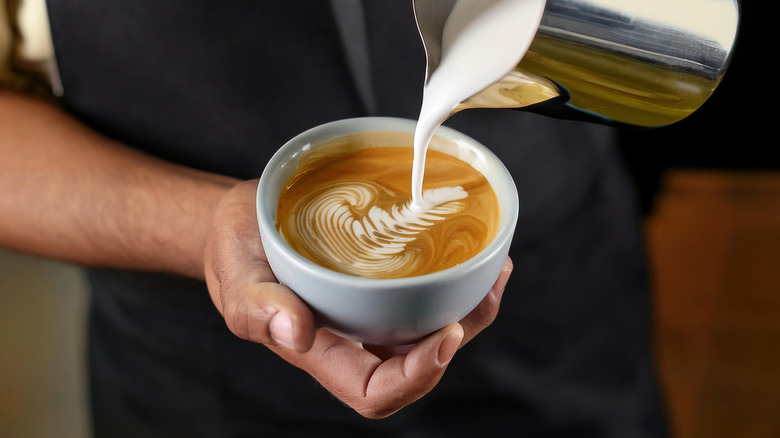
A good cup of coffee is one of life's simple pleasures. Whether you're sipping a mug of the stuff minutes after waking or after a filling meal, the dark, rich brew is bitter, complex, and great served hot or cold. Lattes are just the same, with a bonus of being customizable through a variety of sugars, syrups, and milks. Some lattes, like chai and matcha, skip the coffee altogether, opening up even more flavor and texture options.
As someone who spent 10 years as a barista and created specialty drink recipes, I can tell you firsthand that it may take a few tries to get the hang of making a great latte. But I can also tell you that the rewards are well worth the effort. So, if you want to a gourmet-level coffee drink without waiting in line, this is the list for you. From skipping steps to not experimenting with different ingredients and brewing methods, here are some simple mistakes to avoid when making your next latte at home.
Forgetting to use strong espresso
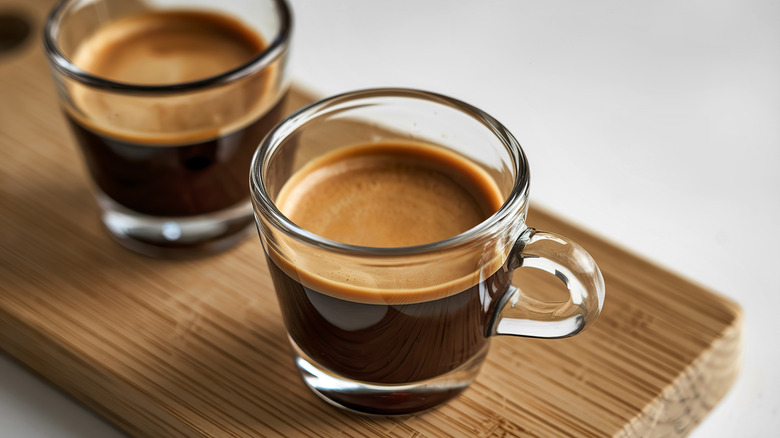
This might seem silly to point out, but you can't have a great at-home latte without using a strong espresso. The dark roasted bean holds its own against milk and sugar, giving lattes depth and authentic coffeeshop flavor. If you don't want to invest in an espresso machine, there are still plenty of ways to make a flavorful shot of the stuff at home, including the classic Italian Moka pot, the cuccuma coffee maker, French presses, and pour-over systems. Instant espresso can save you time, but like any coffee, it should be of good quality for the best results.
When Food Republic spoke with Theo Chen, the managing editor of Coffee Roast, he recommended using a 1-to-2 ratio of coffee grinds to water when brewing espresso. He also suggested that measuring the grounds and water will give you the greatest chance of success, alongside grinding the espresso beans finely. Depending on the type of espresso roast you use, you'll end up with different tastes for the coffee. Companies like Starbucks use a combination of darkly roasted beans, while other specialty brands use lighter roasts, allowing the coffee's fruitier qualities to shine.
Refusing to froth the milk
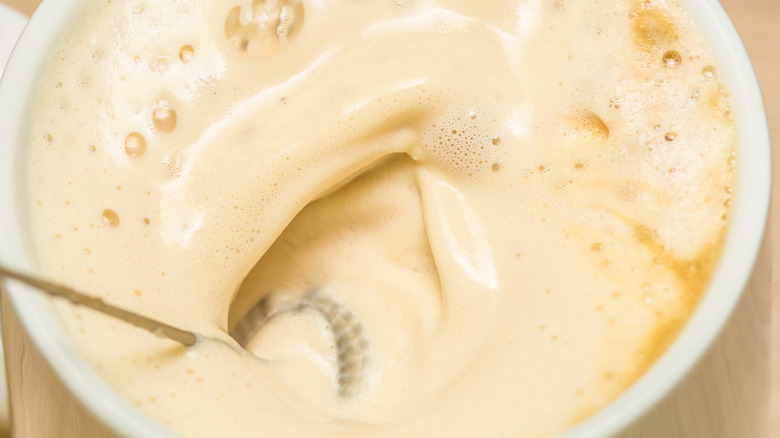
Again, this might seem like an unnecessary step, but it's actually a very important one. Frothing the milk adds sweetness to the drink, but more importantly, it creates the light texture that helps make a latte a latte. When you froth milk, you're adding air to it, creating volume and a matrix of tiny bubbles called microfoam. Luckily, you don't need fancy equipment to make it either. Instead, frothy milk is less than a minute away using just a French press or a glass jar and a microwave.
To froth milk using a French press, first be sure the milk is between 140 and 155 degrees Fahrenheit. This ensures the milk has a stable matrix of tiny air bubbles after it's frothed. Pour the warm milk into the press until about halfway full. Don't add too much, because the milk is going to double in volume, and you'll want to have room for it. Be sure the plunger is submerged in the milk before rapidly lowering and raising the plunger for around 15 seconds. In less than 60 seconds, you'll have velvety frothed milk.
To use the microwave for frothing, pour milk into a glass jar until it's three-quarters full. Secure the lid on top, and shake vigorously for about 60 seconds. Agitating the liquid in the jar will aerate it, creating a stable foam. Take the top off the jar, and heat the milk in the microwave for 30 seconds or so, until it's warm and ready for your fresh espresso to be added.
Neglecting to check the temperature
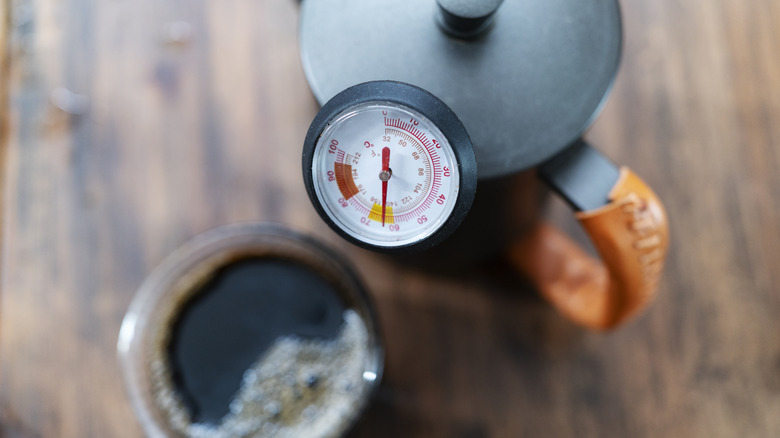
This one goes for both the coffee and the milk. When steaming milk for lattes, many coffee shops, like Starbucks, will aim for 150-160 degrees Fahrenheit. That creates a hot drink with maximum flavor; heating it over 165 degrees Fahrenheit begins to break down the milk, giving you a less-than-optimal experience. Coffee water should be in a certain temperature range while brewing to avoid it tasting burnt. Aim for 195-205 degrees Fahrenheit, slightly less than the 212 degrees Fahrenheit that water boils at.
Brewing coffee in water under 195 degrees Fahrenheit will make it taste weak because the oils aren't extracted. Brewing it in water that's too hot will scald the beans, making them taste burnt. So, yes, brewing your espresso is a bit like Goldilocks finding the right bed. It takes patience and time and can seriously backfire if you don't plan ahead. Grab your digital or manual thermometer before you begin heating the water to make the process seamless.
Avoiding French presses and pour overs
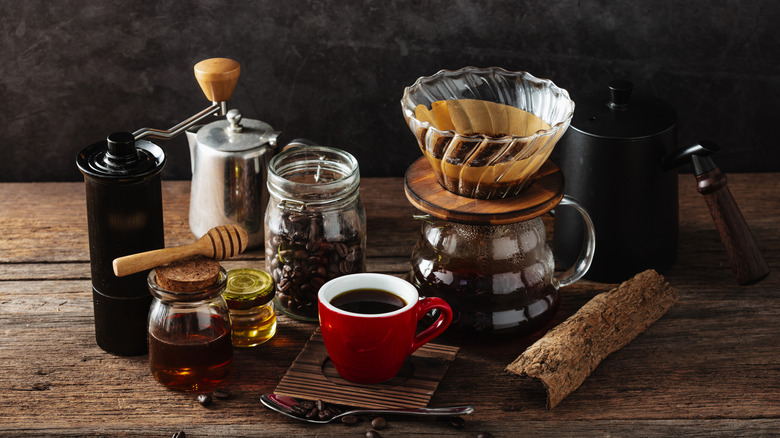
The French press is an iconic coffee maker, but it's not really associated with making espresso. Well, since we don't all have a La Morzacco sitting on our counter, it's time to change that — at least for the sake of making a quick latte. If you're short on time or don't have any fancy espresso-making equipment, a French press will do the job. The simple, elegant plunger design lets you brew your coffee to your preferred strength in style, and does so in a jiffy. While its inherent lack of pressure might not produce the same results as devices more commonly associated with espresso (here's looking at you, moka pot!), it's still more than passable for a latte on the run.
But what if you're not in a hurry? If you make your regular cup using the pour-over method, that'll also work here. It's more labor-intensive than other methods, and as with the French press, you won't be producing the amount of pressure necessary to create true espresso, but the coffee (and subsequent latte) will be perfectly acceptable. Water temperature is particularly important here — not only does it affect the taste of the coffee, but you don't want to burn yourself when pouring or stirring. After adding hot water to the coffee grounds to bloom them, you'll add the rest of the water in two parts. This allows the coffee to brew slowly, giving it a smooth taste without extra acid, and leading to a latte you can sip with the satisfaction of knowing you put the time in.
Using only one kind of milk
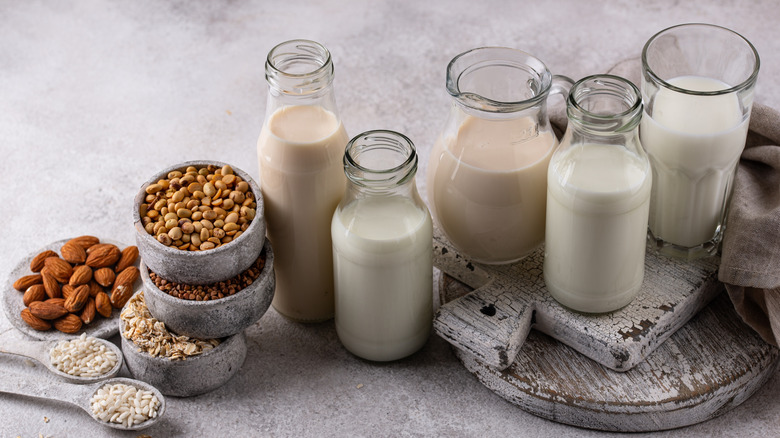
Cow milk is ideal for steaming and frothing due to its combination of fats and sugars. However, there are plenty of alternative milks that can be substituted in a latte, provided you find the barista-approved versions, which are formulated with extra fat. The fats are what keep the air bubbles stable when the milk is aerated, so the microfoam remains meringue-like instead of stiff.
Another factor that will make your alternative milk more frothy is how long it's been open. Fresher is always better for frothing, and both oat and almond milks last around 10 days after opening. Be sure to use the carton before the 10 days are up to avoid the milk separating or clumping. Either one will make frothing impossible because the fats won't be able to emulsify and become stable foam.
So what's the point of trying to use something other than full-fat dairy for a latte? Well, there are many. Diets, lactose intolerance, and taste preference are just a few. Some lattes even benefit from substituting a plant milk, such as hazelnut, that enhances the drink's nutty elements without added fat or sugar.
Forgetting the golden ratio for lattes
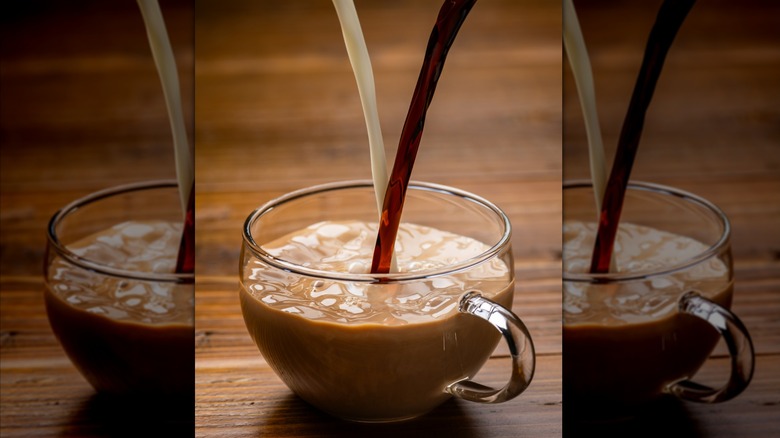
There are general ratios in cooking that have proven useful time and again, such as the 1-to-1 ratio of simple syrup. In coffee making, ratios are useful in every preparing every type of coffee drink. For instance, to make cold brew, the ratio is typically one part coarsely ground coffee to eight parts cool water. When making hot coffee, many coffee shops stick to ratios ranging from 15-to-1 to 20-to-1, depending on the type of coffees being brewed.
To make the best lattes at home, learning this golden ratio will make a world of difference. One part coffee to four to six parts milk will create a silky, well-balanced latte, depending on how strong you'd like it to be. The roast of the coffee you're using for the latte can nudge you toward one ratio or the other. For instance, if you're using very dark espresso beans, you might want more creaminess to blend with the strong coffee. If you prefer a lighter roasted bean, less milk could be a good balance with the more fruity coffee taste.
Using the same sugar for every drink
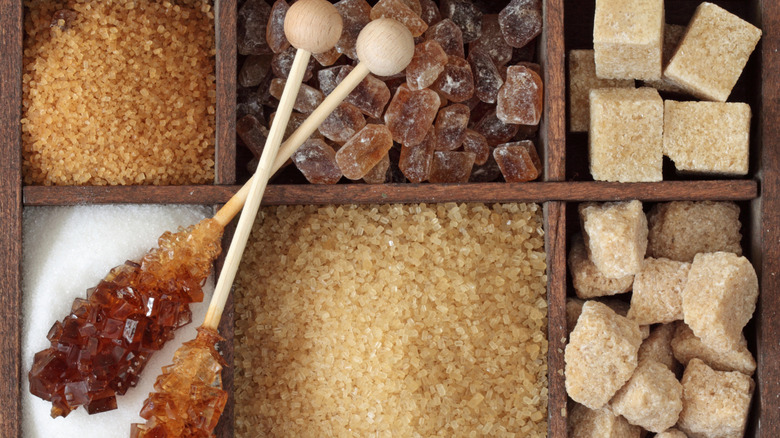
Using plain granulated sugar for your latte is okay, but it won't give you nearly the flavor or texture of other options. Hot honey adds spiciness along with a richer sweetness. Molasses, brown sugar or golden syrup can give coffee unexpected, caramel-like dimensions. Even using crushed candy canes gives you a fun way to reduce the coffee's bitterness while adding texture.
Simple and infused syrups, including honey syrups, are a great way to add sweetness to an iced latte. Maple syrup can be added to cold drinks, too, but it might take some shaking to incorporate it fully. Otherwise, things like granulated or raw sugar, molasses, and other thick syrups will need to be added to hot liquid to melt, before being stirred or shaken to distribute the sweetness. To up the flavor factor even more, try throwing some spices into the sugar before using it in your lattes.
Neglecting to grind your own coffee beans
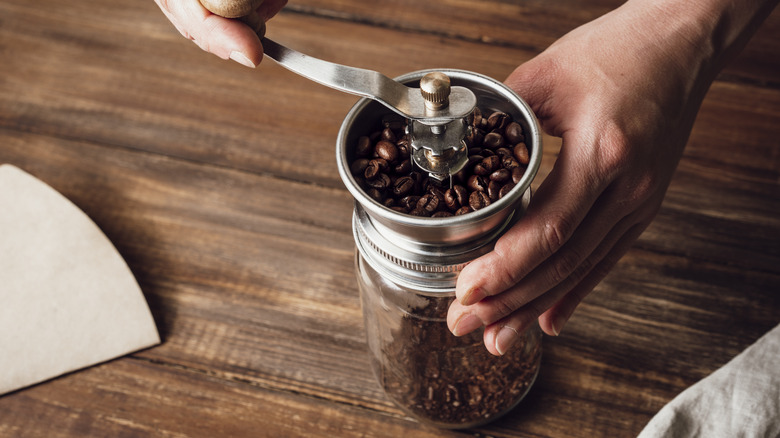
Grinding your own espresso or coffee beans might make the biggest difference in your home latte-making journey. It might sound like a pain, but believe me, grinding the beans doesn't take nearly as long as you think. If you have an electric spice or coffee grinder, the task only takes seconds. If you have manual mills, or even a mortar and pestle for coarse grinds, it still shouldn't be more than a few minutes to your perfectly sized, and fresh, coffee grounds.
Using a burr grinder will give you better results than something like a spice grinder, because a burr grinder crushes the bean uniformly. Many spice grinders use blades which cut the beans irregularly, giving you oddly sized grounds that won't brew consistently. And the grind size isn't only important to much water you'll use when brewing; it affects the taste, too. Coarse grounds take longer to brew but tend to yield more smooth finishes, while finer grounds release more oil and caffeine, creating a more pronounced taste.
Adding ice at the wrong time

For the cold and iced coffee drinkers among us, this is a crucial piece of information. Stop putting the ice into the glass before you pour the hot coffee in. The ice will melt too quickly, giving you watery coffee instead of the smooth drink you worked for. Instead, combine the espresso and warm, frothed milk before adding ice and stirring or shaking. This keeps the drink from being diluted and watery tasting.
Another solution of the watery iced latte problem is to use coffee ice cubes. Whether you're freezing the remains of a pot of coffee or specially making a concentrate to rapidly chill, the frozen brew will add flavor to your drink, not take it away. You can add even more tastiness to the latte by flavoring the coffee cubes with spices or infused syrups. This makes for an ever-changing coffee experience as the cubes melt, releasing more flavor into the drink.
Forgetting there are many types of lattes
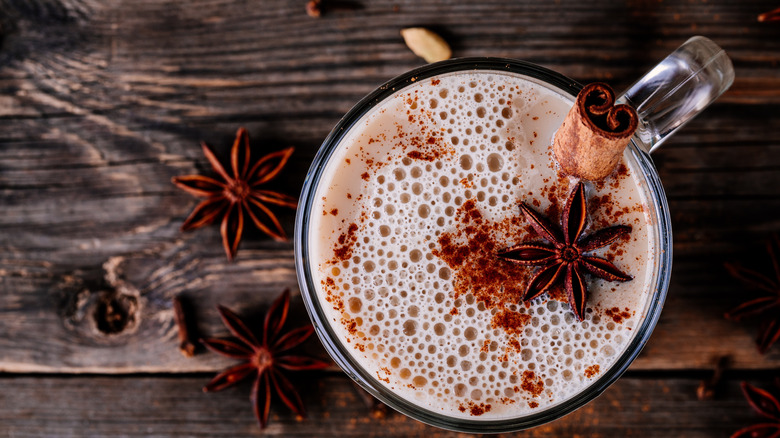
While I believe coffee makes for the ultimate latte, that's not to say I can't appreciate a variety of them. Take matcha lattes, for instance. These sweet, earthy, and frothy drinks can be made with a myriad of flavors, like strawberry, rose, or pumpkin spice. Of course, there are chai and other tea-based lattes, like a London Fog, to help you caffeinate, too.
It can take a moment to learn to make a great matcha latte at home. The matcha itself can clump or become bitter if not treated properly. For instance, if the water is too hot, anything above 176 degrees Fahrenheit, it can scorch the powder, making it bitter instead of balanced. The match will also clump if it isn't stirred correctly because the powder doesn't technically dissolve in water. To avoid these problems, use water that's been simmered, not boiled, and vigorously stir the matcha in a whipping motion to break up any clumps.
To make an excellent chai or tea-based latte, use freshly brewed tea or concentrate with steamed milk and your choice of sweetener. The same latte ratio of one part strong tea to four to six parts milk will give you the perfect warm drink to start your day.