

10 Boomer Kitchen Habits That Confuse Younger Cooks

Everybody's got a soft spot for the flavors of their youth, which, of course, is why food habits differ so starkly from one generation to the next. Take boomers, for instance. A main course of meatloaf, ambrosia salad on the side, and a Jell-O cup for extra dessert might sound a bit meh to most people, but not to any boomer worth their name. This was top-tier fare in the mid to late 1900s; decadent enough to earn a spot at the Holy Grail of family events: Sunday dinner.
Time, of course, leaves its mark on everything, and food culture is no exception. Cuisine has evolved far beyond meatloaf, nobody's really into Jell-O anymore, and the merits of old-school comforts like ambrosia salad have been debated so fiercely that you can't really bring it up at Sunday dinner without earning more than a few side eyes.
But don't assume boomers have completely abandoned their "back-in-the-day" habits. Sure, there's been some evolution, but whether driven by nostalgia or just for the heck of it, boomers can be surprisingly clingy when it comes to their food. Which habits take the cake, you ask? Here's a roundup of things boomers get up to in the kitchen that will likely baffle younger home chefs.
1. Making meat the center of every meal
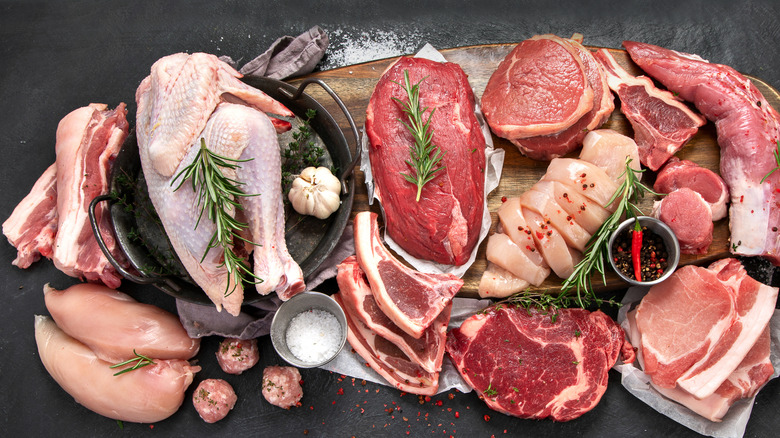
From Thanksgiving to Easter, backyard parties, Sunday dinner, or even just regular old dinner, meat has a sneaky way of insinuating itself onto practically every table spread. But you've got to admit, eating meat at every meal is pretty uninspired, when there are plenty of plant-centric recipes out there that pan out just as well, if not better.
Try telling that to a boomer, though, and see if you don't earn a scoff and a lengthy monologue kicking off with, "Back in my day..." If it don't moo, cluck, or oink, it's probably not making it onto many boomers' plates — no matter how hard you sell it.
Boomers' obsession with meat makes a lot more sense when you put it in context. Sure, meat doesn't have quite the same chokehold on the food market today, but that wasn't always the case. America's appetite for meat was already booming as early as the mid-1800s, when eating meat at every meal was a symbol of prosperity and abundance. That appetite carried straight through the 1900s, peaking right around the time boomers were growing up.
And just as boomers hit peak spending power in the late '90s, Hollywood icon Robert Mitchum's gravelly baritone hit their airwaves with the not-so-subtle campaign: "Beef. It's what's for dinner." Boomers never stood a chance. Meat consumption kept climbing into the early 2000s, and even as the rest of the world's obsession cooled off just a bit, boomers still couldn't fathom a meal without a hefty slab of animal protein at its center.
2. Emotional attachment to name brands

Ever wondered why most boomer pantries look like shrines to food-industry heavy hitters? You can't even get them to give up that very specific brand of peanut butter, no matter how convincingly you pitch the alternative. It's a pretty baffling phenomenon. Name brands don't have the same chokehold on the market they once did, especially with the rise and proliferation of private labels. Products like Costco's Kirkland Signature are, more often than not, made by the very same companies behind popular name brands, only at a fraction of the price.
Naturally, brand loyalty is no longer the force it once was. Younger consumers tend to lean toward quality over labels, trusting taste, ingredients, and price more than a logo. Boomers, on the other hand, are often deeply loyal to name brands and tend to treat unfamiliar brands with deeply unearned skepticism.
Familiar name brands, meanwhile, get a free pass. Why? Because boomers grew up at a time when there were only a handful of TV networks, and putting an ad on television was the absolute pinnacle of marketing. That means they spent a good chunk of their formative years building emotional relationships with name brands. That kind of nostalgia is hard to beat. And it might explain why, for many boomers, a long-trusted brand still feels like a safer bet than the uncharted, murky waters of a generic equivalent — even if it's literally the same product in less elaborate packaging.
3. Putting random ingredients in casseroles
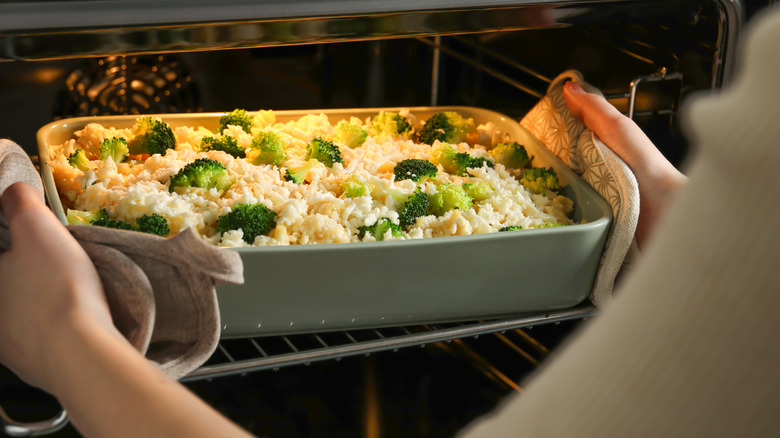
Casseroles have been around for centuries, and while modern iterations are vastly different from retro staples like baked rice and cheese, they still retain the foundational elements of their predecessors. Even cheesy comforts like lasagna are really just casseroles if you think about it, only evolved to the point of losing touch with their roots.
Strangely, casseroles have a pretty horrible reputation. Just scour Reddit and count how many users flat-out call them gross. The collective idea of what a casserole is supposed to look like has been largely shaped by boomer cooking habits. And a boomer casserole is truly marvellous ... in its resourcefulness. There's no real method to it either. You dump in leftovers from last week, a couple cans of this and that, whatever bits of meat you've got lying around, give it a half-hearted stir, blanket the whole thing with a dense layer of cheese, and chuck it in the oven to slow-cook for about forever. Basically, if it's within arm's reach, it's one step away from being an ingredient.
But why are boomers so prone to coalescing multiple mystery ingredients into a single piece of ovenware and calling it dinner? It's not as unusual of a habit as it appears, at least not when you consider the era in which they grew up. Boomers came of age right when canned and other convenience foods were having their big, shiny moment. Some of the food labels even came with casserole recipes right on them! Pair that with being raised by parents who survived the Great Depression — and therefore abhorred food waste — and you inevitably end up with a cook unmatched at turning odds and ends of food into dinner.
4. Using almost no seasoning

Spices belong in your kitchen the same way plumbing belongs in your house. Technically, you could live without them, but not many would recommend it. Any cook worth their name's got a dedicated spice rack stocked with essentials: cumin, Italian seasoning, cinnamon, garlic, ginger, and perhaps one or two exotic game-changers: sumac, grains of paradise, asafetida. There's really no getting around seasoning your food. Even KFC mixes in nearly a dozen spices in its fried chicken.
Boomers have found a way around it, though. Not that they don't season their food: a conservative sprinkling of black pepper and salt still counts as seasoning, albeit in the same way blinking counts as exercise. Of course, food seasoned with just salt and pepper tends to turn out pretty bland, and while that might be inexcusable to most people, boomers take no issue with it. In fact, they might actually prefer it.
Why? Well, for starters, boomers grew up at a time when spice-rich cuisines like Indian, Thai, and Mexican hadn't yet reached the mainstream, which might explain why they regard any seasoning beyond salt and pepper as optional. There's also the fact that convenience foods were booming right around the time boomers were reaching maturity, most of which prioritized uniformity and shelf stability over bold flavoring. In essence, boomer palates were trained on blandness, and considering how much of a role nostalgia plays in taste preferences, it's really a wonder they're willing to try any spices at all.
5. Outdated ideas of what's healthy

Healthy eating matters, no doubt. Scientists have found that a healthy diet can be protective against a number of chronic diseases, including cardiovascular disease, hypertension, and diabetes. And while unhealthy dietary habits persist, most people today are far more conscious of what they put into their bodies.
That said, what healthy actually looks like is not obvious to everyone. Nutrition science has largely moved away from rigid dietary restrictions, acknowledging that healthy living can be achieved through a broad range of eating patterns and lifestyle habits. What's strange, though, is that many boomers still operate according to diet recommendations from the mid- to late-20th century; guidelines that very explicitly encouraged eating certain foods while avoiding others.
Take the Food Guide Pyramid, published toward the turn of the century. It placed food groups like starches, protein, and vegetables at the base of the hierarchy, relegating fats, sugar, and salt to the tiny apex — foods to be eaten sparingly and with caution. Dietary fat, saturated fat in particular, was positioned as the main enemy of diets, which explains why boomers treat fat the way people treat salad at a potluck: suspicious and not to be touched barring a moment of desperation. It also explains why so many boomers boil their food to oblivion and wouldn't be caught dead sautéing a vegetable. Starch, on the other hand, was considered foundational to every meal. That's why you're unlikely to come across a boomer plate without a generous helping of mashed potatoes — and why they insist bread belongs at every meal, whether it makes sense or not.
6. Overcooking meat and vegetables

Vegetables aren't meant to taste like molten, bland mush. Heck, there are at least a dozen ways to make even frozen vegetables taste gourmet. And while there are instances where overcooking vegetables makes sense — soup being the obvious one — making overcooking the default is unforgivable.
Even Gordon Ramsay has gone on the record calling overcooked Brussels sprouts the worst thing imaginable — an oddly specific criticism that somehow doubles as a routine incident report from the average boomer kitchen. Boomers, it seems, have taken the universal dislike of overcooked vegetables as a personal challenge. You've got to hand it to them, though. Try as you might, you won't find a vegetable on a boomer's plate without at least half an hour of cooking time behind it, which is honestly a feat of patience alone. And it's not just vegetables. Boomers are generous with overcooking across the board. Even the Holy Grail of boomer eating — meat — isn't cut some slack. This one's cooked to oblivion, perhaps so it doesn't taste quite so much like meat anymore.
As bizarre as this habit might seem, it actually makes sense in context. Boomers came of age at a time when food safety hadn't evolved to where it is today, and foodborne illnesses from fresh produce were far more common. Health officials recommended thoroughly cooking food — vegetables included — as a safeguard against food poisoning. The food industry has since cleaned up its act considerably, but old habits die hard. So, boomers still prefer their food well done ... just in case. There's also the fact that boomers ate a lot of canned vegetables and meats growing up. Canned food is heat-treated for shelf stability, a process that changes the texture in a way that closely resembles overcooking. Good luck convincing someone who trained their palate on overcooked foods that food doesn't have to taste like that.
7. Some have a complete disregard for food hygiene

Walking into a boomer kitchen is always a dice roll. Sure, there are plenty of boomers out there who keep a pretty tidy space, but there are just as many who don't. So there's a very real chance you'll be hit square in the face with utter bedlam. Appliances that don't appear to have seen a sponge in decades, countertops toppling with assorted clutter, and mystery spills. And it's not just about neglected cleanup. Watching some boomers making a meal is like watching a food poisoning PSA of what not to do. Licking fingers while actively making food, chopping vegetables with the same knife that just prepped raw meat, never washing hands, storing vegetables next to raw meat ... complete chaos.
Why all the mess? First on the blame list: overconfidence. Scientists have found that while boomers tend to feel pretty confident about their food safety knowledge, they're far less consistent about actually following the rules. There's also a strong chance many have an outdated understanding of modern food safety practices. Much of what we now consider basic food-safety knowledge simply wasn't commonplace when boomers were coming of age. Pathogens like E. coli were only just being identified, while others, like salmonella, were only just beginning to enter the public consciousness. The CDC and the FDA food-safety campaigns also weren't nearly as robust, meaning detailed, household-level guidance wasn't widely accessible. Of course, that information is everywhere now, so chances are boomers have encountered it at some point. But even when aware of the risks of contamination, they tend to underestimate the danger in their own kitchens, which drastically reduces their food safety vigilance.
8. Fresh ingredients get side-eyed
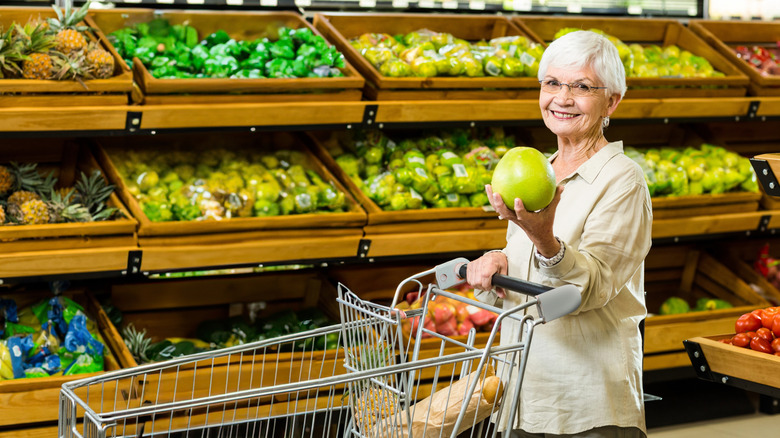
Buying fresh ingredients is a pretty dicey affair. There are plenty of considerations: you've got to know the best times to hit the store for the freshest produce, what red flags to look out for, which items to avoid entirely, and once you get home, how to keep everything fresher for longer. The average boomer doesn't bother with such menial troubles. After all, why gamble on a bag of produce that might spoil in a week when there are neat, reliable rows of the same stuff lining the canned-goods aisle?
Younger cooks are far more inclined to spend a little extra on fresh ingredients, so why don't boomers? Well, for many of them, buying fresh is still something of a foreign concept. For one, they grew up with a booming convenience food industry. Before WWII, convenience foods were often more expensive than fresh ingredients and therefore out of reach for many households. Wartime mass deployment changed that. Production scaled rapidly, technology improved, and when demand dipped after the war, manufacturers turned to the American households to fill the gap.
Canned foods and ready-made meals became cheaper, more abundant, and — thanks to the rise of supermarkets — widely accessible. And while attitudes toward processed foods have shifted dramatically since then, the average boomer still tends to see convenience foods as a marker of prosperity rather than compromise. That said, this problem isn't exclusive to boomers. Scientists estimate that as much as 60% of the calories consumed in American households come from processed foods. Younger shoppers may be slowly turning the tide, but don't expect the average boomer to give up their canned goods without a fight.
9. Storing leftovers in the fridge way too long

Not every day is a "buy" day. Some days you've got to forage in the fridge and find a recipe that stretches whatever leftovers you can scavenge into a full meal. There is a time limit on how long leftovers should stick around, though. The USDA recommends using leftovers stored in the fridge within four days, and frozen leftovers within four months. Beyond that, you're basically courting food poisoning.
Younger cooks tend to be pretty vigilant about tossing leftovers that have outlived their usefulness. Not boomers, though. The average boomer fridge is packed to the brim with an assortment of scraps spanning multiple dinners. That would be perfectly acceptable if the food actually got eaten. But as Redditors with boomer parents can attest, most of it just sits there for weeks, months, and sometimes even years. That, or it gets folded into an atrocious casserole, which almost inevitably ends up right back in the fridge to continue the cycle of leftover hoarding.
So why is letting food go to waste such a struggle for the average boomer? A lot of it comes down to history. Many boomers lived through the Great Depression, a time when families struggled to put food on the table, and frugality was literally lifesaving. Scientists have found that consumption patterns often transcend generations, meaning the thrift habits Depression-era chefs adopted to survive didn't just vanish; they were passed down.
Boomers themselves also came of age in the aftermath of World War II, just as government-mandated food rationing was ending. Naturally, growing up in an era of scarcity drilled in the idea that nothing should go to waste, food especially. That might explain why the average boomer is obsessed with stretching every meal to its absolute limit, preferring to tuck leftovers away indefinitely rather than risk running out.
10. Everything gets a second life

You can't just throw everything away, especially considering how quickly the world is barreling toward becoming one giant landfill. There are practical ways to give what would otherwise be classified as waste a second life. Takeout containers can come in handy when starting a home garden, used olive oil bottles can be repurposed as soap dispensers, and old condiment jars can store leftovers. But you've got to draw the line somewhere; not everything deserves a second act. Don't tell that to the average boomer, though.
Boomers are somewhat obsessed with giving every bit of kitchen waste a future. Walking through a boomer kitchen is like touring a miniature time capsule of food culture. Tupperware with no lids because they disappeared under mysterious circumstances, margarine tubs from the 2000s, gas station flatware, single-use condiment sachets ... it's all in there, just waiting to get a second life. The worst part is that not all of the stuff gets reused. Most of it just exists in a kind of liminal space; never useful enough to earn its keep, but never quite useless enough to throw away either.
To be fair, this habit isn't completely unfounded. Boomers are sometimes described as a bridging generation, coming of age between post-war scarcity and late-20th-century hyper-consumerism. That means that not only do they tend to accumulate a lot of junk, they also loathe to part with any of it — just in case they need it.