

11 Celebrity Chef Grilling Tips You Need This Summer
We may receive a commission on purchases made from links.
Grilling is one of the greatest pleasures of warmer weather. There's something primal about the smell of searing meat. Favorite recipes and decorations can bring back memories as you create new ones. And the meal isn't bad either. Whether you throw on steaks, burgers, chicken, or a variety of vegetables, there's something for everyone at a barbecue. As you prepare for the first or 30th gathering this year, it's never a bad time for tips ... particularly if they come from culinary pros and legends.
The following tips come from seasoned chefs with decades of experience under their aprons. From oiling the grates to determining if you need to cook with the lid on, these techniques are designed to give you the tools to become a grill master in record time. So, if you're an outdoor cooking enthusiast — or would like to be — pull your grill out of hibernation and get ready to let these celebrity chef tips make your next cookout the talk of the block.
Ina Garten flattens chicken for even cooking

Ina Garten's reign as the Barefoot Contessa began in 1978 when she left her White House job for the chance to own and run a food business. Even her lack of experience in the hospitality industry didn't deter her. Instead, the she made the store into a success over the next two decades. In 1999, her first cookbook, "The Barefoot Contessa," came out, featuring recipes from the store. From there, she went on to write many more cookbooks and joined the Food Network in 2002 to film a show with the same name as her iconic store.
In a YouTube video, Garten uses a technique known as spatchcocking when she wants to grill an entire chicken. The process involves using kitchen shears or a sharp knife to cut out the backbone of the poultry before breaking the breastbone so the bird will lie flat. This places the entire bottom and top halves of the chicken in direct contact with the grill grates while cooking, giving the bird a beautiful color and helping it cook more evenly.
Alton Brown lights charcoal quicker with a chimney
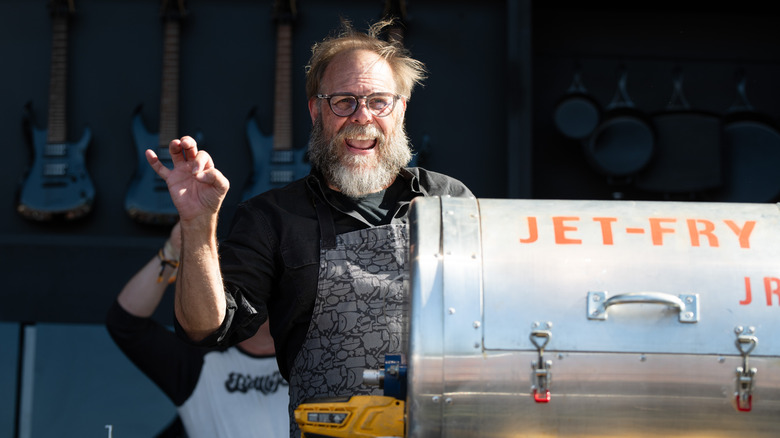
Alton Brown was one of Food Network's most popular and versatile hosts for several decades. He came to the channel after years of being a cameraman led him to culinary school with the intention of making cooking shows. It was a goal he met with shows like "Good Eats," "Cutthroat Kitchen," and "Iron Chef America." Brown combined humor, science, and food to make an indelible impression on his viewers and readers. To date, he's penned almost a dozen cookbooks, including "I'm Just Here for the Food" and "EveryDayCook."
He often gives cooking tips on his Instagram, like this one to help light charcoal more easily. Brown uses a charcoal chimney starter, which holds the briquettes in an open-topped cylinder where they can be lit and pre-heated before being added to the grill. This process is safer than pouring lighter fluid all over the charcoal and throwing in a match. The chimney method also lets cooks take Brown's advice and add a bit of cooking oil to the newspaper kindling that goes in the chimney's bottom. This helps the briquettes light more easily and faster, so you can start your meal sooner. If you don't have a chimney lighter of your own, you can use that same newspaper to mimic one.
Tyler Florence uses bacon for more flavorful burgers
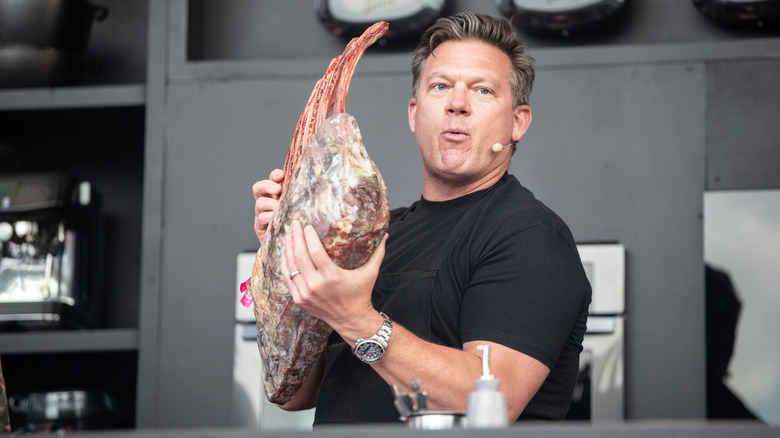
Tyler Florence joined the Food Network in 1996, not long after the channel started. That was good timing for Florence, who'd just graduated college two years before. The chef went on to host numerous shows for the network, including "Tyler's Ultimate" and "The Great Food Truck Race." His cookbook, "American Grill: 125 Recipes for Mastering Live Fire," was published in 2024 and puts a spotlight on various techniques to cook anything on the grill.
While speaking with the Michelin Guide in 2024, Florence spoke about why he added ground or finely chopped bacon into this raw hamburger patties. He said the bacon added texture to the meat, along with extra savory flavor. He also mentioned the need for a cast iron pan or griddle on the grill to help give the burgers the best possible crust, but method works great for the grill, too, provided you account for one thing: Flare ups that might be produced by the extra fat from the bacon. That said, adding the extra fat is actually important to keeping the burger moist. If the burger is too lean, it can dry out and burn much faster than you might think.
Michael Symon cooks sweet potatoes before they hit the grill
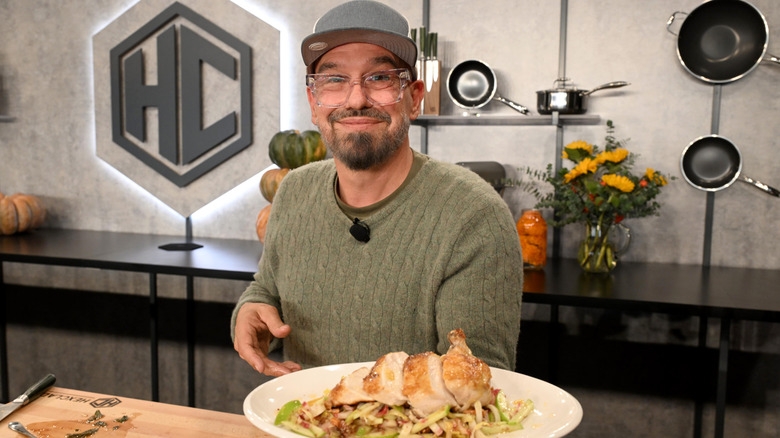
Chef Michael Symon built his career over flames. Whether it was grilling, barbecue, or roasting, his fleet of restaurants encompass them all. He's hosted the Cooking Channel show "Burgers, Brew, & 'Que" from 2015 to 2020, and was a co-host on "The Chew" for nearly a decade. The chef wrote "Michael Symon's Playing with Fire: BBQ and More from the Grill, Smoker, and Fireplace" in 2018, highlighting his love for seared and charred foods, veggies included.
When Symon spoke with Food Republic in 2025, he talked about his two-step method to make sweet potatoes perfect for the grill. He parboils the tubers before cutting them into thick pieces, covering them in oil, and putting them over the fire. Sweet potatoes are particularly dense, so boiling them beforehand helps them cook evenly. They also have a lot of sugar that can burn if left over high heat for too long, so reducing the cooking time helps prevent that.
The technique isn't just for sweet potatoes, either. Regular potatoes benefit from a parboil, too, which allows them to cook through quickly on the grill. Shapes like thick slices or wedges hold up the best, but if you have a grill basket, any size and shape will work. And, of course, for those who want to pack in as much flavor as possible at every step, using broth or wine as you boil will infuse the food with taste without overwhelming it. All that flavor amplifies on the grill, as smoke and char put their stamp on the meal, too.
José Andrés tempers steak before grilling it
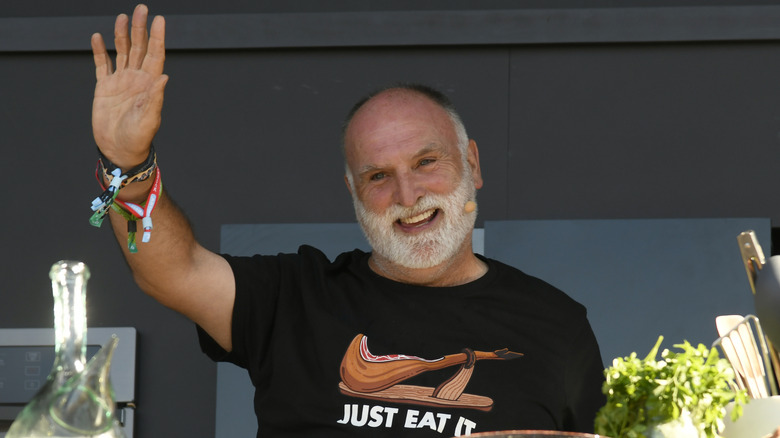
American-based fans of tapas have José Andrés to thank for the small plate revolution. The Spanish-born chef opened Jaleo, a tapas and small plate restaurant in Washington D.C. in 1993. It was many people's first taste of authentic paella or Manchego cheese. Since then, he's opened 40 restaurants, been featured on Netflix's "Chef's Table: Legends," and hosted the show, "Yes, Chef!" with Martha Stewart.
Andrés spoke with Food & Wine in 2022 about the opening of his steakhouse, Bazaar Meat. He gave a few tips on making a great steak, including to let the steak rest at room temperature for around an hour before cooking it. Of course, the multi-Michelin-starred chef doesn't stop there. His restaurant has a special rack positioned above the coals to slowly raise the temperature of the meat before grilling it. This slow-tempering process helps the steaks not to bleed after cutting, even without any resting time.
Home cooks don't generally have that luxury, so he suggests using your oven instead. Tempering meat in a low oven can have the same sear-inducing results as more elaborate methods. And if you simply don't have the time or patience to temper the meat, cold searing your steak can keep it juicy and flavorful without having it stick to the pan.
Robbie Shoults suggests charcoal for better flavor
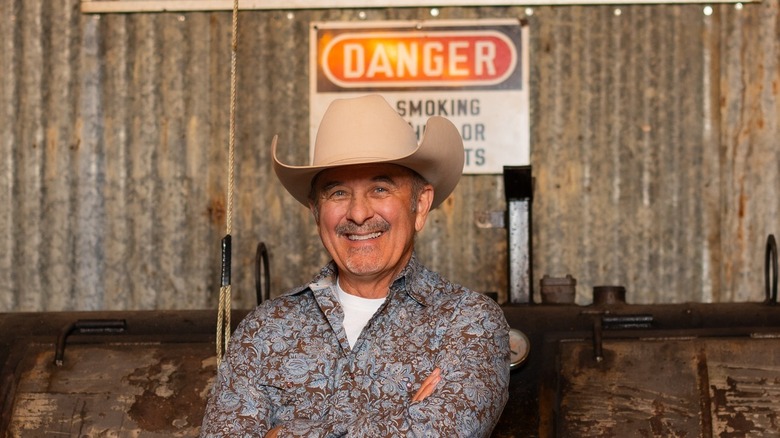
Robbie Shoults is perhaps the least well-known chef on this list, but the man's got credentials. In addition to appearing as a judge on "Beat Bobby Flay" in 2017, he's part of a family smokehouse business stretching back more than 80 years. Four generations of the Shoults family has worked at Bear Creak Smokehouse, which began with slow-curing turkeys and now includes a wide variety of sausages, hams, bacons, and more.
When Food Republic spoke with Shoults in 2025, he talked about his preference for charcoal and wood over gas or propane grills when it comes to grilling steak. The chef says the natural fats that drip onto the briquets help to flavor the meat, thanks to the smoke particles carrying bits of the fat back up to coat the protein. That same smoke is a double-edged sword, however, because if you accidentally overuse lighter fluid that taste will make it's way into your meal, too.
Guy Fieri says leave the lid on for grilled chicken
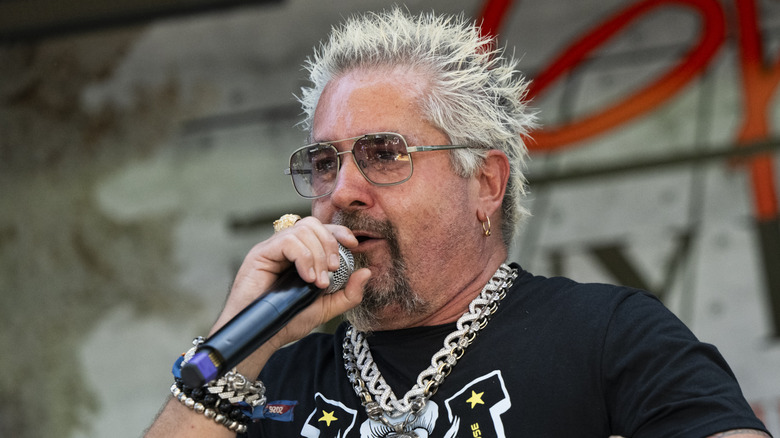
It's hard not to recognize Guy Fieri, and not just because of his famously spiked hair. He's been hosting shows on the Food Network since his debut in 2006 and began presenting the juggernaut success "Diners, Drive-ins and Dives" the next year. That show is still running, over 50 seasons later. In 2014, Fieri wrote the New York Times bestseller, "Guy on Fire: 130 Recipes for Adventures in Outdoor Cooking." As you can guess, he has more than a few restaurants, too.
When talking with Parade magazine about opening Guy's Pig & Anchor Bar-B-Que Smokehouse aboard a cruise ship, he mentioned the importance of leaving chicken to cook slowly. One way to do that is to allow the meat to remain under the grill lid, keeping the heat and moisture in. Instead of finishing with tough or chewy protein, you'll have a tender piece of chicken that falls off the bone without burn marks from flare-ups.
A good rule to follow when grilling is to close the lid on thicker pieces of meat to help them cook through without drying out. Thinner cuts can be cooked without a lid, as they cook much faster and don't stand as much chance of burning before being done. Of course, if you cook with the grill lid on, it's vital to keep the inside of it clean.
Bobby Flay doesn't disturb the meat for a few minutes
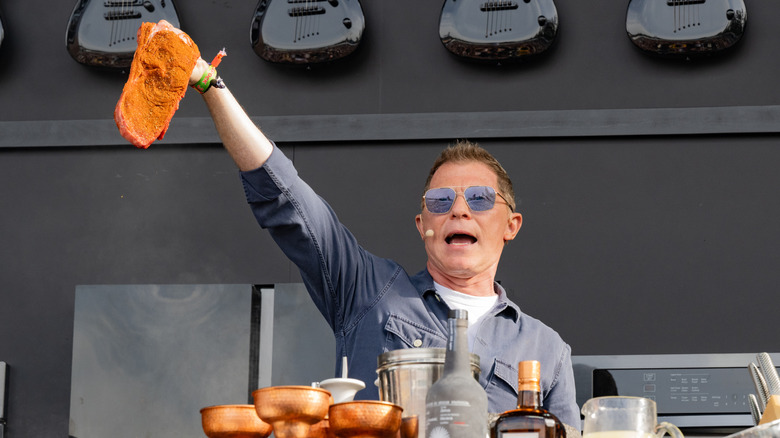
Bobby Flay has been part of the country's culinary scene since 1991, when he opened Mesa Grill NYC. The Southwestern-inspired fare showcased the magic of what a grill master and their tools can create. He joined Food Network as a host and competitor in the mid-'90s and became one of the company's Iron Chefs. Since then, Flay has gone on to write multiple cookbooks, including "Boy Meets Grill," "Grilling for Life," and "Bobby Flay's Grill It." Clearly, the man has a calling.
A YouTube video shows him speaking with news station KRQE when Flay gave the advice to place the meat on the grill and then "leave it alone." Simple and straight to the point, this approach allows the protein to sear before lifting away from the grates as the surface seals into a crust. Not only does this keep the meat from tearing when you try to turn it, but it helps get those incredible char marks from the grill.
Marc Murphy cautions against checking the temperature too often
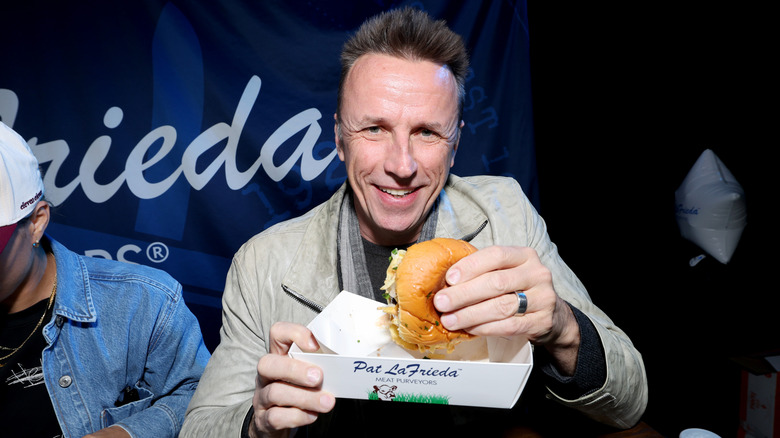
Marc Murphy is familiar to Food Network watchers as the man has appeared on nearly a dozen of its shows. He's been a competitor on "Iron Chef America" and a judge on "Chopped" and "Chopped Junior" for years. He's known for making Italian and French food accessible, and his now closed Grey/Salt restaurant focused on fresh seafood and rotisserie and grilled meats.
Murphy gave tips on using a meat thermometer on the Food Network Kitchen Facebook page in 2020. He advised avoiding puncturing smaller pieces of meat with a thermometer or probe to avoid the food's moisture from leaking out. It's better to slightly undercook it and finish it later than to overcook it and have it end up dry.
There's also the fact the meat will need to rest for a few minutes after coming off the grill. Those minutes help redistribute moisture and heat through the meat, meaning that it keeps cooking after being removed from the heat. Your slightly undercooked pork chops could become a beautiful medium-rare after a 10-minute rest. Besides, there are other ways to check for doneness. Chef Richard Sandoval recommends a touch test along the base of your palm. If the meat is raw it will feel like the base of your relaxed thumb, while medium rare is firmer, like lightly pressing your index finger into your thumb.
Alex Guarnaschelli oils the pre-heated grill before cooking
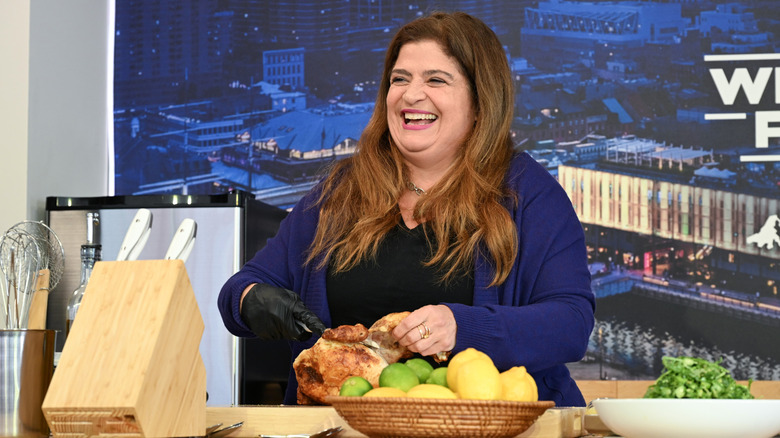
Fans of Food Network are sure to recognize chef Alex Guarnaschelli. She's been the executive chef at Butter Restaurant for more than 20 years and has competed on "Iron Chef America" since winning "The Next Iron Chef: Redemption" in 2012. Her specialty is new-American cuisine, and the grill station at Butter gets quite a workout. So when Guarnaschelli suggests oiling the grates on a grill, we listen.
The chef took to her Facebook page in 2021 to talk about her technique to keep food from sticking. She suggests using a rag covered with a high smoke point oil (like grapeseed or canola) on clean barbecue grates. Heat the grill as normal to create a non-stick surface and enjoy the gorgeous marks as your food releases cleanly. Not only are you protecting your dinner from being torn apart, but oiling the metal will help keep it in good condition for years to come.
You can even add more flavor to your dish by using a flavored oil on the grates. An oil seasoned with herbs and spices will impart a savory and smoky depth into the food without you having to do extra work. Just be extra careful that you don't use things like chiles in the oil, as that can burn and irritate people's eyes and lungs. High fat marinades on oiled grates can also cause flames to flare up, so use caution to avoid losing your burgers and your eyebrows.
Wolfgang Puck seasons the meat an hour before it hits the grill
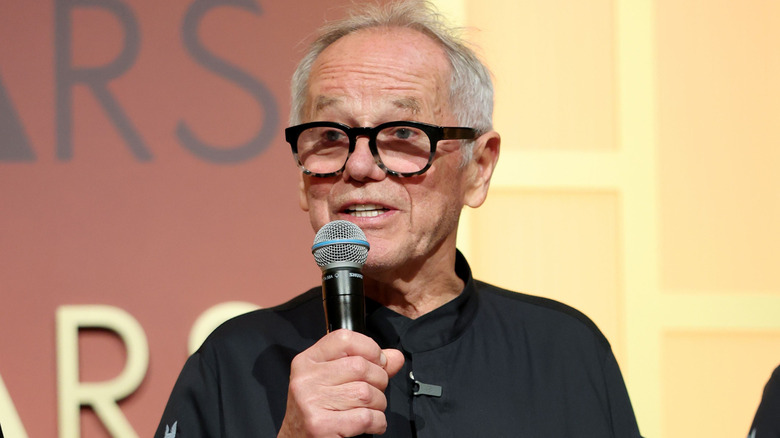
Wolfgang Puck has been one of the most recognizable names in the culinary world for more than 40 years. He opened the world-famous restaurant Spago in 1982 and two of his CUT steakhouse locations each hold a Michelin star. So, it's fairly safe to say then that the man knows how to cook a steak. Providing grilling tips to Michelin back in 2019, Puck said that he prefers to season the meat an hour before it goes on the grill. As he also advises lighting the charcoal at least an hour before putting any food on, the timing works out perfectly.
If you think the one hour mark for seasoning is arbitrary, you'd be wrong. Salt helps draw moisture out of meat, so allowing the stuff to sit on your steak for 45 minutes or more will create a better crust. Beads of moisture will collect on the steak's surface a few minutes after the salt is applied. If you don't wait at least 45 minutes before cooking it, that moisture can prevent the exterior from browning. After about an hour, though, the moisture will have evaporated, leaving the outside of the meat much drier and ready to sear up beautifully.