

8 Mistakes To Avoid When Making French Onion Soup
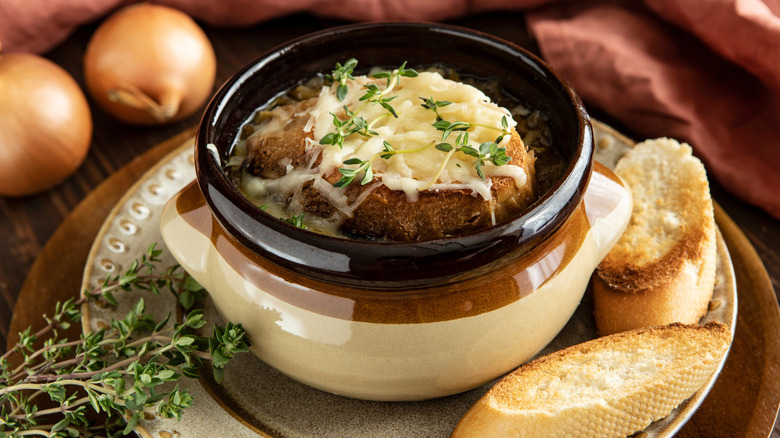
French onion soup endures as an iconic, classic comfort food, filling enough to be a meal all its own on chilly days. There's no wonder why, either — there aren't many people who don't enjoy the rich combination of savory broth, sweet onions, and crusty cheese-laden bread are few and far between. And while new twists on this old classic are constantly cropping up — from those with Indian or Middle Eastern ingredients to Irish-inspired versions and French onion pho – the core tenets remain the same.
Despite its more recent incarnations, it's interesting to note that French onion soup has stuck around for a good three centuries, having first emerged in 1700s France. A soup often used as a hangover cure in French culture, it's one you don't want to mess up, otherwise you'll find yourself with an even worse headache.
From errors in selecting ingredients to common pitfalls in preparation, there are a bundle of ways this majestic meal can go wrong. Avoid these common mistakes when making French onion soup and create a dish that will be remembered for decades, at the very least.
Using subpar ingredients
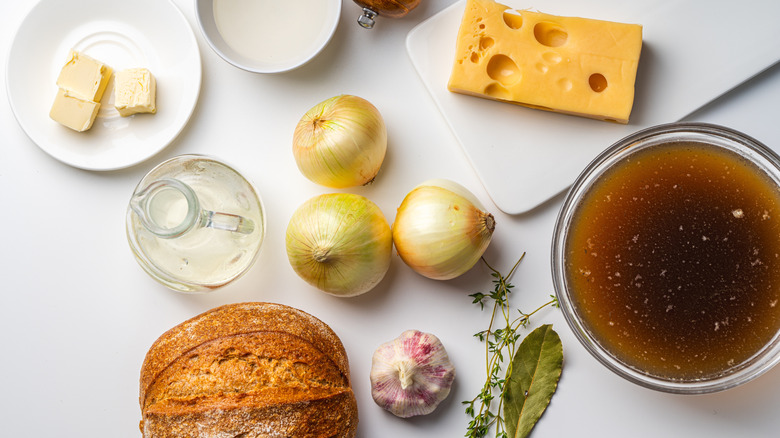
The root of every great dish is great ingredients, so if you plan on making an exceptional French onion soup, you best start with optimal ones. Set yourself up for success as you select the building blocks of your soup. Don't settle for bouillon cubes or beef broth; try subbing beef consommé, as Alton Brown does, or use beef stock instead. Stock holds a richer flavor compared to broth, being made from beef bones and connective tissue, giving it a silkier texture due to the collagen and gelatin released. The result will be a richer, thicker soup. If you have to use beef broth, try rounding out the flavor with the addition of chicken stock.
When it comes to onions, many kinds can be used, but most agree yellow onions are the ideal choice for French onion soup. Yellow onions hold a higher starch content, meaning they'll caramelize faster than other onion varieties. You can opt for more mild Spanish onions, or select sweeter types like Vidalia or Maui onions as well, although these may take longer to caramelize due to their higher water content.
Cooking the onions too little or too long
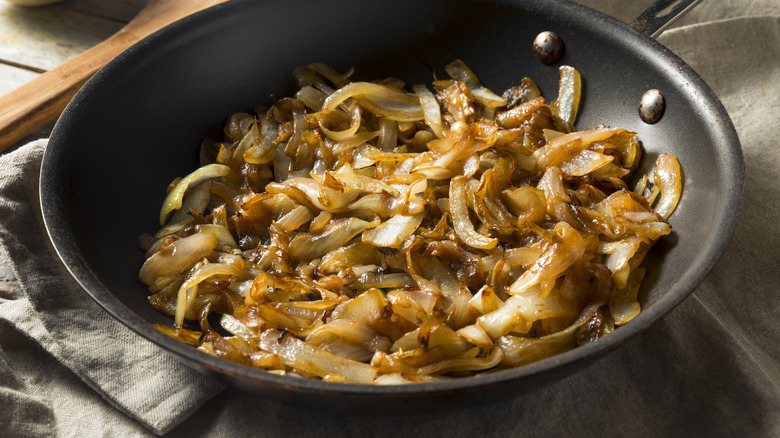
One of the key elements to making a good French onion soup is appropriately caramelizing your onions, but not overcooking them. While some recipes might attest you need to sauté onions for hours on end, this really isn't necessary if you elected for sweet, yellow onions. To properly caramelize onions, cook them for 30 minutes on medium-low heat, stirring every so often and lowering the heat if needed so they don't burn (more on that in a moment). Onions can be cooked in butter, oil, or a mixture of both — just make sure you don't use too much.
Consider how you cut your onions as well. Onions should be cut along the natural grain(from the root to the stem) in order to help your onion slivers maintain their shape. As for thickness, aim for about ⅛ inch. You also don't need to stir your onions constantly either, as this will only cause them to lose shape and break down. Allow them to brown before stirring, and watch the temperature.
Not lowering the heat on your onions
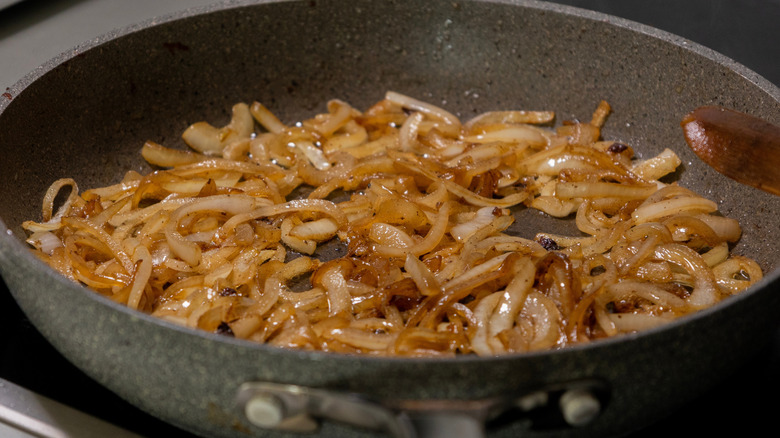
If you notice your onions beginning to become crispy, you'll need to turn down the heat. In order to break down the sugars in your onions and create a more robust taste, you need to caramelize the onions, not fry or burn them. Increasing the heat on your onions isn't going to make them cook any faster — it's just going to ruin their texture and increase the chances of charring them. At least 30 minutes at medium to low heat is what is needed, stirring every five minutes or so.
If you do turn up the heat, you'll likely observe your onion slices becoming crispy — this means you need to turn down the dial to a lower setting. Additionally, if you spy spots of burnt fragments at the bottom of the pan, feel free to add little water and scrape around to keep those flavors in the mix. Towards the end of the cooking time, go ahead and add some salt and other seasonings if you desire. Caramelizing might not be the fastest process, but it's one that's worth it when building a sensational soup.
Forgetting the alcohol
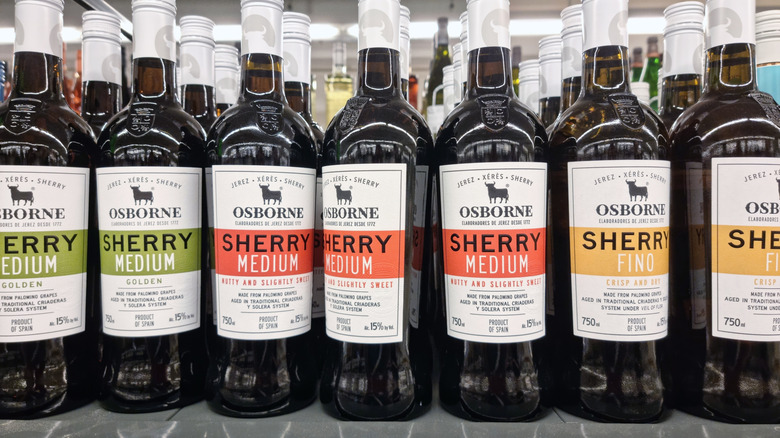
Adding some wine or sherry after the onions are done caramelizing is a signature step to making French onion soup, as this deglazes the pan. Deglazing helps remove all those tiny bits of food and flavor that normally cling to the pan (also known as fond), working them back into your soup broth for a richer flavor. Sherry is the classic alcohol option for French onion soup, but an assortment of different libations can be used for this process, from dry white wine or beer to brandy and red wine.
A favorite of Food Republic is to use Calvados with French onion soup, a French brandy made from apples and pears, to deglaze the pan. Brandy is especially nice in conjunction with this savory soup, helping to accentuate the flavors of the onions and other aromatics. A warmth is added that pairs perfectly with this delectably cozy dish.
If for any reason alcohol isn't an option, there are a few other liquid choices to deglaze your pan. Broth, stock, or even water can work as well. Add your chosen liquid (liquor or not) to the pan while it is hot and use just as much as is needed to span the pan's surface, and let it simmer while you stir. Once the booze or broth touches the hot pan, the fond will start to release, helped with a little stirring. After this, you'll add your stock or broth directly to the pan as well, making for a fantastic medley of flavors.
Using the wrong utensils
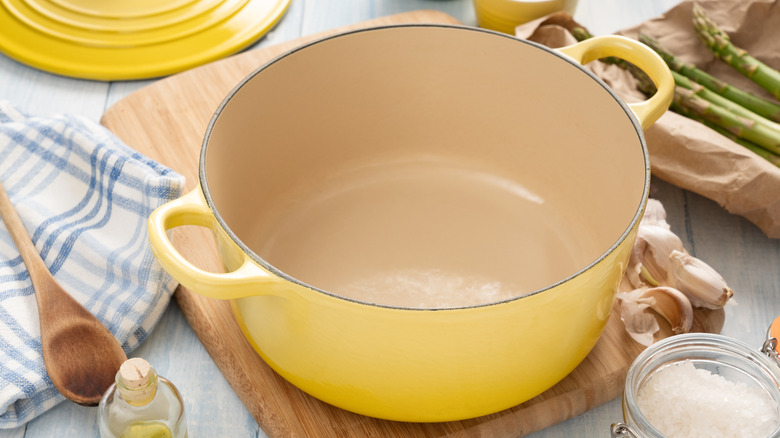
To make French onion soup without damaging your cookware, you'll need to ensure you use the right kitchenware. When it comes to caramelizing onions, you'll want a pot that's wide enough so as to not overcrowd the pan, which causes the onions to steam.
Additionally, steer clear of nonstick pans, as all that stirring and scraping of the fond can damage their coating. The best pans for caramelizing onions are made of cast iron or stainless steel with high sides (remember, you need room for the liquid as well). These pans typically have more even heat distribution, ensuring all onions cook at the same speed. A Dutch oven is also ideal.
Don't have the right pan for the job? If your pan is too small, you can also caramelize your onions in smaller batches or make use of your crockpot instead. You'll need a wood or silicone spoon to avoid scratching the surface of your pot or pan while cooking your onions. Looking for a speedier way to slice those glorious alliums? A mandolin slicer can also help you achieve evenly sliced onions with ease.
Using the wrong cheese
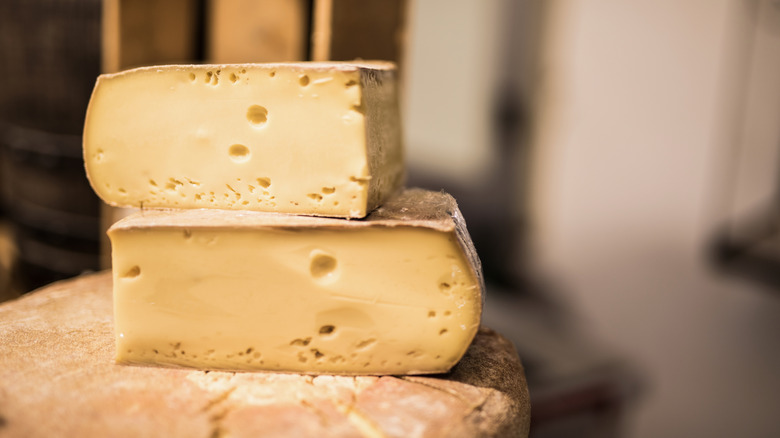
Topping your delicious concoction with the wrong cheese can absolutely ruin all the hard work you've put into a pot of soup, so be sure you opt for the right type. American cheese should never go near this soup, but Swiss, Gruyère, and taleggio are often used.
Gruyère is the classic choice for French onion soup, although its roots come from Switzerland rather than France. Made from cow's milk aged for half a year or more, its nutty yet creamy flavor enhances the rich broth and subtly, sweet onions in this soup perfectly. It also melts wonderfully due to its higher ratio of water to oil. If selecting Gruyère, know that there is a slight difference in taste depending on its age. An older Gruyère will possess a more earthy hint, in contrast to younger Gruyère, which falls more on the creamy-nutty side.
When it comes to prime cheeses for French onion soup, Tête de Moine is more adventurous choice. Also known as Monk's head, this time-tested cheese tastes a good deal like Swiss, only with stronger notes. Another fine option, the Italian taleggio is luxuriously creamy, elevated with a subtle tang that balances with beef stock extraordinarily well.
Emmentaler and raclette also make spectacular substitutions for Gruyère given their remarkable taste and ability to melt beautifully. You can also combine provolone and mozzarella with Gruyère, making for a trio of flavors to top your soupy concoction.
Skipping the final broil
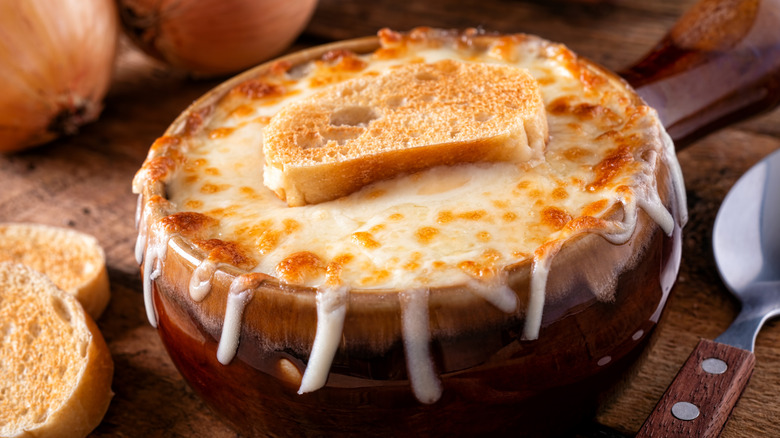
You've made it to the home stretch of crafting an outstanding French onion soup — you don't want to biff it now by bypassing the final step. We all love that gloriously gooey and golden topping to French onion soup. Well, the only way to achieve that perfectly browned, cheesy top is through the use of your oven's broiler (unless, of course, you happen to have a kitchen torch nearby).
You'll need to use oven-safe bowls or crocks and spoon the soup into them. If you prefer, you can pre-toast the slices of baguette as well before topping them with cheese for a crispier spoonful. The preferred method for this final stage is to blanket the bread with cheese on the soup, set it on your oven's middle rack, and broil it on high until lightly browned and crusty.
If you don't have oven-safe bowls, you can also place the cheese directly on the bread and broil this alone. With this method, there's no threat of spilling your soup while transferring the bowls to and from the oven, and you save a good deal of cheese that otherwise would have spilled over the edge of the bowls. Waste not, want not, right?
Plating and pairing incorrectly
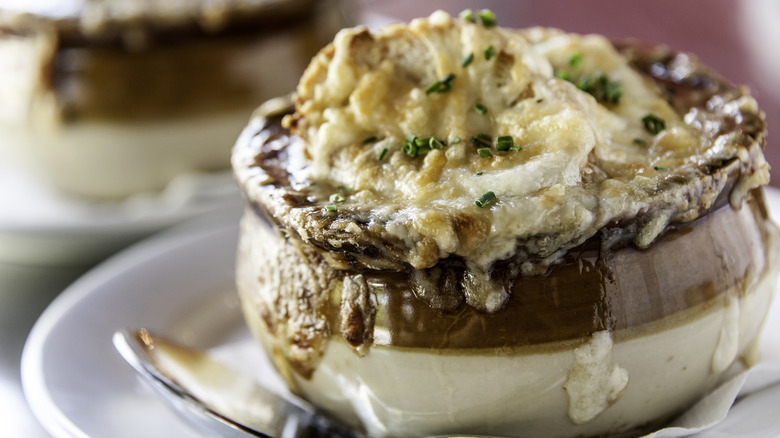
If you'd like to serve French onion soup the traditional way, it is done using deep, porcelain bowls known as lionhead bowls. The deeper dish and narrower top means less bread is needed to cover the soup, leaving plenty of broth for the spooning underneath. It also keeps the soup warm for longer, as less of the soup is exposed to the air.
Even if you don't have this particular tableware on hand, you never want to plate French onion soup in a shallow dish. Doing so will cause the bread to soak up the soup broth much more rapidly, transforming your hard-earned soup into a bready stew. It also looks far less appetizing to have a cheese-topped loaf floating in the middle of your bowl like an island, ready to sink into the oniony waters at any moment.
While this soup can be a meal on its own, it is also sensational when paired with other dishes. A roast beef sandwich, grilled cheese, or light salad can be the perfect companion for French onion soup. A leafy side dish of arugula and Parmesan is a nice touch, or perhaps a tomato panini embellished with prosciutto and mozzarella. Fuller meals can be fashioned as well, such as a New York strip and refreshing vegetables or a filet mignon paired with grilled asparagus.
As for beverages, a sauvignon blanc pairs particularly well with this stunning dish. Its crisp acidity balances out the richness in French onion soup, enhancing the sweet and savory combination. If sauvignon blanc isn't your taste, other ideal wines include chardonnay, riesling, and pinot noir. Cheers and bon appétit!