

What These 11 Fast Food Restaurants Do With Leftover Food
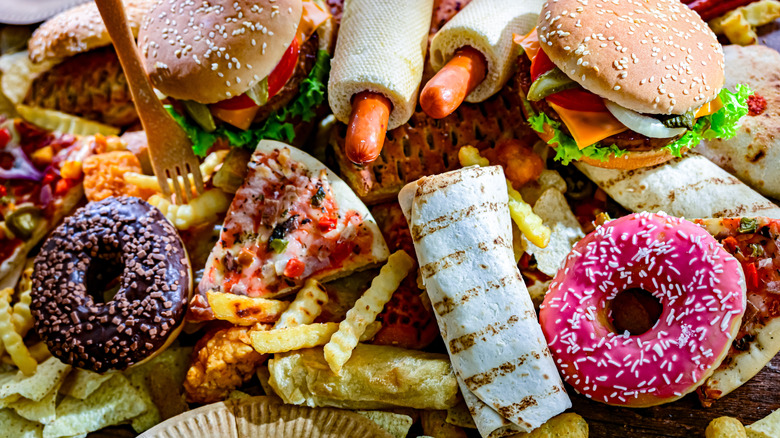
In the United States, 100 million pounds of food are wasted each year, roughly 30% to 40% of the national food supply. Food insecurity affects people of all ages and backgrounds, and the fact that so much edible food ends up rotting away in landfills is a national tragedy. What's most frustrating is that this isn't an unsolvable issue.
Accomplishing this requires legislation, technology, and will. Surprisingly, many fast food chains are leading the way. These lucrative corporations have both a moral and financial incentive to eliminate waste in their restaurants. Through nonprofit intermediaries, chain restaurants can redistribute unused food and ingredients to regional food banks and local charities.
However, dealing with "leftovers" is a little trickier. Food safety laws and the fear of legal repercussions make it difficult or simply not worth it to give away prepared, unsold food. Still, many fast food chains are doing their best to find solutions, with some companies doing better than others.
McDonald's
With over 44,000 locations across 100 countries, there is perhaps no food business with as much global impact as McDonald's. In 2023, the company purchased 714 million pounds of beef, 133 million pounds of cheese, 2.6 billion pounds of potatoes, and nearly 2 billion eggs to service its US-based operations alone. Supply chain management and forecasting are keys to McDonald's success, and it applies these same modeling principles to its approach to food waste.
Despite using billions of pounds of ingredients, McDonald's reports that it wastes "less than 1% of its edible food stock." By analyzing store data, McDonald's helps its franchise owners predict how much food to order and prepare at all times of day, reducing the number of burgers, nuggets, and french fries that end up in the trash.
Since McDonald's goal is to minimize food waste, it doesn't have a restaurant-wide policy on dealing with leftover foods. On its corporate website, McDonald's reiterates that its company-owned and franchisee-operated restaurants are committed to working with organizations like the Food Donation Connection and The Global FoodBanking Network to donate excess food and supplies to people and local communities. Still, given the global scope of its business, this process can be complicated.
Burger King
Burger King is one of the nation's oldest burger chains, serving Whoppers since 1957. And while the burger has retained its signature flame-broiled char, much else has changed. In 2010, private equity group 3G Capital purchased Burger King and packaged it with Tim Hortons (and later Popeyes) to create a new public company, Restaurant Brands International. This new umbrella company controls Burger King's food waste policies.
Like McDonald's, Burger King's approach to leftovers is not to have any to begin with. Through advanced forecasting, BK can help each store location predict how much food to order and prepare for any given day. Burger King has partnered with Too Good to Go, a company that specializes in helping restaurants sell excess food that's still available toward the end of the day. Unfortunately, due to food safety requirements, select perishable food items must be discarded after a certain amount of holding time. And the same goes for breakfast items that aren't sold by 10:30 a.m.
Popeyes
Popeyes specializes in Louisiana-inspired cooking, but the foundation of its menu is chicken. And they do it well, arguably making the country's best fast food fried chicken sandwich. The chain has existed since 1974, but in 2017, its 2,600 restaurant locations were acquired by Restaurant Brands International.
And similar to Burger King, Popeyes doesn't have a clear policy regarding leftovers. Restaurant Brands International provides individual franchisees with tools to help anticipate supply, but it's not obvious if Popeyes works with any local food banks or community centers to distribute leftover food. The problem comes down to Popeyes' menu. Most of its items — besides a few side dishes and desserts — take a dip in the deep fryer, making them harder to redistribute than foods that are refrigerated or frozen.
Online, former employees confirm this, saying that much of the prepared hot food has to be thrown out at the end of the day due to strict food safety guidelines. However, one Reddit user claimed that employees were allowed to take home some of the leftovers, but there's no way to know if or how often this is permitted in other locations.
Wendy's
Wendy's commitment to fresh — never frozen — ground beef has always differentiated it from the other fast food behemoths. But using fresh ingredients comes with a particular set of food waste obstacles, specifically a shorter shelf life. To counter this, Wendy's focuses on rigorous supply chain management to cut down on surplus ingredients. According to a 2024 Corporate Responsibility Report, Wendy's has even employed the help of software giant Palantir to use AI to improve its ingredient forecasting based on a specific restaurant's historic sales data.
But what does Wendy's do with food that has already been prepared? It's hard to say. Like other national chains, most of the hot food that's already been cooked is thrown away. One Reddit user said that, to prepare the grill for lunch, they are forced to throw out most of the eggs, sausage, biscuits, or other hot breakfast foods just before lunch begins at around 10:30 a.m.
However, Wendy's does something unique with its leftover burger meat. Because they're cooked fresh, Wendy's has to grill its patties in advance (otherwise, customers would be waiting a while for their food). After a set time, the unsold burgers are taken off the grill and placed in a warming drawer, where they're later boiled, frozen, and thawed to be used in Wendy's signature chili, a process that has continued since Wendy's inception in 1969.
Shake Shack
The brainchild of New York City restaurateur Danny Meyer, Shake Shack is a fast food wonderkid. Its menu is approachable yet elevated, featuring hot dogs, french fries, thick milkshakes, and a handful of special variations on the classic burger. But Shake Shack holds itself to a high standard that goes beyond food, championing an array of social issues, ranging from animal welfare to LGBTQ rights to suicide prevention.
That's why it's a bit of a surprise that Shake Shack doesn't have a formal food waste policy. Instead, the company aims to eliminate excess food and ingredients by cooking foods to order and using different inventory tracking software and sales analysis tools to ensure locations don't overorder or overprepare.
But this approach is slightly modified for new store openings, where it's much more difficult to predict sales and ingredient requirements. In these special cases, Shake Shack works with different food recovery networks to help minimize the amount of prepared foods that end up in the trash can. All that being said, in its 2023 Stand for Something Good Summary, Shake Shack acknowledged that some food waste is inevitable, but that it tries to donate any excess ingredients whenever possible.
Taco Bell
Glen Bell opened the first Taco Bell in 1962, and in just five years, he grew his fast-casual taco empire to 100 locations. In 1978, the business was acquired by PepsiCo and later spun off into a separate entity, along with KFC and Pizza Hut, called Tricon Global Restaurants, which would later become the fast-food powerhouse Yum! Brands.
In 1992, Yum! Brands created Harvest — a program operated by another organization, Food Donation Connection — to help franchisees distribute excess food to local food banks and charitable organizations. The process is unique: food is placed in airtight bags and then frozen before it is picked up by a Food Donation Connection truck and delivered to food banks, pantries, or another food distribution center. Since its inception, the program has been a success, diverting 215 million pounds of food away from landfills and to people who can use it.
But that's the corporate side of things. Individual Taco Bell locations are franchisee-owned, and day-to-day operations don't necessarily follow such a cut-and-dried model. Food safety laws don't necessarily prevent restaurants from donating food to nonprofits or food banks, but they do require it to be safely transported, which creates some logistical hurdles, especially regarding holding temperatures. That's likely why former Taco Bell employees see so much waste; it's just too much of a liability for franchisee owners to take on.
Chick-fil-A
Chick-fil-A continues to win over the hearts and stomachs of its customers with pleasant service, consistent quality, and one of the best spicy chicken sandwiches in the nation (although there have been some recent complaints over shrinking serving sizes and increased prices). Chick-fil-A has always operated on strong principles, and this pattern continues when it comes to preventing food waste and dealing with leftovers.
In 2012, the Georgia-based chain created the Chick-fil-A Shared Table program. Working in tandem with Food Donation Connection, Chick-fil-A can divert surplus items from over 2,500 of its restaurants to local food banks, shelters, and soup kitchens. According to a Chick-fil-A press release, the ingredients are then repurposed into other meals, like breakfast casseroles, stir-fries, and salads.
For food that can't be saved or given away, Chick-fil-A has implemented a program that encourages franchise owners to compost their food scraps to promote sustainability and help them save on trash removal expenses. According to its corporate social responsibility report, Chick-fil-A's policies have helped its restaurants save over 61 million pounds of food waste from landfills.
Subway
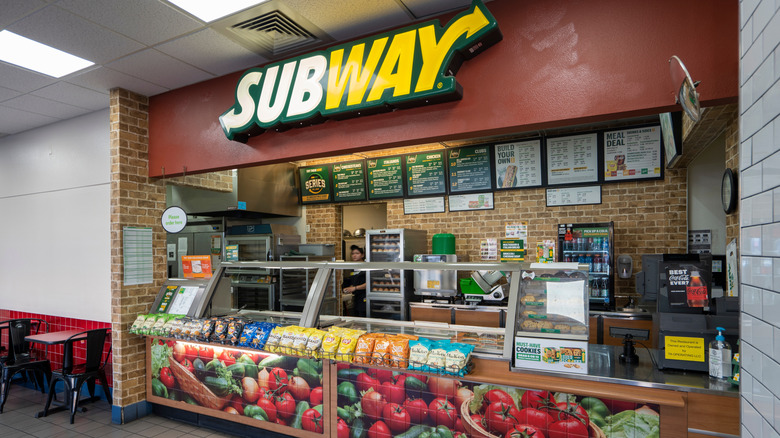
Subway has more than 35,000 locations around the globe, and the company wants to continue to grow its footprint in the coming years. However, rising ingredient costs have hurt the international sandwich chain, all but eliminating the iconic $5 footlong. Still, Subway remains a major player in the sandwich game, despite competitors like Jersey Mike's and Jimmy John's gaining steam.
Unlike many other fast food chains, Subway doesn't have much of a clear policy related to food waste, let alone daily leftovers. Instead, the chain focuses its attention on sustainability efforts and community building. Subway's particular business model, assembling sandwiches to order, also likely helps cut down on leftover product.
However, in a Subway-dedicated Reddit thread, managers and employees lament the amount of wasted product, especially the cookies, which have to be thrown out instead of taken home by employees. Other Redditors agreed, saying that meatballs, soup, bread, fried onions, and avocados are also trashed at the end of the day.
Arby's
Fast food chains typically have strong legions of followers — otherwise, they wouldn't be in business very long. But Arby's has always had a reputation for being the restaurant that everyone loves to hate. Maybe it's the logo or the tagline or any one of the anecdotal controversies that have seemingly plagued its reputation over the years. But recently, Arby's has undergone a glow-up, so to speak, and customers are giving this decades-old sandwich chain another chance.
Arby's is owned by Inspire Brands, a fast food and QSR conglomerate that owns other household restaurant chains like Buffalo Wild Wings, Sonic, Jimmy John's, Dunkin', and Baskin-Robbins. Inspire Brands has a general sustainability policy that calls for a collective effort among team members to be mindful of food waste at each node of restaurant operations, from basic prep work to accurately executing orders. As an additional measure, waste tracking tools are implemented to help refine procedures and pinpoint areas of inefficiency.
To address the inevitable issue of surplus food, franchise owners are encouraged to connect with local food banks or nonprofit community-based organizations. Like many other fast food chains, Arby's works with a food distribution network to help get excess food to the organizations that need it, but this is on a store-by-store basis and not a mandatory corporate initiative. Unfortunately, due to strict hold times and food safety rules, most prepared food ends up discarded.
Starbucks
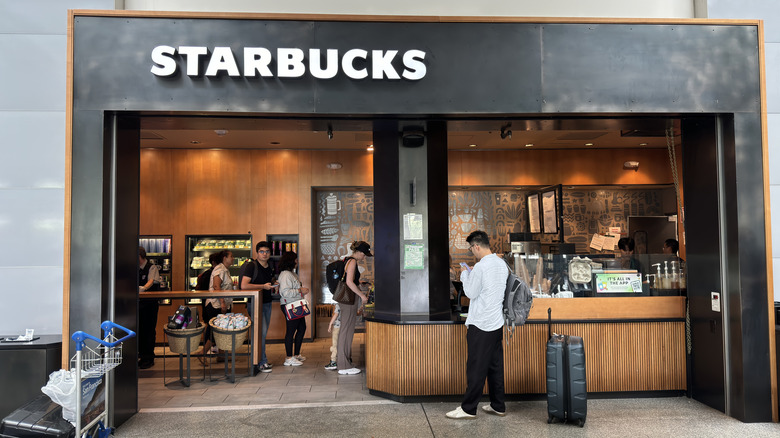
Starbucks has developed a reputation for sustainable ingredient sourcing and employee benefits, such as paid parental leave and medical insurance. The company also leads in food waste reduction efforts. And like many successful corporate initiatives, this one was pioneered by its employees.
What's impressive about Starbucks' FoodShare program is that it's built into the corporate policy, which means it's implemented at 100% of the company-operated locations. Unlike initiatives at other fast food chains, Starbucks is directly involved in the distribution process, contracting a fleet of drivers and refrigerated trucks to pick up leftover food from each location and bring it to a central distribution center operated by Feeding America or another partner. The food is then sorted and delivered to local food banks and pantries.
Part of the reason Starbucks can have such a comprehensive food waste program is the nature of what it serves. Most of Starbucks' pastries, sandwiches, and wraps are brought in frozen and then thawed before being served. Anything that is thawed but not served can be donated, bypassing the challenge faced by most fast-food chains that are dealing with hot foods and ingredients that need to be held at a certain temperature.
Dunkin'
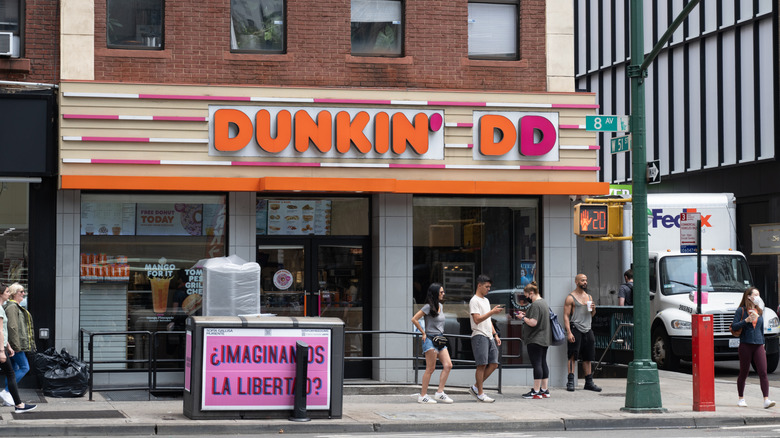
Dunkin' is another fast food chain owned by Inspire Brands, but its operations are a bit different from other restaurant brands. Dunkin', similar to Starbucks, doesn't prepare hot food that sits on a line. Most of its breakfast sandwiches and wraps (and in some locations, even the donuts) are brought in frozen, thawed, and then reheated in one of its spiffy fast-cooking ovens.
However, unlike Starbucks, Dunkin' is a 100% franchise system. That means owners have a lot more freedom in day-to-day operations, from deciding whether to make donuts fresh in-house to participating in the Dunkin' Rewards program. And the same goes for Dunkin's The End of Day Donation initiative.
It works like this: Dunkin' franchisee owners can connect with local food banks and hunger relief programs to donate surplus baked goods, shelf-stable foods, and even unclaimed catering orders from participating locations. Unfortunately, due to strict food safety laws, most donuts, muffins, and Munchkins have to be thrown out at the end of the day, although some specific stores may allow employees to bring leftover baked goods home.