

Keep Your Kitchen Sparkling With These 8 Clever Cleaning Tricks
Maintaining your kitchen can seem like an endless job. Cleaning dishes, disinfecting surfaces, and keeping appliances sparkling and grime-free feels like a perpetual to-do list — one which can be exhausting just to think about. Fortunately, there are several cleaning tricks that can make these tasks more manageable. And best of all? They don't require an arsenal of cleaning supplies.
Simply open your kitchen cabinets or reach into your pantry, and you'll likely find a battery of unexpected tools waiting to help you de-grease, de-smudge, and de-gunk your beloved culinary space. Your home is often already filled with supplies that can be repurposed to make your kitchen shine, from items whiling away in your refrigerator to those hiding in your laundry room.
Some tactics are age-old tricks, passed down from generation to generation. Others are newer inventions, popularized on social media. We've trawled through them all and rounded up the best cleaning hacks to keep your kitchen sparkling, so you can have a spotless culinary space without breaking your back (or the bank).
Remember that dish soap isn't just for dishes
Dish soap has countless uses outside of the kitchen sink, from cleaning granite counter tops to degunking filters for hood vents. While it's tempting just to spray that all-purpose kitchen cleaner everywhere, there are certain surfaces that you definitely should not use it on. Dish soap, however, is a multipurpose cleaner that won't damage finicky materials.
Why is dish soap such an effective cleaning tool? Dish soap contains surfactants, molecules which pull in grease. These surfactants envelop grease and grime when combined with water, efficiently eradicating them from surfaces in a nontoxic manner.
There are any cleaning products that should never touch your granite surfaces, luckily dish soap is not one of them. Diluted dish soap and a microfiber cloth is perfect for everyday cleaning on fussy surfaces like granite, marble, or slate countertops, being both gentle and nontoxic. The same solution can be applied to the inside of your microwave or refrigerator for a quick scrub down as well.
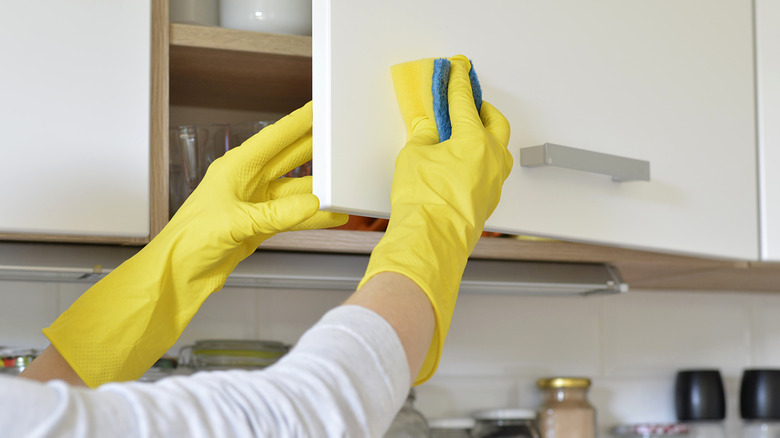
Wood cabinets are also easily cleaned with a homemade solution of dish soap and warm water to remove grease. Simply use a soft sponge or cloth to rub off grime, then wipe down with a slightly wet sponge or cloth. Likewise, wooden kitchen utensils and wood cutting boards should also be cleaned with dish soap and hot water — just be sure to treat with mineral oil once dry to extend their life.
Cleverly clean under appliances
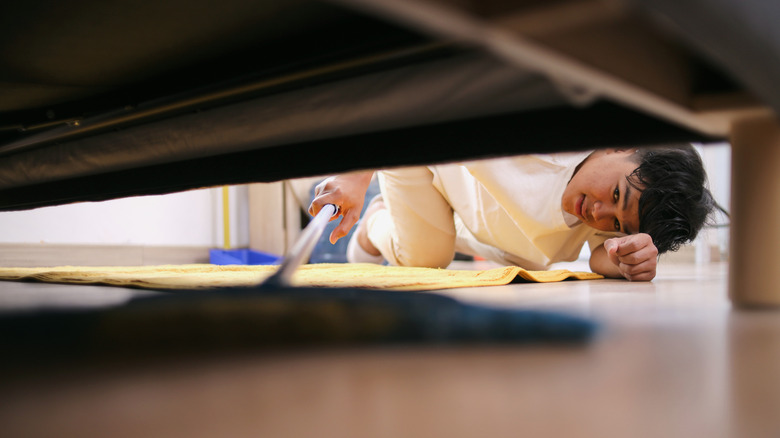
We all know we should clean under our appliances, but few of us have the time or energy to drag them out and do it. Luckily, there are ways to clean under and around bulky appliances without moving them. In fact, there's actually a tool designed just for this purpose. A retractable gap cleaner allows you to remove dirt, pet hair, and crumbs from underneath your stove and refrigerator without the laborious task of moving it.
Still, if you're not interested in purchasing any more kitchen tools, you can whip up a makeshift cleaning device instead to collect debris and dust from under your stove or refrigerator. One trick popularized on TikTok involves attaching an old sponge to a spatula and swiping under your appliances with a cleaning solution made from dish soap. Another option is to use a yardstick equipped with an old sock or cloth secured with a rubber band. What about the crevice between your appliance and countertop? Try a butter knife wrapped in a damp cloth, wielding this handmade hack to clean tighter areas without damaging them.
While cleaning under appliances may seem like a skippable chore, it's a kitchen crevice that should not be overlooked. Bits of food that slip under these appliances can attract household pests. And those dust bunnies? Those are a big welcome sign for dust mites, not to mention their potential to clog appliances vents.
Keep metal shining with common pantry items
Metal surfaces can be a pain to keep shiny and smudge-free. Luckily there are plenty of pantry staples lying around your kitchen that can help. Ever used mayo for cleaning? Mayonnaise can be wielded to clean metals like brass and silver. It can also quiet squeaky hinges, lift water marks from wood, or remove crayon marks from surfaces. How? The oil in mayo can soften, while the vinegar destroys gunk and goo.
For stainless steel, apply flour to make that metal sparkle. Start by cleaning your stainless steel as usual, then wait for it to dry completely. Next, add a smattering of flour and rub in small circles with a soft, dry rag. Before you know it, your stainless steel will be buffed to a gleam. You can mop up any excess flour with a rag or use a vacuum.
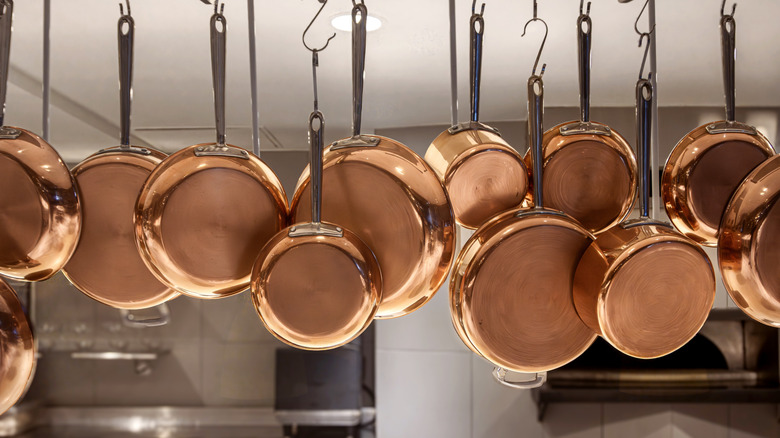
What about copper? For this easily-tarnished metal, yogurt, lemon, or ketchup is your friend. The lactic acid in yogurt is perfect for tackling discolored copper. Just spread over the surface, leave for 30 minutes, and remove with a soft cloth. No yogurt on hand? Try applying a layer of ketchup instead. The salt and acid are helpful agents for removing tarnish. Got a particularly tough piece? Cut a lemon in half, salt it, and use it to rub down the item. Just be sure to rinse with water and buff until dry after using any of these clever copper-cleaning methods.
Make kitchenware sparkle with aluminum foil and dryer sheets
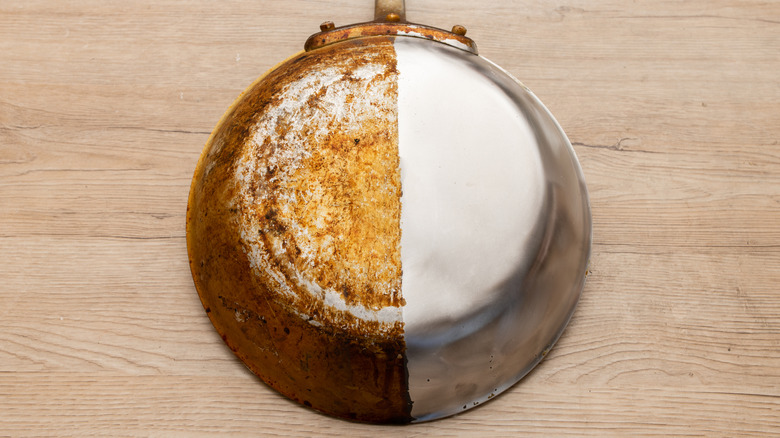
It doesn't matter how clean your cabinets and counters are if your kitchenware is looking dirty. Instead, keep cookware shining by using simple household items. Grab a sheet of tinfoil and crumple it up to clean skillets, pans, and other kitchenware with baked-on gunk — it can even remove rust from cast iron. However, if your pans are nonstick, use dryer sheets instead to prevent scratching their nonstick coating.
Nifty laundry sheets are also great for cleaning baked-on messes from sheet pans. Start by adding a bit of dishwashing soap to your pan, then layer the area with dryer sheets. Cover with warm water and scrub to see stains fade from view. Finish by rinsing with dish soap and drying. Meanwhile vinegar and baking soda are handy for cleaning glass and stainless steel pans, while coffee grounds are perfect for removing baked-on food.
You can also toss a scrunched up ball of aluminum foil in with your dishwasher load to render your silverware extra shiny. A chemical reaction occurs when dishwasher detergent, warm water, and silver cutlery are combined, so it works extra well when added to your dishwasher's cutlery compartment. Aluminum foil is also a handy tool for places with layers of hard-to-clean messes, like oven racks and grills.
Clean your garbage disposal (and other surfaces) with citrus peels
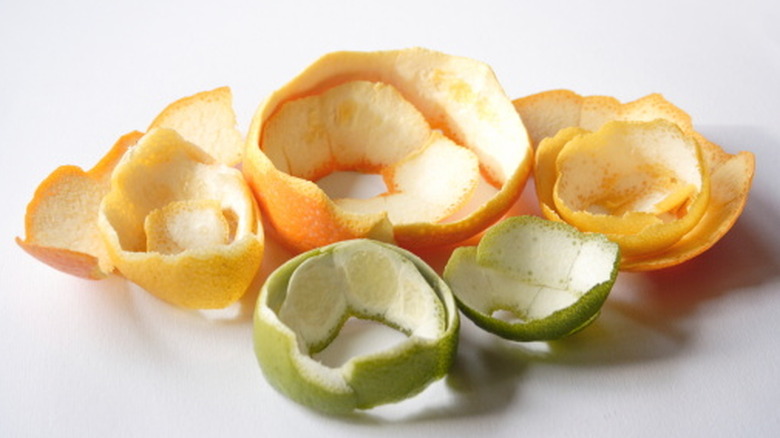
Even if your kitchen is spotless, no one will care if odd smells are wafting up from your garbage disposal. Keep sink smells at bay by using citrus peels to deodorize your garbage disposal. First, tear citrus peels into small pieces. Feel free to use either lemon, orange, or grapefruit peels. Next, combine with ice cubes and pour down the garbage disposal. Follow with cold water and let the disposal run for 30 seconds or so. Turn off the disposal and finish with hot water. The peels help with the smell, while the ice tackles any residue on the blades.
Yet this is not where the power of citrus ends. You can also use citrus peels to clean your microwave, remove water spots, or de-cloud glassware. Try adding a few lemon peels to a bowl or mug of water and microwaving. The steam will loosen up stuck-on food, making microwave cleaning easier (and less odious).
For water spots, just rub citrus rinds on the area like your water faucet and polish clean. To de-cloud a load of glassware, soak glasses in a sink of warm water and orange peels for 15 to 20 minutes, then rinse. Magical citrus peels can even remove cumbersome coffee stains from mugs when rubbed with a bit of elbow grease.
Remove smudges and water stains with shaving cream
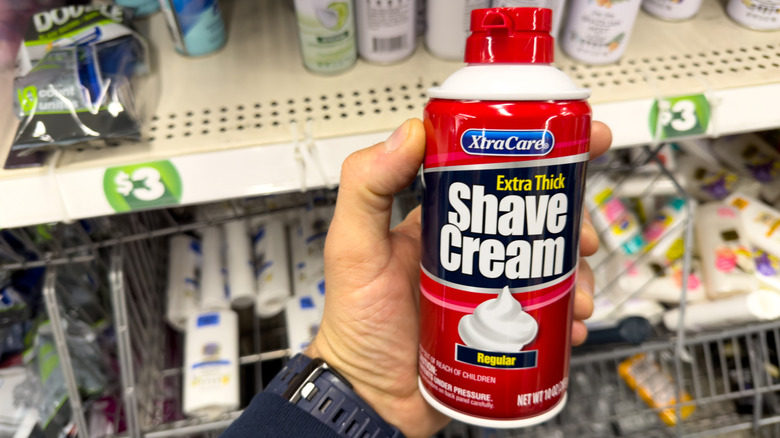
While not a pantry staple, shaving cream is something many have on hand that can provide a variety of kitchen cleaning hacks. Plain, old fashioned, foam shaving cream, is all you need — not gel or scented types. Just spread over the affected surface and rub with a microfiber cloth to wear hard water stains away. Try it on glass, chrome, stainless steel, or even painted wood. It's gentle enough to tackle it all, removing those grubby marks.
Tried and true shaving cream can also clean grout lines. Simply administer it directly on the grout, allow it to rest there for 5 or 10 minutes, and polish up that grimy grout with an old toothbrush. Finish by wiping with a damp cloth to expose your newly cleaned surface. Even better, this method is safe on colored grouts, where more aggressive cleaners cant be used.
Shaving cream not only cleans stainless steel, it lessens the chances of future smears and smudges caused by fingerprints. Simply dampen a microfiber cloth, spread shaving cream on the surface, and buff. Follow with a dry towel to remove the residue for a blemish-free shine. Try applying to glass oven doors and kitchen windows for steak-free glass as well.
Don't neglect your most-touched surfaces
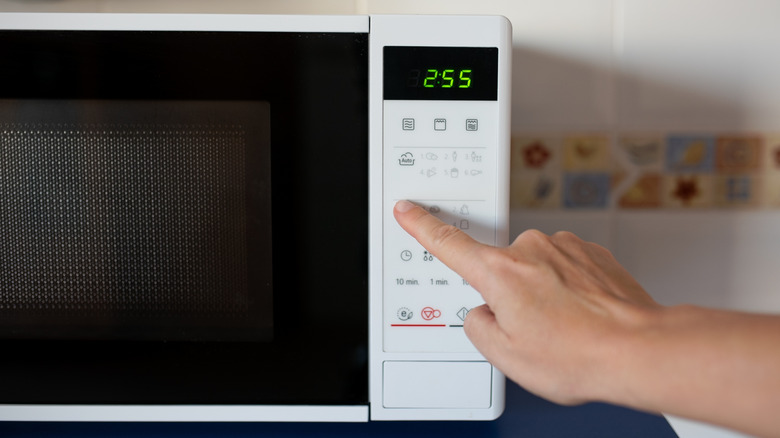
While it's good to get into a regular kitchen-cleaning routine, it's easy to skip unnoticed spots that gather germs. Don't forget about lesser thought-of areas that can harbor bacteria, like your kitchen light switches, appliance touchpads, and cabinet fixtures. It turns out, light switches might be the dirtiest surface in all your kitchen. We touch them daily after handling our phones, food, and other items, making for an ideal hangout for bacteria.
To clean light switches and touchpads, use a disinfecting wipe or make your own vinegar-based cleaning solution. Remember, to never spray light switches directly with cleaners — always spray a cloth or towel instead. Your drawer and cabinet hardware is another hotspot for grime. Even worse, forgetting to clean these surfaces can cause metallic hardware to lose its luster and corrode sooner. For metal fixtures, use a non-corrosive cleaner.
Lastly, consider giving your frequently-touched spice holders or condiment bottles a wipe down. Salt and pepper shakers are often handled while cooking and eating, leaving them subject to germs and grunge. A little disinfecting on these seemingly innocuous surfaces never hurts, just to be safe.
When in a pinch, use bread
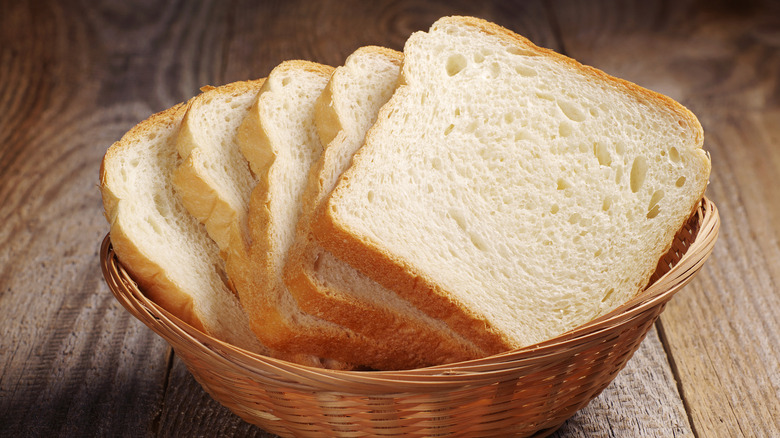
It can happen to anyone. You're on a cleaning marathon, tackling every kitchen surface known to man, then it happens — you run out of paper towels. Fret not, you can keep cleaning if you have some old bread on hand. Wielding leftover bread is an age-old kitchen trick that few utilize anymore, but a simple slice of white bread is great for a variety of kitchen uses.
Underneath its crusty exterior, bread harbors a wonderfully porous structure, just like a sponge. It's ideal for soaking up grease or blotting up dirt due to its puffy nature. Additionally, the gluten easily pulls up stains. Just tear off the crust and ball up some white bread to easily remove scuffs and fingerprints from delicate surfaces like painted walls or wall paper. Got a grease splatter on your favorite cook book? Soak it up with some bread.
Handy old bread can also polish glass surfaces or even pick up minuscule specks of glass after a dish breaks. While you can sweep up larger shards and broken pieces, a slice of bread will collect those tiny pieces you may have left behind. Let that be another reason to always keep a loaf of bread on hand.