

13 Forgotten Meals Middle-Class Families Ate In The '50s
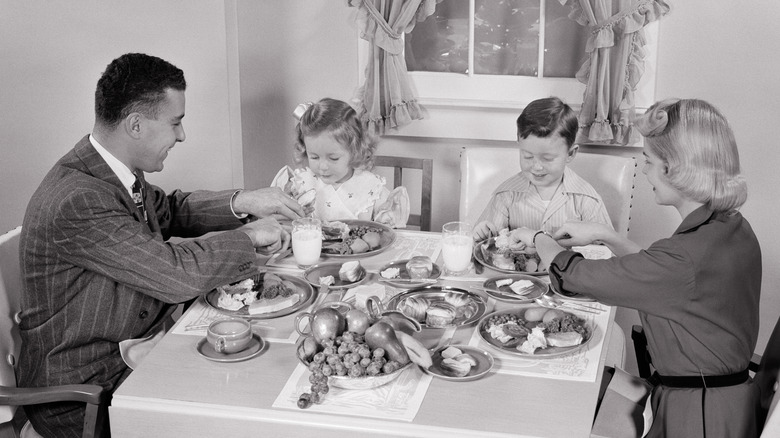
The 1950s were a time of culinary innovation, even if some of the decade's cooking trends don't make much sense now. After the Great Depression of the 1930s and rationing during World War II, the Fifties were an era of relative luxury and opulence.
Interest in foreign cuisines brought back by overseas soldiers, along with the growing industrialization of mass-produced foods, let home cooks get creative with the ingredients at their disposal. Grilling became popular, TV dinners offered convenient quick meals, and the newfound ability to buy previously hard-to-find seasonal ingredients let adults entertain friends and family and try all kinds of novel food creations. Many of these dishes, like tuna casseroles, beef stroganoff, chicken tetrazzini, chicken a la King, and oysters Rockefeller, remain in our orbit to this day, but others, sadly, have fallen through the cracks in history. Here are some of the most interesting forgotten 1950s meals middle-class families used to enjoy.
1. Frosted sandwich loaf
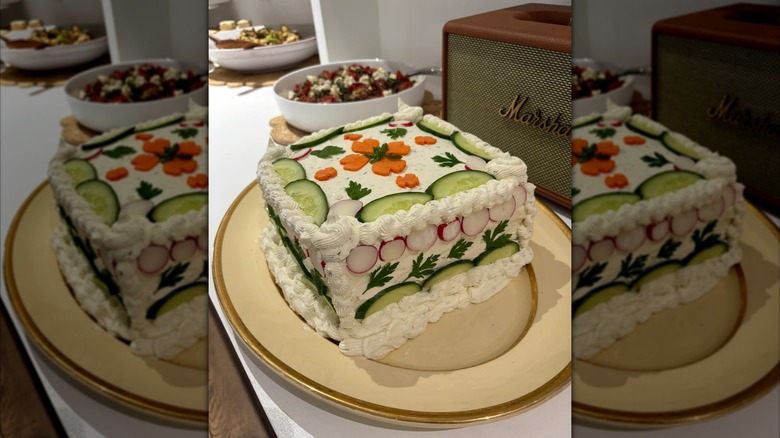
Frosted sandwiches were a 1950s craze that perhaps most succinctly captures the creative, straight-up fun approach cooks of the time took to dinner parties and potlucks. Hardly anyone eats this old-school sandwich anymore, to the point where most people would be hard-pressed to even identify it as a sandwich upon first glance.
A frosted sandwich loaf was typically savory, with choices like pimento cheese and bacon, chicken or egg salad with cucumbers, deviled ham and chopped sour pickles, curried egg, or a combination thereof. The crusts were removed from five slices of bread, which were turned into sandwiches containing the chosen filling. They were then stacked, coated in a mixture of whipped cream cheese, mayonnaise, and light cream, used as frosting, and chilled. When entertaining, the cream cheese layer could be dyed to achieve any color pattern the cook desired. Finally, the garnish: egg yolks, cucumber slices, tomatoes, or carrots were applied to decorate.
2. Chow mein sandwich
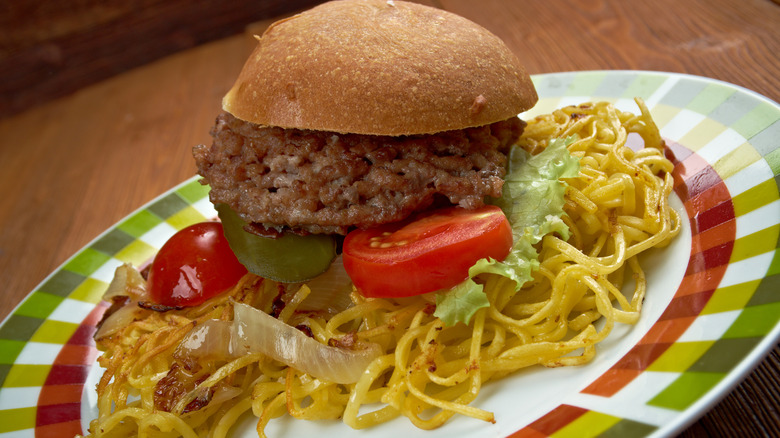
Speaking of throwback sandwiches of the 1950s, have you ever been eating Chinese takeout and wished you could turn those noodles into a handheld delight? Enter the wonderful world of the chow mein sandwich.
This crunchy, savory meal was invented in the 1920s in Fall River, Massachusetts, thanks to a late-1800s influx of Chinese immigrants from the West. By putting a Chinese dish between hamburger buns, they made it more familiar to the area's European immigrants, and the sandwich became a legend, spreading across New England by the 1950s. It contained fried noodles, meat (pork, chicken, beef, or shrimp were all common), brown gravy, and a heap of cooked celery, onions, and bean sprouts. The sandwich was allegedly messy to eat and was often served with a side of sliced bread to soak up all the delicious gravy. Oh, and it was just five cents a pop, begging the question: why on earth are we not all eating one right now?
3. Jell-O salads
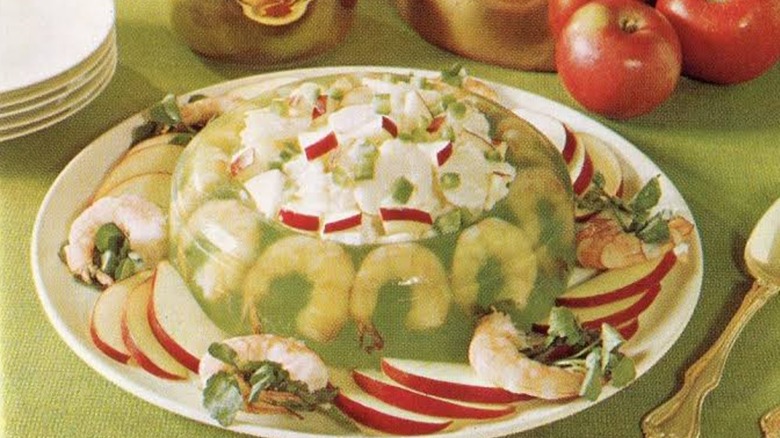
Jell-O salads were introduced to the American public in the 1930s, but they enjoyed a real renaissance in the 1950s, when the cooking trend of putting everything in gelatin really took off. Ornate but inexpensive and largely customizable, these neon inventions quickly became a status symbol of the middle-class dinner party.
Sure, one with modern sensibilities could quibble over the use of the word "salad" for a dish that contained few, if any, vegetables, but what can we say? Salads looked different in the early parts of the 20th century. Plus, it was an easy way to show off to friends that you had the money for both a refrigerator and Jell-O molds. Common dinner party centerpieces included: cabbage relish salad, vegetable salad with tomato, lima beans, celery, onion, vinegar, and Worcestershire sauce, or shrimp Jell-O salad. If you think that sounds good, it also incorporated chicken broth into the gelatin, then added it to a mold with cocktail shrimp, corn, and frozen veggies, and let it set in the fridge before serving.
4. Noodle ring
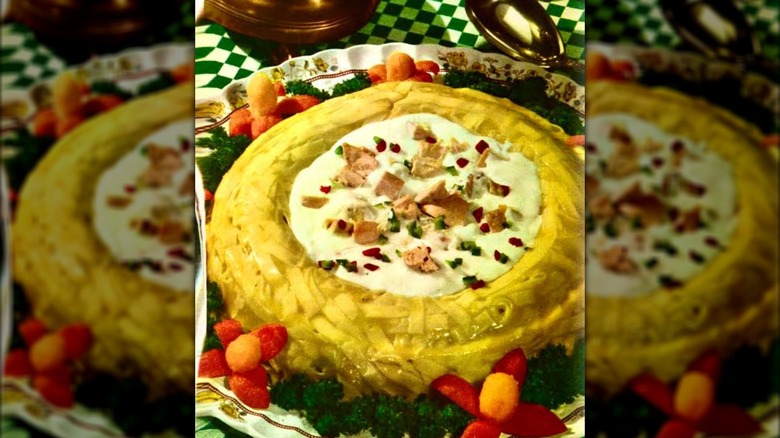
Noodle rings took inspiration from the aforementioned jello salad, and then took it in an entirely new direction. The appeal is obvious, though — after all, who could say no to pasta and cheese baked in a bundt pan? Such a simple pitch made the noodle ring a classic Midwest comfort food, even if you rarely see it today.
In its simplest form, a noodle ring didn't have to consist of more than macaroni, eggs, milk, butter, and cheese, but once you mastered the basics, there was a wide world of variety to explore. You could add ham, ground beef, or veggies. If you were feeling particularly daring, you could top the entire ring with creamed chicken, as seen in the picture above, or tuna in mushroom sauce, either of which was added after baking the ring and then broiling it. You could even make an olive-and-salmon noodle ring with evaporated milk and parsley, which isn't necessarily a combination of ingredients we'd expect to find together, but it still sounds intriguing.
5. Welsh rarebit
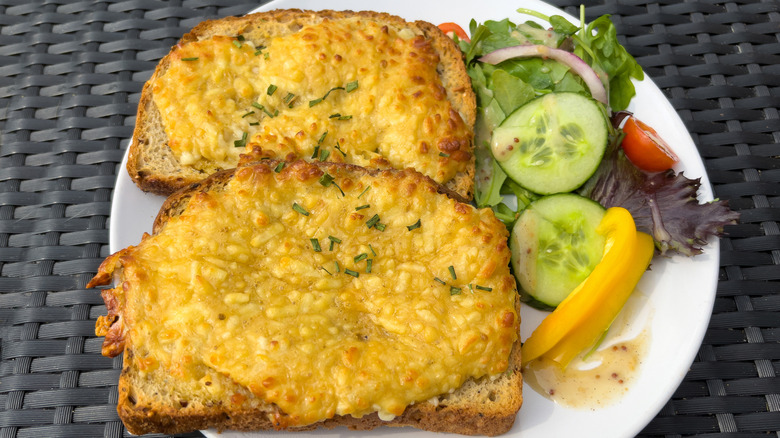
Welsh rarebit is a dish whose exotic name belies a perhaps disappointing reality. Although the recipe may be Welsh, it contains no rabbit and was actually named that because cooks couldn't afford meat.
This British comfort food gained popularity in America during the 1950s, thanks in part to Betty Crocker's Picture Cook Book, published in 1950. Crocker called it a party favorite of Hollywood star Joan Crawford, and her recipe was simple: melt American cheese in a chafing dish, stir in kidney beans and green peppers, and serve on toast. A more traditional version usually features a sauce made from cheddar cheese simmered in ale or stout, along with mustard and Worcestershire sauce. Made correctly, this simple dish with the fun name should be smooth, rich, and slightly tangy, making it the ultimate open-faced grilled cheese sandwich, and one well worth a revival for the greater public.
6. Salmon loaf
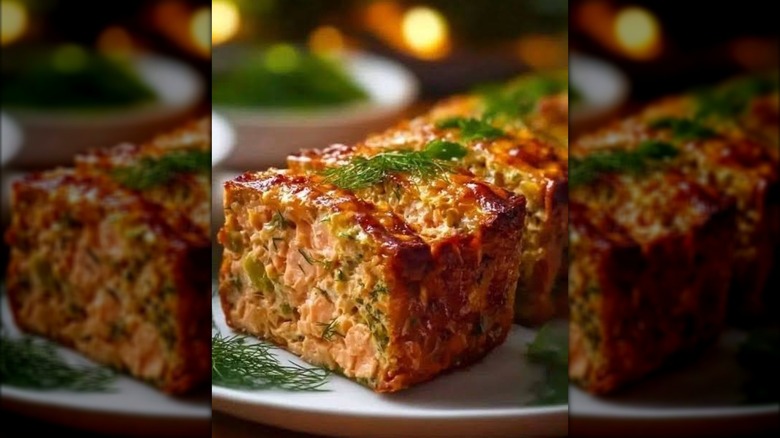
Whatever happened to the creativity and variety of dishes in the shape of loaves? Sure, everyone and their mother has had encounters with meatloaf, from the school cafeteria to home-cooked dinners to rock music of the 1970s and '80s, but why did we allow it to become such a one-note cooking technique?
That wasn't the case in the 1950s, when the baked fish loaf was considered a classic dish. Think meatloaf, without the meat, and with way more breadcrumbs. Fish loaves were a popular one-pot meal at the time, and salmon loaf was one of the most popular versions, though whitefish was also a popular protein used in a similar way to gefilte fish. Salmon loaves were made with canned salmon, mixed with bread or cracker crumbs, eggs, onion, milk, butter, and flavor boosters like salt, pepper, lemon, and parsley, then baked in a loaf pan until firm. The same technique could easily be applied to canned tuna, making this a revival-worthy dish for anyone looking for new one-pot recipes.
7. Ham salad
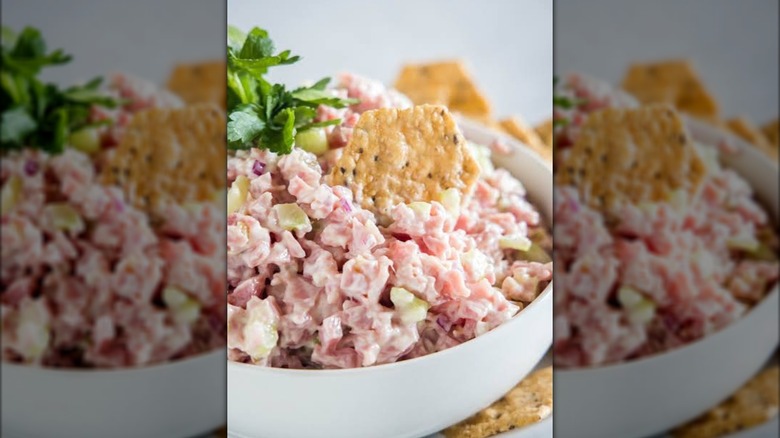
Speaking of culinary mainstays whose variants have been lost to time, let's talk about bound salads. Look in the prepared food section of any convenience store, grocery store, airport sandwich shop, or deli, and you're likely to find egg salad, potato salad, chicken salad, and tuna salad — but what about ham salad?
Ham salad sandwiches were popular in the 1950s and, interestingly, were even served as the centerpiece at post-funeral luncheons. They were also a practical and flavorful way to use up leftover ham. At its simplest, ham salad combined mayonnaise, sweet pickle relish, chopped onion, celery, bell pepper, and mustard, creating a creamy, tangy filling that worked as well between slices of bread or on rolls as it did alongside crackers. A spicier version, called deviled ham, was also popular at the time and used dry mustard, cayenne, paprika, or hot sauce.
8. Frankfurter cornbread shortcake
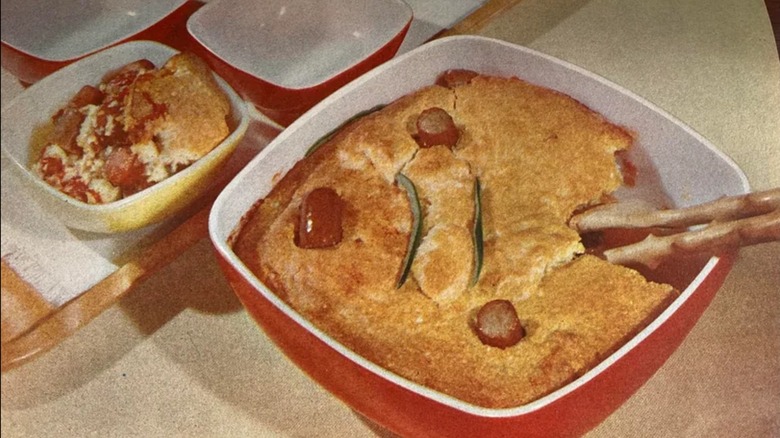
I mean, the name kind of says it all, doesn't it? As mentioned earlier, the 1950s saw a boom in household barbecuing, and this dish combined two of the best parts of a summer grill-out: hot dogs and cornbread. Obviously, it was only a matter of time before someone thought, why not combine them into a one-pot meal that tastes like pure freedom and summertime?
Add pre-packaged cornbread mix or homemade cornbread batter to a baking dish over sautéed vegetables such as celery, onion, peppers, and tomatoes, plus the eponymous hot dogs, then bake until firm. Sliced frankfurters could also be used as a garnish, because hey, you're an adult and who's going to stop you? This dish was perfect for kids and adults alike and had the added benefit of a low-cost ingredient list, making it an ideal summer meal for entertaining or whipping up a quick weeknight dinner unlikely to get complaints.
9. Crown roast of frankfurters
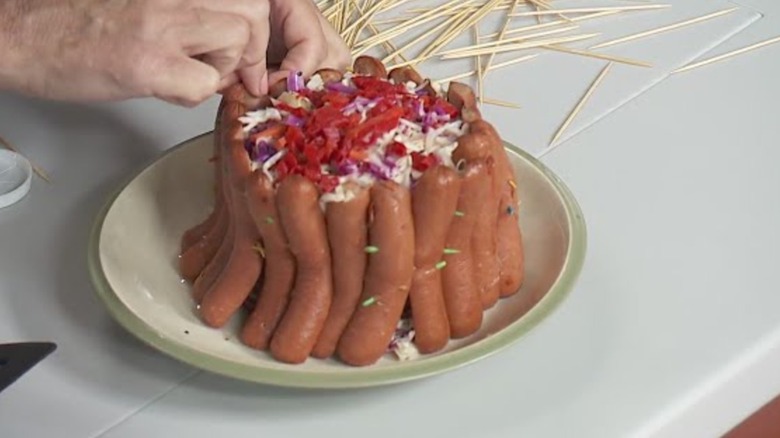
Either cooks were very bored in the 1950s, or they really loved both hot dogs and elaborate shapes, so much so that some of these creations verge on being a sort of performance art. The best example is the gloriously named crown roast of frankfurters, truly one of the most impressive juxtapositions of high and low art.
A dozen hot dogs were joined together, whether with toothpicks or even needle and thread for those really committed to the structural integrity, to form an edible perimeter fence of sorts. What went inside the circle of weiners was up to the cook: a heaping pile of vinegar-based cabbage coleslaw or sauerkraut topped with pimento, cooked veggies and spices, spaetzle (a German spiced egg noodle dish), mashed potatoes, or even mac and cheese. To keep the tops of the hot dogs from burning, strips of bacon were wrapped around the top and secured with toothpicks, which also added extra flavor and fat to the dish when baking. Don't forget: this is a crown roast, so make sure to add the white paper hats prior to serving!
10. Tetrazzini
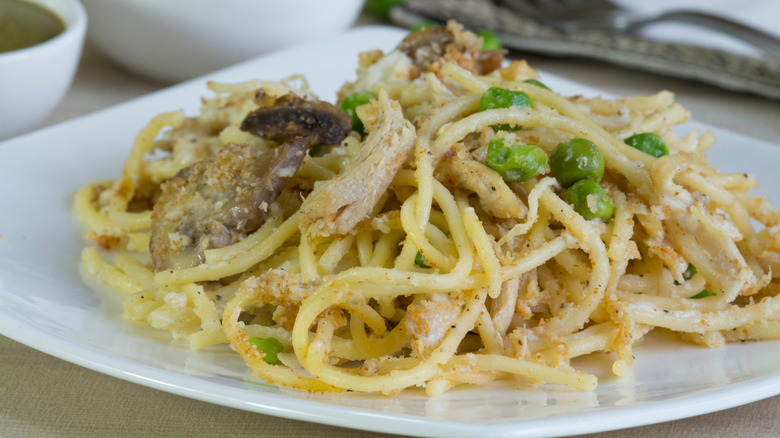
Tetrazzini has become more of a home-cooked comfort dish than a fine-dining experience, but it was once highly fashionable. And why not? After all, chicken, cheese, pasta, cream, mushrooms, and lots of butter — what's not to love?
The origins of turkey tetrazzini (or chicken) can be traced back to the early years of the 20th century, but in the iconic casserole days of the 1950s, it really found a second life as a crowd-pleaser with vague traces of Italian heritage. That is partially because it's such an easy way to repurpose leftover poultry and pasta in an entirely new form, and partly because, well, who doesn't love a heaping tray of what's essentially a fancy mac and cheese? Interestingly, this has become a chicken dish restaurants rarely make anymore, but you can still get that comforting, velvety goodness at home or in many a frozen food aisle.
11. Tube steak and eggs
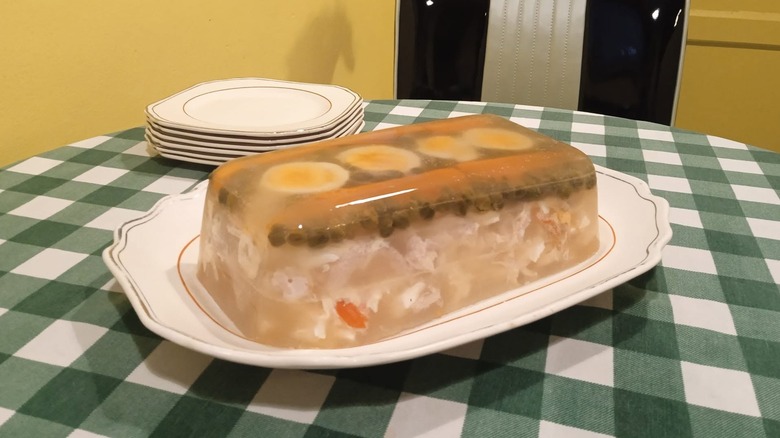
Any food with the words "steak and eggs" is worth taking some time to discuss, but this isn't your local diner's favorite plate. When you hear the term "tube steak," your mind might go to some Jetsons-style futuristic meat-consumption device, or perhaps a dignified surf-and-turf meal eaten on London's public transportation. But as with so many things in life, reality is far more mundane.
Tube steak is, simply, a playful term for a hot dog, but the surprises don't stop there. This dish, rather than being some scramble you whip up when you're short on groceries, is a jiggly mosaic of boiled eggs, hot dogs, peas or something else green, and — say it with us now — gelatin. Set the eggs and hot dogs (sorry, tube steaks) in the bottom of the mold, toss in the greens, and then cover with your savory gelatin, which likely includes chicken stock. If you're someone who wants to see every individual ingredient in a dish as you eat it, this is the one for you.
12. Seven-layer salad
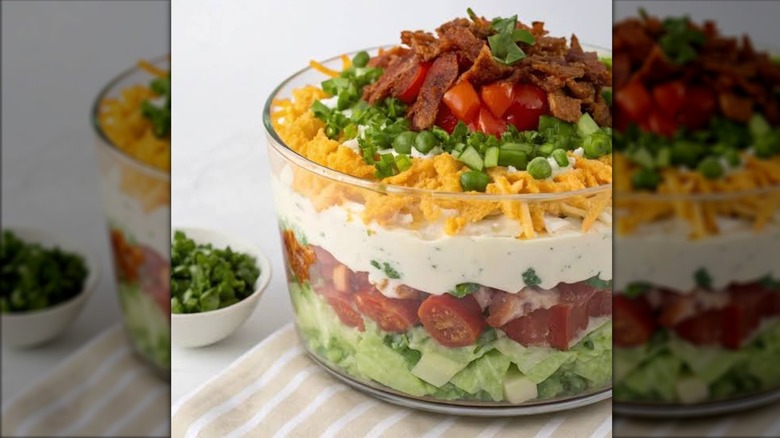
It's no surprise that in an age of blossoming barbecue culture and dinner parties galore, a dish like seven-layer salad became a centerpiece on your table. It's one of a number of classic summer foods you rarely see anymore, but maybe it's time for it to make a comeback.
This isn't a salad for those looking for something light, nor is it the classic 1950s dessert salad. Like all layered salads, part of the appeal is the customization, but there are still standards to follow. The layers can change, but they often include lettuce, tomato, cheddar cheese, bacon, peas, green onions, hard-boiled eggs, and a dressing made with mayonnaise and sour cream. The salad is served in a clear glass serving dish (how else to make sure you're not skimping on layers?) and, most importantly, the salad is never tossed. Again, the layers are the point — well, the layers and the delicious, creamy indulgence.
13. Country captain chicken
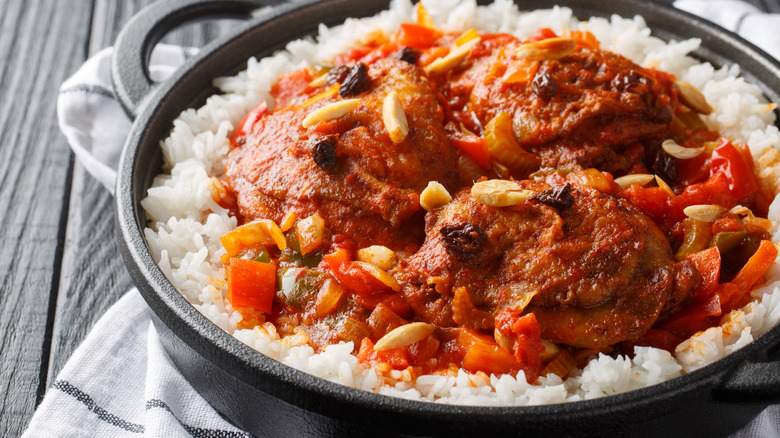
What's that? You've never heard of country captain chicken? You're hardly alone; this curried chicken stew has largely fallen out of favor in recent decades outside Southern regional cuisines, but it was once a hot menu item.
Also known as lowcountry chicken tomato stew, the dish dates back to colonial British rule in India, and the name refers to officers there known as "country captains." It made its way to the United States by the turn of the 20th century, allegedly when one such officer moved to Savannah, Georgia. Indian influence shows up in the curry powder and nutmeg, which set this meal apart from other chicken-and-tomato stews and add a lovely, surprising depth of flavor. Raisins and almonds are then added to provide sweetness and a warm crunch.