

12 Smart Ways To Use Store-Bought Italian Dressing (That's Not Salad)
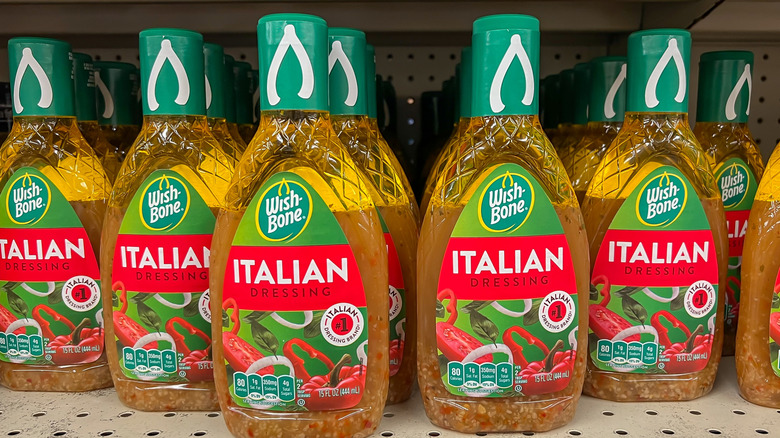
You probably won't find a bottle of Italian dressing in a Roman kitchen or Sicilian cupboards. Like many of today's most popular pantry staples, Italian dressing has its roots in American soil. But that's not to say it was invented without Italian influence. One origin story pegs its creation to a Kansas City steakhouse — the Wishbone Restaurant — where the owner's Italian-immigrant mother had brought with her a recipe for a zippy vinaigrette.
Italian dressing as we know it today has adorned salad greens for decades. At its core is an electrifying combination of ingredients that immediately wake up the taste buds, then quickly soothe them with a gentle finish. For this article, we focused on the most traditional store-bought varieties — no eggs or extra cheese: just water, oil, vinegar, salt, sugar, spices, and the additives necessary to preserve the emulsion and deliver that slick, satisfying texture. This unique mix of characteristics makes Italian dressing a great addition to everything from antipasto salads to baked fish to garlic bread. Here are smart ways to use store-bought Italian dressing that aren't salad.
1. Marinate meats or vegetables
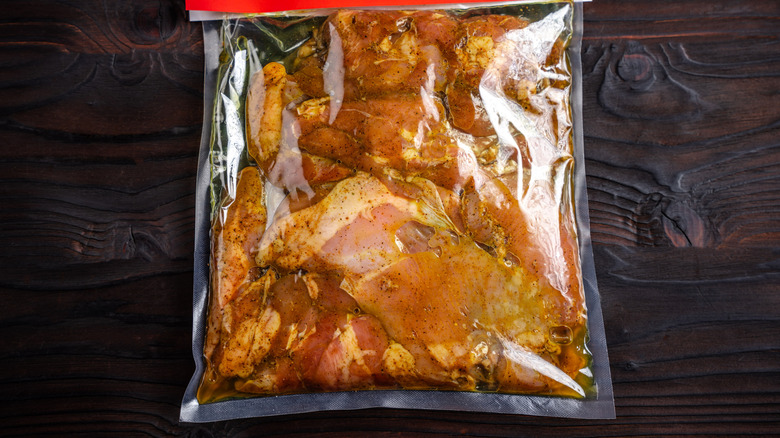
Marinating is a simple and effective way to infuse your food with flavor. The best part is, there aren't too many rules you need to follow. For a basic marination, simply combine a mixture of oil, acid, herbs, and spices. Submerge your vegetables and proteins, and then wait for the chemistry to occur. But while the idea of no guardrails may appeal to your inner culinary daredevil, this fly-by-the-seat approach can lead to a few missteps, especially if you're relatively new to marinating. That's why a store-bought Italian dressing is such a useful shortcut. In one inexpensive bottle, you get all the elements of a good marinade neatly packaged in the right ratios.
So which foods benefit from a marinade of Italian dressing? It's hard to find many that don't. For grilled vegetables, anything you can slice into rounds is fair game: eggplant, zucchini, butternut squash, red or white onions, etc. Strips of bell pepper work, too. With beef, chicken, or pork, a marinade can help flavor and tenderize the meat before it hits the grill, skillet, or flat-top. Just be conscious of marination time. The acid in Italian dressing is so high that it can actually break down or denature the proteins, resulting in meat that's soft or mushy. It also draws out water, making the interior tougher and less juicy, which is why you want to only marinate most meats for two to four hours.
2. Dress an antipasto
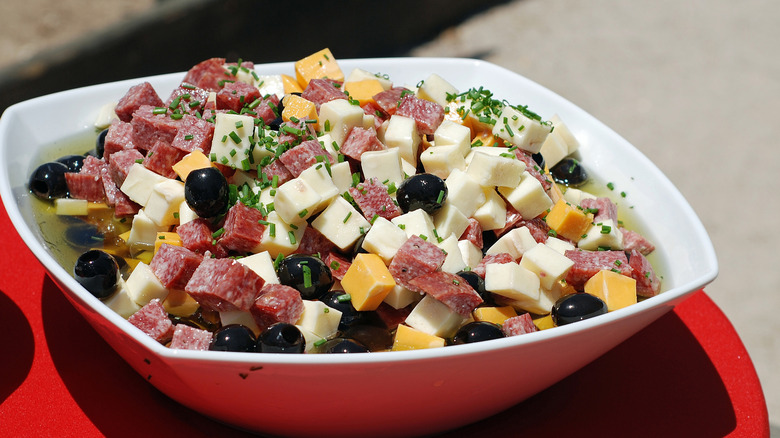
All you need for a good antipasto salad is a simple combination of cured meats, sharp and creamy cheeses, olives, diced vegetables, and a few marinated goodies. Now, it might seem cliché to make an antipasto salad with bottled Italian dressing, but the combination works beautifully — which probably shouldn't come as a major surprise. Italian dressing is both bright and herbaceous, two tasting notes that are necessary to cut the richness of the meat and cheeses while livening up anything that suffers from under seasoning.
Not only does Italian dressing bring harmony and balance, but it makes almost any ingredient a potential addition. You can add meats, cheeses, and marinated vegetables to a bowl of chilled noodles for a charcuterie-loaded pasta salad, or opt for a sweet-and-savory mix with cantaloupe, prosciutto, and butter lettuce. Another variation that can be prepared ahead of time centers on bocconcini (mini mozzarella balls), chunks of bell peppers, and cubed roasted eggplant. As long as you use Italian dressing, all food options are in play.
3. Use as a cooking base for baked fish
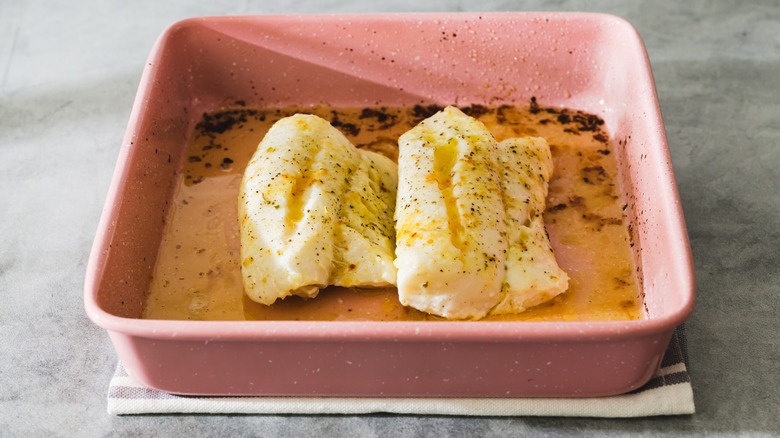
Fish cookery is at once simple to execute and very easy to screw up. While fattier fish, like salmon or halibut, are more forgiving, your typical white fish — tilapia, flounder, perch — are easy to overcook and can come with a surprisingly assertive fishy flavor. Simply ½ cup of Italian dressing can address both of those culinary conundrums at once. But how?
In this case, the Italian dressing serves as a flavoring, cooking liquid, and sauce for an elegant baked fish. The process is so simple it hardly requires a recipe. Just place the fish in a baking dish, cover it with Italian dressing, and roast until firm and opaque — about 12 to 15 minutes, depending on the thickness of the fish. Once the fish is done cooking, you can remove it from the pan and use the drippings as a sauce to pour over rice or any other supporting side dish. If you don't have any fish on hand, you can use a similar method to cook frozen shrimp.
4. Create a glaze for pork or chicken
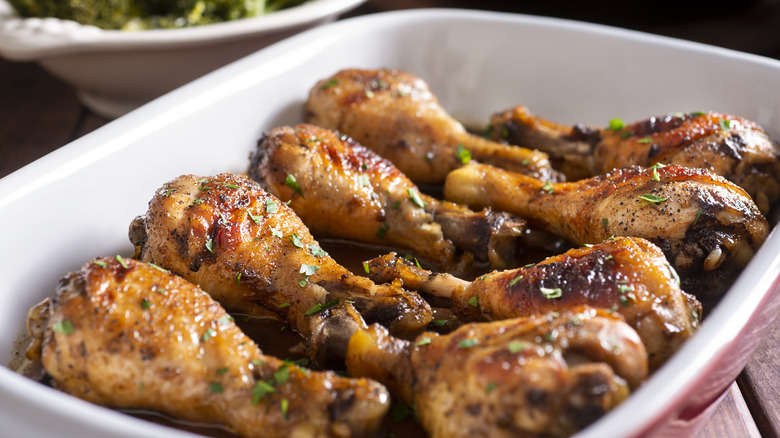
If you want to create an effortless weeknight dinner without tons of prep or dirty dishes, go with roasted meat. A hot oven and a quality protein will get you most of the way there, but it's the Italian dressing that will help you cross the finish line. Like the baked fish above, Italian dressing can instantly transform an ordinary piece of chicken or pork into a dynamically flavored dish. In this scenario, you can use Italian dressing as a marinade, as well as a sweet and tangy sauce to glaze your meat.
The secret is using equal parts brown sugar to Italian dressing. Combine the dressing, sugar, and a few dashes of soy sauce, add the meat for a few hours, then pour the whole mixture into a baking dish and cook until the meat reaches the proper temperature (145 F for pork chops, 165 F for chicken). After it's done cooking, you can pour the remaining sauce/marinade into a pot and simmer away on the stovetop until it's thick and syrupy. Another option is to grill the pork chops (or chicken thighs or breasts) and make the sweet-and-sticky glaze separately, then pour it over after the meat is finished cooking.
5. Upgrade coleslaw
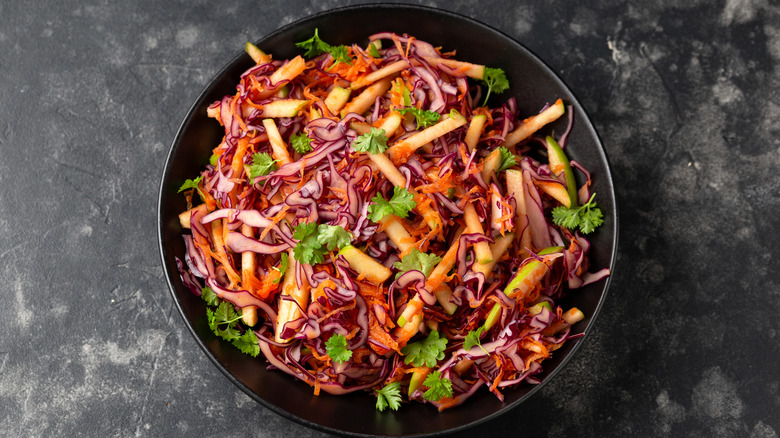
Cabbage — a whole head or pre-shredded — is one of the best values in a grocery store. This hearty vegetable is as versatile as it is affordable, adding crunch to stir-fries and a soft, velvety chew when braised alongside a hunk of meat. But cabbage is most often used for coleslaw. You can make it sweet and creamy with some Kewpie mayonnaise and celery salt, or nutty and tangy with a few shakes of sesame oil and rice wine vinegar.
Or, you can give it the best of both worlds with a few tablespoons of Italian dressing. Cabbage is an inherently tough veggie, but the acid and fat help pacify its fibrous nature and cruciferous bite. Another benefit is that the emulsifiers and stabilizers so common in most commercial Italian dressings help coat the individual shreds, giving the whole coleslaw an even, glossy sheen that makes each bite more pleasant. You can pair the shredded cabbage with other ingredients, like cherry tomatoes, cashew pieces, scallions, sesame seeds, dried fruit, corn, or crispy tortilla strips, depending on the theme or direction of your meal. Try to prepare your slaw the night before serving to develop the flavor and tenderize the cabbage.
6. Drizzle over garlic bread
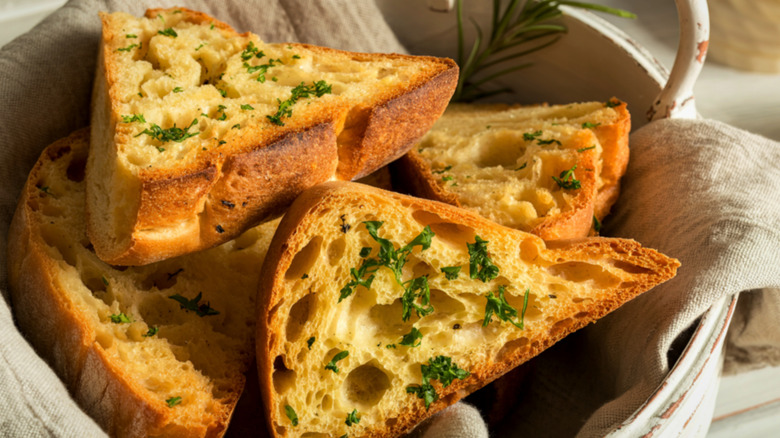
Garlic bread is one of those foods that you can't really screw up. Although not rooted in traditional Italian culture, it's a staple food in Italian-American kitchens across the United States, beloved for its crusty crunch and warm, buttery middle. There are a lot of ways to make garlic bread, and the path you ultimately follow depends entirely on your level of commitment: You can shuck, dice, and sprinkle the bread with fresh garlic and butter, use pre-chopped garlic, or take the ultimate shortcut and simply add a drizzle of olive oil followed by a heavy dusting of garlic powder.
It turns out there's another terrific garlic bread hack — you guessed it, Italian dressing. The magic elixir turns out to be the perfect addition to your garlic bread. And, no, you don't just squeeze it on a butterflied loaf of semolina and pop the whole thing in the oven. But the prep is far from difficult. To upgrade your garlic bread with Italian dressing, whisk it into your butter and garlic before brushing the mixture on the cut side of the bread. Remember to keep the butter warm and spreadable — not totally melted. Otherwise, this can lead to excess moisture and a somewhat soggy crumb. You can then dip the bread in balsamic vinegar or use it as a decadent carbohydrate cradle for a chicken parm hero or Italian sub.
7. Mix into a warm potato salad
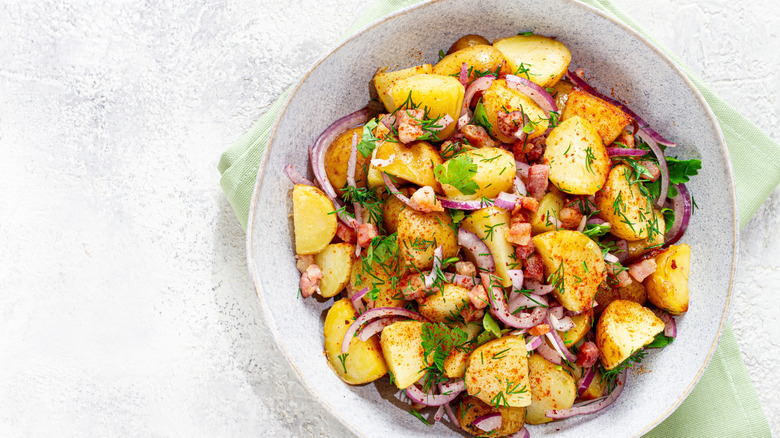
On their own, potatoes don't taste like much. The starchy tuber has a mellow and earthy flavor, kind of like sun-kissed soil. But add butter, cheese, cream, or sour cream, and you've transformed the spud into a gourmet side dish worthy of both fine-dining menus and fast food combo meals. While it's popular to mash, fry, and bake them, one could argue that potatoes are at their best when cut into wedges, boiled, and served as a cold or room-temperature salad.
And once again, the ultimate shortcut is a few glugs of Italian dressing. The acid tang, garlicky seasoning blend, and coating of fat help impart the moisture necessary to combat their inherent chalkiness. Equally important is your potato selection. Fingerlings are creamier and absorb more dressing, while Yukon Gold or Red Bliss will hold their texture after you sprinkle them with oil. Now, the dressing alone won't lead directly to potato salad nirvana, but it'll get you a good part of the way there. Consider reinforcing the flavors with sliced cornichon pickles, sliced olives, capers, scallions, or a spoonful of grainy mustard.
8. Season grilled corn
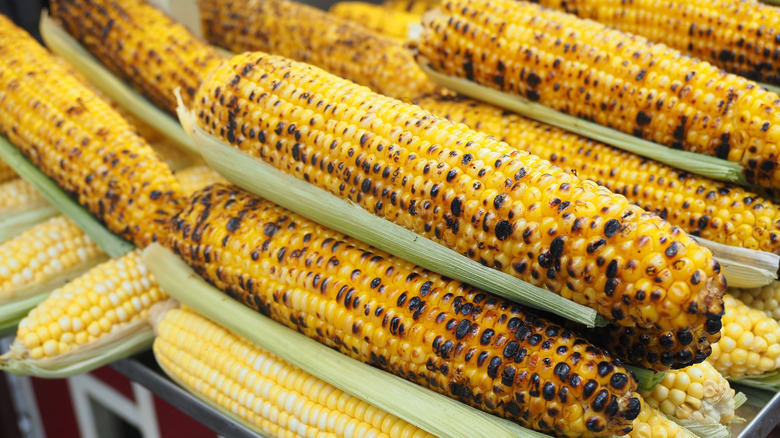
The grill is typically reserved for burgers, steaks, and sausages, but there are a few vegetables that make it to the grates, and corn is one of them. There are plenty of ways to grill corn, from soaking to shucking to brining to parboiling. Ultimately, the goal is to highlight the corn's natural sweetness or infuse as much additional flavor as possible. You can oil and season the corn before it goes on the grill, or you can slather it with mayonnaise or butter after it comes off, but a little rub of Italian dressing might be the most effective method of all.
In this scenario, the dressing serves as both oil and seasoning, helping to kickstart caramelization, prevent the corn from sticking, and keep the kernels succulent and juicy. After the corn comes off the grill, brush on more dressing and sprinkle with Parmesan or cotija cheese, chile powder, smoked paprika, or any other seasoning that fits the rest of the meal. Another option is to cut the freshly-grilled kernels off the cob and use as the base of a corn, black bean, red onion, and avocado salad — or some other variation, depending on what sort of ingredients you have on-hand.
9. Flavor a homemade rice or grain salad
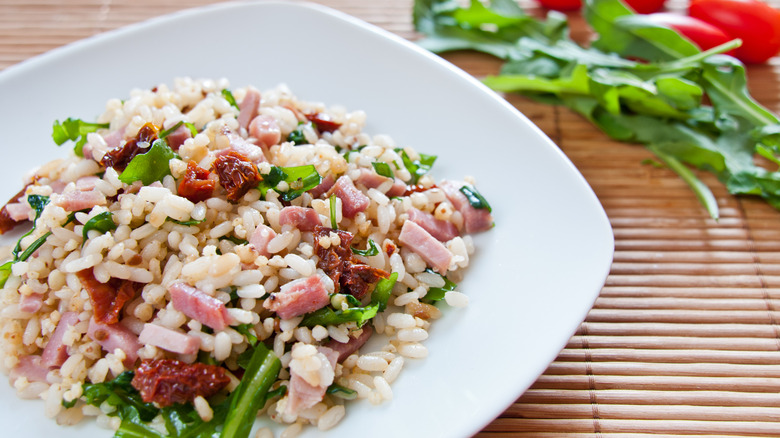
Grains don't get the respect they deserve. Brown rice, farro, buckwheat, millet, amaranth — these hearty little kernels can be so much more than just a landing place for beans, chili, or stew. Yes, they're a nutritious side dish, but if you rebrand them as a salad, grains can suddenly be considered suitable for a main course. To make your salad, cook the grains, let them cool to room temperature, mix in shelled edamame, chopped bell pepper, marinated artichoke hearts, and some cubes of feta cheese, then toss everything with a few tablespoons of Italian dressing.
Whole grains, like potatoes, are inherently starchy and full of fiber, which is why you need something sweet, tangy, and oily to break up the monotony of each mouthful. Note that grains are notorious for soaking up moisture like a sponge, so you may need to add a bit more dressing as the salad sits in the fridge. And while Italian dressing is potent, you may still want to add additional seasonings, like fresh mint, cilantro, or basil, lemon zest, Dijon mustard, or diced shallots.
10. Enhance any cold cut sandwich
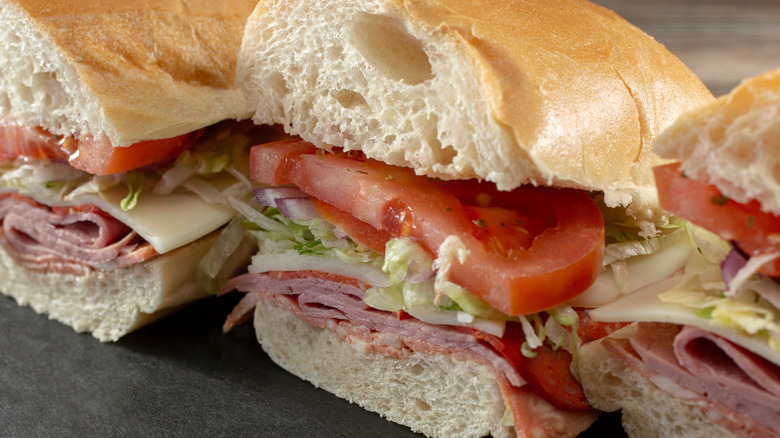
Cured meats have existed for millennia as a way to preserve meat from spoilage. Today, they are a staple of American lunch culture, delivering a holy trinity of cost, taste, and convenience. You can find cold cuts at any supermarket across the country, in dozens of varieties, from classic salami and bologna to smoked ham and honey-roasted turkey. Any way you slice it, a hoagie layered with meat, cheese, tomato, and shredded lettuce is as comforting as it is satisfying.
These sandwiches, which you can customize with any number of ingredients, do need a little help in the flavor department. Although salty, crisp, and creamy, they lack a lubricating oil and burst of acid. An Italian cold cut sandwich is typically served with olive oil and either balsamic or red wine vinegar, but you can save yourself a step or two with a squirt of Italian dressing. What's good about a bottled dressing is that it contains certain emulsifiers that help it cling to the slippery surface of the lettuce and meat. This means your taste buds get an even balance of fattiness and tang with each bite.
11. Add to mayonnaise for a zesty dip
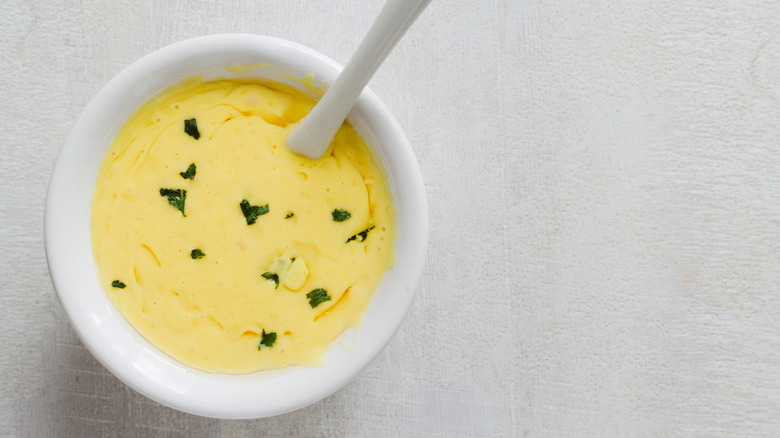
A quick dip is invaluable, serving as a sauce, spread, or destination for dunking. The supermarket has plenty of options, but a premade dip doesn't quite hit the same way as one you make from scratch. And we use the phrase "from scratch" loosely. You can combine a few common condiments and get something truly mouthwatering: yogurt and wasabi, mustard and honey, ketchup and horseradish.
Italian dressing doesn't really work as a standalone dip: The acid, salt, and seasonings are too bold and astringent, even in small amounts. But these characteristics make Italian dressing the ideal addition to another classic refrigerator staple — mayonnaise. The mayo's richness is a natural foil to the potent nature of Italian dressing. You can add the supercharged dip to sandwiches, grilled cheese, garlic bread, or serve it alongside a plate of chips, celery, carrots, and radicchio. If you want to take it a step further, add a sprinkle of red pepper flake, lemon zest, or fresh herbs to brighten up the flavor.
12. Drizzle over bruschetta or roast vegetables
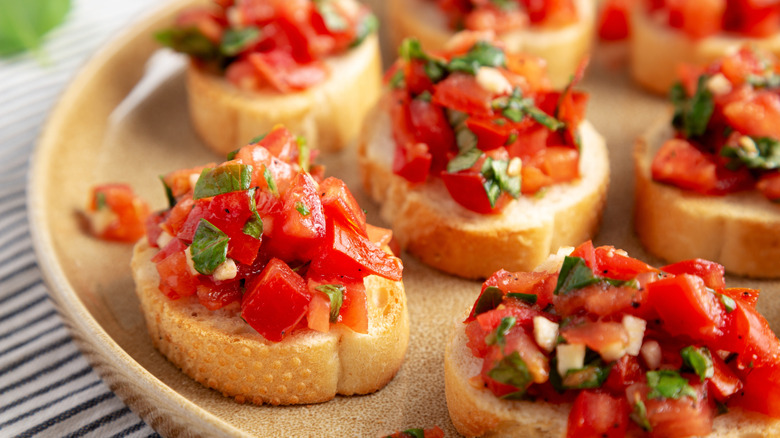
When it comes to your appetizers, it never hurts to err on the side of simplicity. Sure, you can prepare platters of Oysters Rockefeller, hand-fried croquettes, or cheesy gougères, but you can make your life that much easier by supplementing your menu with a few dishes that require minimal preparation. Bruschetta is a popular pass around for this very reason. It doesn't take much to put together — just roughly chop some plum tomatoes (or roast them for a flavorful upgrade), add garlic, basil, and salt, and spoon over a toasted crostini.
In this scenario, think of your Italian dressing as a finishing oil. It's not an 18-year-aged balsamic or cold-pressed extra virgin olive oil, but it adds a balanced finish of tart sweetness to your otherwise naked tomatoes. This same process can be applied to other appetizers, like roasted vegetables, canned artichoke hearts, or hearts of palm. If you're worried about the flavor being too concentrated, gently toss your ingredients with the dressing ahead of time — whether chopped tomatoes, sliced zucchini, or roasted asparagus — so the flavor is evenly distributed.