

7 Forgotten Appetizers From The '70s That Deserve A Comeback
The '70s was a wild decade, and the appetizers that fueled it were no exception. Dinner parties saw a strange medley of classic finger foods of previous years, often made from canned goods, alongside trendier fare inspired by French and Swedish cuisine. Many people had begun experimenting with international dishes, lending them a distinctly Americanized twist. Julia Child was introducing America to more elevated flavors, such as quiche Lorraine, while dozens dined on gravy-soaked Swedish meatballs for dinner.
It was a strange combination of old-fashioned comfort food and novel dishes. During the day, fish sticks and tuna casserole might fill the plates of common '70s school lunches, while ambrosia salad was brought to cookouts and potlucks. Yet by night, the atmosphere held something different. Classic '70s era cocktails like Harvey Wallbangers and piña coladas flowed freely at dinner parties, while the appetizers that accompanied these events were eye-catching and bold.
Perhaps it's time to give them a second look. Although pigs in a blanket may remain a '70s staple that continue to don the appetizer table, these iconic hors d'oeuvres have long been forgotten. Whether you're in search of nibbles for a retro-themed party or are simply looking to mix things up at the next potluck, these bygone '70s appetizers are due for a welcomed revival.
Devils on horseback and angels on horseback
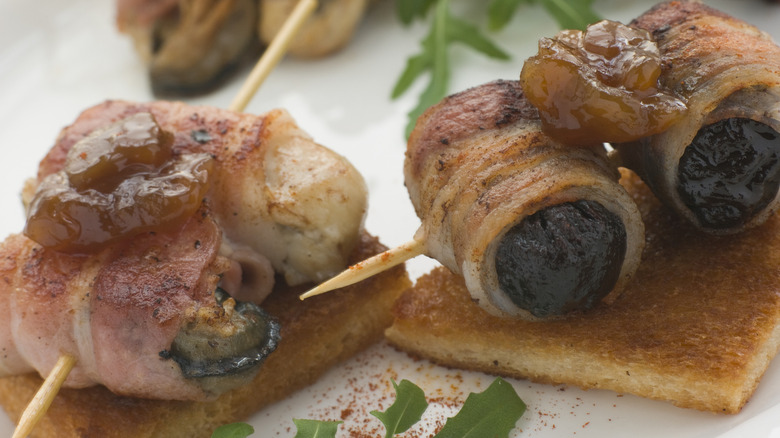
While the name of this appetizer might sound nefarious, it's actually quite divine. Made from a pleasing combo of bacon and dates or prunes, devils on horseback delighted '70s diners with its sweet and savory elements. You'll find many variations on this dish when it comes to recipes. Some include soaking prunes in brandy or making a glaze, while others call for pitting whole dates and stuffing them with cheese and almonds. Once wrapped in bacon and baked, the fruit becomes sweet and jam-like, contrasting beautifully with the crispy, salty wrapping.
Despite being incredibly popular during the 1970s, devils on horseback actually dates back much further — to the British Victorian period, to be exact. During this era, it largely existed as a savory palate cleanser rather than an hors d'oeuvre. Another Victorian-era appetizer — the similarly named angels on horseback — also remerged during the '70s. Made by wrapping bacon around oysters instead of prunes or dates, it somehow elevates this esteemed appetizer even farther. Delectable bacon grease flavors the hot, briny seafood, uniting land and sea together in one ecstatic bite.
Vol-au-vents
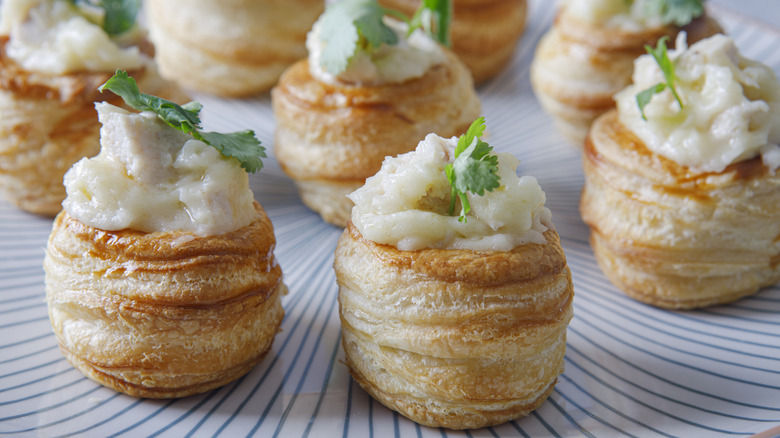
A once-popular 1970s appetizer that decked the tables of high-end parties, the vol-au-vent is an hors d'oeuvre highly deserving of a comeback. A fare with French origins, the '70s take on this appetizer often featured delicate puff pastry hollowed out and filled with savory, creamy fillings. Many cocktail party attendees dined on these puffy morsels during the disco era, savoring bites chock full of chicken pot pie-esque flavors, prawns, or cream of mushroom.
With a name that means "flying in the wind," the vol-au-vent's signature characteristic is its light, airy, pastry casing that cocoons its creamy interior. Birthed in the 1800s by the beloved French chef Marie-Antoine Careme, the dish originally stood as a main course. A creation that swapped the heavier torte dough common in pies at the time with a lighter, flakier substance, it wasn't until later that individual-sized portions became more common, priming the fare for its debut as an appetizer.
While 50 years ago the vol-au-vent might have used cream of mushroom might as a base, oftentimes mixed with flaky tuna or chicken, contemporary versions can easily adapt this '70s app with more intriguing flavors. Modern incarnations of this classic canapé continue to include meat, seafood, and vegetables, with contemporary incarnations spanning from rich pork to lobster and salmon. During the '70s, this hors d'oeuvre often saw savory fillings, but the vol-au-vent can be sweet as well, featuring elements like fruit, cheese, and even jelly or jam.
Spinach balls
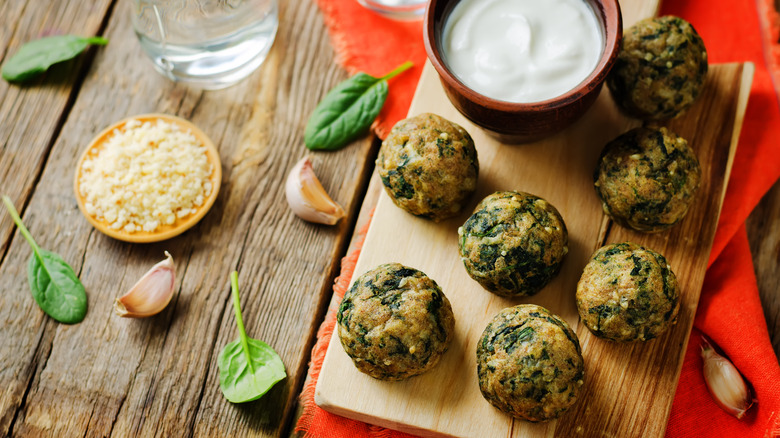
While spinach artichoke dip rose to popularity in the 1950s, it was savory spinach balls that dominated the '70s. Crispy spinach balls frequently appeared on the tables of cocktail parties throughout the decade, offering diners a green, cheesy nibble between disco hits. Compiled from chopped spinach and stuffing mix, they could be given a kick with a dash of hot sauce or spicy mustard. Frozen spinach often makes for the best spinach balls, with the addition of eggs, parmesan, and butter that would be molded into bite-sized balls and baked.
It's a bit of a mystery why this classic appetizer disappeared. Spinach balls stand as a dish that's easy to make, reheat, and freeze, not to mention how they satisfy vegetarians and omnivores alike. They remain delightful whether served hot or cold. Unlike messy artichoke dip that needed plates, napkins, and crackers, spinach balls were much more portable, being perfectly portioned for nibbling on at '70s-era soirées.
An appetizer well-deserving of a comeback, this '70s staple can easily be updated for modern diners. The addition of a few artichokes adds a new dimension to this 'old-school hors d'oeuvre, making for some sensational spinach artichoke balls. Gluten-free versions can also be fashioned, subbing gluten-free breadcrumbs for stuffing fix.
Fondue
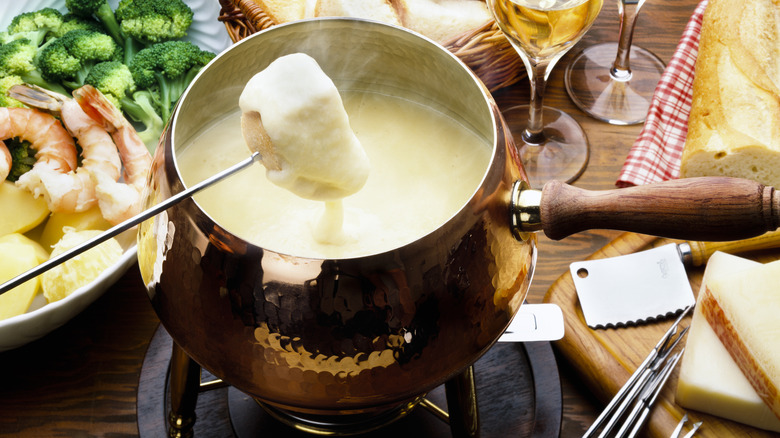
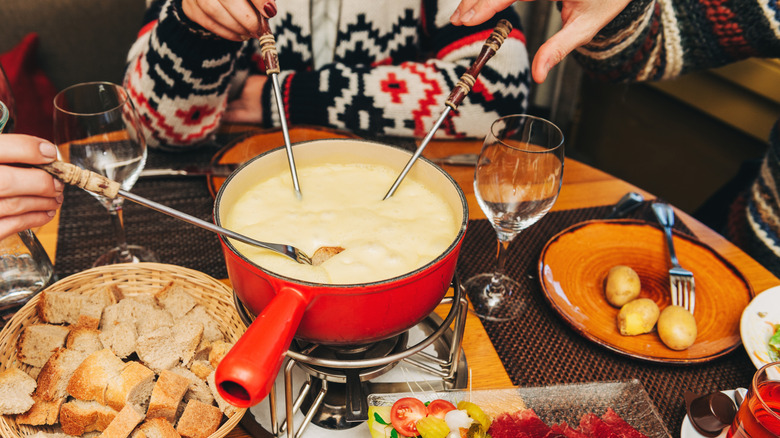
Fondue may be perhaps the most quintessential '70s appetizer in America, despite being a long-standing Swiss invention. Many households had a fondue set during this decade, featuring a set of lanky metal forks and an enameled pot sitting atop a flame. So pervasive was the dish that fondue kits became a common wedding present during this decade, often boasting a signature '70s color palette of green, orange, or yellow.
Fondue had long existed as a classic Swedish fare, having been designated the national dish in 1930 by the Swiss Cheese Union. Made by melting hard cheese and alcohol like wine or brandy, all manner of bread can be dipped within its hearty depths. Although fondue was introduced to America circa 1964 at the world fair, its popularity surged during the '70s due to widespread marketing campaigns designed to sell more cheese. Such adverts, featuring attractive Swiss folk socializing around pots of dairy, caught on.
By the '80s and '90s, the massive fad seemed to decline, perhaps in part due to newfound health trends and diet culture that seemed to define the following decade. Despite this, fondue seems long overdue for a comeback. It's not just bread that can be dipped within the fondue pot's gooey layers. Eager diners can plunge everything from crudité and pretzels to meatballs and seafood into its molten cheesy core. While Emmental stands as the classic cheese for fondue, others can be used as well, made even more enticing with a few pantry ingredients.
Watergate salad
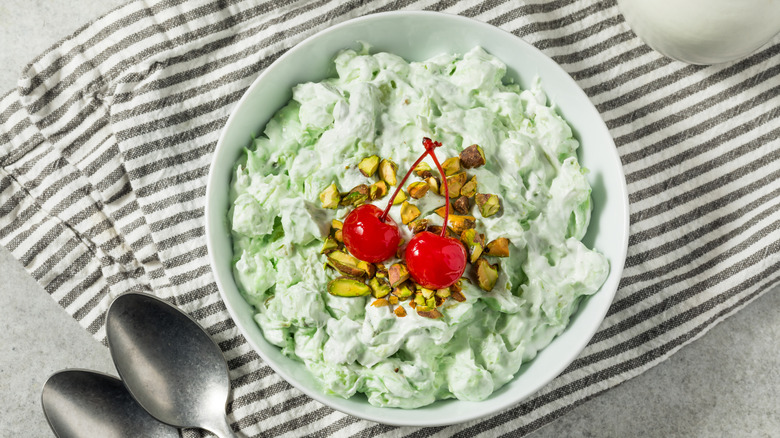
While many '70s appetizers were salty or savory, a little burst of sweet occasionally snuck in, often equipped with a good dose of gelatin, canned fruit, and whipped cream. Whether you call it a starter or side dish, Watergate salad often sat alongside '70s era appetizers, dazzling partygoers in all its green glory.
Unlike the Waldorf salad, which was named after the Waldorf Astoria hotel where it was invented, the Watergate salad holds no known attachment to the Watergate hotel. Instead, it's believed the fluffy fare may be related to another dessert. A dish preceded by Watergate cake, its name likely came from the similar-hued dessert, which also included green pistachio pudding mix. Both continued to surge in popularity in the wake of the infamous Watergate scandal, likely causing a blending of names.
Watergate salad reached the height of its fame during the 1970s, adding pale green to dinner parties with its mix of pistachio pudding mix, canned pineapple, whipped cream, and nuts. The desert salad's found itself in a long list of forgotten desserts from previous decades, joining the gelatinized ranks of long-lost Jell-O salads.
In spite of this, this sugary, velvety dish holds undeniable charm. It's whimsical, playful, and slightly irreverent, adding a kitsch appeal. Like the similarly-themed Crown Jewel Dessert (common in the '50s but no longer around), it adds a dose of frivolity, making it an ideal sweet that can tempt younger generations with its amusing texture, curious flavor, and vintage appeal.
Cheese and pineapple
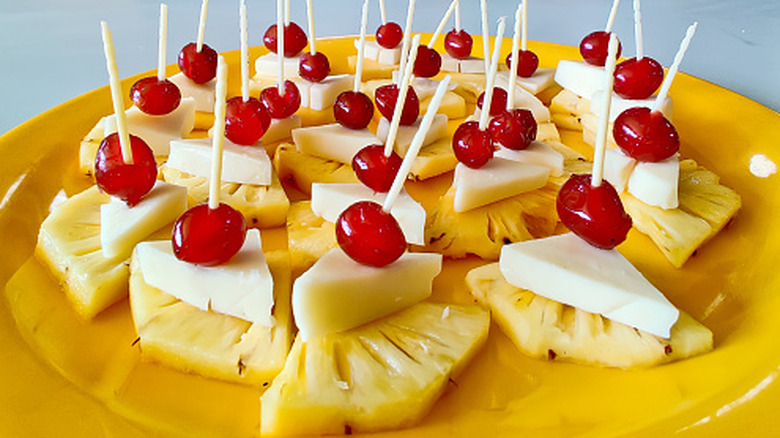
Not all '70s appetizers required fancy baking kits or extensive prep. Some shined due to their sheer simplicity. Cheddar cheese and pineapple were a classic combo in the disco era, pairing savory, sharp dairy against this tangy, tropical fruit. Displays might be as simple as cheese skewers topped with pineapple (sometimes interspersed amongst cheese and pearl onions skewers) to more flamboyant presentations.
The pineapple cheese hedgehog was a regular buffet centerpiece, featuring pineapple and cheese toothpicks that stuck out of a halved orange or potato, often wrapped in foil to give it a little extra disco flair. Occasionally, the odd culinary creation was further embellished with candied cherries for eyes. The simple yet sensational combo still holds up today, making this classic '70s concoction is one that can be tailored to modern-day palates with new fruits, swankier cheeses, or even olives and meat.
Simple skewers of pineapple and Manchego make for a phenomenal duo, pitting sweet yet tart notes against the rich, nuttiness of Spanish sheep's milk cheese. For added pizazz, you can try grilling pineapple first, then topping skewers with a sweet glaze. To recreate the larger orb-like display, appetizer enthusiasts can opt for a larger fruit, like a melon or grapefruit as the base. Cover it with spines of toothpick-speared pineapple, cheese, and your favorite sweet and savory embellishments. Grapes, ham, prosciutto, mozzarella, candied cherries, or cherry tomatoes are all fair game.
Rumaki
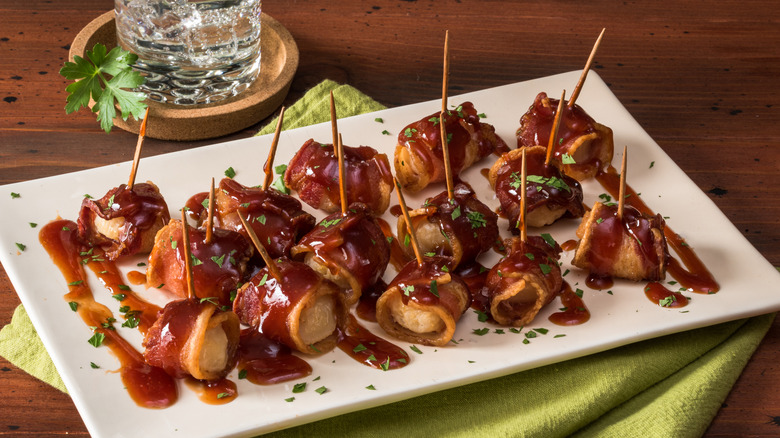
While relatively unknown today, chicken livers and water chestnuts wrapped in bacon were once a staple party dish in the '60s and '70s. No one truly knows the genuine origins of rumaki, although it was claimed to be the invention of Polynesian-themed restaurant owner Victor Begeron, who pronounced it to be rooted in Chinese cuisine by means of Hawaii. The old-school tiki appetizer rose to fame during the mid-century alongside America's fascination with tiki bars and Asian American cuisine.
Rumaki's origins may be debated, but one thing's for sure: This appetizer held its place as a party pleaser throughout the decade. Many a dinner party grazed upon a platter of this glamorous hors d'ouvre, made by marinating chicken livers and water chestnuts in a savory sauce (sometimes with a little brown sugar added), then swathing them with bacon and baking. The result was a perfect union of textures and tastes. The water chestnuts add a little crunch and the liver imparts a decadent richness, while the bacon holds everything together.
The dish likely fell out of favor as organ meats declined in household use in the second half of the 20th century and the knowledge of how to prepare them was slowly lost. During the '70s, versions omitting the chicken liver became more common, with appetizers consisting solely of bacon-wrapped water chestnuts. Still, an abundance of recipes can still be found for both variations.