

13 Boomer-Approved Meals That Feed The Entire Family

Baby boomers, who were born after World War II, grew up with parents who had learned to be frugal due to the Great Depression and wartime food rationing. This upbringing, combined with the influence of a new wave of important food inventions like condensed soups and microwaves, might explain why there are many boomer kitchen habits that confuse younger cooks. But saving money has never stopped being important. Today, rising inflation has families choosing inexpensive ingredients and making more meals at home instead of dining out. Perhaps it's time to bring back some classic, baby boomer-approved recipes that can feed an entire family.
Baby boomers not only learned at an early age to stretch their dollars further by doing more with less but they also discovered the power of canned and dehydrated goods that could live in pantries for months. The end of the war, the development of new kitchen technologies, and increased accessibility to foods that were once perceived as being luxurious allowed for the proliferation of novel, family-friendly recipes. Here are some of the ones from the baby boomer era we think deserve a comeback.
Sloppy Joes
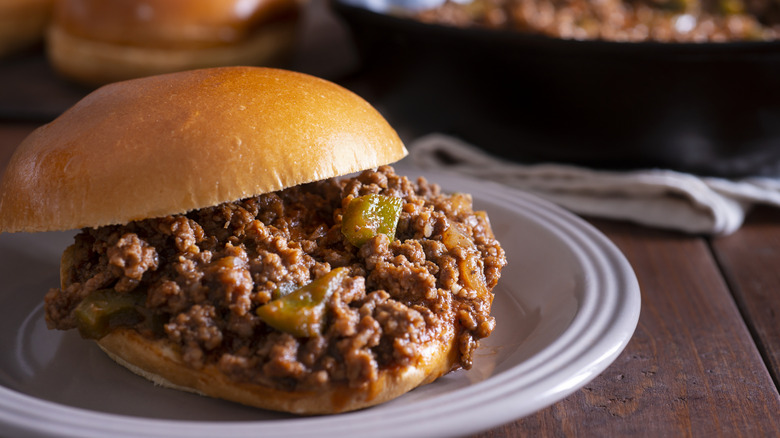
Also known by the unappetizing name "loose-meat sandwich," the sloppy Joe emerged in the 1940s as a way to use fillers to stretch meat and satisfy the whole family. While historians aren't sure who exactly "Joe" is, some lore suggests he was a cook in Sioux City, Iowa, who added tomato sauce to ground beef to create the sandwich. Nonetheless, no one should be unclear why it's called sloppy — any of us who have eaten the sandwich know how the meat tends to fall right out of the bun.
Though you can purchase a canned mixture, the sloppy Joe sandwich is simple to prepare at home, and it's a versatile dish that's open to lots of variation. The sloppy Joe sandwich recipe usually calls for ketchup, but some include mustard, tomato paste, vinegar, Worcestershire sauce, barbecue sauce, brown sugar, and any number of spices, including dried mustard, garlic powder, and chili powder. If you prefer white meat, substitute the ground beef with ground turkey or chicken. You could top the sandwich with grated or sliced cheddar cheese or pickles, or just eat it on its own.
Chicken and dumplings
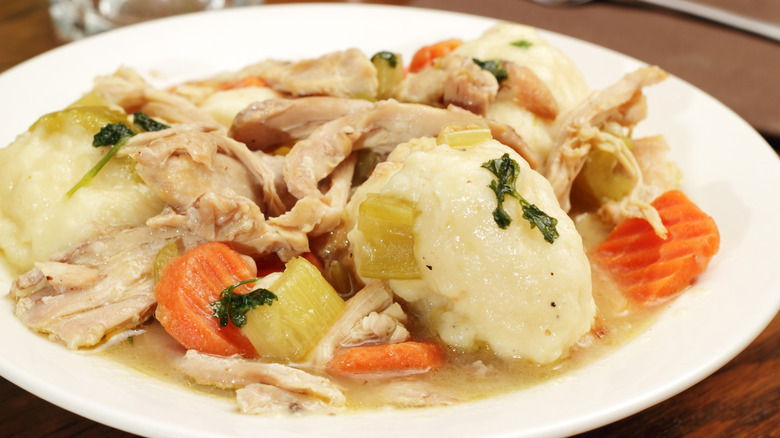
When baby boomers were children in the late 1940s and 1950s, the United States Department of Agriculture (USDA) launched its campaign to make "the chicken of tomorrow," a bird that was 40% heavier and thus could feed an entire family. In the first half of the 20th century, chicken was considered a luxury food, but when these large, specially bred birds came to market, the USDA had a problem on its hands: too many chickens. The agency had to find a way to increase demand. This led to a huge marketing campaign to put chicken recipes in front of every household. A hearty bowl of chicken and dumplings was one of many popular recipes for families that emerged from this time, particularly in the South. In fact, even during the Depression, Southern families would make the dish from old roosters, which were leaner and more affordable.
The recipe for chicken and dumplings varies from cook to cook, not only in how the dumplings are prepared (as they can be made with flour or cornmeal and shaped into drop biscuits, rolled into strips, or cut into squares) but also in where the chicken comes from. These days, purchasing a fully cooked rotisserie chicken is a flavorful shortcut. The chicken and dumplings are typically cooked in chicken broth with onions, carrots, celery, peas, and parsley.
Turkey Tetrazzini
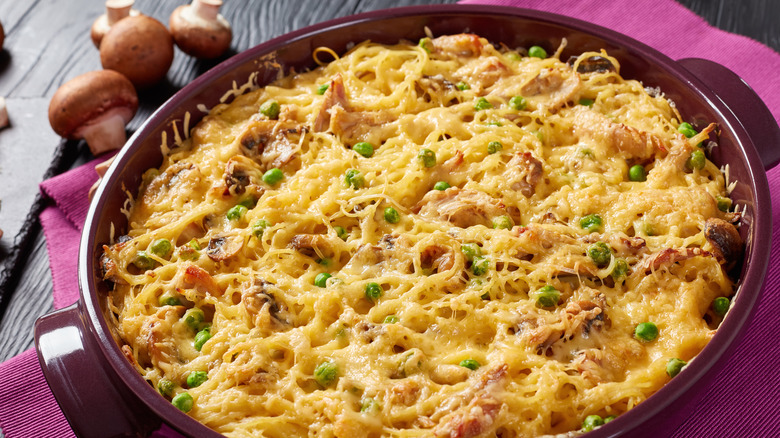
Turkey Tetrazzini is one of those old-school pasta dishes that have all but vanished in the last few decades. Its name is usually credited to Luisa Tetrazzini, an Italian opera singer whose visit to a New York restaurant inspired the chef to create a dish in her honor, though this is just one theory on where the dish comes from. It was a superb way for home cooks to use up leftover turkey once Thanksgiving was over, and often still left plenty of scraps.
Turkey Tetrazzini really hit its stride in the 1960s and 1970s when canned creamed soups became available and added convenience to meal preparation. Add to those some affordable dried spaghetti, leftover poultry (chicken was used, too), mushrooms, and such pantry staples as flour, butter, sherry, and breadcrumbs, and you had all it took to feed an entire family. Turkey Tetrazzini recipes vary, with some preferring a more homemade sauce of light cream, sour cream, cream cheese, or béchamel sauce rather than canned soup. Most, however, are simple and filling, made with affordable ingredients, and help stretch that holiday turkey even further.
Chicken à la king
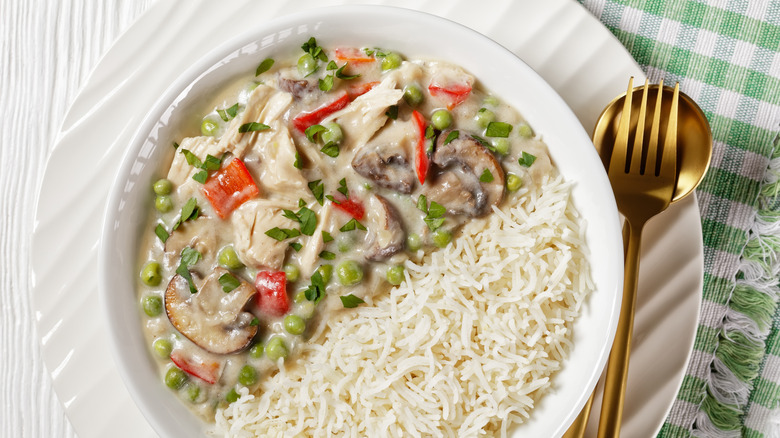
Chicken à la king was previously considered upscale thanks to its international-sounding name and rumored French origins. It was a dish people were used to seeing at formal events and in elite banquet halls and was composed of cubed or shredded chicken and a cream sauce base made with mushrooms, butter, chicken broth, heavy cream, and sherry or Madeira. By the 1950s, low-cost canned versions of chicken à la king were everywhere, including on school cafeteria trays and in microwave dinners. They famously paled in comparison to the original, with their thick, floury sauce and overcooked, limp vegetables and chicken.
Many boomers may remember eating the creamy concoction as it was meant to be served, but it's likely they also have bad memories of the later heat-and-eat versions as well. But it's worth giving chicken à la king another chance — the way it was originally meant to be eaten. Recipes vary, but many include fresh vegetables such as mushrooms, peppers, shallots, carrots, and peas, as well as pimentos and fresh herbs. Make the sauce as it was meant to be, with crème fraîche or heavy cream and, of course, sherry. Then ladle the whole thing over rice, biscuits, toast, or noodles, and you have a comforting, nostalgic meal for the whole family.
Beef stroganoff
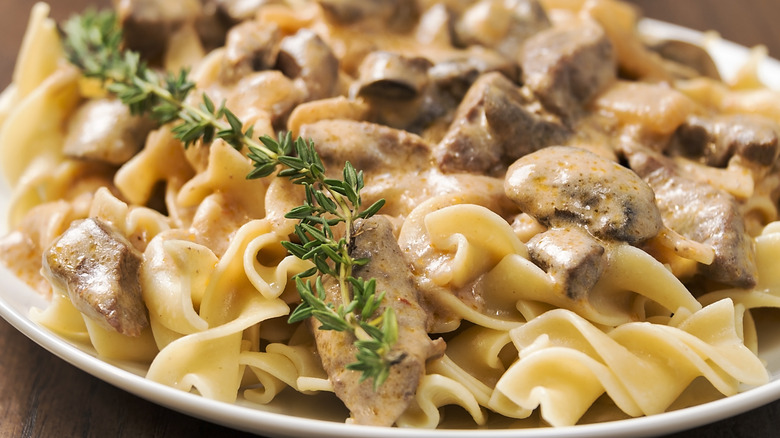
Another comforting meal with an international-sounding name is beef stroganoff. It was hugely popular meal in the 1950s and 1960s — some even suggest it was the most popular meal of the century. While its origin hasn't been officially confirmed, it's believed that it was the product of the French chef working for Russia's Count Pavel Alexandrovich Stroganov. By some accounts, it was developed for a competition among household cooks. By others, this stew-like dish made with small pieces of minced beef was created because Stroganov himself. It was said that, in his advanced age and without a full set of teeth, he couldn't chew full cuts of meat. But it went on to become popular in the U.S. not only because of its elegant-seeming roots but also the simplicity of its ingredients — meat, mushrooms, and egg noodles.
The basic recipe remains simple. It starts with beef sirloin or tenderloin, cut into cubes or strips, which is seasoned and browned in butter. The cooked meat is then added to a brown gravy made from a base of beef broth, flour, and, occasionally, Dijon mustard or cream, along with vegetables such as onions and mushrooms. The resulting stew is typically poured atop egg noodles, but mashed potatoes are popular as well. There are also other secret ingredients you can add to beef stroganoff to elevate the dish, including crème fraîche or a variety of herbs and spices.
Ham and bean soup
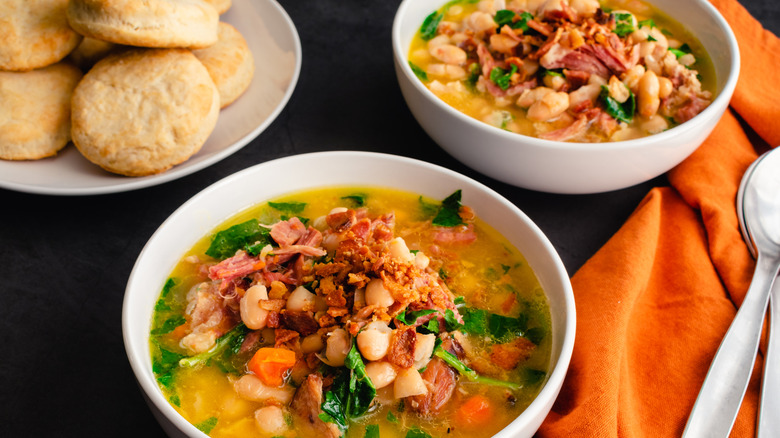
Few recipes have legal precedents as their claim to fame, but this simple peasant dish certainly does. This meal, once called Senate bean soup, was originally made with navy beans, ham hocks, and little else. Its popularity is credited to two senators in particular: senator Fred Dubois of Idaho and senator Knute Nelson of Minnesota, both of whom requested, and even spearheaded a legal mandate (in Dubois' case), to have the soup appear on the Senate Restaurant's daily menu. The dish, also called navy bean soup, was prepared on naval ships during wartime. While senate bean soup was made with ham hocks, navy bean soup usually contained salt pork — a fatty, salt-cured pork sourced from the belly, similar to bacon. It was even added to the U.S. Navy's "General Mess Manual and Cookbook," making it an official meal of the U.S. military.
Ham and bean soup was popular partly because it was made from easy-to-access, affordable ingredients, which is what makes it a good choice for families today. Plus, it's satisfying and easy to prepare. Ham bones and ham hocks have long been used as a way to feed families inexpensively, and dried beans are pantry staples that can last for months on end. Simmer them in plenty of water with herbs and root vegetables, and you have a hearty, cozy meal that'll feed the whole household.
Tuna casserole
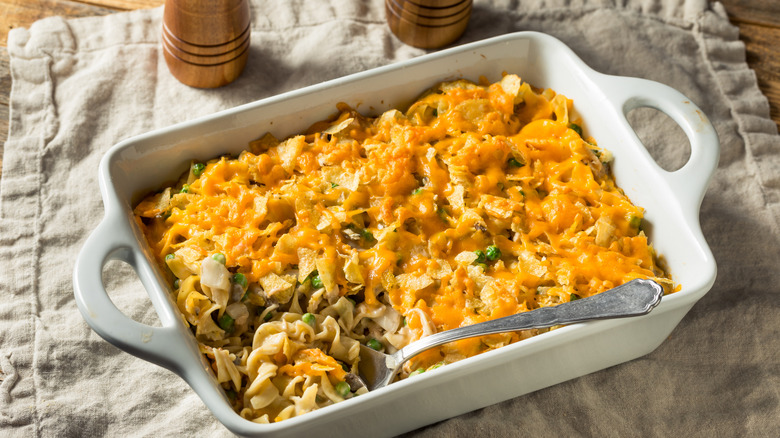
The humble, often-maligned tuna casserole may be the epitome of a baby boomer dish. It was once the domain of church potlucks and has since become the premier economical family meal. It's made of canned tuna, noodles, and canned soup, all of which were used heavily in the 1900s to stretch the grocery dollar. Canned tuna, in particular, was a pantry-friendly, inexpensive protein. When combined with condensed cream of mushroom soup (which became wildly popular in the 1950s) and other ingredients people already had in their pantries, a can or two of tuna suddenly became meal for an entire family.
Many people have added their own spins to the dish, including crumbled crackers, buttered breadcrumbs, and even crushed potato chips. While recipes differ, it usually begins by sauteing mushrooms and celery in butter, adding cream (or cream of mushroom soup), herbs, vegetables (such as peas or green beans), canned tuna, shredded cheddar, and noodles. You can also prepare an upscale tuna casserole using Mediterranean-inspired ingredients such as Parmesan cheese, capers, and white wine.
Chicken and wild rice hotdish (or casserole)
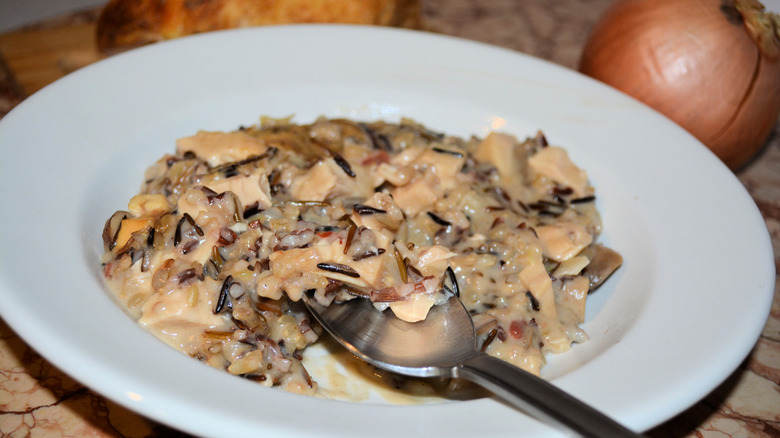
Midwesterners may have definite opinions about the difference between casserole and hotdish. Hotdish — not to be confused with "hot dish," which could refer to any meal that's served hot – is a Midwestern staple known to warm diners up on the coldest of winter nights. Like casserole, it's still a mixture of protein, starch, cheese, vegetables, and a creamy sauce. And while there are endless hotdish varieties (many involving tater tots, interestingly enough), chicken and wild rice hotdish (or casserole, if you prefer) is certainly a longtime favorite. After all, wild rice is the domain of the Midwest, having first been grown in the Great Lakes region of Wisconsin, Michigan, and Minnesota by the Ojibwe people.
Hotdish became quite popular in the 1970s as a dinnertime staple.The ingredients are familiar, easy to access, and can include chopped or shredded chicken (freshly cooked or store-bought rotisserie chicken), wild rice, shredded cheese (sometimes cheddar, though aged cheeses work, too), and some sort of cream sauce — either made from scratch with flour, milk, cream, and chicken stock or a condensed soup shortcut. Some recipes call for slivered almonds, buttered bread or cracker crumbs, mushrooms, carrots, or even sour cream in the sauce.
Chicken Divan
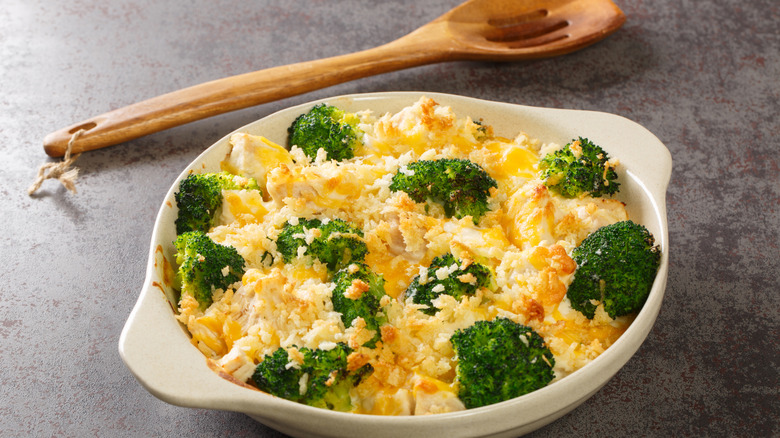
The name of this dish is surely as a clue as to why it was so popular in the 1960s and 1970s. Though the name now refers to a simple casserole made with chicken, broccoli, cheese, and cream sauce, it wasn't always that way. The name hails from the New York City upscale restaurant Divan Parisien, inside the Hotel Chatham, where it was created by chef Anthony Lagasi. It was even described as a "runaway success dish" in the 1949 book "Knife and Fork in New York" by Lawton MacKall. At the restaurant, sliced chicken and broccoli spears were topped with a creamy Mornay sauce — a béchamel combined with grated cheese — and then "browned and brought to the table bubbling hot." The chicken breast was sliced from the side rather than the top to create wide, thin slices that lay nicely on the plate.
Like many mid-century dishes, the recipe evolved as advances in food technology made certain ingredients simpler and more affordable, and casseroles took off. Soon, chicken Divan recipes looked more like casseroles, complete with condensed soups, canned chicken, and packaged sauces. Today's recipes often look like a mashup of both versions; you'll find not only the original version with a sherry-laced Mornay sauce but also recipes made with shredded rotisserie chicken and cream of chicken soup, mayonnaise, white wine, and thawed frozen broccoli florets and cooked in a casserole dish.
Salisbury steak
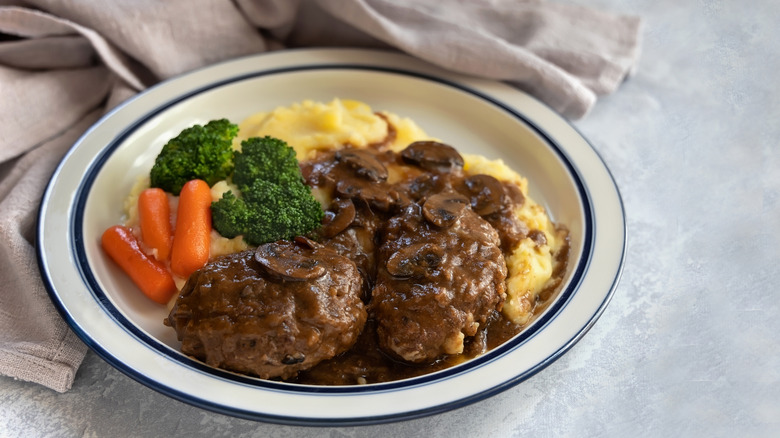
We're willing to bet that at one time in your young life, you ate Salisbury steak in your school cafeteria. Once the icon of school lunches and frozen TV dinners, Salisbury steak was certainly never considered fine dining, with its thick, lumpy gravy and meat patties of often-indiscernible origins. But hearty and oddly satisfying? Absolutely. Perhaps that's why Dr. James Salisbury created the dish in 1888 as part of his Salisbury diet, which he designed to eliminate the poisonous substances he thought vegetables and starches created in the body once digested. He conducted an experiment he believed proved his theory: an elimination diet in which several strong men were fed only oatmeal for a month. Understandably, they grew weak and miserable until fed Salisbury's 10-ounce chopped, lean beef patties seasoned with salt and pepper and cooked in butter, and voilà! They felt better.
The classic recipe containing seasoned beef patties and mushroom gravy, though soon proven not needed for a healthy diet, eventually became popular as an inexpensive and satisfying meat dish among baby boomers. It was made ubiquitous by school cafeterias and frozen meal makers until people grew weary of the processed, subpar versions and started avoiding it. But serve a fresh Salisbury steak with mashed potatoes or a riff on that old TV dinner classic, tater tots, and you have a retro, budget-friendly meal the whole family might enjoy rediscovering.
Corned beef hash
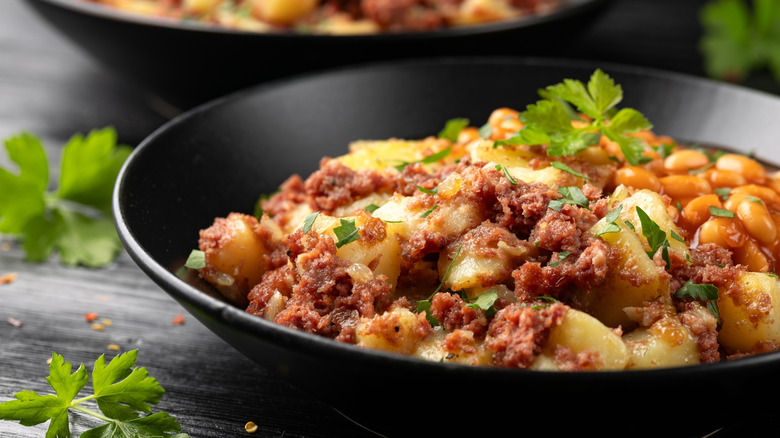
Corned beef hash is an easy, one-pot recipe that became popular during and after World War II. Of course, hash was nothing new then. Since at least the 17th century, cooks have used hash, a meal consisting of leftovers chopped up with potatoes, eggs, or onions, as a way to stretch food. But with the advent of canned foods in the mid-20th century, corned beef hash became especially popular. After all, corned beef, which itself was created as a way to extend beef's shelf life without refrigeration, seems destined to be a budget-friendly entrée.
During WWII, rationing forced home cooks to make the most of every ingredient and not waste a crumb, causing canned meats to become even more popular. Canned corned beef was tossed into a hash and often served with eggs — and a diner breakfast staple was created. These days, corned beef isn't the only meat you can order in a hash; today's menus may also include versions made with smoked salmon, chorizo, sweet potatoes, or a host of spices. Hash is forgiving and versatile, not to mention, a great way to use leftovers, so it's often a baby boomer-approved and family-friendly offering.
Swedish meatballs
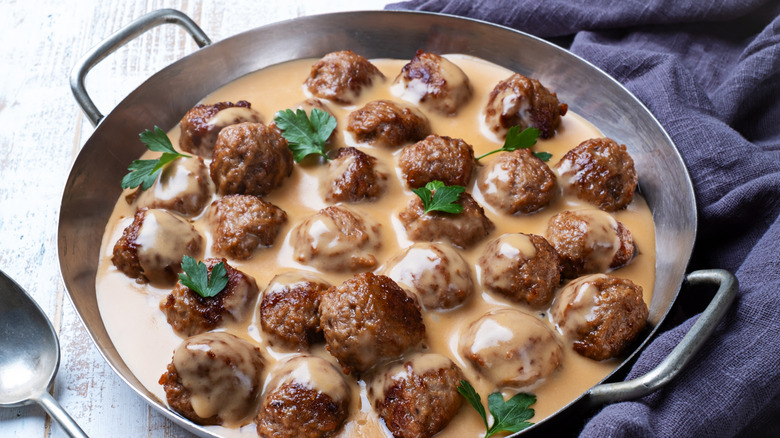
Meatballs have always been a creation born of survival instinct, the need to extend scraps of meat with fillers such as stale breadcrumbs and seasonings to do more with less. Swedish meatballs are no exception. But it was in the 1960s when Swedish meatballs took off in popularity, thanks to, believe it or not, the Swedish furniture company Ikea. Though the stores didn't actually open until 1985 in the U.S. (and now serve the meatballs on-site in its cafés), Americans in the 1960s were often privy to the store's marketing efforts, which had been around for decades and showcased aspects of Swedish life, including its cuisine. That, combined with increased popularity of and access to international travel after WWII, led to an array of international dishes becoming popular, including Swedish meatballs, a darling of 1960s-era home cooks.
The version Ikea sells today is made with a mixture of minced beef and pork, garlic, egg, and breadcrumbs, just as they were typically made in the 1960s. They're browned in a saute pan and topped with a creamy sauce made from butter, flour, bouillon (or consommé), thick double cream, soy sauce, and mustard. They're paired with mashed potatoes and lingonberry jam.
Quiche Lorraine
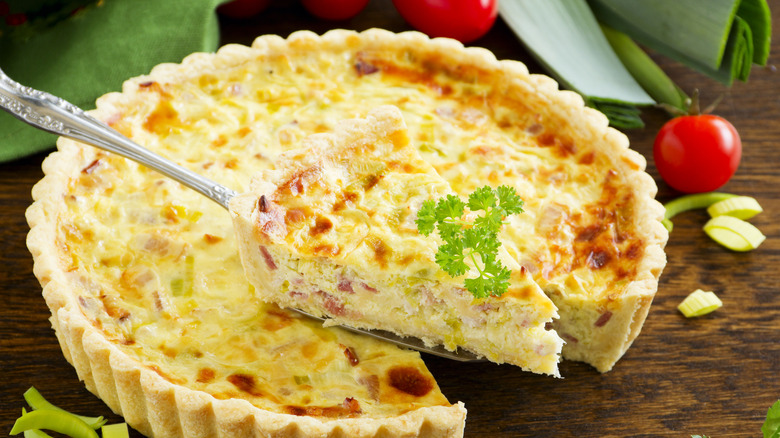
No discussion of foods popular among baby boomers would be complete without a mention of Julia Child, the queen of modern home cooking. Her lessons on French cooking at home, shared in her cookbooks and on her beloved PBS television show, popularized many international dishes. One of these beloved dishes was quiche Lorraine, named for the French region where it originated. The recipe became popular not only because of the growing fascination with international dishes but also because it's a lot simpler than Child's other recipes, such as boeuf bourguignon and coq au vin. It's simply egg, heavy cream (or crème fraîche), and bacon, cooked inside a pie shell. In fact, quiche in general was viewed as a highly versatile and filling dish that could be adapted in a multitude of ways, like by substituting the vegetables, including seafood, or switching out your cheese. It's infinitely forgiving.
Then along came Bruce Feirstein's 1982 book "Real Men Don't Eat Quiche: A Guidebook to All That is Truly Masculine." The book made it seem like eating quiche was decidedly unmanly ... and the trend came, regrettably, to an end. But quiche has always been resilient, and it remains a popular, convenient dish that's experiencing a revival because it's affordable, filling, and endlessly adaptable.