

You've Believed These 10 Air Fryer Myths For Way Too Long
We may receive a commission on purchases made from links.
There's nothing like a new appliance to give your cooking experience a zing of dopamine. And if you're on the hunt for one that will absolutely blow your mind (figuratively, hopefully), then head to the store right now and pick out a quality air fryer. It's basically if a microwave, an oven, and a deep fryer had a group project and came up with an itsy bitsy countertop appliance that cooks almost everything better in just half the time.
These nifty appliances caught fire (again, figuratively) on the promise of speed, versatility, and the illusion of health without trading in crispy fried goodness. But despite the widespread appeal, they remain a woefully misunderstood appliance. There are plenty of myths flying around, and they've probably left you scratching your head a bit. Do they make everything healthy? Could they take up the work of a deep fryer, an oven, and a microwave combined? And are they really a jumble of buttons you'll never figure out?
To sift through the noise and separate fact from fiction, we caught up with Coco Morante, author of "The Instant Kitchen Meal Prep Cookbook"; Becky Striepe, founder of Glue & Glitter; Michelle Doll Dolson, recipe development lead at HelloFresh; Andreas Hansen, founder of Fritaire; and registered dietitian Kristen Carli. Here's what they had to say about the air fryer "facts" you may have picked up along the way, and why it just might be time to show them the door.
1. You can replace your oven with an air fryer
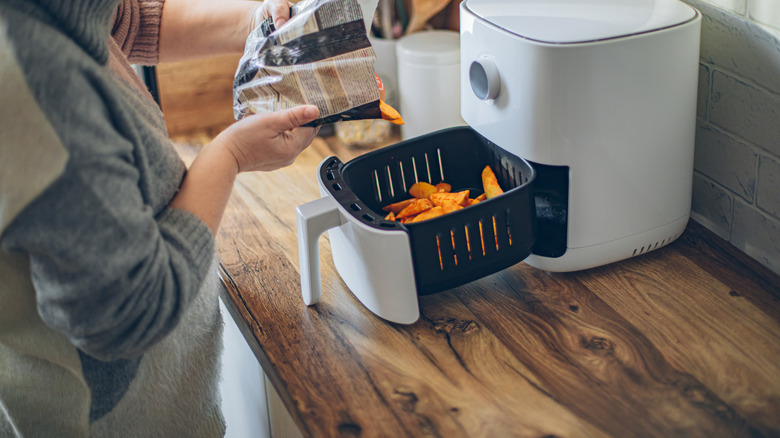
Cooking takes on a whole new meaning once an air fryer enters your life. Foods that used to limp out of the oven now strut out golden, caramelized nearly to a fault, and papery crisp. With everything from everyday fries to hard-boiled eggs and even fresh fruit now on the air-fryer menu, it's only natural to glance at your oven with a flicker of disdain. You are not alone. Becky Striepe also finds herself reaching for the air fryer a lot more often. "I basically think of my air fryer as a tiny, fast oven that doesn't heat up my whole kitchen," she says.
But even she stops short of benching her oven; and neither should you. Sure, the big guy mostly rides the pines on low-key Friday nights with a couple of friends. But ask the air fryer to shoulder the kind of load that comes with Thanksgiving dinner, and you'll be woefully disappointed.
"The air fryers that work best are pretty small, which makes them not great for feeding a crowd or for conventional baking. I find that, in general, a 6-quart air fryer works best for up to four servings of food," Striepe says.
That's not the only reason not to retire your oven just yet. Air fryers absolutely dominate when it comes to structurally sound, breaded, crisp-ready foods like kale chips, french fries, and egg rolls. But according to Michelle Doll Dolson, the minute things get saucy or drip-happy, they're wildly out of their depth. "You have to be careful with physics," she laughs. "If you try to air-fry a wet, dripping beer batter, it's going to rain through the basket holes before it ever gets a chance to crisp up."
2. Air fried food is always healthy
If there's one appliance that's got the healthy eating code cracked, it's the air fryer. The little-to-no oil pitch is tough to sidestep. Almost as soon as air fryers burst onto the scene, fried food, once the villain of the healthy-eating camp, immediately got started on its redemption arc.
It's not all marketing bluster, either. While deep frying calls for, at the minimum, a few cups of oil, air fryers can get the job done with a couple of tablespoons, or even no oil at all. What's more, scientists have found that air frying drastically reduces the formation of acrylamide, a known carcinogen produced by high-heat methods, by a significant margin (stacked against deep frying), per a study in Critical Reviews in Food Science and Nutrition.
But food isn't inherently healthy just become you shoved it in an air fryer. Air frying is a pretty great add-on to an already health conscious diet. But as Kristen Carli tells us, it absolutely cannot compensate for poor dietary choices. "If it is an ultra-processed food being thrown in the air fryer, it's still rather unhealthy, but just without as much oil," she says.
What's more, while the content of acrylamide is drastically reduced by air frying, it's still a high-heat cooking method, which means you're still at risk of taking in heterocyclic amines (HCAs), and polycyclic aromatic hydrocarbons (PAHs), all of which have been linked to cancer.
3. There's no need for maintenance
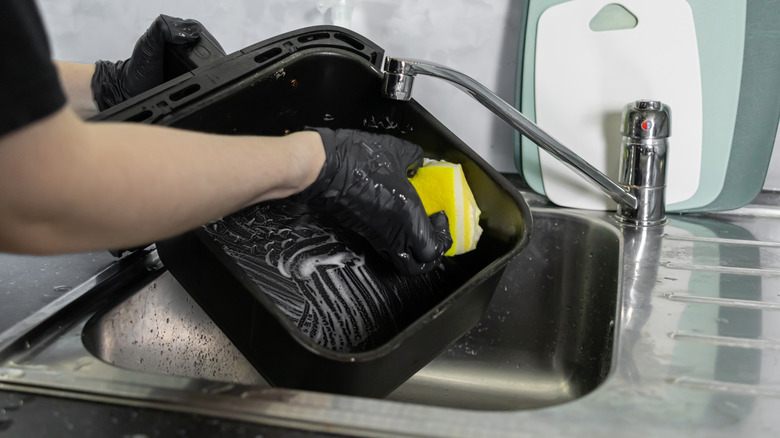
How often do you clean your appliances? Most folks tend to clean on a "see grime, attack grime" basis. But while that kind of strategy might slide for cavernous appliances like ovens, it's one of the biggest mistakes you can make with your air fryer. Most air fryers will still look pristine even after multiple uses, which might give the illusion that they don't need any maintenance at all. But as Michelle Doll Dolson tells us, just because there's no visible grime, doesn't mean a clean up isn't necessary.
Of course, you shouldn't be extra aggressive with cleaning your air fryer. Robust degreasers, bleach, and oven cleaners are completely out of the question. An aggressive cleaner will gradually degrade the non-stick coating on your basket, which is why you might notice more sticking over time.
Though, according to Dolson, the basket isn't the only part of your air fryer that needs attending. "I tell everyone to wait for the unit to cool down and then literally flip it over to check the heating element," she says. "If you let grease build up on that top coil, you're going to get a kitchen full of smoke the next time you turn it on."
Once you've taken care of the basket and the heating element, turn your attention to the vent at the back. Your air fryer might not start smoking if you leave this one unattended, but you'll definitely notice something's up. Per Becky Striepe, those vents have a knack for sucking in bits and pieces of food. Left unchecked, those bits will burn every time you try to cook, which is why you might detect a funky odor coming from your air fryer every time you use it.
4. Air fryers are only good for frozen snacks
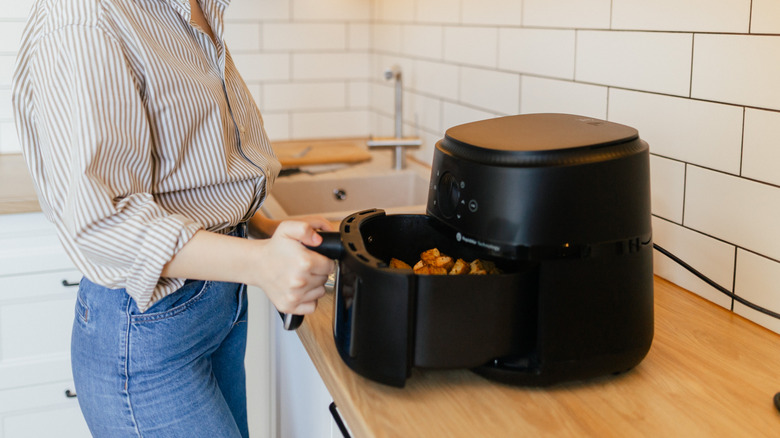
Do you only drag out your air fryer when you're craving a frozen snack? It's not completely accidental. Top on the blame list is the roll out. The early hype cycle of air fryers was basically one long highlight reel of mozzarella sticks, curly fries, tots, and chicken nuggets. Naturally, you concluded this thing was built for nugget revival and nothing else. But, as Becky Striepe tells us, your air fryer can do a lot more than make crispy snacks.
"I find that foods like veggies, tofu, anything breaded, potatoes in basically any form, and granola/baked oatmeal work great," she says. She goes on to explain that while it is possible to make desserts "like donut holes, baked apples, and cookies" in your air fryer, it's best to go with a tried and true recipe as these are a bit tougher to get right.
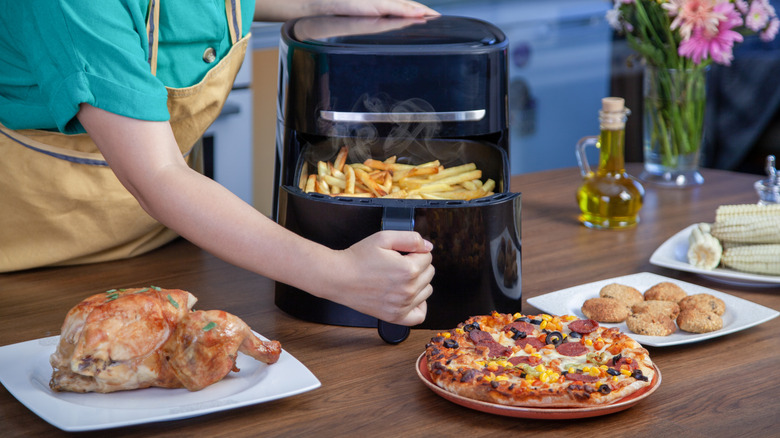
Coco Morante also has an impressive line-up of foods that you might not have thought belong in your air fryer, including zucchini, broccoli, sweet potatoes, baked potatoes, and even personal-sized pizza! Of course, you shouldn't go experimenting with absolutely everything. Hulking roasts or oversized birds are the obvious non-starter.
And as Michelle Doll Dolson says, size alone shouldn't be the deciding factor. Wispy veggies like spinach, arugula, or loose herbs might be small enough to fit comfortably in there, but that doesn't mean they should. "[Those] will just get caught in the fan and singe, stick to the sturdier stuff like kale if you want chips," she says.
5. Expensive always equals quality
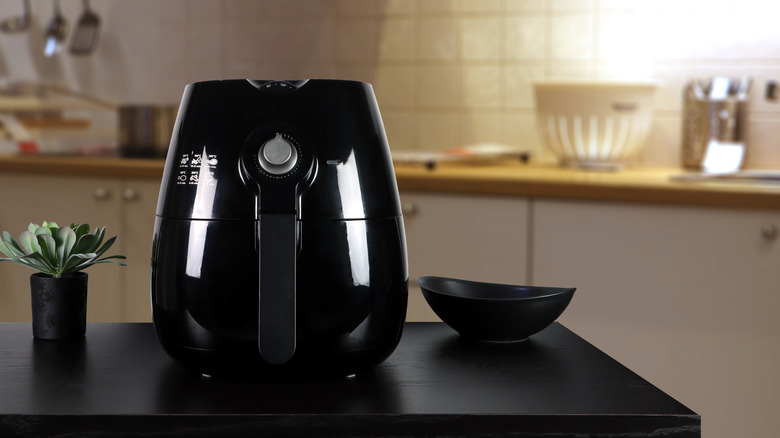
There's a lot to weigh when picking out an air fryer, but price is always near the top of the list. On the low end, you've got got $30 to $80 stalwarts like Dash and Black+Decker, and then there are $150 to $300+ prima donnas like Philips and Ninja. With a price range that wide, figuring out where to place your bet can feel like an uphill battle.
It might be tempting to spring for the premium stuff; after all, expensive always equals quality, right? Well, it's not quite as straightforward as that. Fritaire founder Andreas Hansen tells us that while higher prices might hint at sturdier engineering and nicer materials, that's not always the case. Sometimes, you just end up coughing up cash for clever branding and better marketing.
So how do you know when to take the price seriously? Most folks just eyeball the extras, which, as it turns out, is more myth than method. Units with dual baskets, Wi-Fi, custom presets, and app integration might seem more serious, but while great at padding the receipt, those bells and whistles might not translate to better performance. As Hansen tells us, "thoughtful design, durability, airflow quality, and [quality] materials" are the real adjudicators of quality.
But that doesn't mean you won't get significant value if you opt to go premium. Michelle Doll Dolson says that while the higher price tag has almost nothing to do with how well the appliance will work, it might count for a lot in terms of cooking experience and durability. "What you're really paying for with the higher price tags is better insulation, so the machine stays cooler to the touch, quieter fans, and more durable basket coatings that won't flake off after six months of washing," she says.
6. Air fryers are completely safe
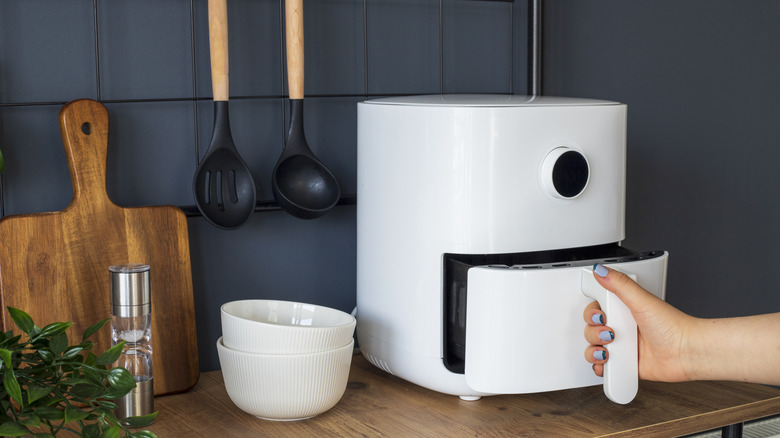
Air fryers are arguably the least panic-rousing appliance you've got in your kitchen. There's no dramatic steam release like a pressure cooker, no bubbling oil bath like a deep fryer, no open flames, and nothing to signal things might go awry at any moment. They're small, insulated, self contained; some even come with an auto shut-off feature for extra reassurance.
But don't let the choirboy exterior lure you into a false sense of security. There are real safety issues you've got to be on the look out for when using your air fryer. According to Michelle Doll Dolson, top on that list is where you place your air fryer in the kitchen. "If you tuck it right against a tiled backsplash or underneath a low cabinet, you risk cracking the tile or even melting the underside of your cupboards. You really need a good 5 inches of breathing room," she says.
That's not all. According to Dolson, air fryers are, at their core, a high-powered convection system. "Think of it like a concentrated windstorm of heat," she says. "Inside that small chamber, a powerful fan forces hot air to circulate at incredibly high speeds around your food." An appliance designed like that obviously draws a lot of power, which means you've got to be extra careful with where you plug it in.
Plugging it into an extension cord simply won't do, since those are not designed to handle that kind of sustained load. To avoid accidents, like, say, the extension cord melting or bursting into flames, Dolson recommends plugging your air fryer directly into the wall outlet.
7. Air frying is the same as deep frying
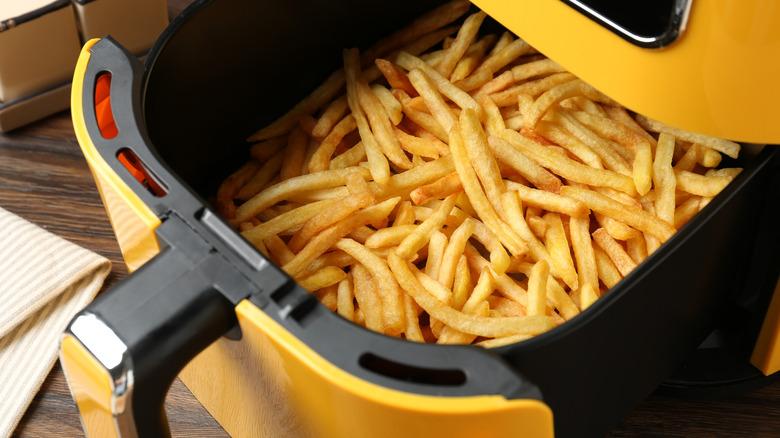
A whole mental checklist pops up when you consider switching out your deep fryer for an air fryer; cost, space, minimizing the risk of burning everyone in sight. Chances are that you truly believe you're making a straight swap. Sure, you'll get the same browned crispy result from an air fryer as you would a deep fryer. But it's not really the one-for-one it appears to be.
Michelle Doll Dolson tells us that while air frying and deep frying might seem, and even sound, the same, they work on completely different principles. "It's a bit of a misnomer," she says. "Deep frying is all about heat transfer through hot fat, but an air fryer is essentially a high-velocity convection system." Basically, air frying blasts your food with extremely hot air so the surface dries out instantly, giving you a result that's almost visually identical to what you'd get from a deep fryer.
Chiming in is Coco Morante, who explains that method is not the only thing that sets air frying apart from deep frying. Sure, air frying absolutely nails the crunch, but you might notice some subtle visual differences. Hot oil is a far better heat conductor than air, which means you'll get a thicker, more cohesive crust, and a slightly deeper golden color with a deep fryer. "I don't necessarily think that's a bad thing, though — air fried food is a lot less greasy, and I feel much better after eating it than I do with deep fried foods," she says.
8. You don't need oil to air fry your food
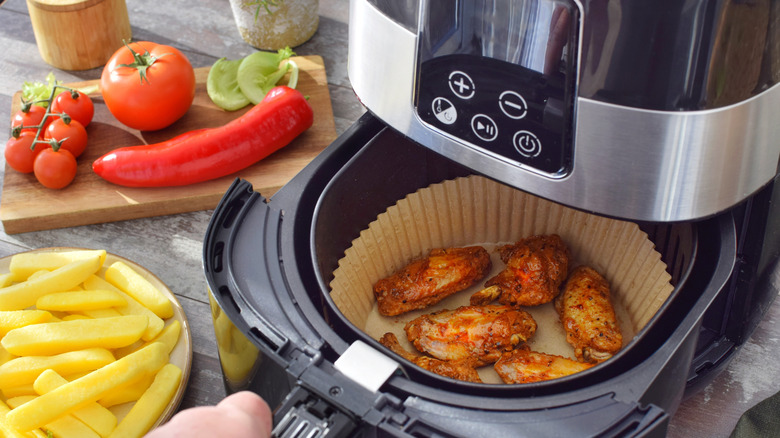
You've watched the TikToks, endured the ads, and skimmed the blogs: Apparently, people are getting away with air-frying practically everything, with a few exceptions, of course. Meanwhile, you're still stuck on frozen fries. What's the holdup? It might just be that the name "air fryer" sold you on the idea that oil is completely optional.
But Coco Morante cautions that using very little or no oil at all is, for the most part, a non-starter with air fryers. Things like raw vegetables and un-breaded meats absolutely need oil, or else they'll turn out sad, unevenly crisped, and dry. She makes an exception for pre-fried foods like day-old fries, tater tots, or chicken nuggets, which already contain oil. Ergo, they will crisp up nicely without any more.
How much is enough? Michelle Doll Dolson tells us restraint is key when deciding how much to add in. "You aren't trying to saturate the food; you're just giving the heat a surface to grab onto," she says. "A light coating is what bridges the gap between a dry bake and that glorious golden-brown."
But does every oil make the cut? Olive, avocado, grapeseed, even good old vegetable oil are all fair game. Dolson says there's just one ultra-convenient shortcut that's strictly off-limits: aerosol cans. Many aerosol cooking sprays contain a bunch of add-ins: emulsifiers like soy lecithin, anti-foaming agents like dimethyl silicone, and propellants like propane. These additives can bake onto the surface of your basket's non-stick coating and form a sticky film. Over time, the coating can turn gummy and hard to get out, which can degrade the non-stick coating on the air fryer basket.
9. Air fryers are a complicated appliance
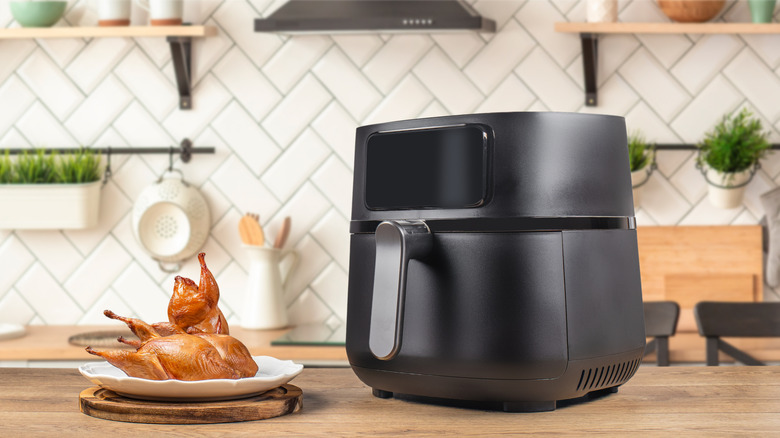
Unboxing an air fryer can be gamble. Sometimes you're a natural. And other times, you stand there, blinking at the baskets, dials, and presets paralyzed by decision fatigue. Don't take it personally; the buttons do half the intimidating. The marketing doesn't help, either. When people start throwing around jargon like cyclonic convection and vortex heating, you're bound to think there's a learning curve involved. But, as Andreas Hansen says, there isn't as much to it as you might have been led to believe.
"People think there's some kind of secret wizardry happening in there," Hansen says. "If you want to visualize it? It's like a tiny wind tunnel for your chicken. When the airflow is designed properly, you get even browning. When it's not, you get soggy fries and disappointment. So the real magic isn't the 'frying' — it's airflow engineering!"
From that angle, all the complication starts to fall. After all, if it's all about airflow, then all you need is to pick a temperature and time, and maybe do a mid-cook shake so the airflow can strut its stuff. But what if you're dialing in the right temperature and time and still getting lackluster results? Fret not. According to Hansen, it's not because your appliance is broken and or you've failed the air fryer learning curve. "Nine times out of 10, it's overcrowding," Hansen says. "Air fryers need space. They're dramatic like that!"
10. All air fryers are built the same
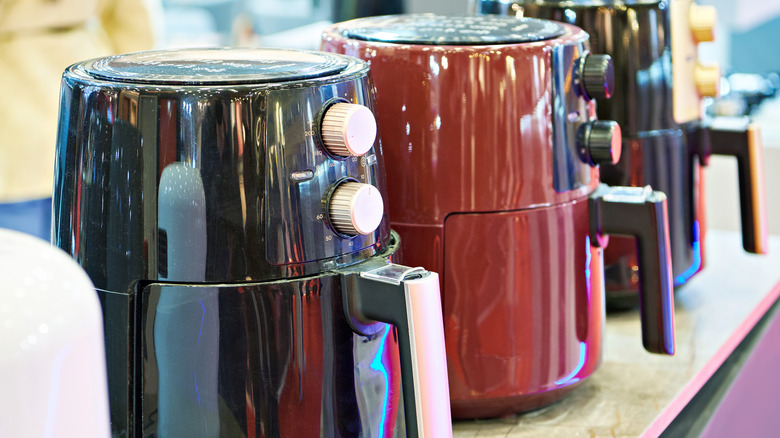
Buying your first air fryer can be a bit intimidating. But once you get the hang of the essentials (drawer, basket, temp, and timer), it's all smooth sailing. And that's when you start thinking: Aside from the price tag, aren't all air fryers designed the same? Andreas Hansen notes it's not quite as straightforward as that.
Air fryers come in varying designs, which can affect how efficiently they operate and how good they are at cooking your food. Hansen explains that in traditional box-style designs, heat moves from a fixed point, which can create the kind of hot and cold spots you'd expect when cooking with a microwave. "That's why you're constantly shaking the basket, rotating food, or checking to make sure one side isn't overdone while the other stays pale," Hansen says. In contrast, air fryers with circular bowl designs allow heat to circulate much more freely through your food, leading to "even browning, better texture, and reliable results without the guesswork."
Hansen also points out that material quality also differs from one appliance to the next, which might affect how well they stand the test of time. Take the baskets, for instance. Most come with a non-stick coating. But the degree and speed of wear and tear can vary wildly depending on whether the manufacturer opted for glass, ceramic, or Teflon.