

The 13 Biggest Mistakes Everyone Makes With Homemade Salsa
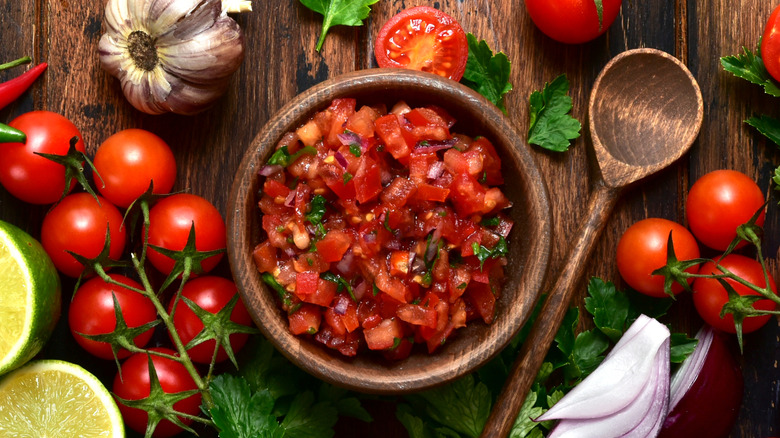
Few condiments are as versatile as salsa. It's just as at home alongside tacos as it is spooned over burgers, grilled meats, or eggs, and it's delicious enough to serve with nothing more than a bag of tortilla chips. While there are lots of fantastic options on store shelves, making it from scratch is actually quite easy and typically yields the best flavor. That is, of course, if you manage to avoid a few common mistakes.
Despite how simple salsa is to make — after all, there's no cooking involved — creating a batch that truly wows everyone who tries it isn't always as easy as it seems. To help, we are addressing the most common mistakes that people make when creating homemade salsa. Knowing what they are will help you avoid them, so your next batch is not only beautiful to look at but also packed with the fresh, balanced flavor we all want.
Over-blending the ingredients
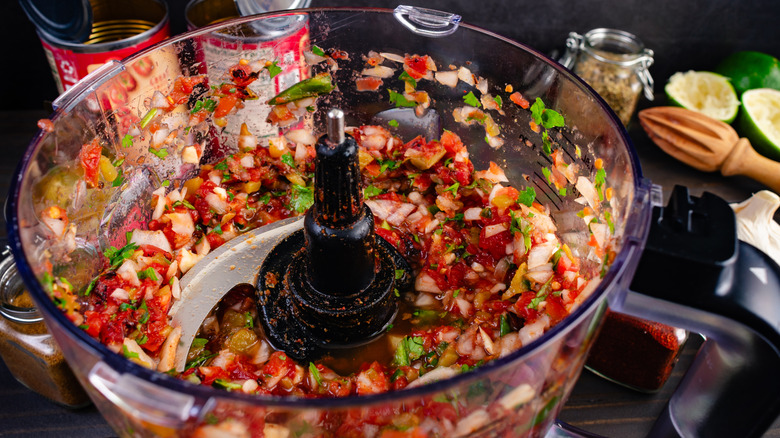
Most people use a blender or food processor to make salsa because it results in lightning-fast results. However, one of the most common mistakes — over-blending the ingredients — is just moments away if you aren't paying close attention.
When blended perfectly, classic tomato salsa has a bright red hue, and the texture varies from coarse to smooth, depending on your personal preferences. Conversely, when you accidentally over-blend salsa, it leads to an undesirable texture that's mushy. But, over-blending can affect more than just the texture. It incorporates excess air into the salsa, leaving it foamy and less vibrant in appearance. Green salsas made with ingredients like tomatillos or cilantro may also darken more quickly as oxidation sets in, causing them to lose their fresh, bright color.
To ensure you don't over-blend salsa, you need to watch your machine like a hawk. We also recommend using the pulse function. Quick bursts of power are your friend when it comes to making this beloved condiment from scratch. Stirring the ingredients between pulses also leads to more uniform results in the end.
Thinking more ingredients is always better
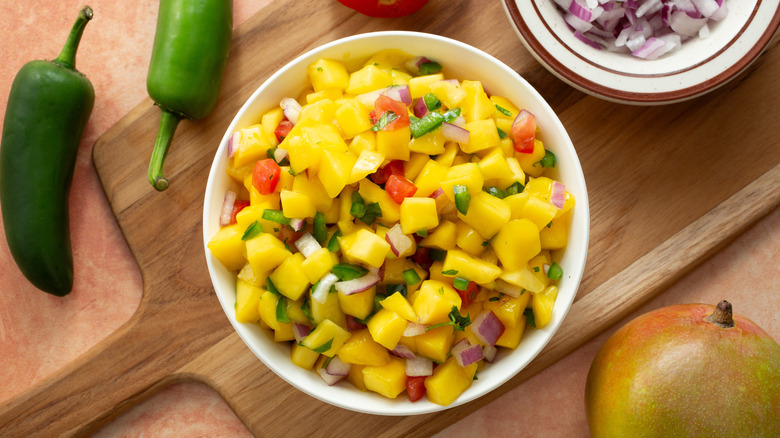
In its most basic format, salsa consists of tomatoes, onions, cilantro, a spicy pepper, lime, and salt, and turning them into the tasty condiment only requires a quick mix. Even so, many novice salsa makers think that adding more ingredients to their recipe is a surefire way to improve it. While this can be true, salsa is one of those instances where less is often more. There's no need to go overboard.
Sure, a couple of extra ingredients, like garlic, avocado, corn, cumin, or coriander, can be a good thing in homemade salsa. However, we don't recommend branching out until you get the basics down pat. Once you master the balance of ingredients and have a classic salsa recipe under your belt, then you should feel free to start experimenting with flavors and textures. Besides, the simplest recipe is darn near perfect as-is when you execute it correctly.
Not seasoning properly
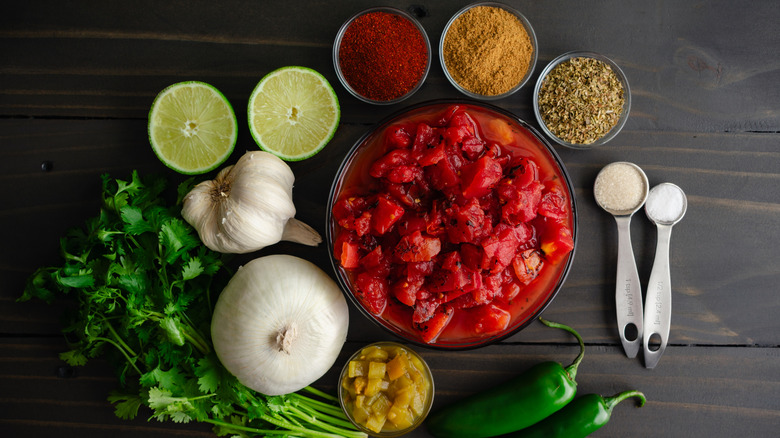
Tomatoes, onions, and spicy peppers all by themselves pack a ton of flavor in every bite. However, it is the seasonings you add to a classic salsa that transform it into the condiment we all know and love. With this in mind, you need to properly season your homemade salsa. Unfortunately, though, not doing so is a common mistake many of us struggle with.
Traditionally, salsa seasonings include lime, cilantro, and salt; that's it. Garlic and olive oil are also common, but considered extras. When you branch outside of a classic red salsa, the flavor add-ins are practically limitless, but season slowly. Tasting and readjusting as needed is the best course of action, especially when it comes to salt. If you go overboard on it or any of the other flavor enhancers from the start, the salsa becomes weighed down — which takes away from the ideal, fresh taste you want in the dish.
Keeping it too simple with tomato options
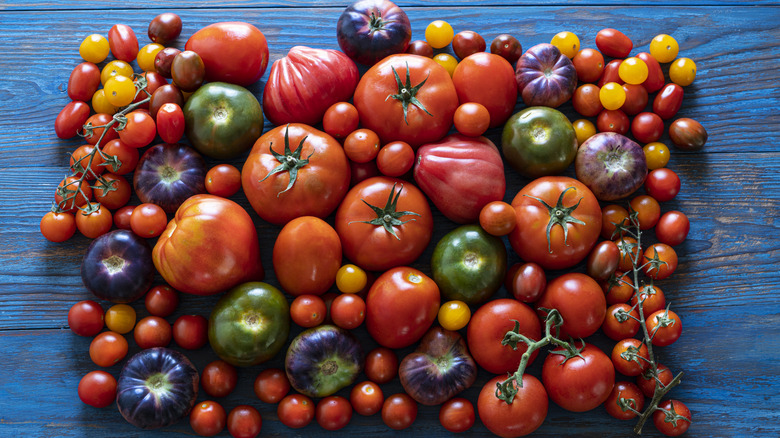
Switching up the types of tomatoes you use in your homemade salsa will serve you well when you want to stray from a basic rendition of the condiment. There are many types of tomatoes, each with distinct flavors. While some of us stick to a basic hot house red tomato when making homemade salsa, keeping your tomato pick too simple can be a mistake. As it turns out, there are lots of fantastic options that can really liven up a bowl of salsa.
Ripe, soft Roma tomatoes are a great choice for your next batch of fresh salsa. They have a low moisture content, so it won't become too watery. They are also super meaty, leading to a hearty result. While much smaller, cherry tomatoes add a delicious sweetness to homemade salsa that, when seasoned properly, gives the dish a layered element anyone could love. In addition, charred and fire-roasted tomatoes are wonderful options. They add a deep, toasty flavor that complements the condiment like no other. If fire-roasting tomatoes at home isn't in the cards, there are plenty of canned varieties that are ready to step in and deliver the same nuanced taste.
Not balancing the ingredients
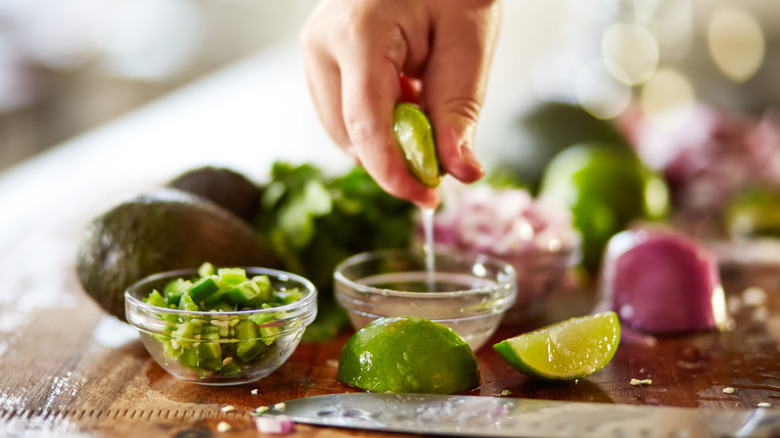
For the tastiest homemade salsa, achieving the perfect balance of ingredients is essential. This goes for more than just the proper use of seasonings, too; we are talking about the whole list of elements.
When salsa contains too many tomatoes or too much lime, it quickly becomes overly acidic. In addition, when there are too many spicy peppers, the heat factor quickly gets out of control. To avoid all of these missteps, it's best to start with fewer of each. You can always go back and bulk up your salsa with more of anything you find it is lacking. It's the taking out part that's tricky, if not downright unachievable.
So, just like with seasonings, it is best to start slowly, taste, and adjust when it comes to the veggies and citrus you use in your homemade salsa. You also want to keep in mind how you will be enjoying the salsa. If you are serving it with tortilla chips, taste the salsa with a chip instead of a spoon. The salt and texture of the chips can change how the flavors come across.
Thinking all salsa has to be spicy
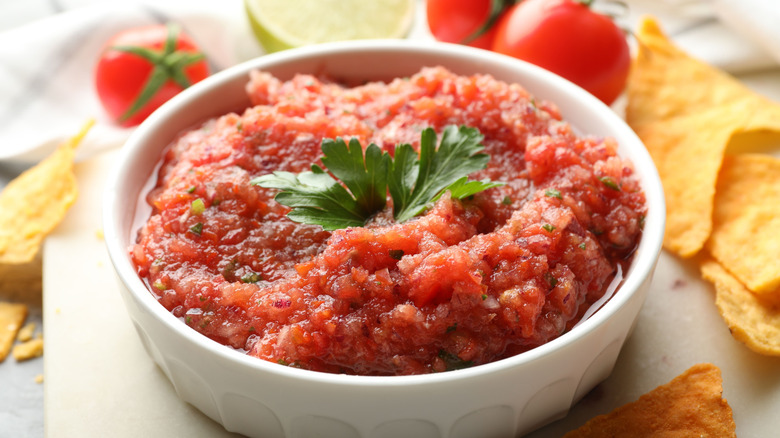
For the most part, salsa recipes are spicy. No surprises there since one of the ingredients used in a basic recipe is a spicy pepper, like a jalapeño. However, thinking all salsa has to be spicy would be a mistake. In fact, if you don't want any heat, you don't have to incorporate any ingredients that bring that to the table. You can even make a sweet salsa if that tickles your fancy.
In addition to leaving spicy peppers out of the mix, you can also replace them with something else to add a bit of missing flavor back into your salsa. The best way to achieve a similar texture is to swap out spicy peppers for bell peppers. They provide the same crunch, and there's nothing spicy about them. Corn, sweet or fire-roasted, won't let you down, either. Whichever route you go, people with a sensitive palate to heat, like kids, will no longer be excluded from the fun.
Limiting your base options
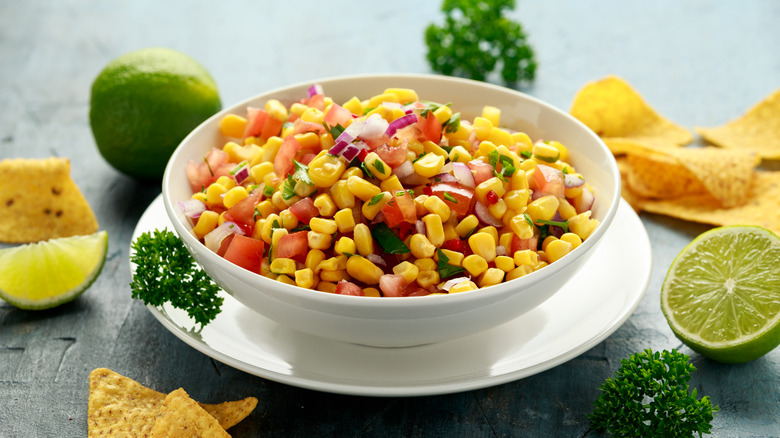
Tomatoes are the classic pick when it comes to choosing a base for salsa recipes. However, thinking it is the only suitable workhorse for the dish is a common mistake. In fact, there are plenty of fruits and veggies vying for a spot as the star of the homemade salsa show.
A fresh corn salsa is one of the most popular permutations of the classic recipe. It provides a deliciously sweet flavor profile and pairs perfectly with the other usual suspects found in the dish, like lime, onion, spicy peppers, and salt. Several fruits are also waiting in the wings for their time to shine. For example, the smoky sweet flavor of grilled pineapple gives salsa a tropical edge that is sure to draw just about everyone in. The same can be said for mango. A sweet watermelon salsa is another show-stopping rendition that oozes summertime vibes. All of these fruits also create a yummy, sweet and spicy effect that is easily palatable for a wide range of personal preferences.
Salsa verde, AKA green salsa, swaps out your typical tomato base for tomatillos. In addition to the eye-catching appeal of a roasted tomatillo salsa, you also wind up with a bright, citrusy, somewhat tart flavor that has become a favorite of many.
Not adding acid at the end
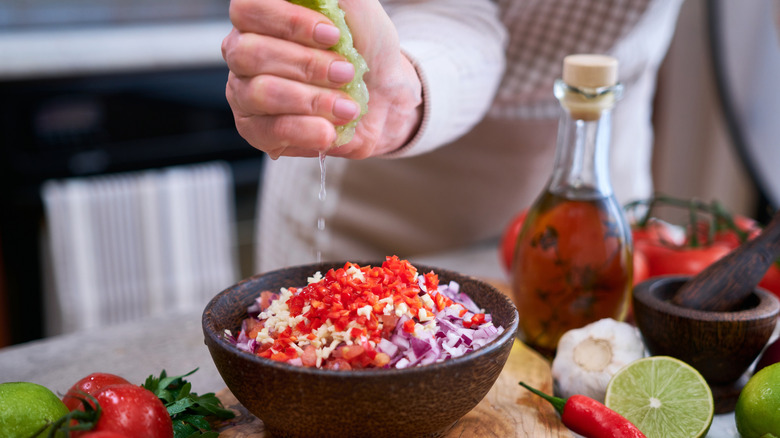
When it comes to adding acid to dishes of all kinds, it is typically best to wait until the food is almost done. This keeps the acidic element, like lime or vinegar, bright and zesty. When it is incorporated too soon, instead of brightening flavors, it quickly gets lost in the mix. With this in mind, adding lime to your homemade salsas too early on in the process is a mistake. If you do, your salsa will easily fall flat, and nobody wants that. No need to fret, though; this is one mistake that is super easy to avoid.
To avoid losing the citrusy brightness of lime in your salsa, wait to squeeze it into the bulk of the ingredients until your salsa is one or two blender pulses away from being done. You can also stir it in after you take it out of the blender, whichever works for you. Either way is better than the alternative, adding lime juice too soon.
Using dry herbs
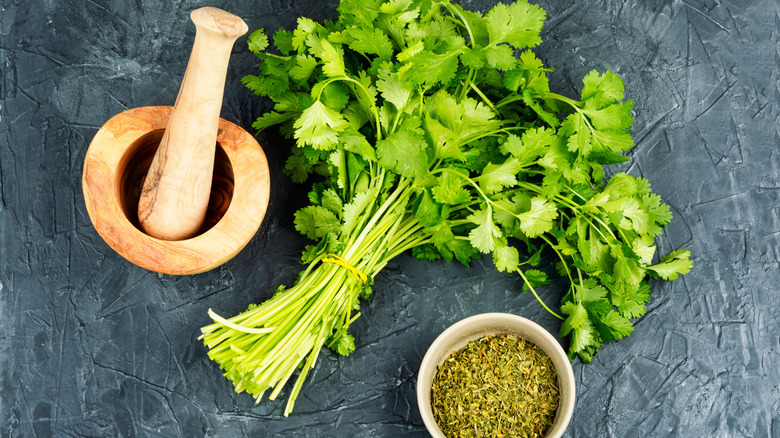
Dry herbs are great because they allow you to keep a collection of seasonings stocked and on hand without having to worry about them spoiling, something that happens very quickly with their fresh counterparts. However, when mixing up a batch of homemade salsa, reaching for dry herbs is a mistake. Compared to fresh herbs, they come with a significantly diminished flavor overall. You can forget about any semblance of freshness as well, so it's best to let your spice rack take a back seat when making salsa and reach for fresh herbs instead.
Cilantro is the herb of choice for making salsa, and the dried stuff doesn't even come close to the flavor provided by fresh sprigs of it. The latter is bright, zesty, and bursting with bold flavors. The former has some of the same taste, but it is a complete dud when the two versions are held up side by side. So, when it comes to making salsa, always reach for fresh cilantro. The same can be said for other herbs that work their way into the mix when you branch out from the basic recipe.
Not knowing the type of onion you use matters
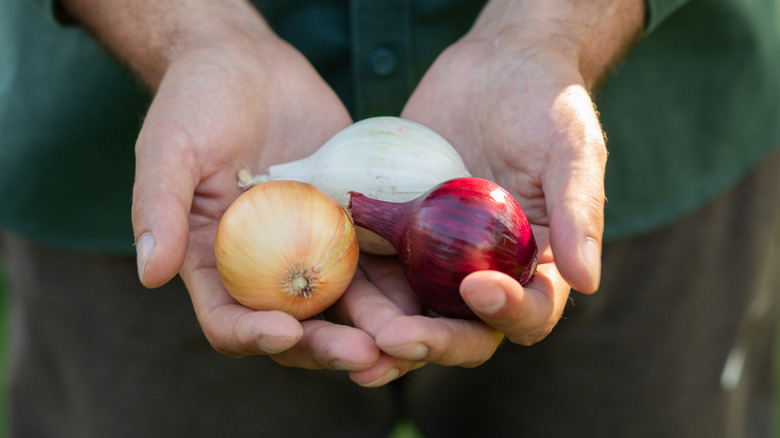
Similar to tomatoes, there are a slew of different types of onions, and the kind you use has a serious effect on the flavor of homemade salsa. Not knowing this, and potentially choosing the wrong variety, is a mistake you'd be wise to avoid. When it comes to cooking, yellow onions make a wonderful pick. However, you want to steer clear of them when making salsa. Instead, white or red onions are the way to go because they provide a taste and texture more suitable for a classic salsa recipe. They also taste great when consumed raw.
White onions are the most common pick for salsa. They have a bright, sharp flavor that remains crisp yet won't overpower the other ingredients in the recipe. You can also choose to cook white onions to tone down the taste and add a bit of caramelized flavor, but since we are making salsa, raw ones more than fit the bill. Red onions can also be used in salsa to add a pop of color, a zesty bite, and a similar flavor to their white counterparts.
Sticking to one type of spicy pepper
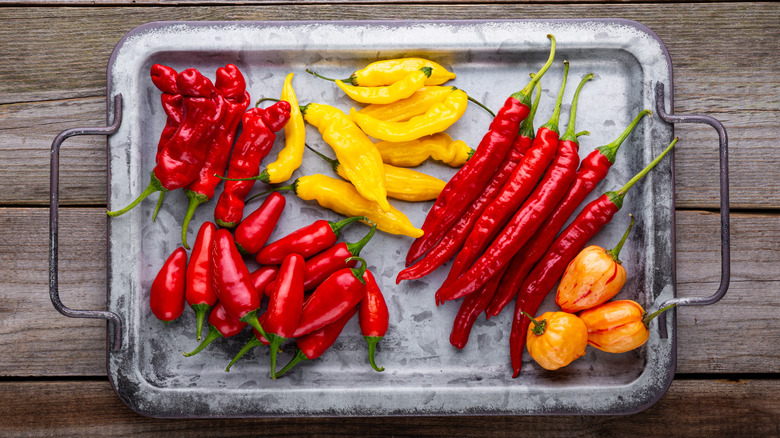
Ah, spicy peppers. There are so many of them, and they vary in both flavor and heat levels. Suffice it to say, the choices never get boring. Even so, most people simply stick to one type of spicy pepper when making salsa from scratch: Jalapeños. While there is no denying that they make a stellar pick, using them and them alone is a mistake salsa-making pros don't make. Experimenting with different options is a great way to level up your salsa game.
In addition to jalapeños, habanero peppers, serrano peppers, Hatch chilis, Anaheim chiles, and Pueblo chiles all make superb additions to salsas of all kinds. Opt for fire-roasted chiles, and the taste only gets better. Or, if you fancy yourself someone who can handle a serious blast of heat, you could also go for one of the nine hottest peppers in the world, like ghost peppers or Carolina Reapers. Be careful, though, because when they say there are the spiciest varieties in the world, they are not playing around.
Forgetting to let it rest
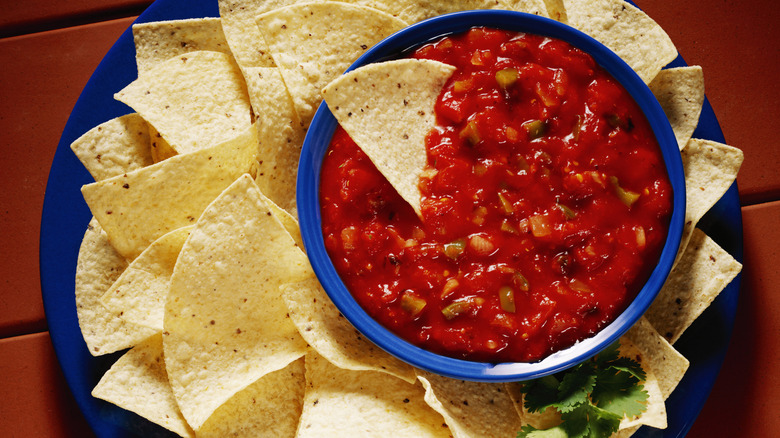
Once your salsa is blended to perfection and all of the ingredients and seasonings are properly balanced, it's easy to think that there aren't any mistakes left to make. Sadly, this is not the case. The first post-creating mistake that many people fall prey to is simply serving salsa the moment it is prepared. As it turns out, the pros recommend letting freshly made salsa rest for about 30 minutes in the fridge before diving right in.
When you let salsa sit for a few minutes, the flavors can change as the elements come together in a more harmonious way. Because of this, it is best to re-taste it after resting. This gives you one last chance to make changes to the seasonings and other ingredients before serving. You may not always find you need to, but giving yourself every opportunity to pull off a perfectly executed homemade salsa is always a good thing. Don't fall short and give up at the last minute.
Not consuming fresh salsa within a week
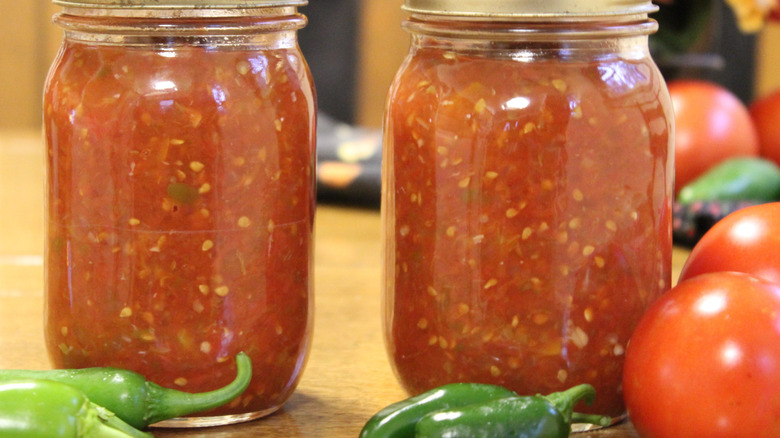
The final mistake people commonly make with homemade salsa is not consuming it fast enough. It is easy to make this blunder, too, because jarred salsa has a significantly longer shelf life than its fresh counterpart. Once opened, the store-bought variety can last for two weeks and up to a month if it is properly sealed and refrigerated. Fresh salsa, on the other hand, only lasts for about five days. Maybe seven, but we find that is pushing it because the longer it sits, the more fresh flavor is lost.
To ensure you never let all of your homemade salsa efforts go to waste, don't make a massive batch of it unless you have plans to use it all in less than a week. You can always make more, and throwing unused fresh salsa out should be a crime. We joke, but once you get the technique down pat and know how to avoid all of the common salsa-making mistakes we've covered without a second thought, it won't take long to blend up a new batch.