

8 Best Soy Sauce Brands, According To Customers
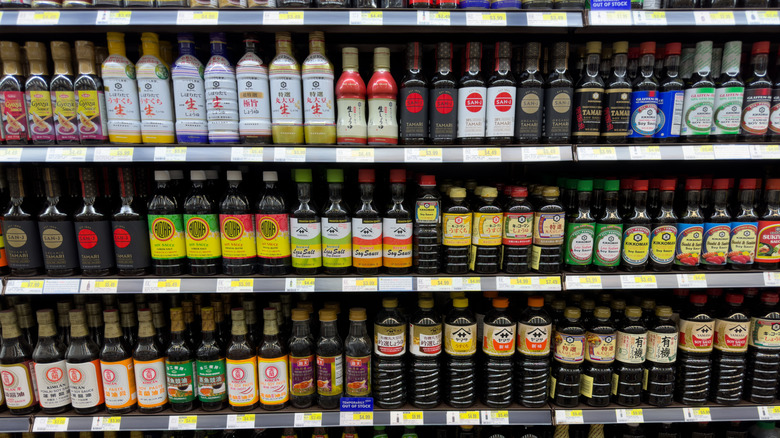
Soy sauce is at once art, science, and ingredient. Like wine, miso, kimchi, or any other fermented food, it is simple in composition but complex in taste. Making it requires just a handful of ingredients — primarily soybeans, wheat, salt, kōji mold, and water — and time. However, within this basic framework there can be immense variation and regional distinction.
There are hundreds, if not thousands, of different soy sauces, each with its own unique flavor profile, price point, and purpose. Some are used as an alternative to salt, while others are selected for their sweetness, color, or umami, which makes choosing the right type or brand difficult, especially for the unfamiliar shopper.
So, how does one begin their soy sauce journey? As with any other food product, the first step is to take the plunge and experiment with different options. Look beyond the cheapest or most common and dabble in premium, dark, thick, or flavored varieties. Even still, there are many competing brands to sort through. Some rely on traditional fermentation methods and high-quality ingredients, while others take shortcuts to lower prices and extend shelf life.
When shopping for soy sauce, it helps to have guidance. This list is based on the thoughts, comments, and opinions of passionate customers who regularly use soy sauce. After sorting through hundreds of comments, posts, and reviews, it was clear that some brands stood above the rest. Prices may vary.
1. Lee Kum Kee (Dark Soy Sauce)
Look at any roundup of quality soy sauce brands, and you'll find Lee Kum Kee somewhere on the list. The company was founded in 1888 in China's Guangdong province by Mr. Lee Kum Sheung, who also just so happens to be the inventor of oyster sauce, a sweet and savory condiment made with oyster extract, sugar, and spices.
Today, Lee Kum Kee is a global empire of Chinese sauces, noodles, condiments, oils, soups, and vinegars. But it is best known for its 30 types of soy sauce, which range from the high-end "first draw" to flavored and low-sodium varieties. If you look at the ingredient label, you'll notice that some of Lee Kum Kee's soy sauces include preservatives, while others feature flavor enhancers or added caramel color. Don't let this deter you; these additions are designed to enhance the overall flavor, not mask or disguise it.
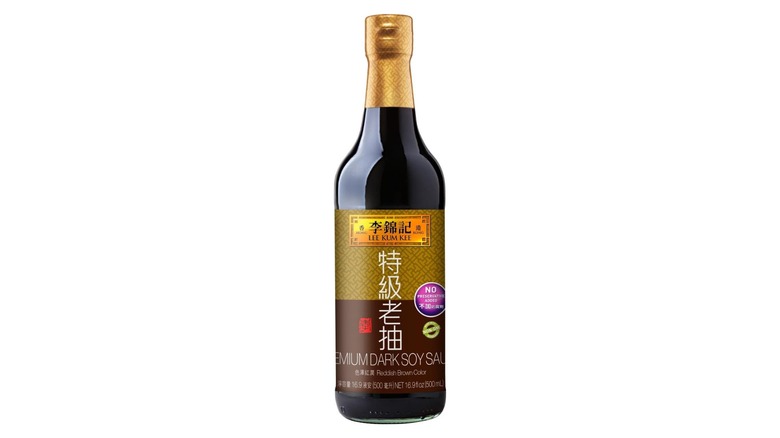
Customers are especially fond of Lee Kum Kee's Premium Dark Soy Sauce. This syrupy, rich, and slightly sweet variety can be used as the central ingredient in soy sauce chicken, sesame tofu, or sweet, slow-braised pork. Just don't use it in place of traditional or light soy sauce, which is dramatically thinner and saltier.
2. Lee Kum Kee (Mushroom Flavored Dark Soy Sauce)
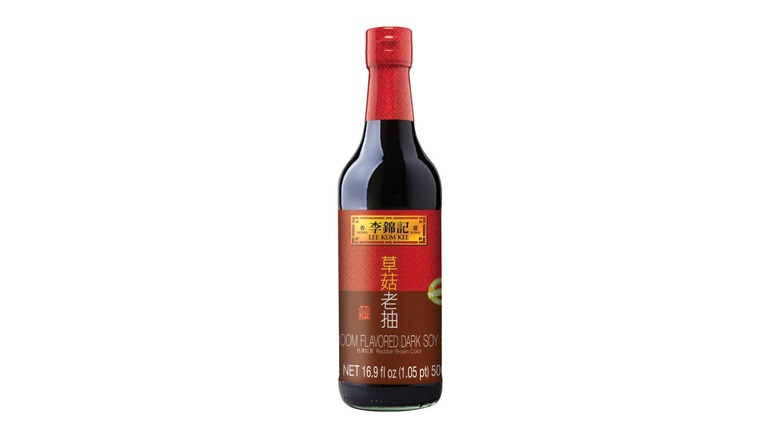
This is the only brand with two soy sauces on the list, but we thought it necessary, especially given that both products are so celebrated online. So what does the Lee Kum Kee Mushroom Flavored Dark Soy Sauce bring to the party? A whole lot of deep, savory umami goodness. It's true that the product gets a little help from some added artificial flavors, colors, and preservatives, but its base is still pure soy sauce.
Reviewers describe this product as a nostalgic taste that reminds them of home. Just a dash gives a big mushroom flavor and a mild sweetness to anything it touches. Again, this is not your typical light soy sauce and shouldn't be used as a source of salt. It's thick and viscous, not thin, so use it sparingly or when you need complex flavor in a hurry. Don't add it to light or delicate proteins; instead, incorporate it into sauces, stir-fries, dumpling filling, noodles, or marinades for pork, duck, or chicken.
3. Wan Ja Shan (Organic Aged Soy Sauce)
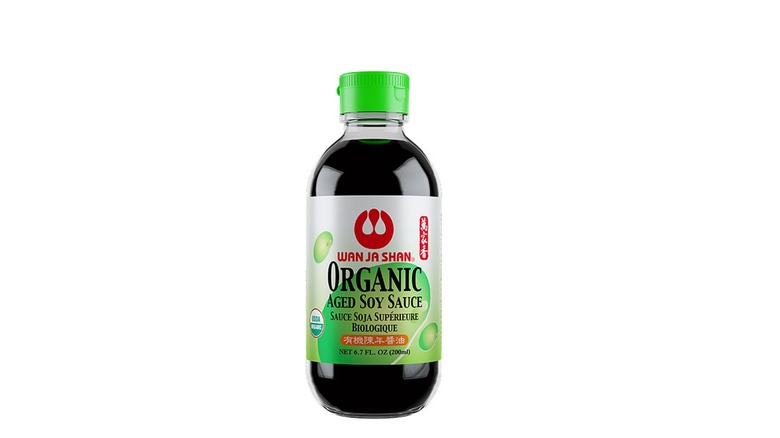
Wan Ja Shan has been producing soy sauce for nearly a century, but its product line extends well beyond that, featuring everything from fruit vinegars and hoisin sauce to black bean soy glaze and kelp ponzu. But this diverse array of items takes a back seat compared to its selection of soy sauces, particularly its organic aged soy sauce.
Organic soy sauce isn't widely popular or available, but this label implies purity, which is especially important in a soy sauce industry that's constantly fending off lower-quality, imitation products. On its website, Wan Ja Shan says that its organic line uses only the best non-GMO soybeans and organic ingredients whenever possible. And if you check the ingredient label, you'll see this claim holds up — no added colors, preservatives, or flavorings in sight.
Besides using only organic ingredients, Wan Ja Shan's aged soy sauce has another trick hidden in its bottle that makes it popular with customers: a touch of sugar. And this makes sense because reviewers will point to the product's mild, gentle flavor and less astringent bite as the characteristics they most enjoy. It's recommended to use this aged variety as more of a table sauce for drizzling over rice, noodles, cooked vegetables, fish, and other light proteins. For the quality, Wan Ja Shan is a steal, with a price that's not so far off from a bottle of Kikkoman.
4. Koon Chun (Thick Soy Sauce)
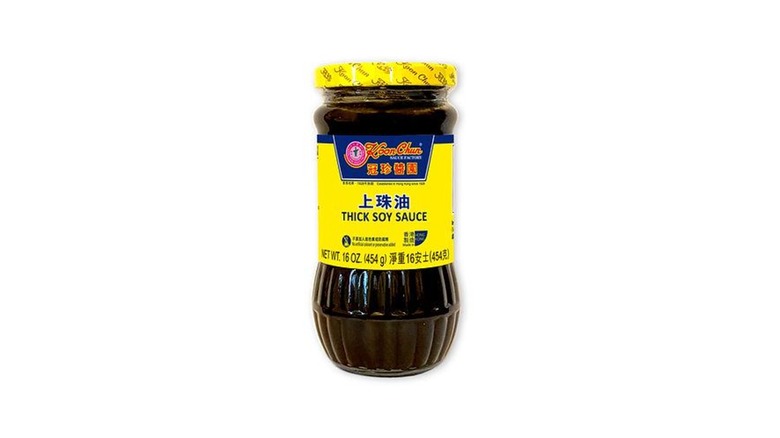
Koon Chun is a well-recognized Hong Kong-based manufacturer that's been producing soy sauce for nearly a century. Today, the company remains committed to its founding principles and brewing methods, which means no added flavors or chemicals to speed up fermentation.
And while its traditional soy sauce is good, it's Koon Chun's Thick Soy Sauce that receives all the buzz online. This is a really neat product. It's essentially a caramelized sugary paste that's flavored with soy sauce. To get an idea of how sweet (and salty) it is, 1 tablespoon contains 60 calories and 23% of the recommended daily value of sodium.
So how does one use thick soy sauce? You're only bound by your imagination. Its caramel flavor and rich umami notes make it well suited for both ends of the sweet-and-savory spectrum. The thick soy sauce gives char siu and other sweet-marinated meats their mouthwatering sheen. It's also a potential substitute in recipes that call for a combination of soy sauce and sugar, like teriyaki chicken, glazed salmon, or even baked beans. Its primary ingredient is molasses, so don't be afraid to try adding a spoonful to your next batch of cookies or ice cream sundae.
5. Pearl River Bridge (Light Soy Sauce)
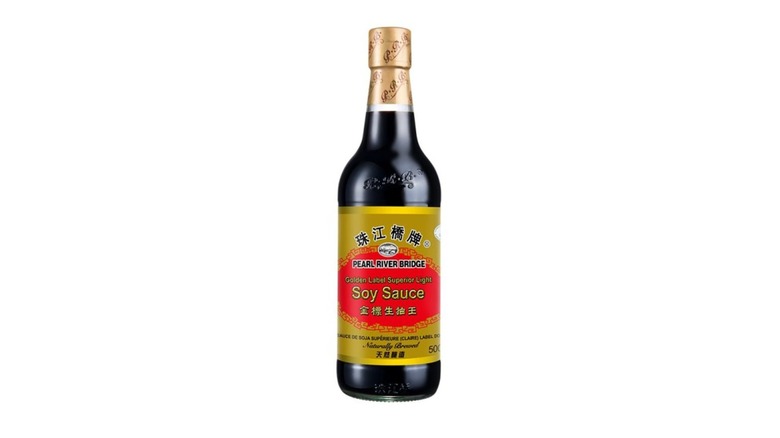
If you're looking for a brand that knows how to execute a simple light soy sauce, then you need to consider Pearl River Bridge. This company appeared in almost every Reddit thread and on online soy sauce forums. They produce a reliable light Chinese soy sauce that, because of its higher salinity, is ideal for sauces, stir-fries, soups, salad dressings, or your next steak marinade. However, the salty, savory notes also pair surprisingly well with traditional sweet flavors, like caramel and chocolate, making this light soy sauce a fun addition to brownies, cookies, and desserts.
Pearl River Bridge features a full product line, but passionate soy sauce devotees argue that unless you have a palate capable of discerning the tasting notes of a pricier "first-press" soy sauce, you're likely better off with a standard light variety, which costs around $4.99 for a 16-ounce bottle at most H-Mart supermarkets. Use this one as your standard everyday soy sauce.
6. Yamasa (Koikuchi)
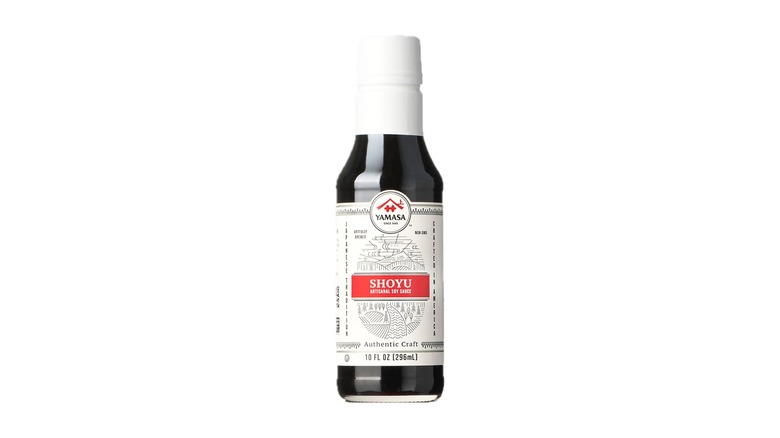
The Japanese word for soy sauce is shoyu. And it should come as no surprise that the country takes its shoyu very seriously, so seriously that soy sauces are organized into five distinct categories whose standards are upheld and monitored by the Japanese government.
Now, we're just going to focus on koikuchi, or "full-flavored" shoyu, which accounts for much of the Japanese soy sauce market and is known for its moderate salinity, mellow sweetness, and acidic tingle. It's essentially the go-to soy sauce in Japan, ideal for dipping sauces, simmering, stir-fries, teriyaki glazes, and sushi.
With so many uses, it's obvious that you need a high-quality bottle on hand, but when sorting through online reviews and message boards to find the "best," it became apparent that this top designation really depends on what you're eating. For sushi and sashimi, the answer was clearly Yamasa. Users note that it's less salty than some other major Japanese brands, with a subtle umami note that pairs well with rice and raw fish. Although Yamasa isn't widely available, you can likely find it at specialty retailers or H Mart.
7. Kikkoman (All-Purpose)
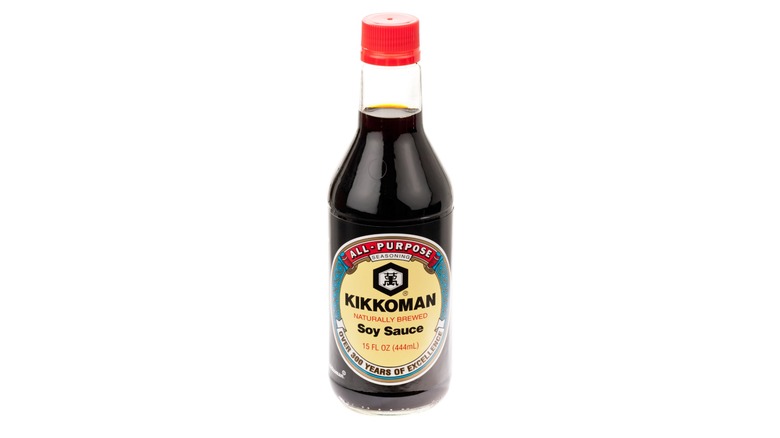
You can't have a conversation about soy sauce without Kikkoman. As the world's largest soy sauce manufacturer, it dominates the market in Japan and the United States. Its quality and value are appreciated by everyday customers and soy sauce connoisseurs alike, and its bottles can be found in supermarkets nationwide. According to reviews, its Traditionally Brewed Soy Sauce remains one of the top all-purpose soy sauces, designed for dipping, mixing, and marinating.
Usually, when a food item is produced at such a scale, its quality inevitably dips, but Kikkoman has managed to avoid this issue, thanks to the company's relentless commitment to integrity, tradition, and technique. And as a result, generation after generation of customers remain devoted to its soy sauce. Its products are available for purchase at nearly all national supermarkets at an affordable price. Shoppers appreciate its balanced flavor profile and punchy saltiness, making it the go-to soy sauce for many U.S.-based consumers. Most importantly, you can use it for pretty much anything: marinades, dipping sauces, sushi, ramen, fried rice, or a sweet and spicy soy glaze.
8. San-J (Tamari)
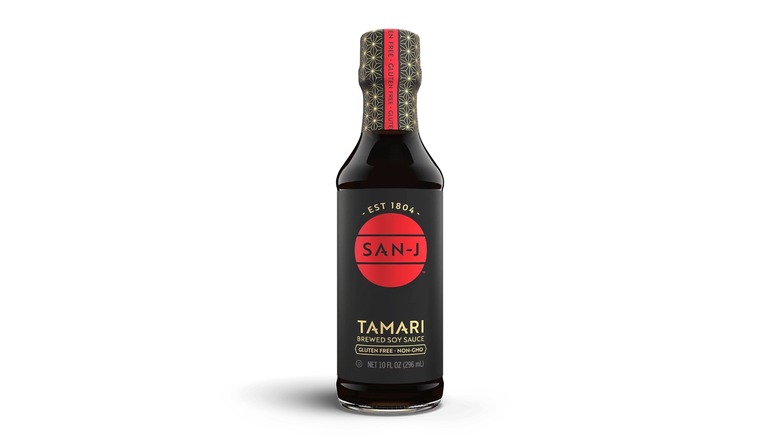
Despite its name, soy sauce contains a high proportion of wheat and is therefore not gluten-free. This seems to always surprise people — as well as frustrate them. But celiacs need not fear, because there's an excellent substitute that may be even tastier than soy sauce itself.
Tamari is a wheat-free alternative that delivers the same salinity and measured umami flavor as soy sauce. Once the salty byproduct of miso production, tamari is now a product line of its own, made in a similar fashion to soy sauce, just without the roasted wheat. And when it comes to finding the highest-quality tamari, you don't need to look any further than San-J. This well-respected brand uses an eight-generation brewing process that — unsurprisingly — doesn't rely on any artificial flavors, colorants, or preservatives.
Customers enjoy the San-J Tamari, citing a full flavor that's not overly harsh or intense. Whereas traditional soy sauce gets a tinge of sweetness from the fermented wheat, tamari is pure umami. Many reviewers noted that once they tried San-J Tamari, it was tough to go back to another mainstream soy sauce brand. However, it's a bit more expensive, so try using it in dishes where the umami flavor will take center stage.
9. Bango (Kecap Manis or Indonesian Soy Sauce)
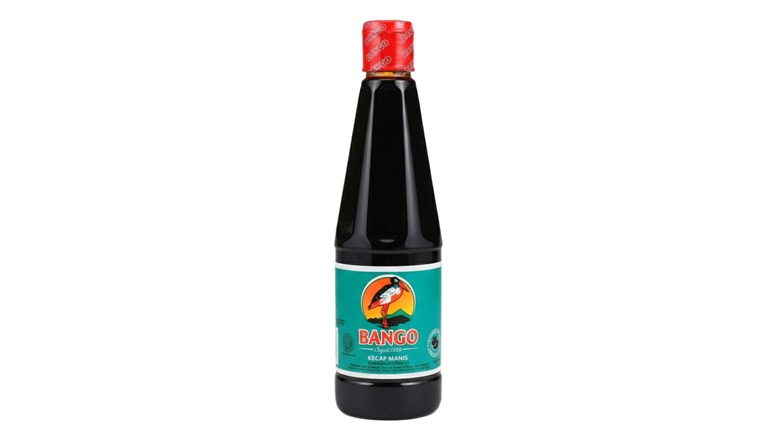
As I looked for the top soy sauce brands, an item kept appearing: kecap manis. This classic Indonesian condiment is not soy sauce in the traditional sense, but rather a product that has been flavored with soy sauce. The most dominant ingredient in kecap manis is sugar — palm sugar, to be exact — resulting in a sauce that's sweet, salty, and viscous, almost like molasses in its look and form, with notes of toast, warm spices, and caramel.
And the most popular brand by a clear margin is Bango. Can you find it in the United States? Not unless you really search for it. However, you can get it online, and the extra effort might just be worth it. People love the stuff, and it has a cult-level following on par with Sriracha and Kewpie mayo.
So if you manage to come across a bottle of this Indonesian soy sauce, what do you do with it? Like most unanswered life questions, there's a Reddit thread dedicated to the inquiry. Most commenters suggest using it in place of honey or molasses. That means adding it to marinades and sauces or combining it with vinegar and spices for a tasty dipping sauce. But like any ingredient, it doesn't hurt to get creative and develop your own fusion foods.
Methodology
Research for this article began with an online search for the best soy sauces, which led me to a number of Facebook posts, Reddit threads, YouTube videos, and food blogs. I sorted through these different mediums, reading comments, analyzing reviews, and watching culinary influencers and food writers discuss their personal favorite soy sauce brands and products.
A handful of clear favorites emerged. However, brands often have product lines featuring hundreds of items, not to mention dozens of different varieties of soy sauce. That means one company's dark soy sauce may be deep in flavor and richness, while its low-sodium option may lack umami and zip. Also, not every soy sauce variety is appropriate for every dish. What's great for dipping sushi isn't always great for marinating pork.
Lastly, when putting this list together, I wanted to focus on brands that were relatively available (and affordable) in most supermarkets across the United States. And if not, you could probably track them down at H Mart or another Asian specialty retailer or online.