

10 Cheap Fish That Should Make You Think Twice (No Matter The Price)
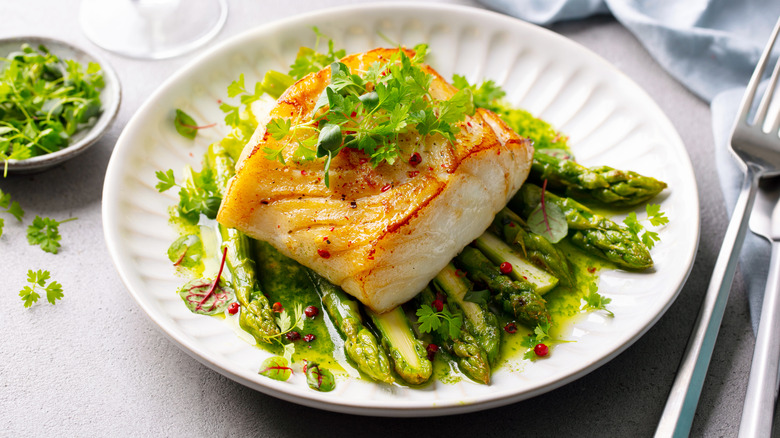
The number of fish options in the seafood aisle seem to be as plentiful as those in the actual sea. Front and center are the wallet squeezers like bluefin tuna, Chilean sea bass, wild halibut — fish so decadent they demand a wine pairing and artsy plating. Then you've got your more responsible choices: salmon, snapper, sea bass. And at the bottom of the whole enterprise, you've got the guys that absolutely refuse to siphon your cash: tilapia, cod, and catfish, among others.
Now, you might think you've got a pretty good idea of where to place your bet — maybe depending on whether rent is due. But it's not quite as easy as that. Price matters, sure, but it can't be the only metric. Luxury cuts might be downright delicious; the problem is, everybody knows it and everybody wants a piece. That's why a lot of these species are so heavily fished they're barreling toward in some waters.
Still, you can't veer too far in the opposite direction. The odds of getting something passable start to slide the further down the price ladder you go. That's not to say you can't score a pretty decent fillet for a couple bucks. But the gap between great and terrible grows dramatically wider the slimmer your budget gets. It's important to know how to sift through the bottom of the barrel and come out with something that won't absolutely disappoint. To help you out, we've put together this roundup of the cheap fish you want to avoid.
Tilapia
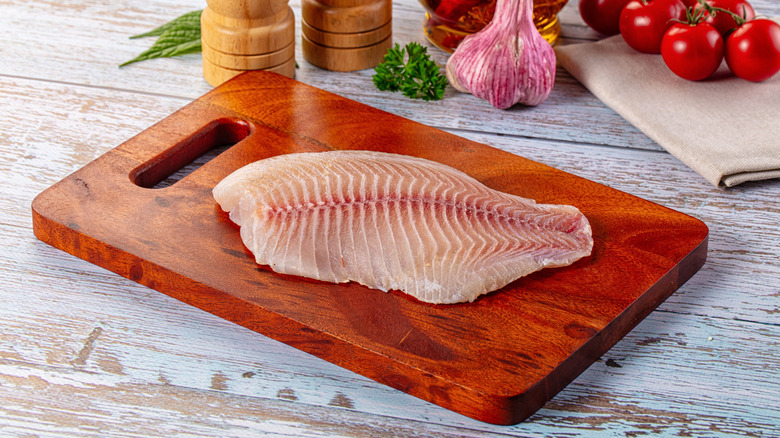
Picture this: You're in the grocery store trying to pick out a decent fresh fish that fits comfortably within your shoestring budget. Your eyes catch a price tag that borders on obscene — it's tilapia, and it's basically flirting with your wallet. Should you take the bait? It's thin, it's boneless, it's dazzlingly pink; what could go wrong, right? A lot, apparently.
Appearances notwithstanding, tilapia does not always lend itself particularly well to several conventional cooking methods. Steaming renders it mushy, baking strips away much of its moisture, and aside from stinking up your entire kitchen, uneven dehydration in the microwave causes its muscle fibers to shrink and clump together, leaving it tough and dry. A 2023 study published in the journal Molecules recommends sous-vide as a workaround, but let's be honest: Sometimes the wherewithal to break out Ziploc bags and vacuum sealers is just not there. And even if you do summon sous-vide energy, tilapia can be woefully underwhelming — its faint flavor practically vanishes in strong sauces. And that's when it's good quality.
Poor quality tilapia is more common than it should be. That's because the species is tailor-made for industrial aquaculture (or fish farming) and conditions are not always stellar across the board. Per research published in Aquaculture in 2021, compounds like geosmin and 2-methylisoborneol (2-MIB) can build up in the flesh under less-than-ideal farming conditions. These compounds are responsible for that muddy taste low quality tilapia is infamous for. Fixing it isn't simple. The fish need to be held in clean water before harvest to purge those compounds, a process that adds time and cost. And for a fish that's already marked down to bits, that final step doesn't always make the cut.
Rockfish
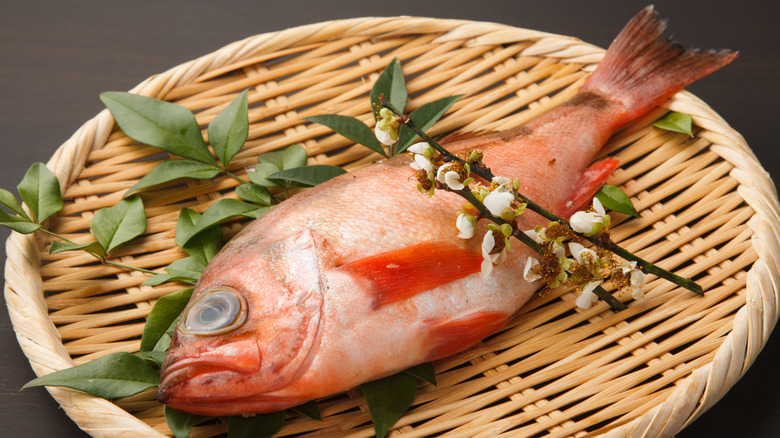
There's a lot to weigh when deciding what cut of fish to take home. Price, flavor, texture are the obvious ones, but there's a bigger one, previously a buzzword, but now a huge consideration when making food choices: sustainability. But what fish are sustainable? Your sustainability cheat sheet probably tells you rockfish is among them, so you pat yourself on the back for making responsible adult decisions as you reach for it.
But is it really as responsible a buy as you might assume? The name rockfish doesn't actually refer to a specific fish; it's basically a generic term that covers everything from fast-maturing, widely available species like chilipepper and yelloweye rockfish, to slow-maturing, long-lived species like canary and bocaccio rockfish. You likely won't find that distinction plastered on a grocery store price tag, and based on observable characteristics alone, there's no telling what particular species you're getting. Which means you could very well end up taking home a slow-maturing species that was previously on conservationists' radar due to overfishing.
On the bright side, rockfish lends itself well to practically all high-heat cooking methods: sautéing, steaming, baking. But that doesn't mean it's infinitely forgiving. Since it's a fairly lean fish, there's not a lot of fat acting as a buffer against overcooking. There's very narrow window of doneness and you're likely to lose half of it to the pan if you're not paying attention; especially during a hard sear. As far as flavor goes, fresh rockfish tends to carry a delicate, slightly sweet, almost nutty profile. But because it's so subtly flavored, it can disappear on you, particularly in dishes with heavy seasoning.
Grouper
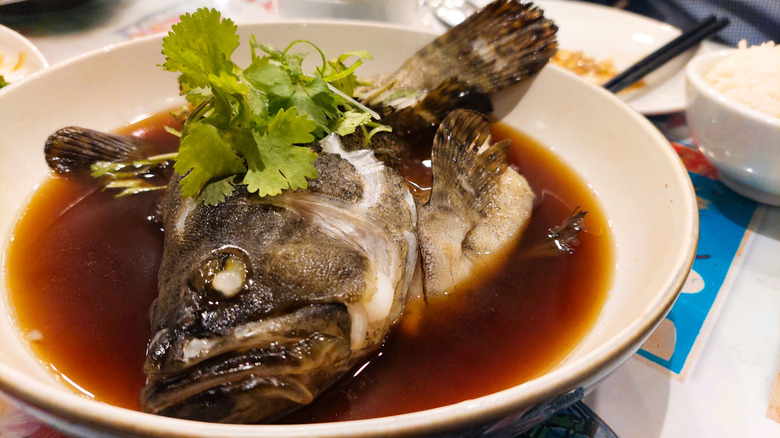
There's something mildly thrilling about finding something you'd normally pay top dollar for discounted to oblivion. But the fish counter isn't really the place to get your fix of bargain-hunting dopamine. This is especially true when shopping for premium fish like grouper. Like practically everyone, you love a firm, flaky fish that works well with just about every cooking method. Grouper checks all those boxes, so stumbling onto heavily discounted grouper can feel pretty serendipitous.
But it hardly is. Because it's such a high-demand fish, retailers typically price it somewhere in the $25–$30 per pound range. Finding it significantly cheaper than that should raise a few eyebrows. In many cases, that "grouper" may have been swapped out for lower-value fish like Asian striped catfish; something virtually indistinguishable once it's scaled and filleted. But what are the chances of that happening? Higher than you might think. A 2020 study published in the journal Biological Conservation, for instance, found that only 18% of grouper sold in restaurants and stores in Turks and Caicos was actually grouper; the rest had been substituted with cheaper species like freshwater catfish or snapper. Then there are sustainability issues related to overfishing with certain types (like rockfish, grouper isn't one single species) as well as toxins that can crop up in varieties that originate in reefs. All told, if you come across grouper that's significantly marked down, it might be better to keep walking.
Atlantic cod
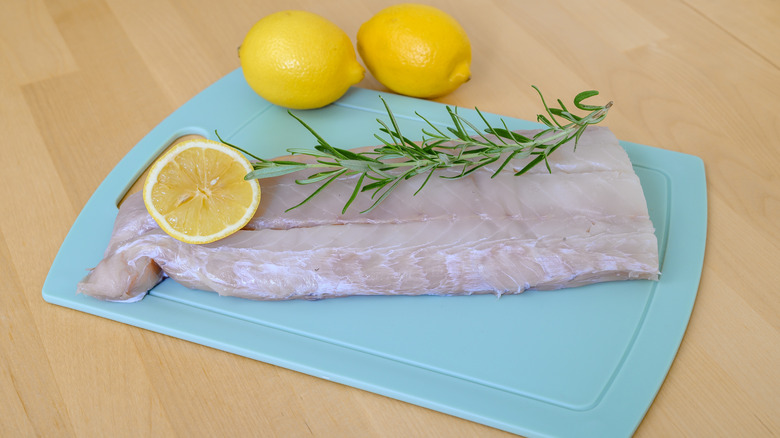
Atlantic cod is beloved for its sweet flavor, the large flakes, and sturdiness, all of which make it great for frying. But what if you stumble upon Atlantic cod priced well under the typical $8-$12 per pound range at major retailers? Well, hold your fish and chips fantasies, because you're probably in line for disappointment.
The times are not great as far as buying cod goes. North Atlantic catches have dwindled even as demand remains sky-high, which means prices are climbing fast. So when you see cod going for cheap, something's usually up. For one, it might not be cod at all, what with mislabeling being as rampant as it is in the seafood business.
And even when it is real cod, cheap sometimes means compromised quality. Fishing method plays a big role here. Bottom-trawled cod, for instance, can sell for up to 25% less than line-caught fish. That's because in large hauls, some fish die before they're properly bled. And when fish is bled after death, blood remains trapped in the flesh, accelerating breakdown through oxidation and bacterial activity. What you end up with is fish that's discolored, mushy, and with a muddy, slightly livery flavor.
Then there's the shelf-life problem. To extend it, some suppliers will keep cod alive for extended periods before slaughter, during which time the fish goes without proper nutrition. The fish then starts breaking down its own muscle proteins for energy, which, according to research published in LWT, degrades the texture to the point where it can turn almost gelatinous — not the kind of fish you want for your fry, regardless of the discount.
Imported catfish
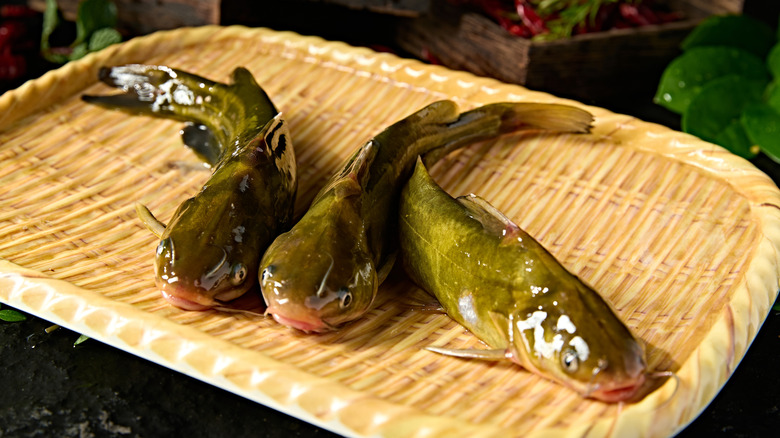
Catfish: the fish everybody loves to hate, but somehow can't stop buying. But does it really deserve all the rotten tomatoes getting flung at it? It's a tough debate. Catfish farmed in the U.S. is more than serviceable. You may not get the same kind of payoff you would with salmon or halibut, but you can still do some genuinely phenomenal things in the kitchen with it. Fried catfish with tartar sauce? Unbelievably good.
What's really supercharged all the hate is imported catfish — basa, swai, and tra. These fish are typically sold frozen and can spend a long time in transit. And because temperature isn't always perfectly controlled along the way, they can go through multiple freeze–thaw cycles before they even reach the retailer. According to research in The Journal of Food Engineering, under that kind of stress, muscle cells begin to break down and leak water. So when you finally get the fish into a hot pan, instead of a sear, you get a puddle. Fats within the flesh also begin to break down into free fatty acids, giving the fish a stale, slightly oily (and not in a good way) taste. At the same time, oxidation kicks in, weakening the structure further and pushing even more moisture out of the flesh. When everything shakes out, you get fish that's watery, dry (yes, somehow both), bland, and stale.
Kitchen woes aside, swai and basa tend to bring a few ride-alongs to your dinner plate. Studies, like this one published in 2018, have detected residues of antibiotics like enrofloxacin, flumequine, and sulfamethoxazole in imported catfish, raising serious questions about the health risks of consuming it.
Tilefish
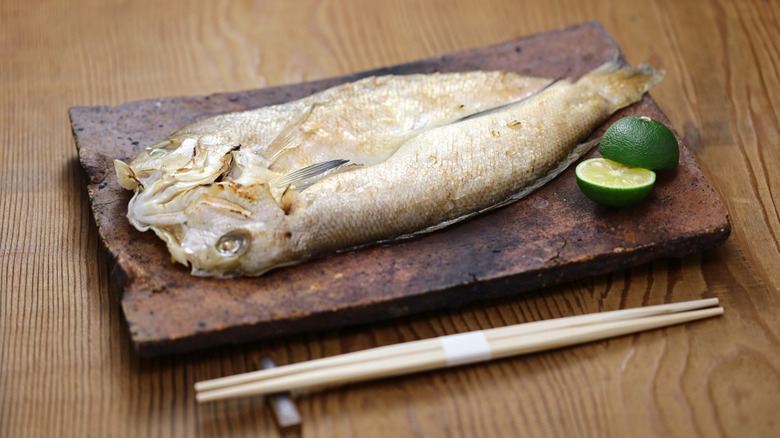
Some bargain-bin fish will fail you all ways: they cook like a mess, come with health baggage, and carry a mile-long sustainability rap sheet. Not tilefish. It's easy on the wallet, hovering somewhere between $2 and $5 a pound, yet cooks like something far more expensive. Flavor-wise, it leans sweet and buttery, playing nicely with things like lemon-butter pan sauces, herb crusts, or a simple garlic sear.
On paper, it's a steal — until you start reading the fine print. Tilefish can live up to 26 years, which lengthens the time they've got to accumulate mercury over their lifespan. They also sit relatively high on the food chain, which means they're steadily taking in even more of it along the way. That doesn't mean all tilefish contain unsafe levels of mercury. Research from 2020 published in Environmental Pollution found that Northwest Atlantic golden and blueline tilefish generally fall within the United States Environmental Protection Agency and Food and Drug Administration's thresholds. Northeastern Gulf of Mexico tilefish are a different story entirely. A 2019 study published in Science of The Total Environment found mercury levels exceeding those same thresholds in a whopping 90% of samples.
The sticky part is that sticking to Northwest Atlantic tilefish isn't as easy as reading a grocery store label. Sometimes sourcing is kept vague, and sometimes — particularly in sketchier corners of the market — it's not always entirely accurate. And if a fish's safety hinges that heavily on where it was caught, and you can't fully verify that information, it might be best to just steer clear.
Carp
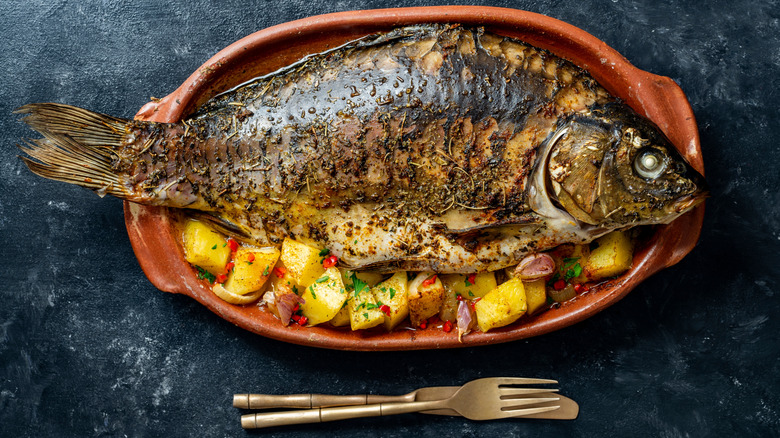
Fish like salmon, Atlantic herring, and sardines are worth every extra dollar. Others are a pretty hard sell, even when someone is basically giving them away. Common carp falls squarely in the latter camp. This fish spends its time rooting through warm, murky, stagnant waters teeming with cyanobacteria (blue-green algae) and actinomycetes; prime producers of geosmin and 2-methylisoborneol. These compounds seep in through the gills, gradually saturating the flesh with that all-too-familiar muddy, pond-like flavor.
Getting rid of that murky taste takes a bit of effort. A thorough soak in lime juice or vinegar might help, or if your knife skills are up to it, you can cut out the bloodline. Sadly, it won't end there. Carp is riddled with intramuscular bones, so you'll still need to go in with some aggressive deboning before it's ready to cook. And even if you make it through that whole ordeal — tears kept to a minimum — there's still the question of sourcing. A 2021 study published in the Journal of Environmental Health Science and Engineering found that carp from polluted environments can carry traces of heavy metals, compounds linked to a range of respiratory, neurological, and cardiovascular effects.
That's not to say all carp are a terrible buy. Asian carp, for instance, sticks to the upper waters, so you're less likely to get that swamp flavor for which common carp is infamous. Those annoying bones are still present, though, and who really wants to work that hard to save a few bucks?
Mackerel
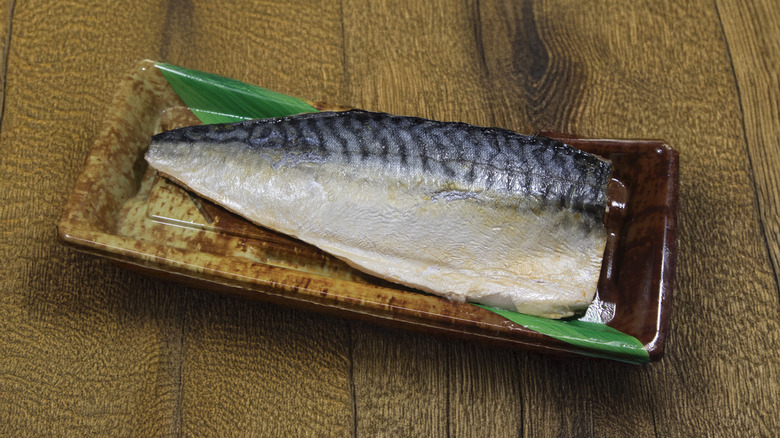
If you're hankering for a fish that dazzles on a charcuterie board and makes a divine choice for sashimi, then mackerel is absolutely the fish for you. But you've got to be extra careful with what kind of mackerel makes it to your dinner plate. Atlantic, Spanish, and Pacific chub mackerel are stellar choices if you're trying — as you should — to steer clear of fish with high mercury content. King mackerel territory is a little shakier — it hovers around 0.73 parts per million (ppm), way past the Food and Drug Administration's 0.46 ppm cutoff.
Mackerel can also give you scombroid poisoning, especially if temperature control isn't spot on. Bacterial activity ramps up quickly in fish with high water and fat content, and while you can usually tell when fish is fully on its last legs, mackerel doesn't always give you that courtesy. The fact that you can't reliably see, smell, or taste it makes it pretty hard to sidestep.
From a cooking standpoint, mackerel is not outright your enemy, but it might not cut you as much slack as something like cod or pollock. Because it's so soft and oily, you've got to be extra careful with how you handle it. It'll absolutely stick and tear apart on the pan or grill if you don't, for instance, make sure the surface is properly oiled before you put it on.
A softer knock against it is the flavor. This is absolutely not the fish for anyone hoping for an easy crowd-pleasing fillet with a restrained flavor profile. It's got a rich, assertive, somewhat fishy flavor that's not easily cowed by strong sauces or heavily seasoned breading.
Orange roughy
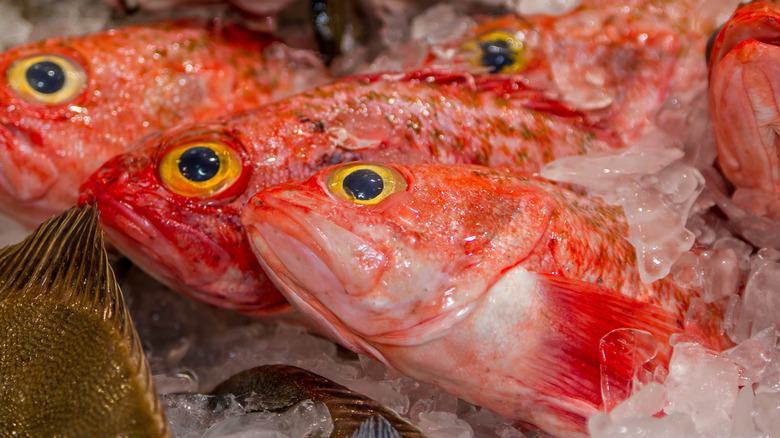
A big strike against most cheap fish is that they're pretty unfriendly in the kitchen. Tilapia overcooks in a blink; whiting, which is woefully short on fat, dries out if you so much as look at it wrong; and carp ... well, carp just refuses to cooperate on every level. But not orange roughy (which was originally known as slimehead and rebranded for obvious reasons). It's got a delicate flavor, so it offers quite a bit of versatility, and large flakes that take pretty well to most cooking methods.
But that ease belies a lot of baggage you absolutely don't want. Per research published in the journal Fisheries Research, orange roughy has a tendency to cluster in specific, predictable areas, which makes it especially vulnerable to overfishing — after all, who wouldn't want a fish that practically gathers to be caught? The problem is that it's a painfully slow-maturing species, taking up to 30 years to reach maturity, so stocks don't recover quickly once they've been overexploited.
Another hard knock against it is mercury content. Orange roughy are long-lived — some well over 100 years — and sit relatively high in the deepwater food chain, giving them plenty of time and opportunity to accumulate mercury. Per the Food and Drug Administration, this species averages around 0.57 ppm, well over the agency's 0.46 ppm threshold.
Flounder
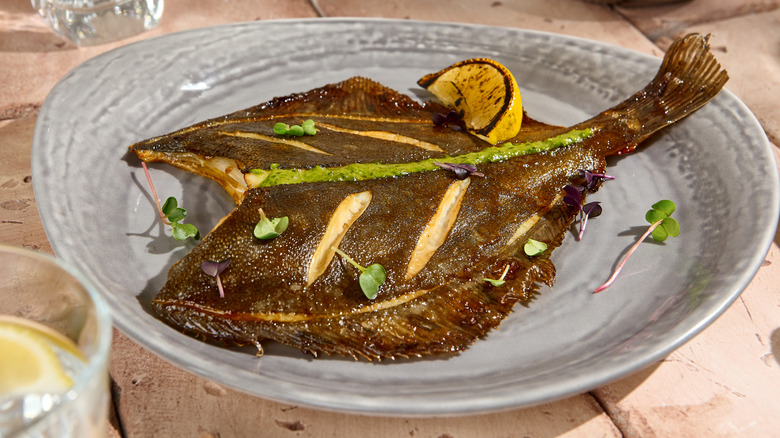
Something's bound to be up when one name is used as a catch-all market term for several entirely different types of fish. Some days you might stumble onto something actually decent and others onto something that makes you wonder if it even belongs in the same category.
Such is the case with flounder, a term used to refer to a whole range of flatfish. Under that umbrella could be premium picks with a delicately sweet, creamy flavor — like petrale sole — or low-rankers like Pacific Dover sole, with softer flesh, smaller flakes, and a much more subdued, almost bland flavor. And of course, if the prices are rock bottom, chances are you're not dining on the top-ranking members of the group.
The other strike against flounder is the taste. While not offensively fishy, it's got a reputation for being mind-numbingly dull. Strong sauces or heavy seasoning are an absolute non-starter here; it'll all but disappear under the weight. And while you can work around that by opting for higher-quality species, that's not exactly easy when you're dealing with vague grocery store labels — and a whole lineup of inexpensive fish with far more character begging to go into your cart. Even if you do prefer the nothing taste, the odds are stacked against you in the kitchen. Flounder often comes in notoriously thin, fragile fillets, which means it can turn chalky and dry in an instant if you don't actively protect what little moisture it has.