

Our 3-Ingredient Easter Bark Recipe Is The Perfect Festive Treat
We may receive a commission on purchases made from links.
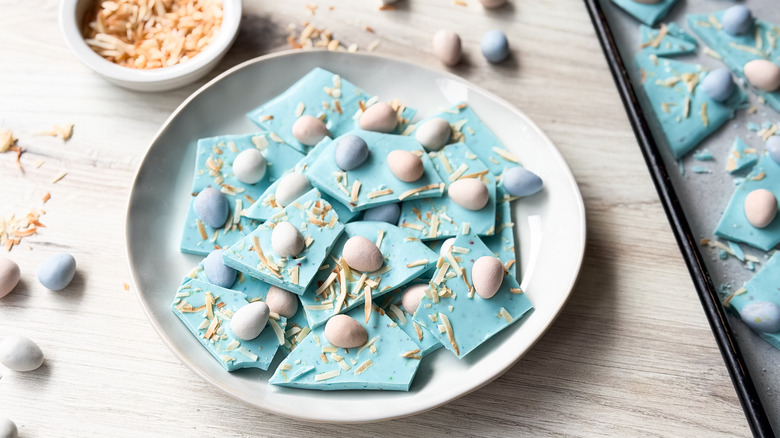
Whether it's chocolate bunnies, gooey Cadbury eggs, jelly beans, or those squishy marshmallow Peeps, Easter brings out quite the assortment of treats and sweets. Want a new way to repurpose those candy-coated eggs? Our festive 3-ingredient Easter bark is eye candy at its best. Recipe developer Julie Kinnaird shares with us her take on holiday bark in a concoction of a robin's egg blue creamy base topped with pastel candy eggs and toasted coconut. Kinnaird uses a combination of pastel colored candy melts to create her desired hue, then adds the eggs and coconut for a whimsical nod to springtime robin nests. The result is a treat that is a fun and colorful addition to an Easter brunch buffet, or perfect for gifting in Easter baskets and bags.
This confection comes together in minutes, cools quickly, and can be tailored to your own personal color preferences. Not a fan of coconut? Try adding some colorful sprinkles instead. The fun is in making this project your own, and the joy comes from how easy it is to do. Kinnaird provides options for melting your candy double-boiler style or in a microwave. Either way, the user-friendly candy melts yield consistent and delicious results.
Gather the 3-ingredient Easter bark ingredients
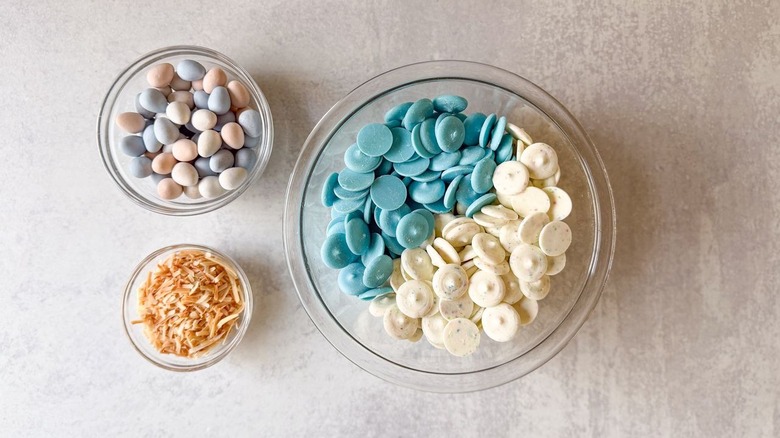
This 3-ingredient Easter bark allows you to use your own creativity with candy melt blending. Pastel colors are perfect for Easter or springtime, and Kinnaird wanted to achieve a robin's egg blue by combining light blue and confetti melts. Pink, yellow, lavender, or shades of green would also be lovely. Cadbury mini eggs also come in a range of pastel colors and are the perfect size for individual pieces of the finished bark. Toasted unsweetened coconut adds some crunch, hints of toasty coconut flavor, and a bit of whimsy to imitate nesting bits for the robins.
Step 1: Prepare a baking sheet
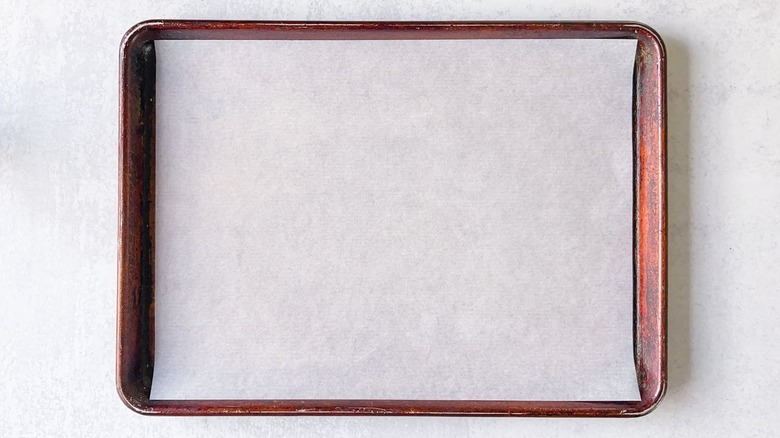
Line a baking sheet with parchment paper.
Step 2: Add water to a saucepan
Fill a medium saucepan with about 1 inch of water and bring it to a simmer.
Step 3: Create a double boiler
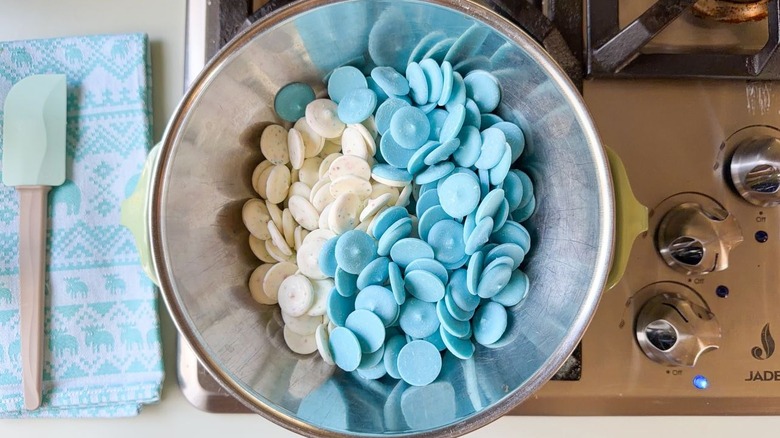
Place the candy melts in a heat-proof bowl that can fit in the saucepan to create a double boiler.
Step 4: Stir until just melted
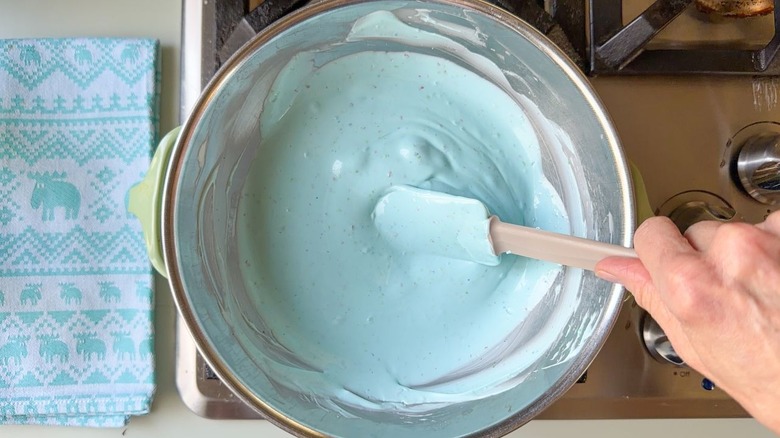
Stir the candy melts frequently until the mixture is glossy and smooth. Do not overheat to prevent scorching.
Step 5: Option to use a microwave for melting
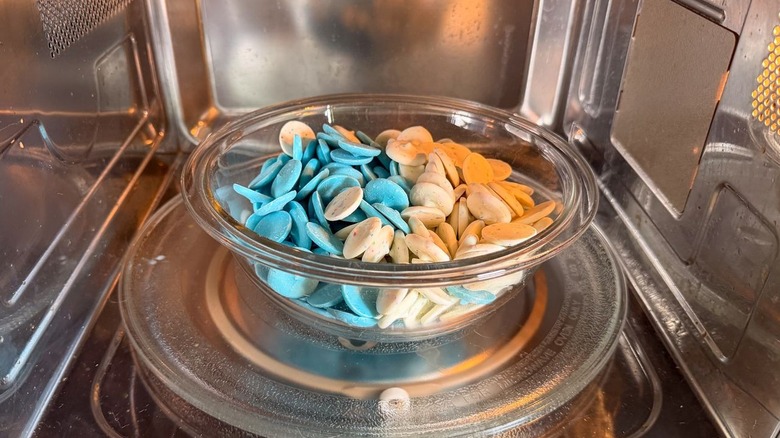
Alternatively, use a microwave-safe bowl and microwave the candy melts at 30-second intervals on medium-high power, stirring between intervals until smooth.
Step 6: Pour the melted candy onto the prepared baking sheet
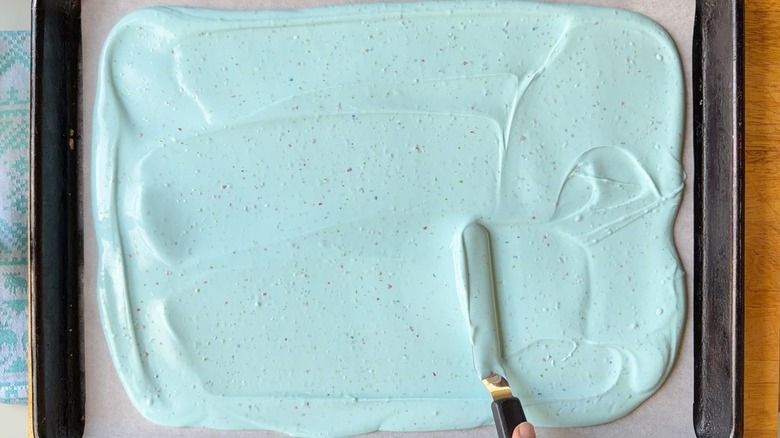
Pour the melted candy onto the parchment paper and spread it into an even layer with an offset spatula.
Step 7: Sprinkle the toasted coconut on the mixture
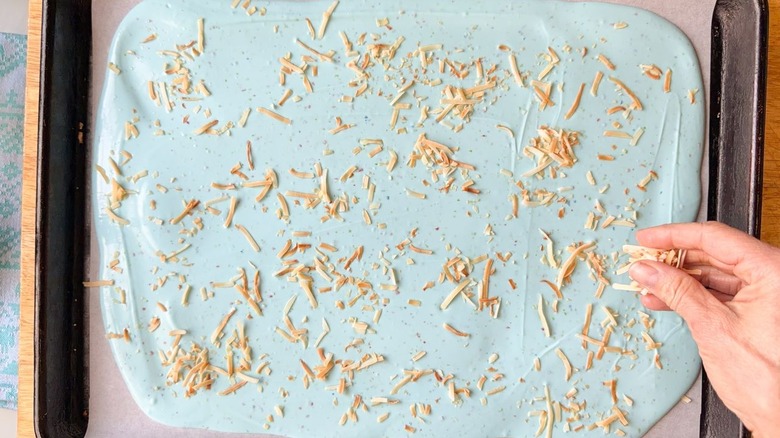
Allow the bark to cool slightly (about 5 minutes), then sprinkle on the coconut while the bark is still soft.
Step 8: Add the chocolate eggs
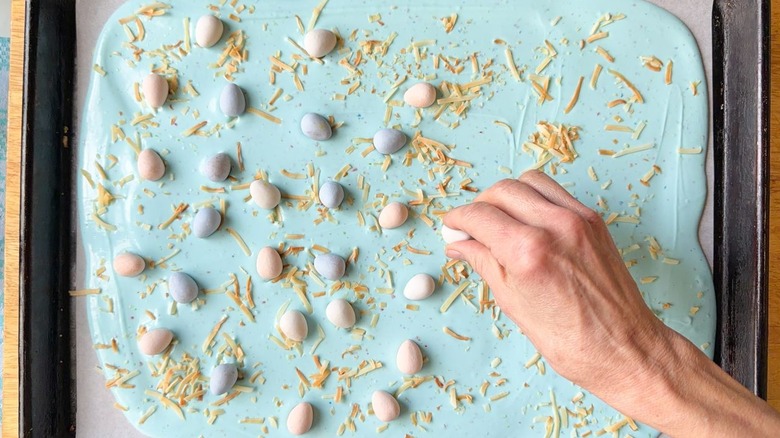
Arrange the candy eggs and press down gently on them to adhere.
Step 9: Chill the bark
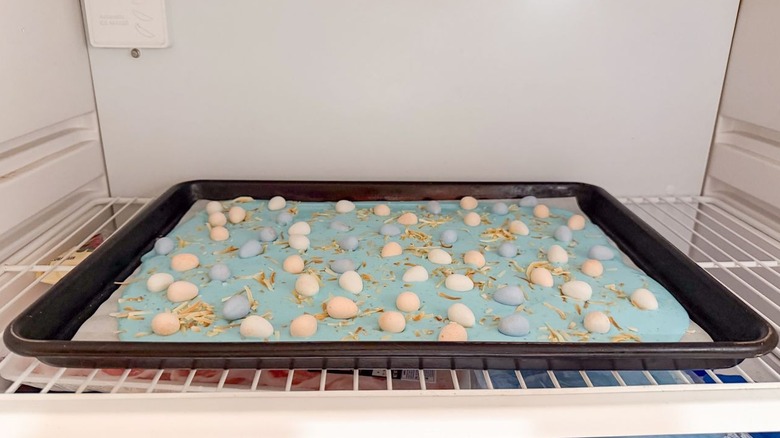
Chill the bark in the refrigerator until firm (about 30 minutes).
Step 10: Break the bark into pieces
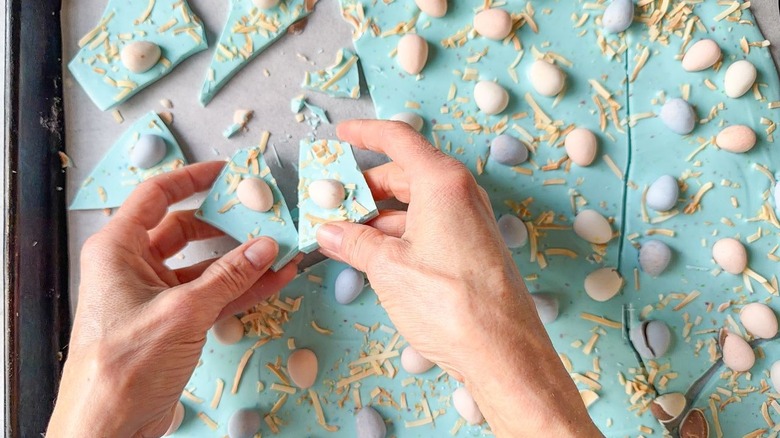
Break the bark into pieces. Serve immediately or store in an airtight container in a cool place.
What else can I serve for an Easter meal?
3-Ingredient Easter Bark Recipe
Our pretty 3-ingredient Easter bark has a creamy, robin's egg blue base topped with pastel candy eggs and toasted coconut, and it comes together in minutes.
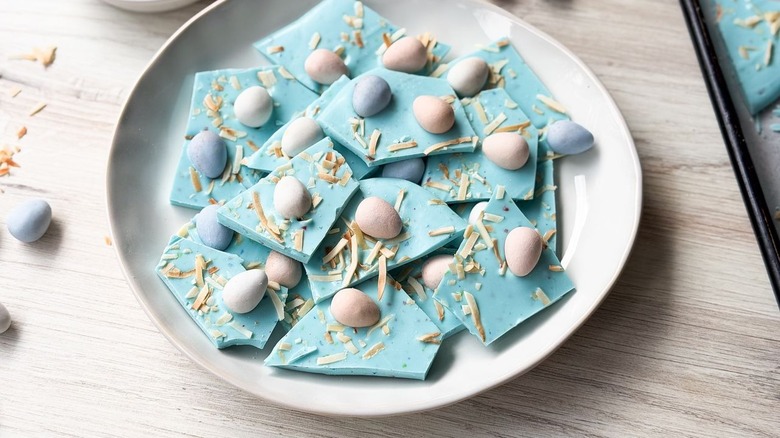
Ingredients
- 24 ounces pastel candy melts
- ¼ cup finely shredded toasted coconut
- 1 cup mini candy-coated chocolate eggs
Directions
- Line a baking sheet with parchment paper.
- Fill a medium saucepan with about 1 inch of water and bring it to a simmer.
- Place the candy melts in a heat-proof bowl that can fit in the saucepan to create a double boiler.
- Stir the candy melts frequently until the mixture is glossy and smooth. Do not overheat to prevent scorching.
- Alternatively, use a microwave-safe bowl and microwave the candy melts at 30-second intervals on medium-high power, stirring between intervals until smooth.
- Pour the melted candy onto the parchment paper and spread it into an even layer with an offset spatula.
- Allow the bark to cool slightly (about 5 minutes), then sprinkle on the coconut while the bark is still soft.
- Arrange the candy eggs and press down gently on them to adhere.
- Chill the bark in the refrigerator until firm (about 30 minutes).
- Break the bark into pieces. Serve immediately or store in an airtight container in a cool place.
Nutrition
| Calories per Serving | 347 |
| Total Fat | 21.9 g |
| Saturated Fat | 13.2 g |
| Trans Fat | 0.0 g |
| Cholesterol | 0.0 mg |
| Total Carbohydrates | 45.7 g |
| Dietary Fiber | 4.3 g |
| Total Sugars | 38.9 g |
| Sodium | 8.2 mg |
| Protein | 3.0 g |

How do I make my own toasted coconut?
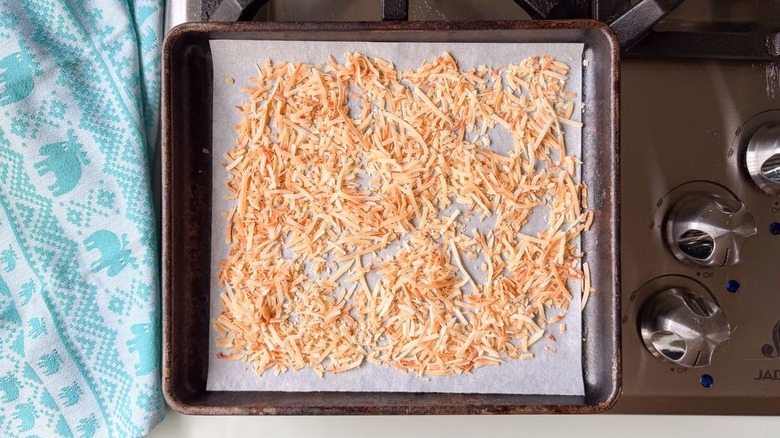
Making your own toasted coconut is simple and fast, and toasted coconut is perfect to have on hand to add crunch to ice cream, fruit salad, or savory dishes like curries. Start by preheating an oven to 325 F. Next, line a small baking pan with parchment paper. Add your coconut flakes or shreds in an even layer to fit the pan and bake for about 5 minutes, keeping a very close eye on the process as the coconut can easily burn. Stir the coconut halfway through toasting, as the outside edges will tend to start browning before the center of the pan. Once your coconut has a wonderful toasty aroma and has turned golden brown, remove it from the oven immediately. The coconut will continue to toast on the hot pan, so have a plate or shallow bowl ready for cooling it. Simply lift up the parchment on 2 opposite corners and pour the hot coconut onto the plate or bowl.
Note that because this recipe uses unsweetened coconut, it will toast more evenly than coconut that has sugar added. The extra sugar will burn quickly in the oven and can cause the coconut to have an unpleasantly bitter taste. Unsweetened coconut is also more versatile for use in a variety of dishes where you don't want to add extra sweetness. You can also create lovely toasted coconut in an air fryer at the same heat setting.
What is the best way to break apart the bark, and how can I fix eggs that broke or fell off?
Once your bark is complete, you will want to create fairly uniform and attractive pieces for serving or gifting. It might be tempting to use your fingers to do all the work, but this can lead to the chocolate melting or developing a splotchy surface due to the natural heat of your hands. Kinnaird likes using a basic kitchen mallet (used for tenderizing meat) and a small, sharp knife to create clean, long cracks in the bark. Hold the knife perpendicular to the bark with the tip stuck into the surface until it touches the pan. Next, tap on the top of the knife handle, and the bark will start to crack. Do this in a few spots and then break apart the larger pieces by hand.
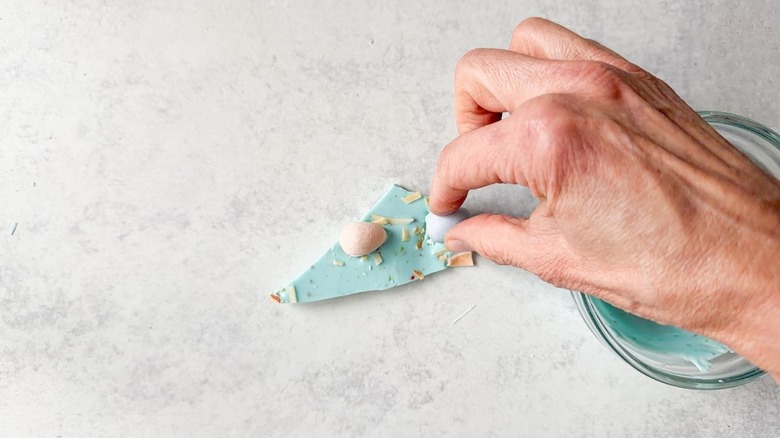
After your bark is broken up, you may have a few egg "casualties" that have either broken apart or simply popped off the bark's surface. If this happens, gather up a few candy melt broken bits from the pan and place them in a small microwave-safe bowl. Heat them for a few seconds at a time at medium heat and stir until melted. Use a small spoon or knife to dab some of the melted mixture onto the bark and reattach the egg.