

The Ideal Way To Cook 10 Popular Cuts Of Steak
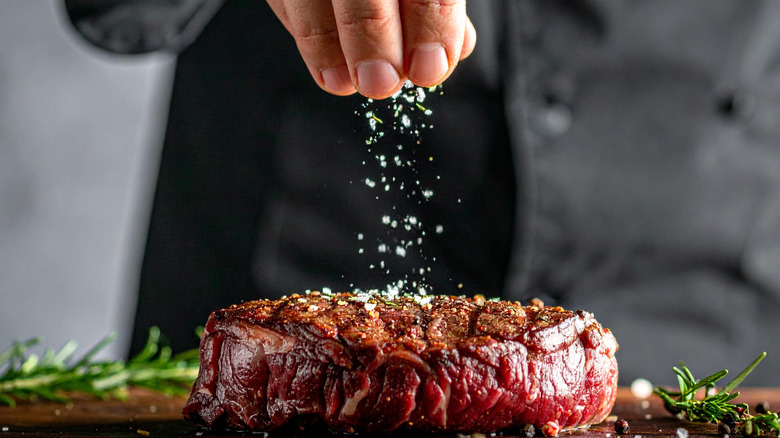
There is no single, universal truth to cooking a great steak. After all, when a cow is broken down into primal sections and processed into the individual steaks we know, each has its own unique character. Whether it's a modest cut like chuck eye or a fancy steakhouse splurge like a tomahawk, different cuts of beef demand particular approaches on the grill or in the pan. What works for a lean filet mignon will betray the marbled magic of a ribeye. Treat a thin skirt like a flat iron, and you'll end up with leather.
Navigating this carnivorous landscape, with its varied fat content, muscle grain, and overall heft, can make the difference between a good dinner and a great one. It's an exercise that demands an adept butcher and a knowledgeable guide. For that, we went straight to the source: Dave Yasuda of the legendary Snake River Farms, a purveyor known for some of the finest beef in the world.
Yasuda knows his way around cattle, especially when it comes to steak cuts. He champions a method of pure practicality, focusing on the singular detail that elevates each slab into perfection. While even he concedes that there are certain common factors when cooking steak — "season generously, use a thermometer... rest [the meat]" — he's here to guide us further, to consider how the anatomy of the animal informs cooking technique.
Filet mignon
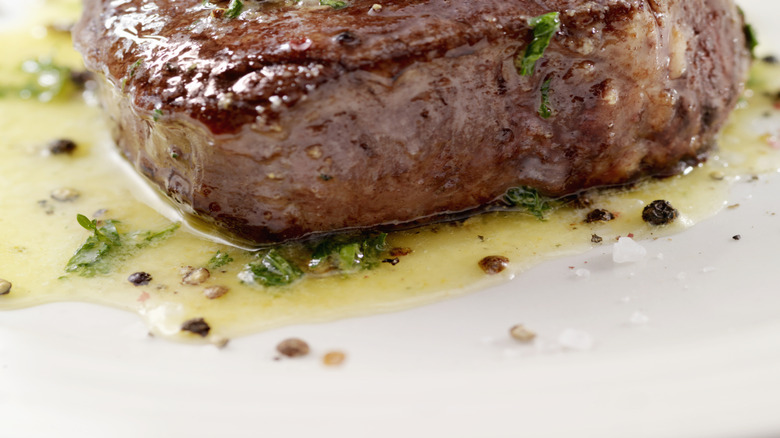
Hailed as the most tender cut on the cow, filet mignon is the epitome of refined beef, but that legendary texture comes with a caveat: it's remarkably lean. This is the cut you choose for its delicate, buttery bite, not for a rich, beefy punch. Sourced from the psoas major, a non-weight-bearing muscle that runs along the spine, this part of the tenderloin is so soft you can literally cut it with a fork. Served in small, elegant portions, these rounded medallions are the quintessential special occasion steak.
Still, the distinct lack of fat on a filet mignon is both a blessing and a curse. Its leanness makes it the worst cut for the grill, where it can dry out with nary a glance in the wrong direction. To truly honor the filet, you must add richness back into the beef. Yasuda says with certainty, the key is to "fatten it up." His method is straightforward: "Add richness to this delicate cut by butter basting in the pan, topping with a flavorful compound butter or finishing with a pan sauce." This is both an essential wash and an elaborate finish, providing a luxurious counterpoint to the steak's lean and delicate nature.
New York strip
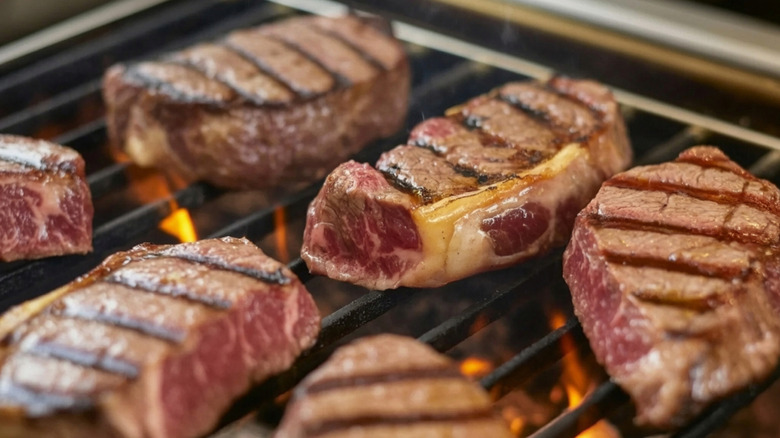
The New York strip is the steak for those who appreciate substance without pretense. Cut from the strip loin (a section of the short loin primal that sees little work in the animal's life), it boasts a firm texture and a beefy, assertive flavor. This cut is a steakhouse favorite for a reason: robust, reliable, and perfectly suited for high heat on the grill.
Yasuda puts it plainly: "The New York strip has abundant intramuscular fat which turns into flavorful juices to baste the firm texture of the steak. A minimal fat cap reduces flare ups." This is a cut built for live fire.
To honor its powerful character, keep the seasoning simple. A generous crust of coarse salt is your primary tool, creating a savory barrier to seal in the flavor. Aim for a perfect medium-rare (130-135 degrees Fahrenheit) to preserve its tenderness, as it can become tough with excessive cooking. And when it's done, always slice against the grain for an easier chew.
Ribeye cap

Nestled against the bone of the rib primal, wrapped around the classic eye, lies the spinalis dorsi, better known as the ribeye cap. When butchered correctly, this is a prized cut: a marbled sheet of beef, quite long and not too thick, that delivers on flavor in a big way. Think of the ribeye cap like the ultimate hybrid, possessing the unmistakable fatty depth of a ribeye while maintaining the melt-in-your-mouth tenderness of a filet.
Because of its relatively thin profile, it demands a confident, swift hand. Yasuda cautions: "Don't overcook it. The ribeye cap is relatively thin with an average thickness of about one inch. It's prepared on high heat on a very hot skillet or grill to activate the Maillard reaction and set an appetizing sear. Flip and grill briefly so the cap isn't overcooked." This is a cut for a blistering cast-iron skillet or a roaring hot grill; a quick, hard sear is all it needs to achieve buttery perfection.
For those who live and breathe steak forums, the cap is a near-religious topic. On Reddit, one user's declaration, "A ribeye without a cap is not a ribeye," sparked a chorus of agreement. Many argue that a capless ribeye is a fundamentally inferior experience, stripped of its most decadent component.
Porterhouse
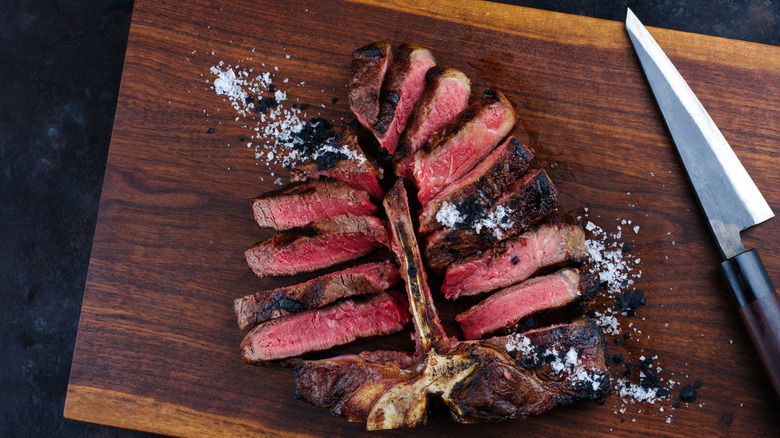
The porterhouse earns its crown through a prime anatomical location and a simple rule of size. This titan is a center-cut from the hindquarter, precisely where the short loin and the tenderloin meet at their widest point. This privileged position means you get the best of both worlds on a single, T-boned shape: a substantial New York strip on one side and a full filet mignon on the other. The defining standard is that the tenderloin must measure at least 1.25 inches wide, making the porterhouse ideal for a shared plate.
But how do you execute two steaks with varied densities on the same bone? Since the thick, lean filet and the richer, more forgiving strip cook at different paces, Yasuda suggests a measured approach. "Start low and slow. These are two cuts that cook at different rates, so a reverse sear in the kitchen helps to equalize the cooking time. On the grill, use a two-zone method, and set the tenderloin size on the far side of the grill."
The porterhouse is not a cut for a reckless blast of heat. The gentle, low-and-slow start coaxes both muscles to a perfect, even doneness, where the filet remains succulent while the strip reaches its ideal temperature. A quick rest and a final sear will define the signature crust. With a little practice and a deliberate approach, you can conquer this crowd-pleasing steakhouse experience at home.
Flat iron

Tucked away in the chuck primal, this cut is a bona fide scientific marvel. Yasuda tells us that it's officially ranked the second most tender piece of beef you can buy, right behind the lofty filet mignon. Still, it's an easy cut to overlook: a cow only has two shoulder blades, and therefore only four flat iron steaks.
The flat iron's biggest advantage is that it's very hard to mess up. According to our expert, it is "the only steak to cook medium (or more). It's delicious cooked medium rare but possesses the unique ability to retain a juicy, tender finish when cooked to medium, medium well, or well done. While this isn't a pure non-negotiable rule for the flat iron, it does represent a useful fact about the cut."
While other steaks become dry and tough when overcooked, the structure and marbling of this cut keep it moist. This makes it a great choice for anyone who prefers their steak cooked past medium-rare. Just find yourself a butcher with a deft hand to remove the connective seam, and you'll be rewarded with a tender, flavorful steak that offers great value.
Hanger
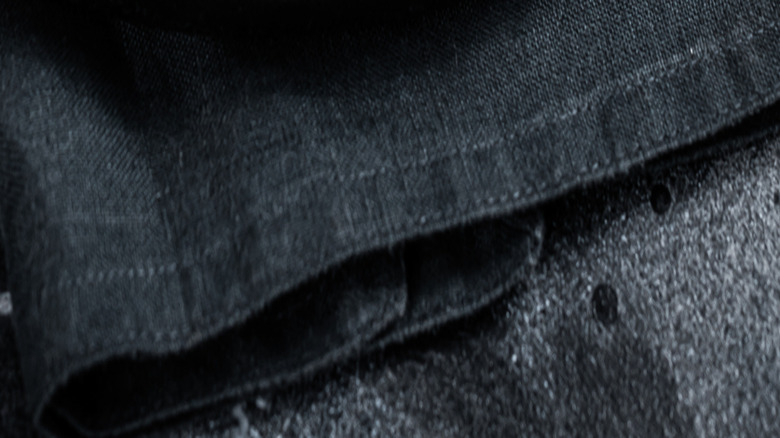
The hanger steak, or onglet, is for those in the know: a long, asymmetrical cut with a coarse, open grain and a famously mineral-rich flavor. Its name comes from a unique position in the animal, literally hanging from the diaphragm near the kidney. This location contributes to its deep, somewhat gamey intensity, a flavor Anthony Bourdain once praised as "strong, almost kidneyish." And here's the kicker: there's only one per cow, making it a true butcher's prize.
Because of its shape and texture, the hanger requires a specific approach. Yasuda advises, "Cook hot and fast. This steak is long and shaped like an irregular cylinder. It has coarse, loose grain and loves high heat. Sear it on a smoking hot grill or cast iron skillet being careful to not overcook. Shoot for a max temp of 130 degrees Fahrenheit and you'll be rewarded with a crusty exterior and tender pink interior."
This is not a steak for timid heat. A blistering sear will give way to a proper crust and keep the interior at a perfect medium-rare. Its ropy texture also means you must slice it thickly and squarely against the grain to yield a tender bite. Once an underdog in the butchery case, the hanger has become a classic on bistro menus for good reason. It offers a bold, beefy character that more expensive cuts can't match.
Skirt
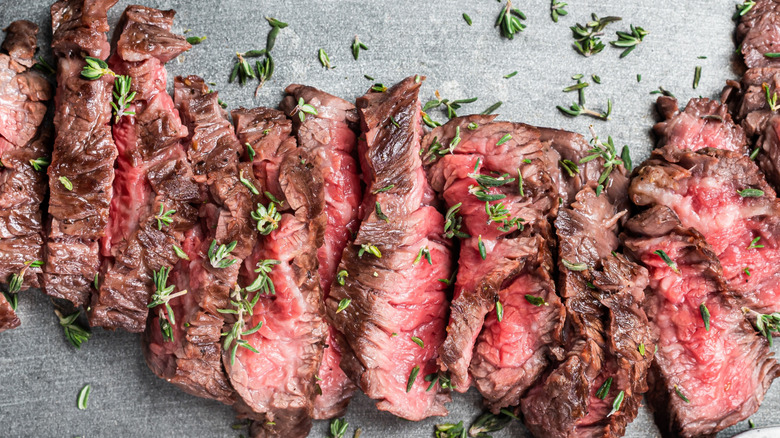
Don't let the skirt steak's thin, unassuming appearance fool you. This is a workhorse of flavor, a humble cut from the diaphragm that packs a robust flavor, especially when charred, thanks to its generous marbling and coarse grain. The original star of the fajita, this cut is built to absorb marinades and thrives under the intense, quick heat of a grill. These days, skirt steak has graduated past Tex-Mex and earned a spot on steakhouse menus.
Yasuda confirms: "Skirt steak was made popular as the beef of choice for fajitas but has emerged as a great cut for a steak dinner." But how do you go beyond taco territory and make it the main event? "Cut a section of the skirt, rotate it 45 degrees, and then slice it against the grain to shorten the muscle fibers. The result is a flavorful and tender bite."
The final cut makes all the difference. If you slice skirt steak with the grain, it will be tough and chewy; if you slice it thinly against the grain, it becomes remarkably tender. Get this detail right, and you've unlocked one of the best values in the butcher shop.
Chuck eye
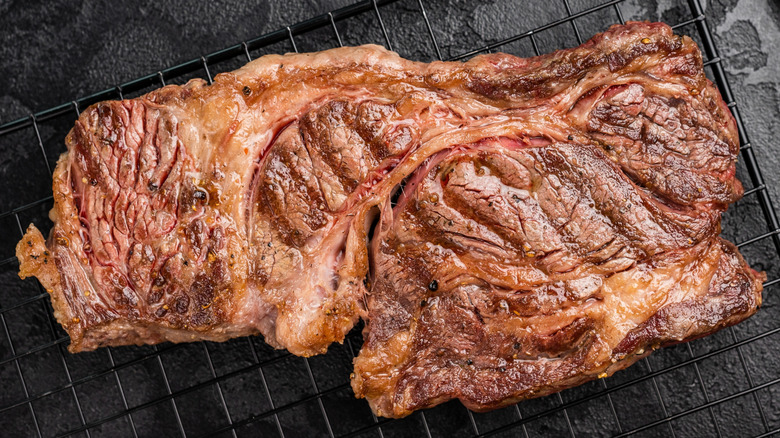
Situated next to the coveted ribeye in the hard-working chuck primal lies another of the meat case's best-kept secrets: the chuck eye. Affectionately dubbed the "poor man's ribeye," the first three inches of this cut are essentially a ribeye steak (composed of the same complexus and spinalis dorsi muscles) for a fraction of the price. The catch is no surprise: It comes bundled with tougher, surrounding muscles that a frugal butcher can trim away for grind or carefully craft into a steak.
This cut is rich with flavor, but benefits from a gentle touch. Yasuda delivers with the quintessential solution, suggesting that the chuck eye was made to be sous vide. "The chuck eye is a value-packed steak that comes from a muscle that receives a large amount of exercise. It has a moderate amount of intramuscular fat, and this combination works to create deep beef flavor. Use your immersion circulator and a water bath of 130 degrees Fahrenheit, and let it cook for 3 to 4 hours to help tenderize the steak and produce a delicious steak at a great price."
The low-and-slow sous vide bath is the key to gently breaking down connective tissue without overcooking the precious heart of the steak. After the tempered cook time, sear it in a searing hot skillet with some fat and aromatics. This technique respects the cut's potential and delivers on flavor and texture. Just look for a well-trimmed version and try to skip those held together with string.
Cowboy ribeye
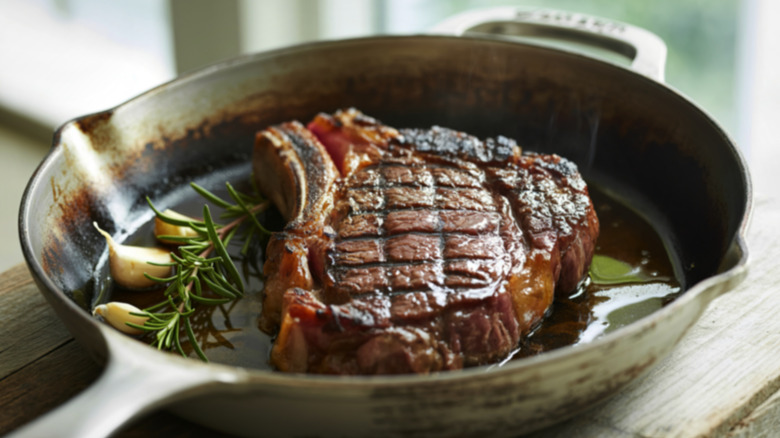
The cowboy ribeye is a massive, bone-in feast, essentially a single thick-cut portion of prime rib. This is a cut for a small crowd, easily enough for three people, and awes with beautifully marbled muscle and rich, beefy flavor. It was a cut beloved by Bourdain, who savored the rib section for its "perfect mix of fat and lean." But cooking a steak this size and shape requires a shift in strategy: abandon the direct heat and, once again, embrace the reverse sear.
This method is perfect for such a substantial piece of meat, with or without the bone. Yasuda confirms the logic: "There is a commonly held belief that the bone adds flavor, but that's not necessarily true. The bone does insulate the meat nearest the bone, so it can be a bit more tender than the outer slices." A mindful technique elegantly manages this heft, as we learned with the porterhouse. Start by slowly roasting the steak in a low oven (250-275 degrees Fahrenheit) until it's about 10 degrees shy of your target temperature. This gently cooks the interior evenly from edge to edge, rendering fat without creating an overcooked band.
After briefly resting the meat, sear the slab in a blazing hot cast-iron skillet. This creates that coveted crust while bringing the temperature to peak completion. The result is a steak with a sublime texture gradient, a savory, crisp exterior that gives way to a uniformly juicy, rosy interior.
Tomahawk
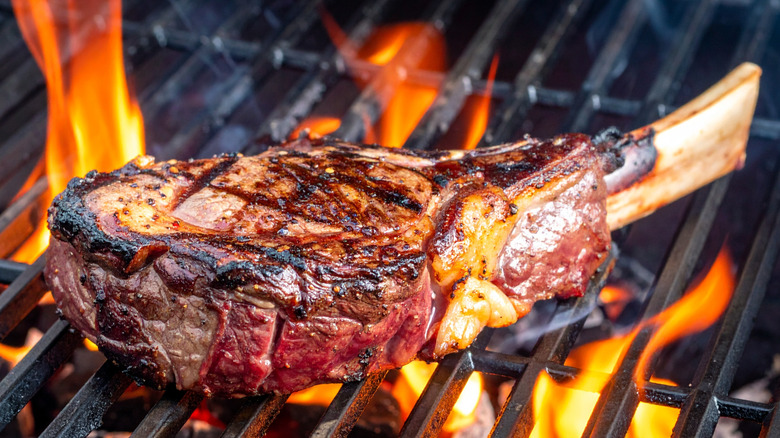
Once you've mastered the cowboy ribeye, you can move on to its theatrical cousin — the tomahawk. At its heart, this is the same beautifully marbled ribeye. The difference is pure butchery bravado. Instead of a trimmed bone, the rib is left long and meticulously frenched, revealing that iconic handle. But this grandeur introduces a new challenge: The bone's length, combined with the steak's massive weight (2.5 to 3 pounds) and thickness (almost 3 inches), makes for something almost impossible to manage in a standard skillet.
The reverse sear method is absolutely necessary to bring the colossal interior up to temperature without launching a burnt assault on the exterior. Start by roasting it indirectly on the cooler side of a grill (or in a low oven), rotating the meat until the center is close to your target temperature, then resting it while the subsequent heating element adjusts for the final step.
Since the tomahawk won't fit in a pan, the ideal method is to sear it directly over coals or flames, or finish it in a hot oven. This multi-stage process is the only way to achieve a perfect savory crust, but the timing is critical. Pull it too soon, and you miss the flavor; leave it too long, and the delicate fat cap chars into a bitter shell. According to Yasuda, succeeding with this method will result in "a tomahawk steak that is pink from edge to edge with a golden brown exterior crust."