

10 Unexpected Balsamic Vinegar Uses Every Home Cook Should Try
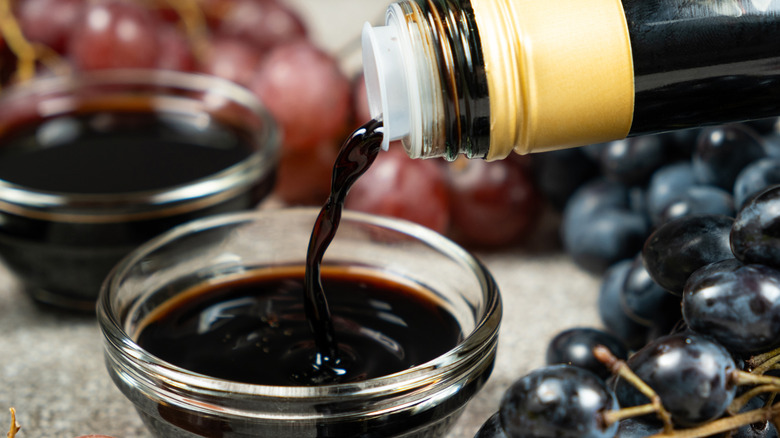
Balsamic vinegar is in a class all its own. It's layered with tart, tangy, and sweet flavors, making it deliciously complex. It is also less harsh and significantly more drool-worthy than other types of vinegar. Just saying. Of course, balsamic vinegar's complexity makes it super yummy beyond belief, but it can also make it tricky to come up with new ways to take advantage of the nuanced taste. That is, of course, without a little help. We all know balsamic vinegar is the perfect ingredient for salad dressings, marinades, and a dip for fresh bread — mixed with olive oil, of course. Don't forget caprese, either, but how else can you incorporate the tangy, subtly sweet delight into your cooking? As it turns out, there are plenty of ways, each one more delicious than the last.
On a mission to bring you the lesser-known but still incredibly tasty uses for balsamic vinegar you find below, we combed through Reddit threads, scoured online recipes, and considered our own experience with it in the kitchen. So, if you're ready to start using your bottle of balsamic vinegar in unexpected ways that will leave you drooling for more — umm, yes, please — you're in the right place.
A drizzle of balsamic vinegar on pizza goes a long way

We all know bread and balsamic vinegar go hand in hand, but what if you take the concept and apply it to pizza crust? It's downright delicious. Pizza already has all the Italian flavors that balsamic vinegar craves, like tomato, cheese, and basil, and that's without even considering the crust or any additional toppings (many of which also taste phenomenal with our favorite tangy, sweet vinegar). So, yeah, pizza and balsamic vinegar are a match made in heaven. It even has what it takes to elevate frozen pizza, and it's no secret some of them could use some serious help.
There's only one hitch when it comes to pairing pizza and balsamic vinegar: In its typical state, it's quite runny. As a result, if you want to combine the two, you'll have to use a very small amount or simply serve it on the side for dipping. Otherwise, you run the risk of making your pizza soggy. This seems a bit hindering, though, right? It is, so instead of using straight-up balsamic vinegar, it's best to opt for a balsamic vinegar reduction on pizza. It's much thicker, so it clings to pizza with ease, and it allows you to drizzle the flavor we all know and love across the entire pizza without creating a soggy mess. Winning. Just remember that balsamic vinegar reduction also has a more concentrated flavor, so use it sparingly.
Add a dash of balsamic vinegar to burger patties

Everyone loves a good burger loaded up with tasty toppings. However, the burger patty itself needs to be just as flavorful as all of the stuff that comes along with it. If not, it just falls flat. Fortunately, though, there are lots of ingredients you can add to your homemade burger patties to make them sing with flavor — like onions, garlic, bread crumbs, and more — but one you may not have considered before is balsamic vinegar. It works so well that once you get a taste, you may never make burgers without it again.
One of the things we all love most about balsamic vinegar is its tangy bite. It literally leaves us drooling for more. With this in mind, adding some of the signature flavor to your burger patties can only lead to tastier burgers with more bite. Plus, a little acidity goes a long way in any dish, and balsamic vinegar's got acidity for days.
You know what? This goes for all kinds of burgers, too — beef, buffalo, veggie, whatever. We've used a dash of balsamic vinegar in homemade veggie patties many times, and it always leads to exceptional flavor in the end. We've also used it on tempeh burgers, and you guessed it: They were much tastier as a result. Whatever kind of burgers you prefer, don't forget, balsamic vinegar is their friend.
Brighten the flavor of chili with balsamic vinegar
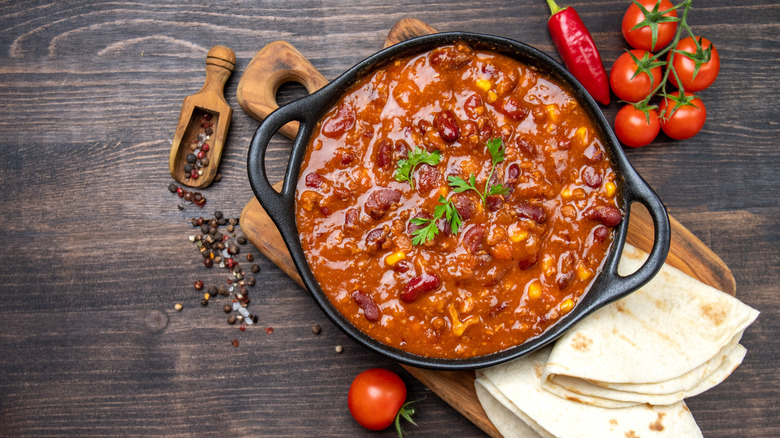
One of the best things about homemade chili is that you can put all kinds of different stuff in it. There are a few standard ingredients, like beans, tomatoes, meat, and onions, but really, it's a free-for-all. Heck, in Texas, they don't even use beans. However, the devil is in the details, as they say, and if you don't get the ingredient proportions and flavors balanced just right, your homemade chili simply won't live up to the expectations surrounding the hearty, beloved dish. No need to worry, though, because balsamic vinegar has your back.
Adding a tablespoon or 2 of balsamic vinegar to a large pot of chili is often all you need to develop the deliciously bright, tangy flavor it craves, regardless of the ingredients. We should know, because this is a trick we've been relying on for many years. The rest of the ingredients may change from one batch to the next. We like to add whatever we have on hand, but balsamic vinegar is a constant. There's no other ingredient that can add the same complexity, acidity, and brightness all at once. Add some to your next batch of homemade chili and you'll be a believer in no time.
Balsamic vinegar pairs wonderfully with fruit
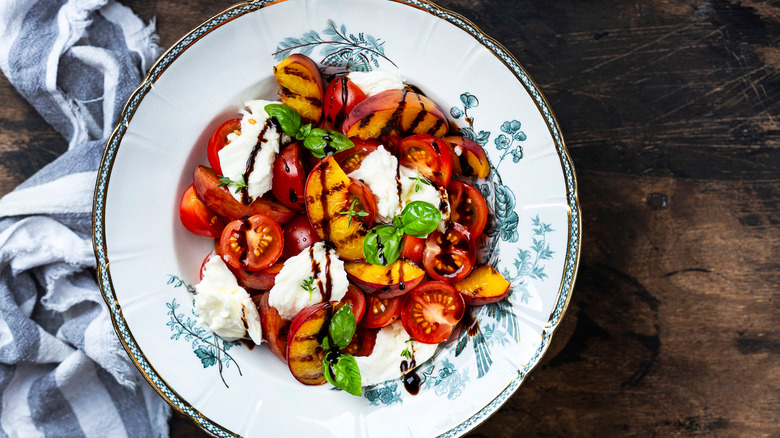
Considering balsamic vinegar's tart, tangy, predominantly savory flavor profile, fruit is far from the first thing to come to most of our minds when we are conjuring up ways to use the ingredient. However, thanks to the underlying sweetness of balsamic vinegar, pairing it with fruit leads to unexpected results that are, by any standards, delicious.
For starters, balsamic vinegar and peaches are an iconic duo. Add prosciutto to the mix, and it only gets better. Seriously, who doesn't want a balanced bit of salty, tangy, sweet goodness? Oh, yeah, put all of them on top of a pizza, and watch out. This is a Colorado favorite during peach season (Palisade peaches are a big thing there), and even without the meat, it's one pizza combo you won't want to miss. Besides, you'll get bonus points for combining two of the unexpected uses for balsamic vinegar from this list: pizza and fruit.
Balsamic vinegar and berries also complement each other beautifully. Strawberries and goat cheese drizzled with balsamic are our favorite, especially when served on top of a bed of leafy greens. Raspberries and blackberries taste delectable with balsamic vinegar, as well. According to a commenter on Reddit, you can even stir a small amount of it into blackberry pie filling for a brighter, tangier taste. Sign us up. This is by no means the end of balsamic vinegar and fruit's tasty pairing potential, either, but it'll sure get you started.
Use balsamic vinegar to caramelize onions and enhance flavor in endless veggie dishes
When scouring Reddit for some of the best, albeit more unexpected ways to utilize balsamic vinegar, there was no end to recommendations for pairing it with veggies — and we couldn't agree more. Everything from mushrooms to asparagus to green beans and beyond benefits from a bit of the tasty, tangy liquid tossed in the pan while cooking. However, our all-time favorite veggie to pair with balsamic vinegar is Brussels sprouts. There's something about the way the earthy, tart, sweet, tangy flavors come together that not only tastes freaking amazing, but smells delectable, as well. We know Brussels sprouts are a dealbreaker for many, but who knows? Maybe balsamic vinegar is the key to unlocking the little green veggie for you for good.
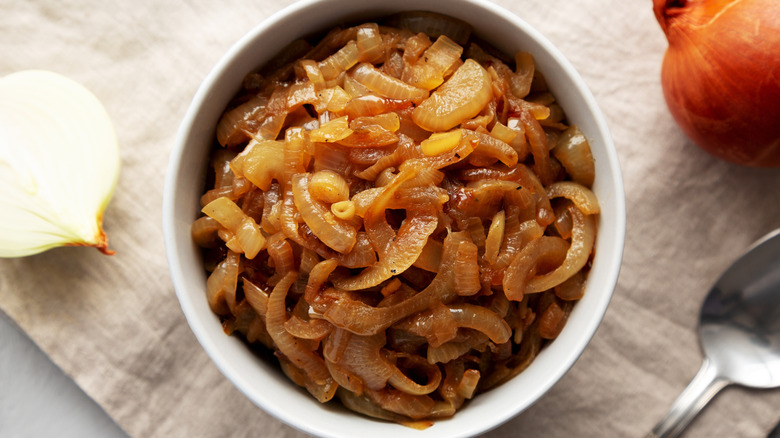
Another intriguing Reddit recommendation we dug up is to finish off caramelized onions with balsamic vinegar. Several people mentioned how it amplifies flavors in the most delicious of ways. Plus, it'll definitely add to the golden brown color, something that'll only help catch the eye quicker. You could also put some straight into the pan while you slowly cook the onions so the flavors seep in. Even so, if you want to maintain the bright zestiness that accompanies straight-up balsamic vinegar, you should still add a touch at the end. The flavors tend to dull the longer they cook, so make sure to boost them again at the end for the tastiest results.
Add depth to marinara sauce with balsamic vinegar
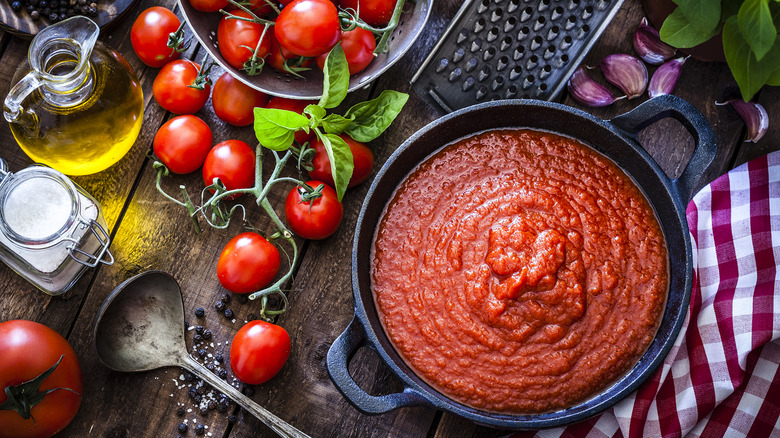
Another one of our all-time favorite uses for balsamic vinegar is to add it to marinara, or red gravy, as we call it. In fact, it's one of several secret ingredients you should be adding to your spaghetti sauce. That is, of course, if you want it to make Nonnas everywhere proud — which, obviously, we all do. Whether store-bought or homemade, balsamic vinegar has everything needed to enrich and deepen the flavors found in the most boring of red sauces. In fact, we wouldn't dream of making a batch of red gravy without it.
The key to successfully adding balsamic vinegar to marinara is to start slow. The bright acidity of it can easily overpower the other ingredients in your sauce, and the best sauces are expertly balanced. You don't want too much tang or too much acidity, and balsamic vinegar has both of them to boot. Start slow, stir, and taste. If the flavors aren't noticeable, repeat. The exact amount will depend on the specific sauce, but suffice it to say that they all taste better with a dash of balsamic vinegar. In fact, you don't have to stick to standard red sauces with this tip, either. It works for Arrabiata, Pomodoro, and more. It also tastes wonderful in Bolognese. So, with just a bit of balsamic vinegar, you can go ahead and kiss bland red sauce goodbye forever. Finally.
Mix balsamic vinegar with buffalo sauce and maple syrup for chicken wings and more

Buffalo sauce is basically the perfect condiment all by itself, so when we first heard of adding anything to it, we were uncertain why we should bother. However, we have since eaten those words. As it turns out, a mixture of buffalo sauce, balsamic vinegar, and maple syrup is everything we ever wanted, and we simply didn't know it yet.
Adding more vinegar to buffalo sauce isn't all that revolutionary. After all, it already contains vinegar. Still, the addition of balsamic vinegar in particular adds a more complex tang that won't be overlooked. Plus, it has some sweetness, which, paired with maple syrup, balances out the heat in buffalo sauce. What more could you want? Nothing, that's what.
Once you whip up a drool-worthy balsamic, maple, buffalo sauce, you can use it to season all kinds of things. Chicken wings or chicken fingers are obvious choices, but you can also slather it on tempeh, use it to season veggies, and so much more. It's a sauce, after all, so just about anything you want to infuse with sweet, tangy, and spicy flavors fits the bill.
Elevate the flavor of canned beans with balsamic vinegar
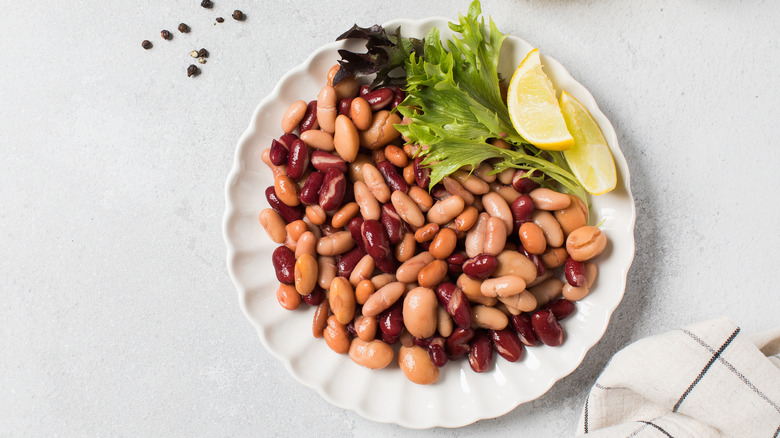
Canned beans are undeniably convenient. Cheap, shelf-stable, and pre-cooked for use at a moment's notice, they have you covered when time is of the essence. The only issue with canned beans is that they don't always taste as good as the ones you soak and cook yourself. There's something about that liquid that they come in, too. It's kind of gross, but nothing a quick rinse won't solve. Still, we always keep canned beans on hand. They may need a little help in the flavor department, but thankfully, balsamic vinegar is here to the rescue.
Just like with other foods, balsamic vinegar adds a deliciously tart, tangy acidity to canned beans, and that's basically all that's needed to take them from meh to marvelous. Obviously, some herbs and spices won't hurt, either, but balsamic vinegar is a flavor powerhouse all by its lonesome, and canned beans are just the thing to soak it up. You can even add it to baked beans to amplify their inherent sweetness. Whatever beans you opt for, only use 1 teaspoon of balsamic vinegar to start. Then, give them a taste and reevaluate. It's easy to go overboard, so it's best to always start slow and adjust as needed.
Add balsamic vinegar to bread dough for the ultimate texture and flavor upgrade
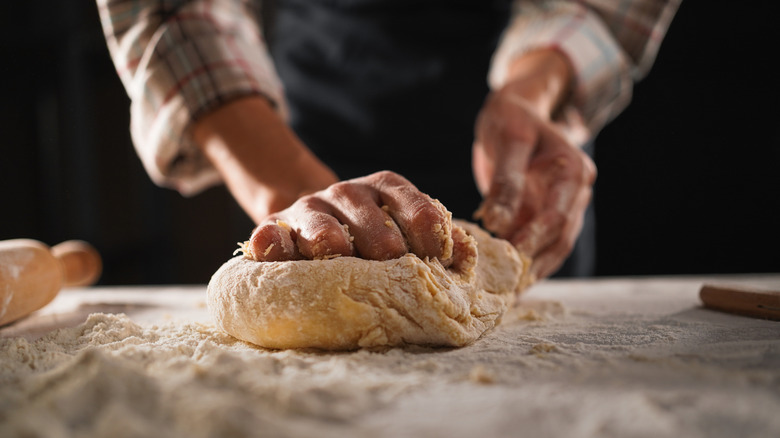
Everyone knows that dipping freshly made bread in a pool of olive oil and balsamic vinegar is delicious. Just bringing it up is enough to make my mouth start watering, but guess what? You can also eliminate the middleman, i.e., the saucer of oil and vinegar, and add a bit of balsamic vinegar straight to your bread dough before baking. Not only will it enhance the flavor of the bread overall, but it is also known to improve texture. It may seem too good to be true, but a small amount of vinegar is just what you need to ensure lofty rising and a less dense loaf overall. It doesn't have to be balsamic vinegar, either, but it leads to a super bright, bold taste that is sure to turn some heads.
How much balsamic vinegar do you need to achieve the loftiest, tastiest bread? Well, you can use as little as 5% or as much as 10% for a super bold, bright, and tangy taste. If you lean more towards the heavier end of the spectrum and you are worried about changing the color of your bread too much, don't forget: There's always white balsamic vinegar. Regardless, considering how fickle bread-making is, we'll take all the help we can get. How about you?
Drizzle balsamic vinegar over ice cream for a sweet and tangy treat
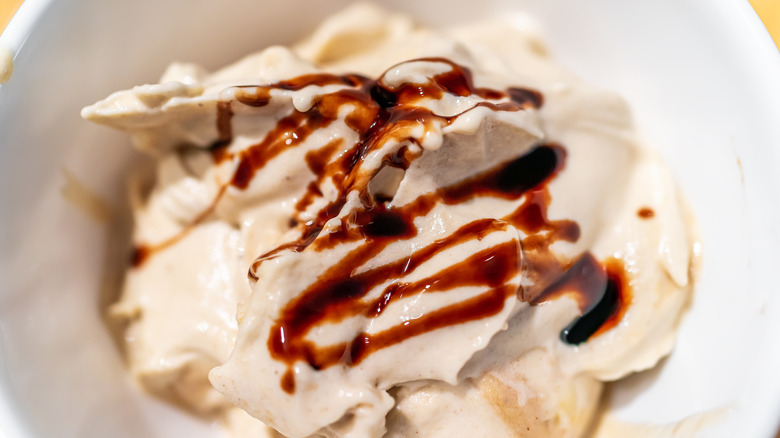
The final unexpected, yet tasty use for balsamic vinegar that we discovered is to drizzle it over ice cream. What? Yup, you read that right, and we were just as surprised as we imagine many of you are right now. According to the hive mind on Reddit, though, it's mouth-watering, to say the least.
One commenter on Reddit, who agrees that using balsamic vinegar on ice cream is entirely out of left field, had this to say about it, "This is going to sound ridiculous, but I've had balsamic drizzled over ice cream and it's delicious." Interesting, but they weren't the only ones. Another commenter chimed in and said, "A really good aged one is excellent drizzled over French vanilla ice cream with strawberries." Okay, we're definitely listening now.
It's not just Reddit that confirms the use of balsamic vinegar on ice cream, either. Apparently, one of the more famous ice cream shops in New York City, Big Gay Ice Cream, has made a blueberry balsamic sauce for its ice cream, and it is to die for. Who would have thought? But also, consider us sold. We guess it's time to start shopping for premium balsamic vinegar, so we can not only start adding it to ice cream, but continue exploring the other fantastic uses we've discussed for it, as well. Which one will you try first?