

What's The Difference Between The Protein In Beef Vs Chicken?
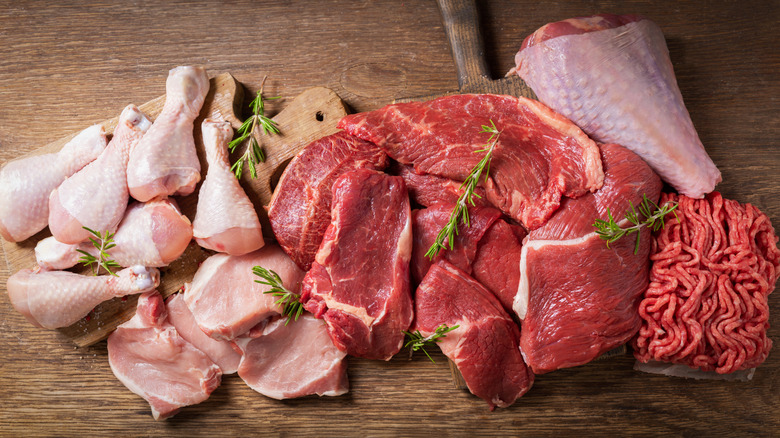
Protein is having a serious moment. Once the domain of gym-goers looking to fuel their muscle gains, protein-maxxing has officially entered the mainstream. And while building muscle is probably its biggest claim to fame, there are plenty of other reasons to make sure you're getting enough protein in your diet. It can support bone health, help maintain muscle as you age, and play an important role in recovery from injuries. According to Harvard Health, the Recommended Dietary Allowance (RDA) for protein is around 0.36 grams per pound of body weight, although individual needs can vary considerably depending on factors such as age, activity level, pregnancy, and dietary goals.
While there are plenty of great plant-based steaks with similar protein to beef, meat remains one of the easiest ways to pack a lot of it into your diet. Chicken and beef are two of the most popular options, but which one actually comes out on top? The answer isn't quite as straightforward as you may think. If you compared an entire cow with an entire chicken, the former would obviously contain vastly more protein overall. But unless you're planning on eating your way through a whole cow, that's not a particularly useful comparison. Most of us get our protein from individual cuts, which makes the contest a little more interesting.
While chicken breast is often considered the top choice for bulking up on protein, there are several other meats that do contain more — certain beef cuts included. One major advantage of beef is variety, with a wider range of cuts that can deliver plenty of protein. Beef cuts also tend to be larger and denser, making it easier to get a substantial serving of protein in a single meal. But while beef may win the protein-per-ounce showdown, chicken gives you plenty more bang for your buck.
Eating chicken is a budget-friendly way to hit your protein goals
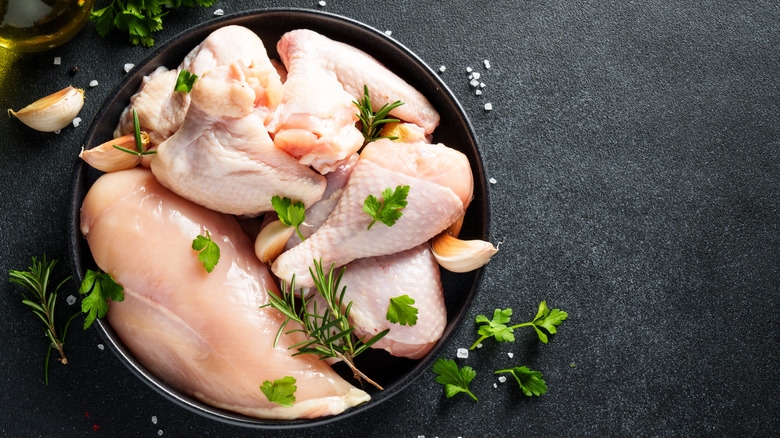
Chicken breast is often touted as the most protein-heavy meat you can find at the grocery store. While its numbers are certainly impressive, it doesn't actually hold the top spot. Three ounces of grilled, skinless chicken breast contains roughly 25.9 grams of protein. Compare that with a grilled top sirloin, which contains around 26 grams per three ounces, or the tenderloin, which comes in at roughly 26.1 grams using the same serving size and cooking method. We're really having to split hairs here. Top sirloin and tenderloin are among the most protein-dense cuts of steak available, and the differences are still marginal at best. Still, it would be wrong to say that chicken breast is, by default, the most protein-heavy meat available.
The domain where chicken breast does have an edge is price. Beef tenderloin is one of the most prized cuts of beef. Because it sits along the cow's spine and does very little heavy lifting, it contains little to no connective tissue, which helps give it that famously melt-in-your-mouth texture. Unfortunately, that reputation comes in tandem with a hefty price tag. Similarly, while top sirloin might be a more budget-friendly alternative to filet mignon, a particularly prized cut from the tenderloin, it will still typically cost considerably more than your run-of-the-mill grocery-store chicken breast.
Put into perspective, the difference between tenderloin, top sirloin, and chicken breast might amount to just a fraction of a gram of protein per three-ounce serving. The price difference, however, is much more substantial. For anyone looking to consistently pack protein into their daily meals without breaking the bank, chicken breast is undoubtedly the better option.
Lean cuts of beef are a serious source of protein
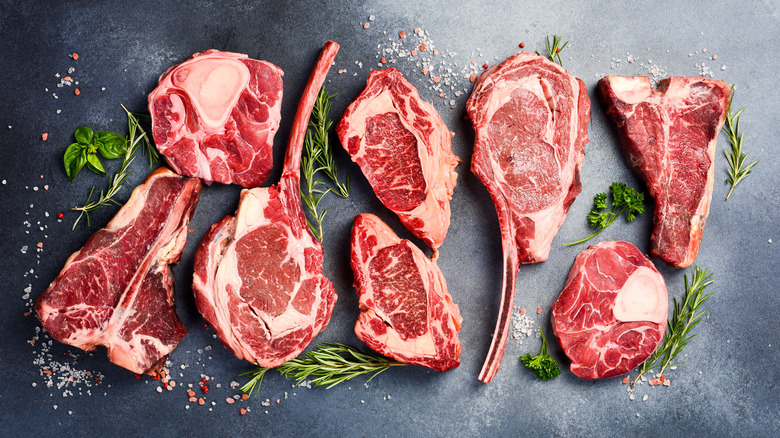
What separates a high- and low-protein cut is fat, which takes up the weight that protein would otherwise occupy. That's why you'll rarely see exceptionally well-marbled steaks touted as high-protein. While chicken breast edges out most steaks, its other cuts are hardly competing. The fattier thigh, for example, only contains around 21 grams of protein per three ounces. What beef has that chicken doesn't is a variety. Lean cooked steaks like the top round, eye of round, top sirloin, flank, and tenderloin generally land around 23 to 26 grams, so there are considerably more high-protein options to choose from.
This variety can have a major impact on your meal. Chicken breast can be a bit one-note; no matter how you dress it up, it's still a chicken breast. But beef's leaner cuts each deliver a completely unique meal. Top sirloin is your classic steakhouse-style fare; flank steak is made for marinating and slicing thin for fajitas or stir-fries; top and eye of round roast beautifully for sliced sandwiches. This makes beef a far more varied and customizable source of protein.
Alongside the protein per ounce comparison, you've also got to factor in the portion sizes of chicken breast and steak. A typical raw chicken breast weighs somewhere around 6 to 8 ounces, while an average steak portion tends to run 6 to 10. Of course, if you'd rather get your protein from a chicken, there's nothing stopping you from cooking up a bigger breast, or two. But since a breast and a lean steak pack such similar protein per ounce, portion size ends up being what really sets them apart, and steak tends to come out slightly ahead simply because there's more of it on the plate.