

These 4 Meats Have More Protein Than Chicken
We may receive a commission on purchases made from links.
Chicken is often the meat of choice for those looking to boost their protein intake. And the assumption isn't wrong — a chicken breast contains 25.1 grams per 3-ounce serving. However, while we often assume that chicken is the pinnacle of the muscle-building fuel, there are actually several cuts of meat that contain more.
The majority of meats that tend to be high in protein — like turkey, beef, and veal — are lean, as they are primarily composed of dense muscle tissue rather than fat (this is also why chicken thighs offer a lower concentration than, say, the breast). However, being lean isn't mutually exclusive with being protein-dense. Take bluefin tuna, which is famously super fatty but also loaded with the macronutrient.
With a wide range of high-protein options available, ensuring you hit daily intake goals doesn't have to be boring and repetitive. Incorporating more protein into your diet can also have a variety of benefits beyond just building muscle. It manages a wide range of bodily functions, including muscle repair, immune system support, and metabolic function. According to Harvard Health, we should generally eat 0.36 grams of protein per pound of body weight — just make sure you don't take your protein-maxxing to the extreme.
Veal offers lean protein and tender texture
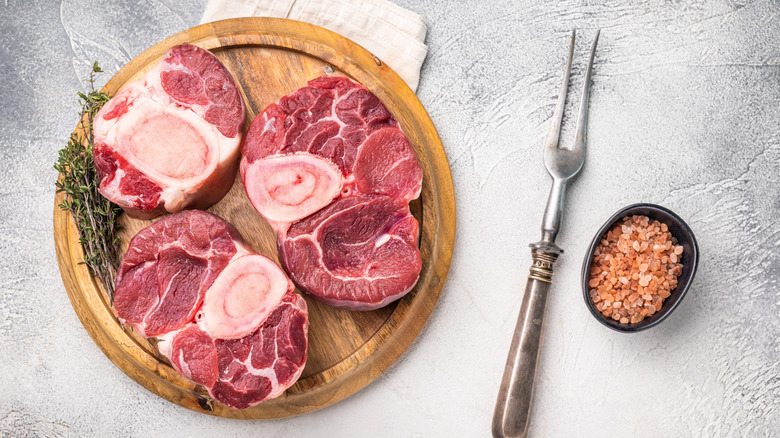
Veal is a delicacy. Featuring meat from cattle slaughtered under the age of eight months, it's famed for its mild flavor and delicate texture. Because the young calves don't have enough time to develop any meaningful fat, their meat is extremely lean and super high in protein. For example, veal loin contains an impressive 25.7 grams per 3-ounce serving.
Veal already has a reputation for being naturally tender, and the loin — the section of meat taken from the back of a young calf — is considered to be one of, if not the most, tender cuts. Unlike tougher areas like the shoulder or shank (which require braising to break down their tough connective tissue), a veal loin can easily dry out, so a quick roast of around 15 minutes is all you need to get the job done.
Over in the U.S., veal isn't the most popular cut of meat. It's considerably pricier than more common cuts like beef, pork, and chicken, and it also comes with a side of controversy. In the 1980s and 1990s, there was an animal welfare movement against "veal crates," which were used to restrict calf movement to make the meat more tender. As a result, there's definitely a taboo surrounding it. However, no such stigma exists in Europe, where it remains a culinary staple. It's especially prevalent in Alpine regions within Italy, France, and Austria. Iconic European veal dishes include Austrian wiener schnitzel and Italian saltimbocca.
Turkey is a great high-protein option
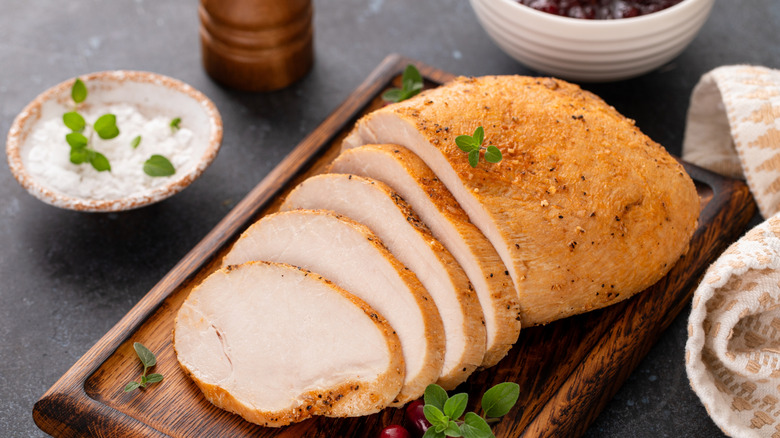
Turkey doesn't get the love it truly deserves. Sure, everybody gets one during Thanksgiving, but outside of the festive season, it's mostly forgotten. It's definitely a lot less forgiving than chicken, as it's leaner and notoriously easy to overcook. It's also much larger, which means it takes longer to prepare properly. While roasting a chicken takes around one to two hours, you'll need upwards of three hours on hand to roast a whole turkey. But if protein is a priority, it might be worth the extra effort, as just a single 3-ounce turkey breast contains 25.6 grams.
Whether you're cooking a whole turkey or just a breast, the traditional tried-and-tested method is roasting. To prevent overcooking, make sure to regularly check its temperature with a meat thermometer and remove it from the oven when the thickest part of the bird is 165 degrees Fahrenheit. Make sure to let it rest for around 15 to 45 minutes, where it will finish off via carryover cooking. This will also solve all your dryness worries by allowing the meat's juices to redistribute.
While you could roast the breast yourself, it's also super easy to find turkey breast sold cooked and pre-sliced from retailers like Walmart. These styles of cuts allow you to enjoy the protein benefits of the meat while also making it more versatile. You could make a turkey sandwich or add it to a bagel. Alternatively, pair it with other nutrient-dense ingredients like a fried egg or a delicious, meltable cheese like Swiss for a deli-style spin.
Bluefin tuna is one of the most protein-dense fish
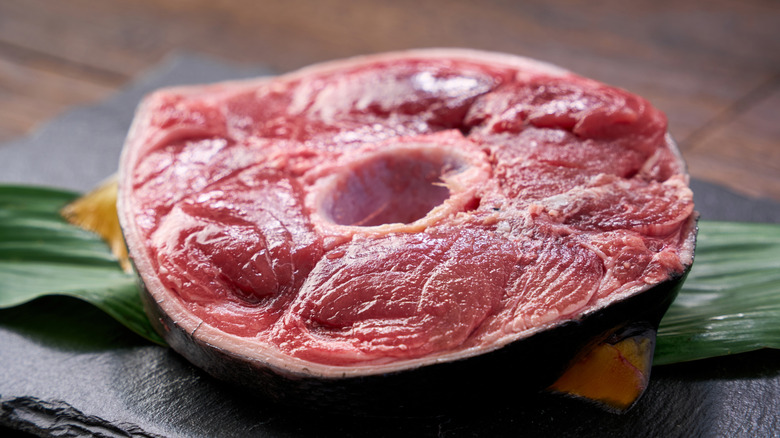
Fish often gets ignored in the protein discourse, but it's actually an excellent source of high-quality fuel. Sure, most fish can't compete with a chicken breast, but one tuna species manages to surpass all expectations. Known for its huge size, eye-watering price tag, and exceptional quality, bluefin tuna also contains a whopping 25.4 grams of protein per 3-ounce serving. But be warned — it's commonly known as the "Ferrari of tuna," and its prices are reflective of that title.
While most high-protein foods tend to be on the leaner side, bluefin tuna is actually famous for being incredibly fatty. With a buttery texture and rich flavor, it has become the darling of the seafood world, and whole fish have been known to fetch millions of dollars. You'll be sure to find it at a high-end Japanese restaurant; it's excellent sliced raw for sashimi or nestled over seasoned rice for a tasty nigiri. Because of its popularity and exceptional reputation, bluefin tuna was once heavily overfished, leading to serious concerns about the survival of the species. However, their populations have recently shown promising signs of a rebound thanks to strict international fishing quotas.
If raw fish isn't your thing, we recommend cooking it over the grill. The intense heat infuses the meat with a rich, smoky flavor while crisping up the exterior. Other methods like pan-frying or oven-baking work, too.
It's no surprise that beef is packed with protein
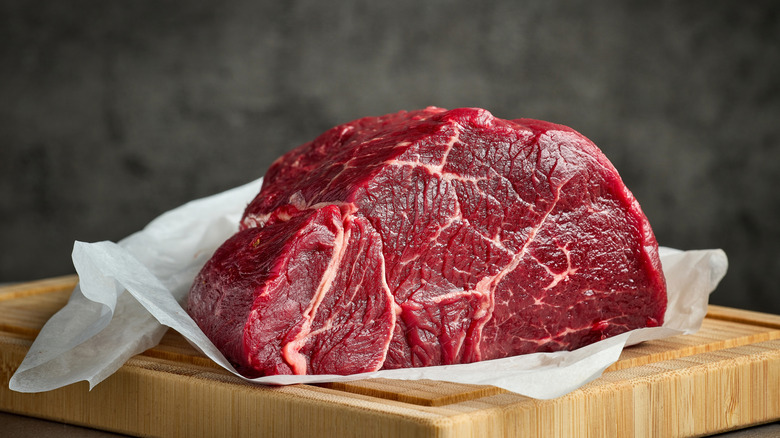
Beef can be an excellent source of protein, but concentration varies. Lean cuts tend to be significantly higher in the macronutrient than marbled cuts. Take one of the leanest cuts — the round — which packs a staggering 30.3 grams per cooked 3-ounce serving. That's 5 grams more than chicken.
Aside from their protein content, lean steaks and marbled steaks are very different. Marbled cuts — such as ribeye or flat iron — are full of intramuscular fat, which melts when heated and bastes the meat in rich flavor. Another advantage of this fat is that it keeps the meat moist and juicy, making it much more forgiving to work with. Conversely, lean, protein-heavy cuts require more care. However, this lack of marbling does come with advantages — since intramuscular fat is a prized trait, its absence makes the round one of the most affordable cuts.
It's not a great idea to pan-fry lean cuts whole. Ultimately, it'll likely turn out dry, chewy, and unpleasant. Instead, marinate the beef in an acid-based solution to tenderize the meat, and then cut it into ultra-thin strips. This makes it a budget-friendly option for beef stir-fries like Mongolian noodles or beef bulgogi. It's also well-suited for braising, with the low-and-slow cooking breaking down its dense muscle fibers and making the meat fork-tender.