

10 Rules Texas Roadhouse Staff Members Have To Follow
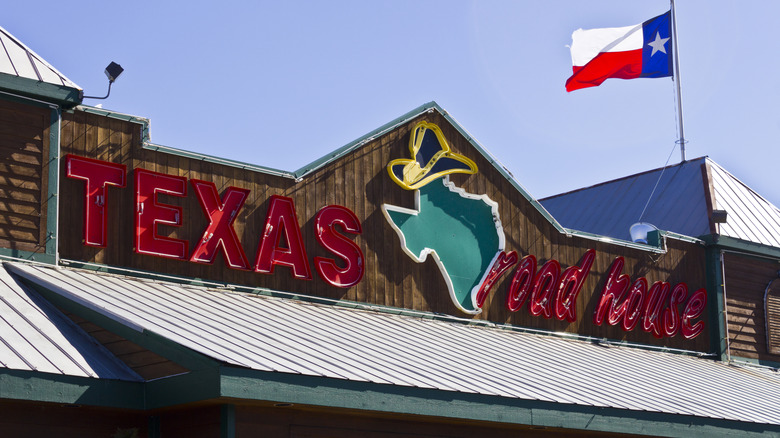
Dining at a Texas Roadhouse is meant to be a fun experience that corporate messaging promises will be "legendary food, legendary service." The chain is known for its commitment to scratch-made breads, hand-cut steak, crave-able steak sauce, and unique dining culture, but curating that Texas Roadhouse experience for guests isn't an accident. A thorough, and sometimes surprising, set of employee guidelines and rules are put in place to ensure every Texas Roadhouse delivers the same, enjoyable dining experience customers expect at every location.
As much as customer experience matters however, a business has a bottom line and staff contentment to consider, as well. Among servers, the quality of tips at the end of the night are a big part of what makes a restaurant worth working at or not. For Texas Roadhouse staff, or "Roadies," these mandatory rules are just part of the job, like a little good-natured line dancing.
1. Line dancing is rehearsed, but not always required
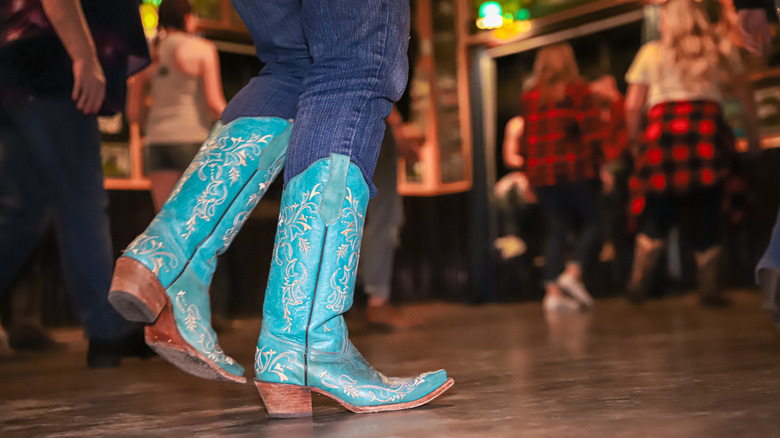
The iconic line-dancing Roadies is perhaps one of the first unusual rules diners might associate with the Texas-themed chain, but it's not as universal as you may believe. The management team at each location plays a large role in deciding when and how often front of house employees need to pause their customer service tasks, and line up for a high-energy dance in front of guests, notes employees on Reddit. Some locations opt to let it slide entirely, while others might require it on a regular schedule throughout the day.
If new employees are hired to a location with line-dancing on the menu, they aren't just thrown to the wolves to learn on the job. Rehearsals are required, and either live or online training is provided for a two-step line dance so Roadies can jump in with enthusiasm during their regular shifts.
If you're wondering if dancing takes priority over food quality or diner experience, former employees on Reddit suggest that when it's time to dance, not all servers are expected to drop everything and participate at once. Some managers ban the dancing during rushes, but an enthusiastic performance can actually serve as a pleasant distraction to customers when there's a wait, easing some of the pressure that can be put on servers when a restaurant is slammed.
2. Uniforms should be clean, pressed, and always tucked in
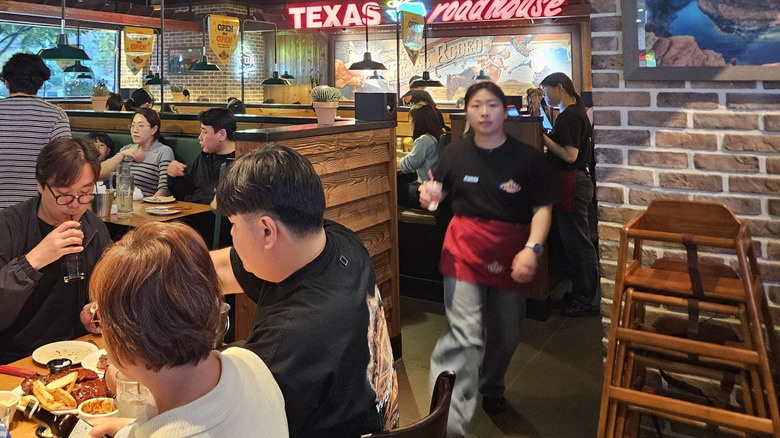
Texas Roadhouse's appearance policies are curated to assure customers that a clean, professional staff is handling their food. While it might be annoying for staff to take out nose and facial piercings or purchase dark-wash non-distressed jeans, restaurants often build these policies to create a safe and healthy environment for both staff and customers.
And there are a lot of specificities at Texas Roadhouse. Every server is required to have a clean, company-provided shirt tucked into dark-washed jeans, per Indeed. Leave the designer-torn denim at home, though. Texas Roadhouse expects a server's pants to be free of holes, rips, snags, or other modifications and ensure they have a black or brown belt to finish off the tucked-in look.
Other policies, like limiting piercings and jewelry is both a part of professionalism and food safety. Tattoos are equally restricted according to the company's guidelines, but we've heard it varies from location to location and the manager in charge, notes Reddit. But don't forget the footwear! While you might expect servers to stroll up in a themed shoe like cowboy boots, Texas Roadhouse policies are the same as most restaurants: Non-slip shoes are a must for all staff to prevent slips and falls.
3. Employees get used to rolling out the birthday saddle
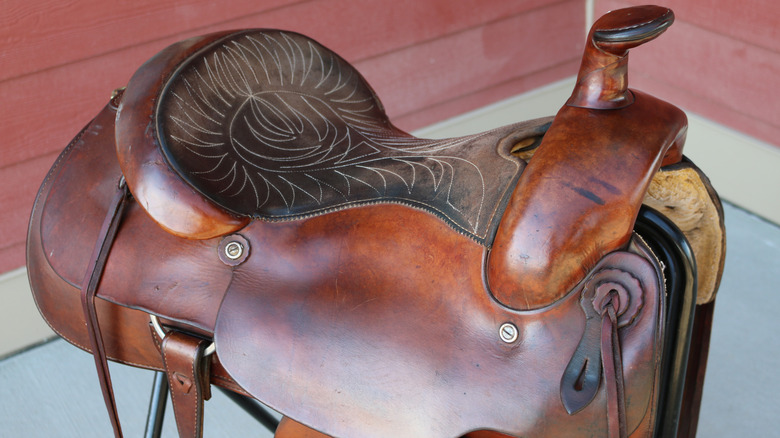
While the employees may not be sporting cowboy hats, boots, and flannel shirts, Texas Roadhouse does have a themed birthday celebration that Roadies are expected to carry out on customer request. A real horse saddle, mounted on an easy to push platform, can be brought right up to the birthday guest's table, for a very noticeable public celebration that is part hilarity, and part mortification, depending on the customer, according to employees on Reddit.
The routine servers perform is simple. Birthday guests sling a leg over the saddle, then servers call the restaurant's attention to them, encouraging all diners to join them in a big birthday "yee-haw." While there are certainly moments a server can tell the birthday person in question would rather skip it all together, it doesn't stop the birthday saddle from showing up regularly during shifts, often several times an hour. For some diners, the experience and server enthusiasm is even worth a bigger tip, and so we doubt that saddle is going anywhere anytime soon.
4. Employees are asked to act with H.E.A.R.T.
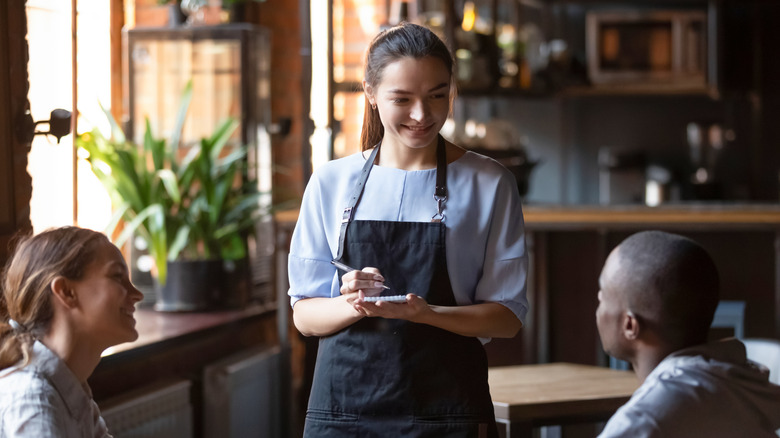
Texas Roadhouse trains its Roadies that the mission is to provide legendary service and legendary food to every customer, beginning with the staff members that make the company's first impression. We've all heard the well-rehearsed server repeat common phrases and greetings in chain restaurants, but the lack of creativity may not be their fault. It's quite often literally how they're trained. Texas Roadhouse hosts are coached to greet customers with a scripted greeting, and its servers are expected to carry out the five steps of H.E.A.R.T. with every table, every time, according to a training practice on Quizlet.
Each letter of H.E.A.R.T. stands for a different step in a guests dining experience, starting with an enthusiastic "Howdy," followed by "Engaging" with guests for their drink order. Next comes "Arrive," a step that guides employees through how quickly a table's appetizers, salads, and main courses should be dropped off after they've placed their order. Once food is on the table, staff is expected to continue to "Respond" to the table's needs for the duration of their dining experience before they wrap it up with a warm "Thank you." While sometimes these rehearsed steps can make a server seem stiff and practiced, the H.E.A.R.T. guidelines are there to ensure a guest's needs are met for their entire visit.
5. Customers should be in and out in 55 minutes
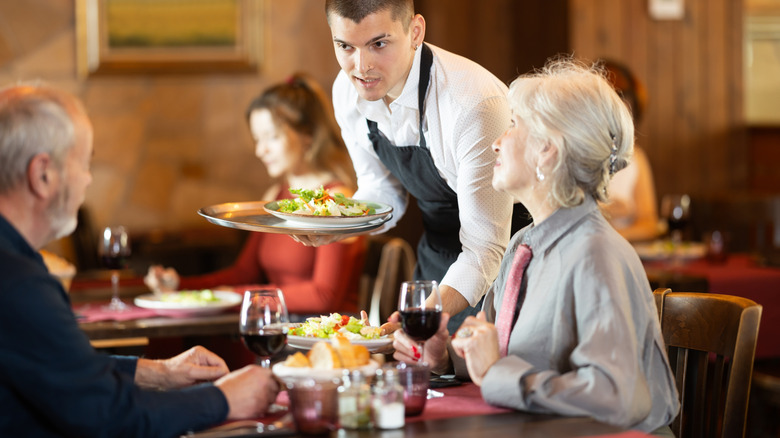
Texas Roadhouse's H.E.A.R.T. guidelines might have its heart in the right place, but what most guests may not realize is that those five steps of legendary service, also come with strict windows of time in which they should be carried out, per employees on Reddit. Each step outlines a Roadie's ideal pacing, one that Texas Roadhouse deems optimal for guests, all with the aim to "strive for 55," or get a table in and out in 55 minutes.
Tables should be greeted with their "howdy" in under 45 seconds, and drink orders taken in just two to three minutes of a guest sitting down. After a server gets a table's order, food arrival has a similar strict time windows. All apps should be dropped within six to eight minutes, salads in five minutes, and entrées no longer than 15 minutes.
What might surprise diners is the short window in which servers are expected to "respond to tables" just a brief 13 minutes are expected for a server to pay attention to maintenance of the table during their first bites. After that, Texas Roadhouse encourages servers to wrap it up in just two to three minutes, ideally sending tables on their way in less than one hour.
More tables means more restaurant profits of course, but most Roadies appreciate the rapid turnover, too. Texas Roadhouse typically aims to limit servers to just a few tables at a time, so one group of guests that lingers beyond their meal can really impact a server's income for the night, adds a Reddit commenter.
6. Upselling is part of the process
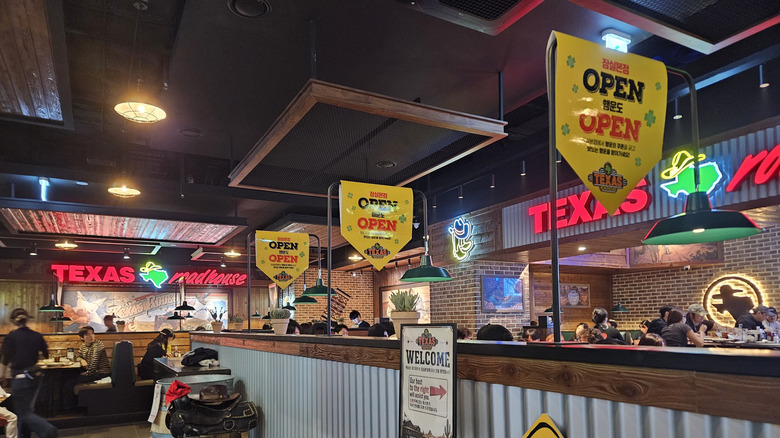
If it wasn't enough to expect its employees to remember the steps of H.E.A.R.T. service, the menu items, and each table's specific requests, Texas Roadhouse has other rules that put pressure on a Roadie's interaction with every table. Servers are ranked by "blast reports" that are based in part by upselling customers on certain services, features, and products. Employees on Reddit are split, with many enjoying the opportunity to increase their sales, which often means more tips and earned incentives like better sections, more tables, and busier shifts. Customers may not mind either, especially when some of the best tips for enhancing your Texas Roadhouse steak include taking advantage of those extras.
Not all servers have the magic touch however, and those that struggle to rank amidst the highest percentiles of blast scores in the restaurant can be penalized, instead. Less tables, slow shifts, or even being demoted to host are potential consequences that can add to staff stress and unhappiness.
7. Descriptive food language can work better than sales speak

In a restaurant culture that incentivizes its servers to earn high "blast scores" or a high percentage of upsells per shift, there is bound to be a strategy that emerges among its employees. As one Texas Roadhouse manager suggested on Reddit, upsells tends to be more successful if a server uses "yummy words not money words."
In their advice to the original poster, a worried new server, the manager suggested laying off asking customers if they'd like their food loaded or smothered, and opting instead for different descriptors. This advice is echoed by other employees, suggesting servers offer legendary strawberry margaritas instead of just drinks, hot fresh-baked rolls instead of bread, and naming the specific toppings they can add to sides and steaks. Customers are much more likely to add bacon and cheese to their creamy mashed potatoes or sautéed mushrooms on the steaks than they are to "smother" their food.
This can seem a little manipulative on its face, but others suggest that the language helps clarify what they'd be getting and what questions to ask. We suggest you hear them out — Roadies are just doing their job, and we often find that communicating with your server can be a key to a better overall dining experience anyway.
8. Upsell beyond the food and beverages
Not all the upsells that Texas Roadhouse employees are expected to offer to customers are food related. During different times of the year (like the holiday season), diners should prepare themselves to be asked if they'd like to buy a gift card, or even several all at once. The steakhouse chain offers different gift card promotion packages throughout the year, providing perks like bonus gift cards to guests. Oftentimes, restaurant locations with high gift card sales earn incentives of their own. According to several employees on Reddit, Roadies are expected to explain gift card perks and promotions to every guest in order to help boost their locations overall sales.
For many servers, this upsell is the hardest to weave into the natural dialogue of the table and some even outright avoid it, incentives or penalties aside. Others take the strategy of being direct, letting guests know they're required to ask and that there's a promotion if they're interested.
9. Always a Roadie, on or off the clock
In our current online-era, where social media is a big component of daily life and restaurants can live and die by reviews, it's not surprising to learn that Texas Roadhouse also has guidelines for how its employees should conduct themselves online, even when away from work. In addition to prohibiting employees from portraying themselves as company representatives, staff should not post about employees, customers, vendors, or any other work related topic in any way that is negative, harmful, or false, per the Code of Conduct.
We've seen more than one server rant on social media about difficult customer experiences, but this comes with a big risk to Roadies. While it might be tempting to take to their social media threads and vent about their trickiest and most demanding customers, it could be considered a violation of Texas Roadhouse's code of conduct. Roadies need to consider if complaining about it to their followers is worth the potential termination that could follow.
10. Management will ask for a sick note

The last thing anybody wants is a sick server coughing and sneezing over their food. Calling out sick would be expected for any restaurant that cares about customer and employee health, at least in our eyes. But at Texas Roadhouse, it takes a little extra work to get a sick day excused by management.
When employees find themselves too sick to work, they're encouraged to go onto the company-provided online symptom survey. On Reddit, a parent of a server said that her daughter was prompted with one after calling in sick. If symptoms have the potential to violate health codes, such as vomiting or having a fever, the system provides a sick note and the employee can get their shift excused.
Systems like this can help with accountability, ensuring no single staff member calls out too often, or leaves shifts uncovered, but it can also feel like an invasion of privacy to have to report their health symptoms to a non-medical professional. Staff does not have to take the symptom survey, but without the sick note from the provided system, employees are without any protections. Calling in sick, especially if the shift isn't already covered by a coworker, could be as good as calling in to quit.