

13 Reasons Waffle House Scrambled Eggs Taste Better Than Yours
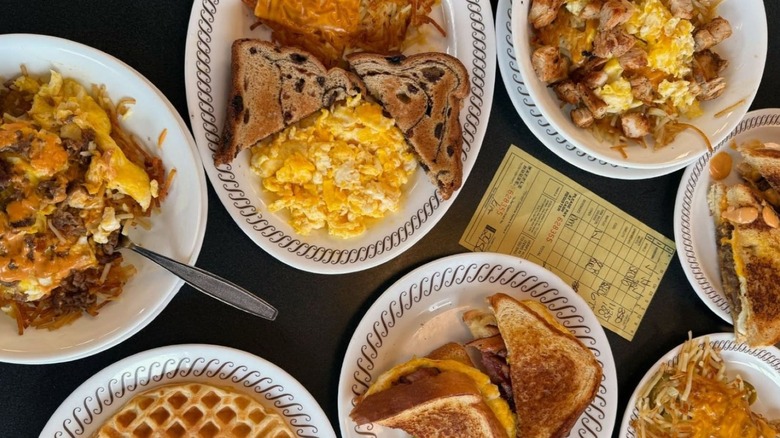
Oh, Waffle House: It's forever welcoming, forever fluorescent, and forever full of odd-hour people in pajamas, prom dresses, and night-shift uniforms, all clamoring for decent eggs and maybe a hot drink to get the night moving. It's the kind of place you could really get used to, so much so that walking past a temporarily shuttered location feels almost chilling, like a sign of the apocalypse. But much as we'd all like to believe Waffle House would never just up and leave, it pays to be prepared.
First step to getting your ducks in a row is recreating those glorious menu items at home. Scrambled eggs seem like the obvious place to start; after all, how hard can it be? A pan, a couple of eggs, some butter, cheese, and voilà ... right? Not so fast! Don't be fooled by how quickly they arrive after you order. That's exactly the kind of confidence that leads to sad, underwhelming eggs that come nowhere near Waffle House's cheesy goodness. Reproducing the chain's scrambled eggs is a lot trickier than you might think. Fortunately, we've rounded up a few of the reasons yours keep falling short of the ideal, along with tips and tricks to set you on the right path.
You're using old eggs
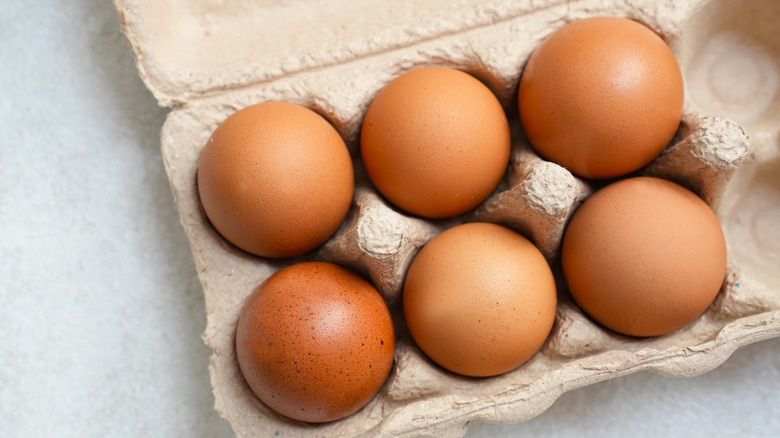
For most of folks, buying eggs is a low-stakes affair: See a trusted brand, grab the carton, keep it moving. Waffle House, however, is a lot less casual about its egg selection. Not just any old egg gets the nod there – the chain goes for Grade A, farm-fresh eggs sourced from Indiana-based Rose Acre Farms.
Pretty much every carton at the grocery store is Grade A, so no, you're not getting fleeced if you don't squint too hard at the grading. But you should pay a little attention to the three-digit code above the sell-by date. That's the pack date: 001 means January 1, 365 means December 31. That's because an egg can seem totally fine on the surface and still be far too old to give you the soft, dreamy Waffle House scramble you're after.
As eggs age, their internal membranes weaken, the yolks flatten, and the thick whites thin out. Whisking older eggs get you a looser, less cohesive mixture that won't cook up with the same rich creaminess Waffle House eggs are known for. Older eggs are also much less forgiving; their weakened structure makes it harder for them to hold onto moisture, so they'll quickly turn weepy and rubbery if you overshoot the heat just a little.
Your egg mixture is not aerated well enough
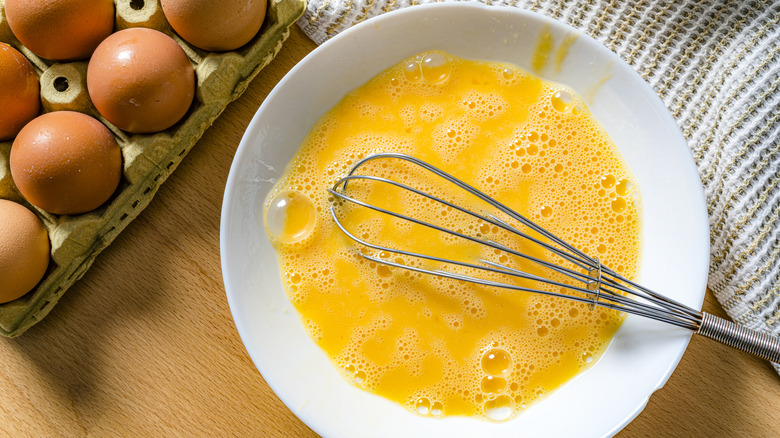
One of the biggest appeals of Waffle House scrambled eggs is the texture. They're airy, with fluffy curds that sit soft and gentle on the palate. A big reason for that is how thoroughly the eggs are aerated before they ever hit the pan. Waffle House uses a blender to whip the mixture until it's fully combined and nicely full of air.
That might seem like a pretty aggressive whisking trick for scrambled eggs, but it matters more than you'd think. Eggs have natural foaming properties, meaning they can trap and stabilize air, which helps create the delicate fluffiness Waffle House eggs are known for. If the mixture isn't properly aerated, the eggs hit the pan without those tiny pockets of air in place. As the proteins coagulate, the curds can turn out bulkier, denser, and rougher instead of light and tender.
Proper whisking does more than just work air into the eggs; it also makes sure the yolks and whites are fully and evenly combined. Because the two don't cook exactly the same way, a poorly mixed egg mixture can set unevenly, leaving you with scrambled eggs that feel patchy rather than smooth and cohesive. A dense mixture is also far less forgiving on the pan. The uneven chunks can cook up pretty quickly, especially under high heat, so it's pretty easy to blow right past that soft, creamy Waffle House sweet spot and land in rubbery country.
Waffle House uses a specific kind of cheese
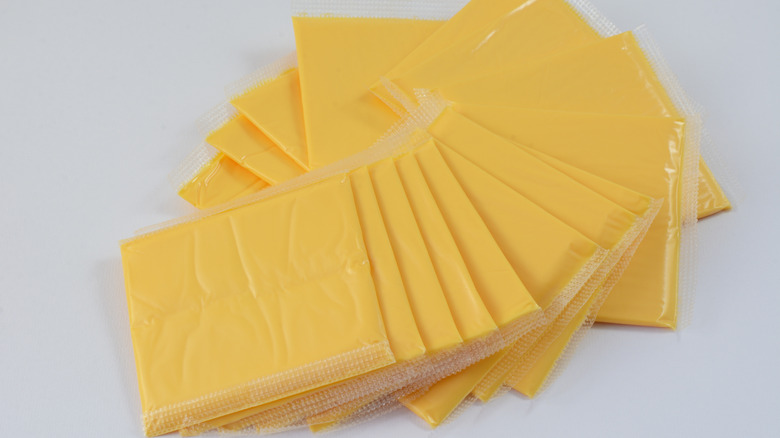
Sometimes you need a kick of cheese to crank up the creaminess in your scrambled eggs. Plenty of cheeses can elevate a scramble, but if you're trying to toe the Waffle House line, not just any cheese will do. Controversial though it may be, and technically not cheese to some purists, the only one that really passes muster is good ol' American cheese.
And no, it's not just because it's dependable and cheap. American cheese has a salty, delicate flavor that plays especially well with the soft, creamy mildness of scrambled eggs without overwhelming them. But its biggest selling point is probably its near-perfect balance of water and fat, which lets it melt into a smooth, soft, homogeneous mixture that seems almost tailor-made for egg curds. That means no clumps, no oily separation, and none of that patchy melt you might get from a firmer cheese like cheddar. American cheese also melts in a very short window, which means it can slip into the curds quickly without snagging them into heavy clumps and completely throwing off the texture.
Of course, there's a limit to everything. Waffle House keeps it restrained: Just one slice of American cheese for every egg. Any more than that, and the eggs can turn overly overly rich, greasy, and almost gluey; any less, and you lose that Waffle House adjacent creamy richness and end up with eggs that taste almost austere.
Your choice of pan matters
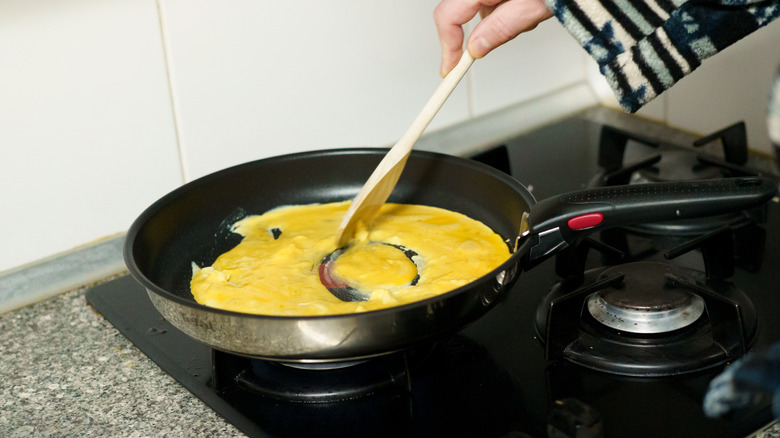
Not every egg disaster is your fault — sometimes the real saboteur is the equipment. You've got plenty of options with scrambled eggs, but what's the best pick? Most experts will tell you to reach for a nonstick pan if you want the best scrambled eggs. It's sound advice, but that's not exactly how Waffle House plays it. The chain has its own very specific pans for scrambled eggs, and really for eggs across the board.
A Redditor claiming to be a Waffle House employee spilled the beans on the pan of choice: aluminum. Not exactly the preferred pick for scrambled eggs, sure. But it can be just as reliable and forgiving as non-stick if you know how to handle it. It heats fairly evenly, which means fewer scorched patches and a better shot at soft, cohesive curds than you'd get with a hot-spot magnet like cast iron. And if you've ever cooked with aluminum, you already know it responds fast to heat shifts. That kind of responsiveness is a game changer with scrambled eggs, where close control can mean the difference between creamy and soft or dry and chunky. The catch is that aluminum is a little trigger-happy with heat. Keep a tight grip on the burner, or your eggs could go from soft and creamy to charred faster than you can blink.
You might be overcooking
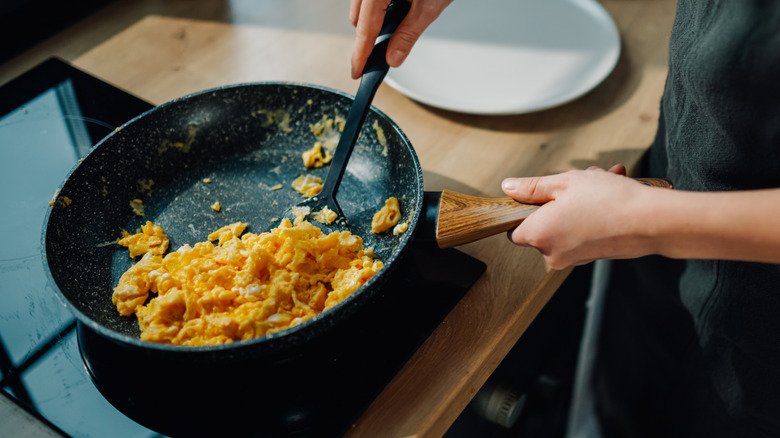
Arguably the biggest mistake you'll want to avoid when making scrambled eggs is overcooking. Eggs have an absurdly narrow doneness window; the proteins start coagulating the second the beaten mixture hits the pan, so even if your technique is flawless and your heat control is spot-on, one tiny miscalculation can still leave you with a chalky scramble. Strangely enough, that is one fate Waffle House scrambled eggs tend to avoid. Part of the reason is speed: The eggs go from pan to plate in record time, which helps keep residual heat from pushing them past the point of doneness.
Now, nobody expects you to have the kind of rapid-fire reflexes that come with being a Waffle House cook, but there are a few things you can do to stop the cooking before you plate your eggs. Top of the list is pulling the scramble off the heat while it's still a little runny, so it doesn't turn chalky and rubbery from carryover heat. And while it may be wildly unreasonable to dig into your eggs before they've had a chance to cool, don't let that cooling-off period happen in the pan. This is also one area where your choice of cookware can come to the rescue. Like Waffle House, go for a pan that responds quickly to temperature changes, just so there's less residual heat hanging around to push your eggs past soft and creamy.
Waffle House uses a very specific kind of oil
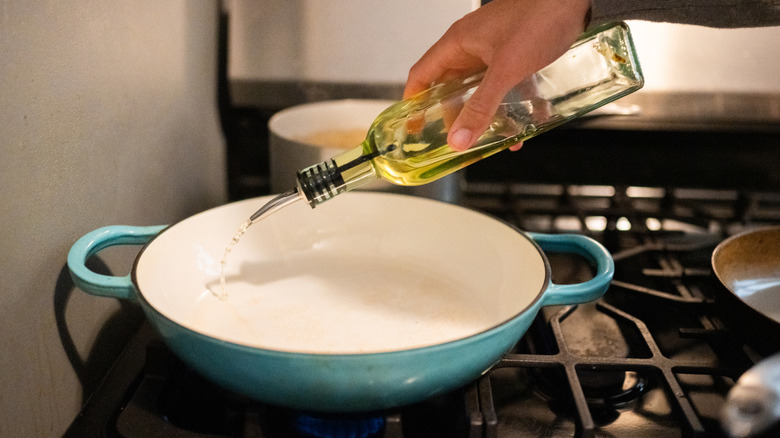
Cooking fat is a huge part of the texture-and-taste equation when it comes to scrambled eggs, so your choice matters every bit as much as, if not more than, technique. Most experts will point you toward butter, and for good reason. It gives scrambled eggs a richer mouthfeel and that unmistakably luscious flavor. But if you've ever watched butter hit a hot pan and immediately start acting up, you know how easy it is to make a butter mistake. Vegetable oil is much more permissive, but the tradeoff is that your eggs can end up tasting a little stripped down.
Waffle House gets around this dilemma in a pretty clever way. Rather than use plain cooking oil, or more strongly flavored oils like olive oil that can end up hijacking the scramble, the chain leans on shortening. It has a fairly high smoke point, which helps dodge butter's tendency to burn. And because it's semi-solid, it clings to the pan better, giving you a little extra insurance against sticking. Now, if Waffle House is not using butter, you might be wondering why its eggs still manage to mimic the creaminess of a butter-made scramble. The genius of the shortening Waffle House uses is that it's butter-flavored, so you get a sturdier buffer between the eggs and the pan without giving up that delectable buttery taste.
You're adding cheese directly into the bowl of beaten eggs
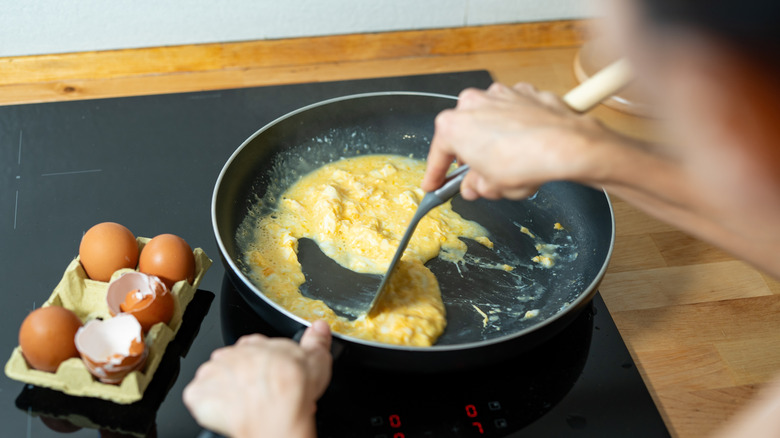
Adding a dash of ricotta, a spoonful of cottage cheese, or — if you're sticking to the Waffle House script — a couple of slices of American are great ways to crank up the creaminess of your scramble. But when exactly should you give your eggs that cheesy little boost? Most folks do it right from the jump, either as a hack for more even distribution or simply to save a step. Waffle House does things a little differently. The cheese is melted into the scramble after the eggs leave the heat.
It gives you one extra step to work through, but you'll absolutely thank yourself for the endurance. When you mix cheese straight into the beaten eggs, you're not just timing the eggs anymore; you're timing the cheese too. And since those two don't exactly cook at the same pace, you may end up leaving the scramble on the heat longer just so the cheese can catch up, only to wind up with an overcooked mess.
Clumping up your egg mixture with cheese that early also throws off the consistency, which can wreck your chances of forming those soft Waffle House-style curds. You're also more likely to end up with uneven pockets — some that set heavier, others that turn out much cheesier — instead of one smooth, cohesive scramble.
You lean too heavily on liquids
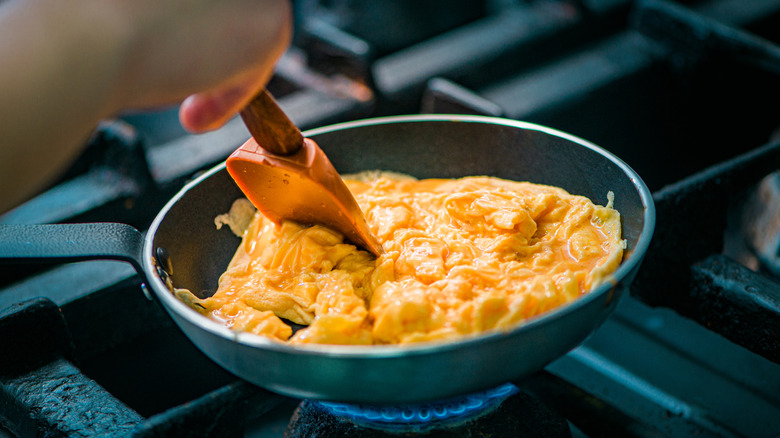
Scientists and foodies agree: Drizzling a little milk or water onto your scramble can dilute the egg proteins, slow coagulation, and give you a tiny buffer against overcooking. But while pretty nifty, this trick absolutely won't fly if you're aiming to do things the Waffle House way. Absolutely no liquids get the nod here. Instead, cooks rely aeration, fat, cheese, and technique to get that fluffiness folks try to chase with liquids.
This makes sense, especially if you're trying to dodge sogging up your eggs. That splash of water or milk can give you a better chance at fluffiness, sure. But it also asks the egg proteins to hold onto even more water as they coagulate. Miscalculate the amount or timing even a little, and that extra moisture can seep out, leaving a weepy scramble in its wake. The risk of overcooking also goes way up with added liquid, since you may end up extending the cook time just to dry out the stuff. And that's all it takes to blow past that itsy-bitsy doneness window and end up with eggs that are rubbery, dry, or both.
You're cooking over high heat
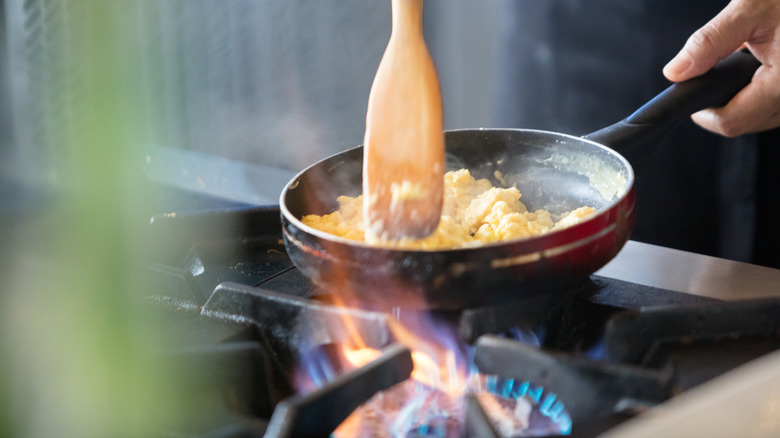
The speed at which Waffle House cranks out its scrambled eggs might make you think the cooks are blasting them with nuclear-level heat back there. So why do yours turn out sad when you try scrambling on high? First off, scorching heat isn't what gets those eggs to the plate so fast. The real tricks to that near-perfect Waffle House scramble are speed, skill, and cookware.
Blasting your scramble with heat might get breakfast moving faster, but it also forces the egg proteins to coagulate too rapidly. This wrings out water, leaving the scramble weirdly both wet and dry. You also won't get those airy Waffle House-style curds this way. The parts touching the pan set too fast while the rest of the mixture lags behind, leaving you with an uneven scramble full of large, rough curds and random wet bits.
Things get even dicier if you're adding cheese halfway through. American cheese is sturdier than natural cheeses like cheddar, but even it has its limits. Leave it on high heat for too long and it can turn tacky, gummy, and clump around the curds, leaving you with heavy, sticky pockets. Yuck!
You don't stir your eggs right
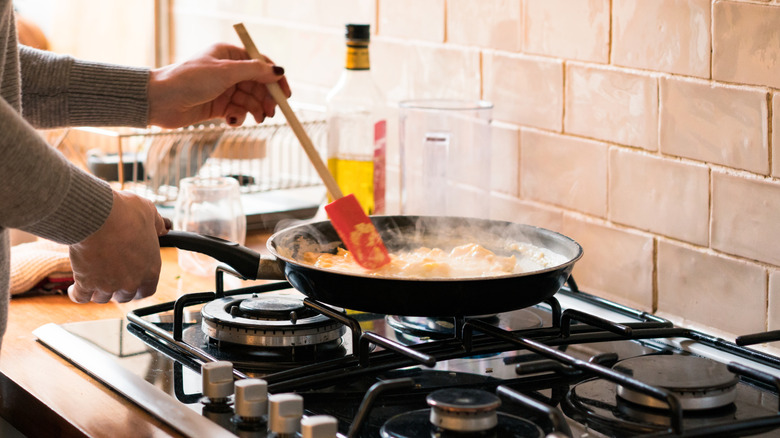
Most folks don't give much thought to how they stir scrambled eggs. The intuitive move is to let the eggs sit in the pan until the bottom sets, then hack the whole thing apart to 'scramble' it. It works, technically, but it won't get you that fluffy Waffle House-style scramble. Spatula technique matters, and it varies depending on the type of curds you're after. Experts often recommend near-constant stirring for teensy, creamier curds, but that's not how Waffle House plays it.
Instead of a French-style whisked tiny-curded scramble, Waffle House eggs tend to lean more fluffy. To get there, the cooks don't appear to stir the eggs nonstop from the jump, as you can see in this TikTok. Instead, they give the mixture just enough movement to keep it from setting unevenly, then use a few quick sauté-style flips to fold the scramble onto itself and push the uncooked bits toward the center. Trying to mimic those pan-toss reflexes at home, of course, might end with you flinging breakfast across the kitchen. But worry not — there are safer alternatives. Use a spatula to gently push the eggs from the edges toward the middle, letting the uncooked mixture flow into the empty spots, then keep folding until everything sets into soft, fluffy curds.
Not using more than one pan for cheesy eggs
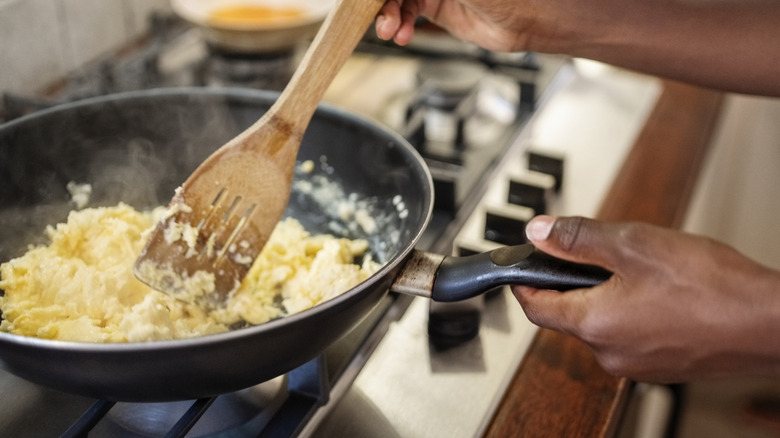
There are plenty of ways to whip up a scramble, but the double-pan method might be the most intimidating of the bunch. It's great for custardy, French-style eggs, sure, but it also calls for a double boiler and the patience of a saint, which you probably don't have on a random Thursday morning. Waffle House has its own two-pan method for cheesy eggs, but fortunately, it's far less intimidating.
The eggs, of course, start out in an aluminum pan, where they're scrambled until just shy of done. Then, right before they cross the finish line, they're transferred into a cast-iron skillet holding a couple slices of American cheese. The cook then folds the cheese into the eggs, using a few rapid-fire movements to melt everything together without pushing the scramble past doneness.
Adding your cheese this way gives you a far better chance of getting a cohesive cheese-and-egg mix. For starters, the eggs don't have to loiter in the pan waiting for the cheese to melt, which gives you a solid buffer against overcooking. The extra pan also gives the cheese a chance to soften before the eggs join in, so there's less chance of it clumping up and leaving you with sticky pockets.
You're adding too much seasoning
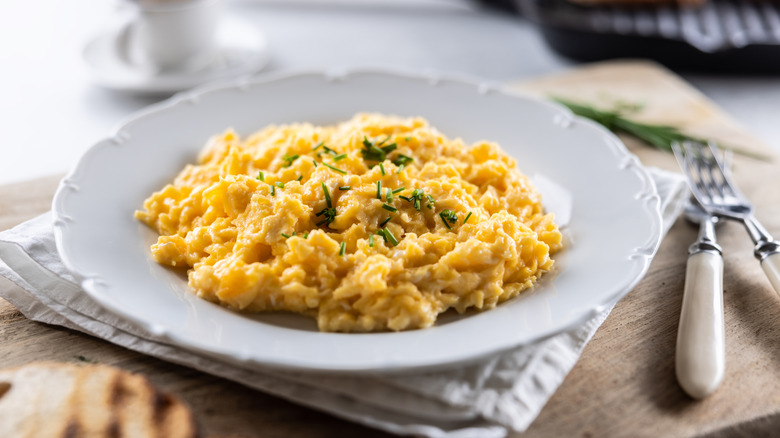
Sometimes you want a little spicy razzle-dazzle in your scramble, and that's totally fine. A number of seasonings can perk up eggs beyond bleh breakfast staple. But if you're trying to land in Waffle House country, go ahead and toss those ideas right out the window. The appeal here is clean, creamy cheesiness, which is why Waffle House skips seasoning altogether – no salt, no pepper, no nothing.
Skipping salt makes perfect sense. The chain's nutrition guide shows the sodium count climbing from 60 milligrams for plain eggs to 310 milligrams for the cheesy kind. With that much sodium already in the mix, extra salt would probably bulldoze the egg flavor. The butter-flavored shortening also lends a hand, bringing in a savory richness that perfectly compliments the cheese, so there's no need to dust in things like fenugreek or miso to chase the same effect.
You're scrambling too many eggs at once
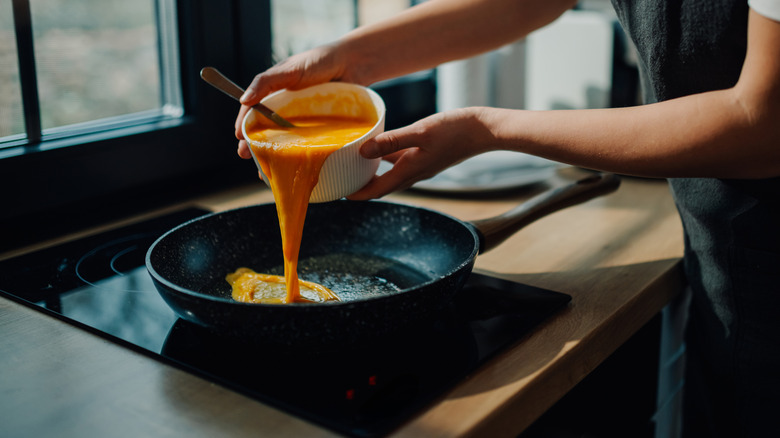
How many eggs should you scramble at once? You might say, "As many as it takes to feed the breakfast party." Waffle House, however, shows a little more restraint in that area, sticking to just two eggs at a time. And it's not because its pans can't handle more — according to Waffle House employees on Reddit, those pans range from about 8 to 10 inches, which means the cooks could probably squeeze about four eggs in those bad boys if they wanted to. So why don't they?
A lot of it comes down to control. A small batch gives you more room to fold, push, and scrape, so you won't lose control of curd size the second the eggs hit the pan. A bigger batch also means your eggs have to linger on the pan while you wait for the whole thing to set. The bottom and edges may end up overexposed to heat and already sliding past the doneness window while the top is still yet to set, leaving you with a pretty uneven scramble.