

We Found 9 Grocery Stores That Donate Their Unsold Food
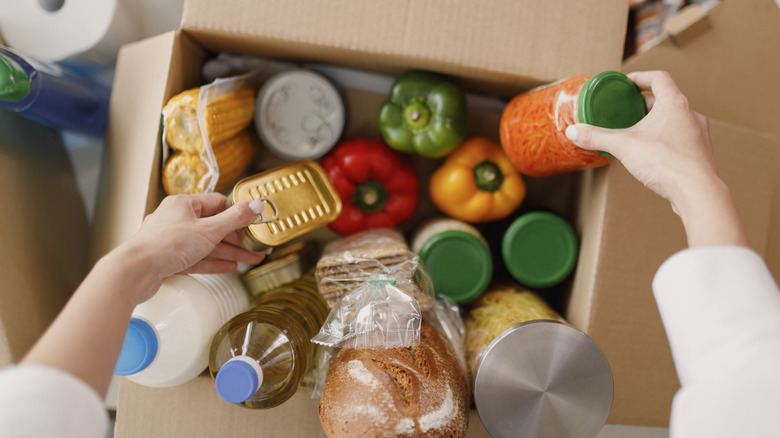
At some point or another, we've all caught ourselves wandering down the aisles of our favorite grocery store, wondering what these supermarkets do with all their unsold or expired food. Exactly what each grocer does often depends on the individual retailer. While some stores may simply toss it, there are some companies making sure these valuable food items don't end up in the trash — a sad fate that happens more often than you'd think.
Although some states ban large grocery retailers from trashing unsold or expired food, not all do. Food waste is actually a large issue in the U.S. The United States Department of Agriculture estimates around 30 to 40% of the United States' food supply is wasted, often ending up in landfills, where it contributes to greenhouse gases. This fact becomes even more distressing when you learn that 1 in 7 Americans simultaneously faces food insecurity, rendering the tragedy twofold.
Luckily, several grocery stores are battling the food waste problem by diverting unsold food to places where it's needed most. While many stores may heavily discount soon-to-expire foods, others are putting it to even better use, placing it in the hands (and mouths) of those in need. From nationwide supermarkets to regional retailers, each of these grocers is fighting to do their part, rescuing valuable resources and reallocating unsold food to those facing food insecurity.
Sprouts
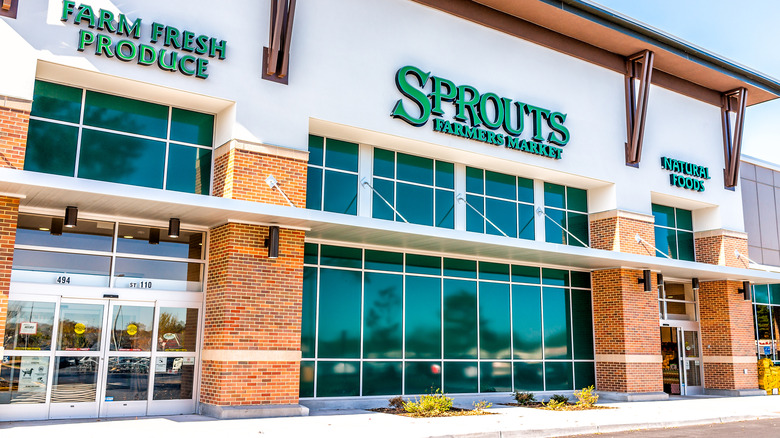
Although Sprouts may feel more like farmers market than a grocery store given its bountiful amount of fruits and vegetables, it's definitely the latter, and it's one that's been donating a hefty amount of its unbought food. Sprouts has diverted over 30 million pounds of unsold food since 2022, including 14 million pounds of fresh produce. This is done through a partnership with Careit, a food donation app that connects the grocer with nonprofits who address food insecurity in surrounding communities.
The free app not only helps link stores with nonprofits, but aids in record keeping, allowing both the supplier and thankful food bank to document just how many pounds are diverted from the waste stream. Carol's Kindness Food Pantry, a nonprofit located in East Austin, Texas, found that it obtained more than 1 million pounds of food from Sprouts alone since using the Careit App, including produce, salads, and meals.
Sprouts considered avoiding food waste to be one of the company's highest priorities. The company has given 244 million pounds of food away through its food rescue program since 2013. In 2025, the grocer joined the U.S. Food Waste Pact as part of its latest commitment. Operated by ReFED and the World Wildlife Fund, this collaboration is leading the charge to tackle food waste and surrounding issues, with Sprouts as one of its many partners.
Whole Foods
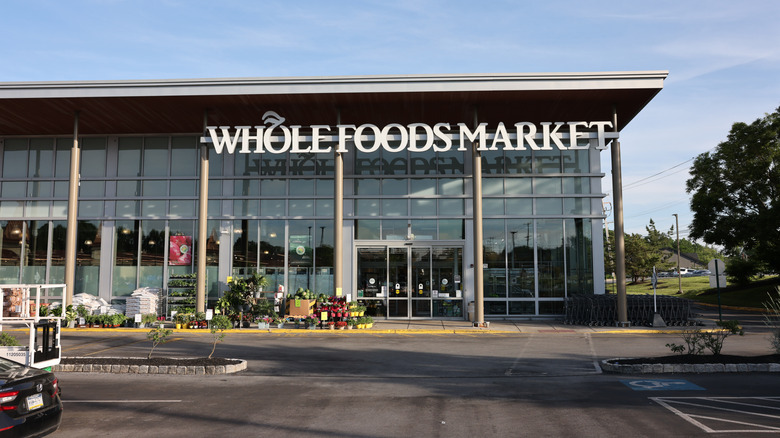
On its website, Whole Foods states that it's committed to reducing its food waste by half by 2030. The national retailer is actively working towards this goal through a variety of practices, including donating unsold food to food rescue agencies and food banks through its partnership with Food Donation Connection. In 2024, the grocer contributed 34 million pounds of food to such programs, supporting a variety of food redistribution groups.
Whole Foods has also financed the acquisition of refrigerated vehicles to help with dispensing food through its Nourishing Our Neighborhoods initiative. Through this program, groceries are bundled up at grocers like Whole Foods, picked up by these vehicles, and directly driven to food banks or other food distribution centers to be given out.
In addition to donating perishable and nonperishable goods to these organizations, the store diverts food waste by using cosmetically damaged produce in its smoothies and bakery items, and being selective about the amount it orders so as to not waste more than needed. In 2024, the retailer rescued 636,000 meals via its partnership with Too Good To Go, an app that makes surplus food accessible to purchase at half price or less.
On top of this, the store also aims to keep food out of landfills even when it can't be donated. When unused food isn't consumable, the grocer utilizes organic diversion programs that compost the materials, administer it to farmers for livestock use, or channel it to proper facilities.
Wegmans
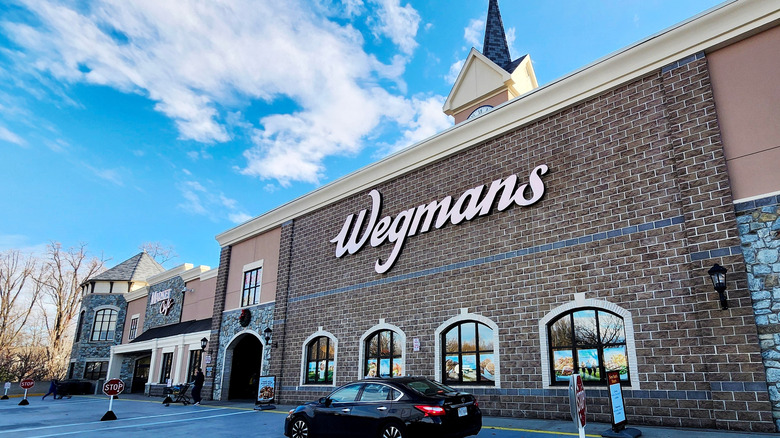
Those of us in the West and Midwest may not be familiar with this regional grocer, but Wegmans is still doing an admirable job in the food donation realm. As stated on its official website, the company donated over 36 million pounds of food in 2024 in the United States, working with 50 food banks in nine states. Yet these efforts aren't just a one-off venture.
Wegmans is dedicated to providing 30 million meals to communities each and every year by partnering with Feeding America food banks across the country. Food donation is not all this long-standing retailer does to support its local communities, however. This lesser-known grocer also supports health, hunger relief, and youth assistance through cooperation with local organizations.
The Northeast and Mid-Atlantic-centered retailer makes it easier for nonprofits and food banks to contact them with donation requests by submitting an online form. It goes to show that a store doesn't have to be a mass merchandiser to make a difference in its community.
Aldi
Not only does pared-down food chain Aldi offer some of the lowest prices of any grocer, the company also continues to excel in decreasing food waste. Those wondering what Aldi does with its unsold food will be pleased to learn this frill-free grocery store helps tackle food insecurity by donating food that's past its sell-by date but still safe to eat to community food banks. In 2024, the grocer donated 39 million pounds of food along with 29,000 boxes of nonperishable food to families affected by natural disasters as part of its collaboration with Feeding America.
But Aldi isn't just donating food that's about to expire. The company also packs disaster relief products to deliver to people suffering from the effects of natural disasters, including items like diapers, water bottles, and cleaning products. The retailer has sent items to individuals affected by flooding in Michigan and Maryland, along with assisting in hurricane relief efforts in Florida, Texas, and Puerto Rico.
The extra minimalist grocery store already helps the store curb food waste with its smaller layout, forcing stores to be more selective about what it buys. Aldi continues its efforts to expand the ways it handles the food waste problem, stating that it aims to reduce food its waste by half by 2030.
Trader Joe's
Not only is Trader Joe's one of the most popular grocery chains nationwide, it's also one devoted to eliminating food waste. Trader Joe's donates an astonishing 100% of its unsold but safe-to-eat products to community nonprofits through its Neighborhood Shares Program. This includes such items as baked goods, dairy, protein, and meals like soups, salads, and sandwiches, which account for a remarkable 80% of donated items. Every store takes part in this effort, working with over 2,100 partners across the nation.
Every Trader Joe's location possesses its own Donation Coordinator dedicated to supervising the store's community contributions. Any nonprofit organization seeking food or beverage donations must coordinate with this individual via a submission in writing.
Every day a store is open, soon-to-expire items are removed from store shelves, scanned for inventory purposes, and set aside for food donation to approved programs. The results are weighty. In 2024, more than 500 stores combined their efforts to donate 98 million pounds of food to those in need.
Costco
The massive retailer known by many is an active participant in food donation programs, helping to assist those in need, one muffin at a time. Costco donates a good deal of unsold food to food pantries, food banks, and other community-based food programs in its effort to reduce food waste. From unsold bakery items to unsold produce, this membership-only merchandiser gave away more than 223 million pounds of food in 2025, partnering with groups like Feeding America and The Global FoodBanking Network.
Still, food donation isn't the only avenue by which the store combats food waste. Costco also fashions new products from its unsold products for its warehouse members. A product like unsold rotisserie chickens might be reused into another item, like a chicken pot pie or chicken enchilada, for example. Meanwhile, organic items are often used for animal feed, redirected to local farms, animal sanctuaries, or rescues. At certain stores, other types of organic waste is ferried to compost facilities, ending up as a key ingredient in nutrient-rich soil.
Kroger
While Kroger has been closing underperforming locations in several states, it's definitely still addressing the food waste problem through its remaining stores. Kroger's Zero Hunger Zero Waste program diverts its unsellable yet safe food to local food banks, allowing the grocer to supply surplus groceries to those in need. The retailer aims to help all sorts of groups, from those who ensure youth are receiving adequate meals in school to those to improve access to healthier foods in underserved communities.
From 2018 to 2023, the program has provided over $66 million to organizations fighting to end food waste and address food insecurity in the U.S. So far, Kroger has donated over 815 million pounds of fresh food, with 100% of stores actively participating. It has also donated a $1 million grant to Feeding America in 2024. But the store's efforts to make a difference don't stop here. It also encourages customers to get involved by enticing them to donate small amounts at the register through Kroger to their local food banks during Hunger Action Month.
Publix
Publix shouldn't just be acclaimed for its delectable made-to-order subs, because it's also making big strides within the food donation world — and has been for a while. A store that has been donating food since 2009, Publix dispenses deli goods, produce, meat, and other grocery items it deems no longer salable but still safe to food banks partnering with Feeding America and other nonprofits.
While the food donation effort began small, starting within a small selection of stores, it expanded to a companywide endeavor by 2011. In 2024, the program added another 4,000 products to its Good Together donation program, expanding its impact even further. Over 1 billion pounds of food have been donated through the company's Good Together donation program since its founding, with 115 million pounds contributed in 2024 alone.
Food donation is just one signature step this company has taken in addressing hunger issues in the U.S. Twice a year, the store inspires customers to donate funds through its Good Together Hunger register campaign program, letting food banks round out Publix's fresh food donations with nonperishable items. In 2025, these efforts resulted in close to $13 million funds. Additionally, Publix Charities has given an astounding $78 million to hunger-related programs since 2015.
Walmart and Sam's Club
Although Walmart has been making a lot of changes recently, from digital shelf labels to new partnerships, the company's commitment to food donation remains unwavering. Walmart's network of stores (including Sam's Clubs and other distribution centers) have given more than 7.5 billion pounds of food to food banks throughout the United States since 2006.
But the company's efforts are not solely dedicated to the U.S. — more than 760 million pounds of food were donated globally during the company's 2023 fiscal year, making it perhaps the most impressive of all food retailers in terms of food donation. Furthermore, its "Fight Hunger. Spark Change." campaign has assisted Feeding America in working with local food banks for more than two decades.
During the month-long campaign, Walmart and Sam's Club donate money for every participating product bought online or in store. The grocers also accepts donations at check-out, online, and at campaign sites. The result? Around $271 million funds donated, with over $177 million coming from the stores and the Walmart Foundation.