

11 Common Mistakes Everyone Makes When Peeling Fruit
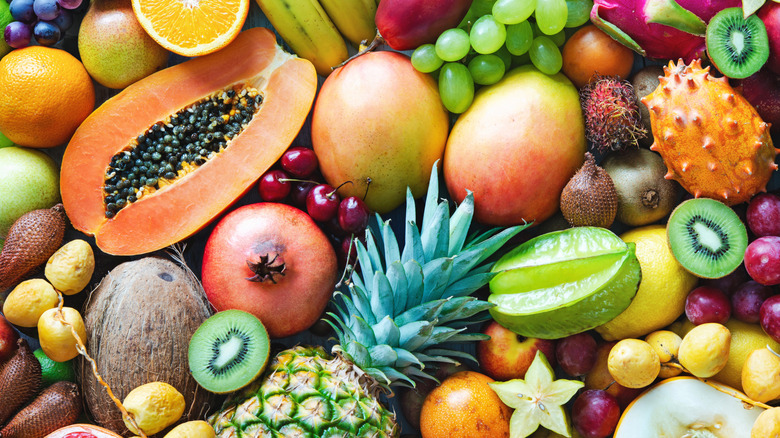
There's lots of chatter online about the best ways to peel all kinds of fruit, and the debate may just rage on forever. Regardless of how you feel about the many creative methods that seem to gain so much attention, there are a few mistakes you would be wise to avoid. Why? Well, when you sidestep these common blunders, you not only cut down on unnecessary waste, but also create less of a mess along the way and speed up the process as a whole. Sounds like a win-win-win to us.
From peeling your bananas in the wrong direction to trying to peel tomatoes without blanching them first to not utilizing a spoon to help you scoop avocado meat from the skin, many of the missteps found below are ones plenty of people commit every day. So, even if you think you already know the best way to peel a particular type of fruit, you may be surprised to learn there's a more efficient or tidy way to get the job done. Are you already in the know, or are you falling prey to frequent mistakes unbeknownst to you? Let's find out.
1. Forgetting a knife can help you avoid pith when peeling an orange
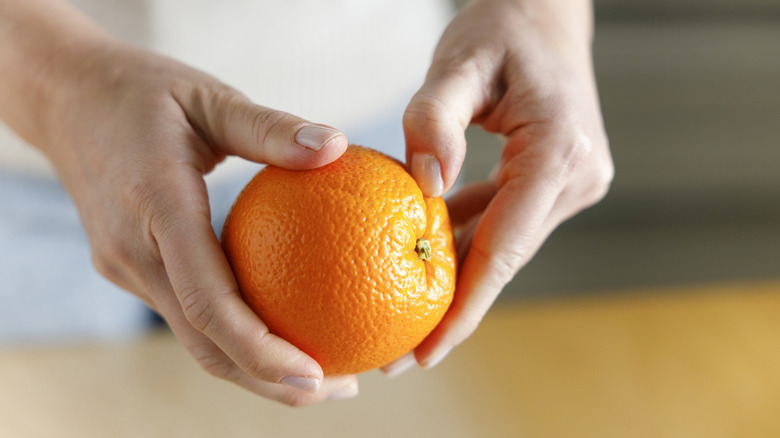
You'd be hard-pressed to find someone who hasn't tried to peel an orange using nothing but their hands before. However, doing so is the first fruit-peeling mistake on our list. If you've ever done it that way and found yourself attempting to remove the white, stringy pith to no avail, you already know why, too. Thankfully, though, there's a way to avoid this and cut down on the bothersome, bitter-tasting membranes, and it isn't complicated. All you need to do is employ a little help from a knife. Not only will it get the job done quickly and correctly, but it'll also save you from having to scrape remnants of the orange peel from under your fingernails as well — and most of us are all too familiar with how annoying that can be.
To peel an orange while avoiding the majority of the pith (aka the right way), start by setting it on a cutting board stem side up. Then, use an extra-sharp knife to make a vertical cut just off the side of the stem, straight down to the bottom. Continue doing this four times in total, in a box shape, so you are left with a rectangular center piece. The middle section will contain most of the pith, so feel free to toss it out. After that, you can simply enjoy the four orange wedges straight from the peel. It's that easy.
2. Forgoing boiling water when peeling peaches
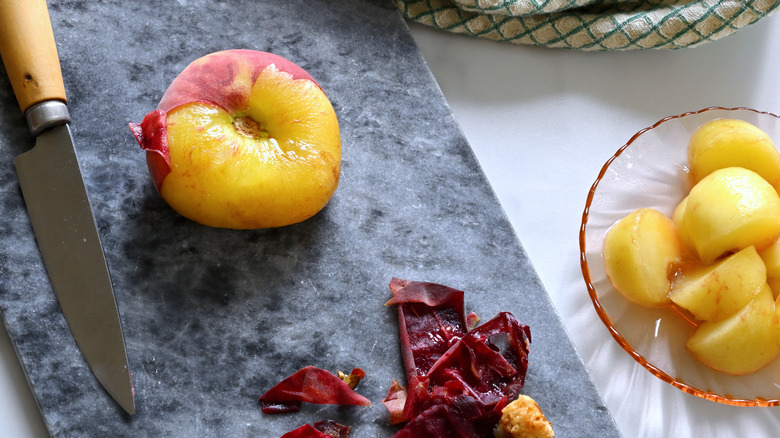
A major complaint people have about peaches is that they don't enjoy consuming the fuzzy skin very much. As a result, knowing how to peel them will serve you well. Even so, many people don't even think about removing the skin, or they reach for a peeling tool, and unfortunately, that's a mistake with the gentle fruit. While handy, the kitchen tool is much too abrasive for the tender skin and meat of a peach, so they rip right through them and often leave you with a juicy mess and significantly less fruit to enjoy. Nobody wants that. Luckily, there's a better way. You just need to blanch and shock the peaches quickly, and the skins will basically slide right off.
To utilize the blanch and shock method, start by cutting a small X pattern into the bottom of whole peaches. Then, lower them into a pot of boiling water with a slotted spoon. Leave the peaches in the boiling water for about 1 to 3 minutes, depending on how ripe they are — the riper they are, the less time they'll need, but you'll know they are done when the scored sections start to peel back. After that, remove the peaches and submerge them in an ice bath to quickly cool them off and prevent them from cooking. After about five minutes, extract the peaches and use your hands to quickly and easily peel back the skins, starting from the scored section.
3. Not scoring a grid pattern to peel mangoes
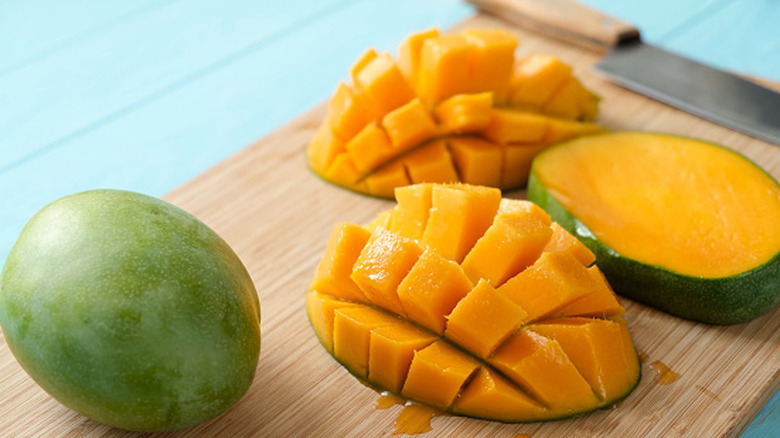
Mangoes are a stone (or drupe) fruit. As such, they contain a large pit in the center, and this can make peeling them complicated, especially since the flesh is so tender. However, you can easily manage the task if you utilize the best method for peeling mangoes, which involves scoring a grid pattern in the outer portions of the mango after the core is removed. When you do, you are left with simple-to-remove cubes of fruit that are perfect for munching solo or incorporating into recipes of all kinds.
To start, set a mango on a cutting board and hold it upright with the stem at the top. The next step is to use a sharp knife to make vertical cuts from the top to bottom on all four sides about ¼ inch from the center. This removes the pit and leaves you with four sides containing all the good stuff. After that, use your knife to score a grid pattern in each portion, taking care not to cut through the skin itself. When this is done, push up from the skin side so you wind up with rows of protruding cubes of fruit. All that's left for you to do at this point is to use a spoon to scoop them out. Your knife will work as a scoop as well, but the room for error increases, as it can easily cut through the skin. So, if you want to play it safe, spoon it is.
4. Not blanching tomatoes before peeling
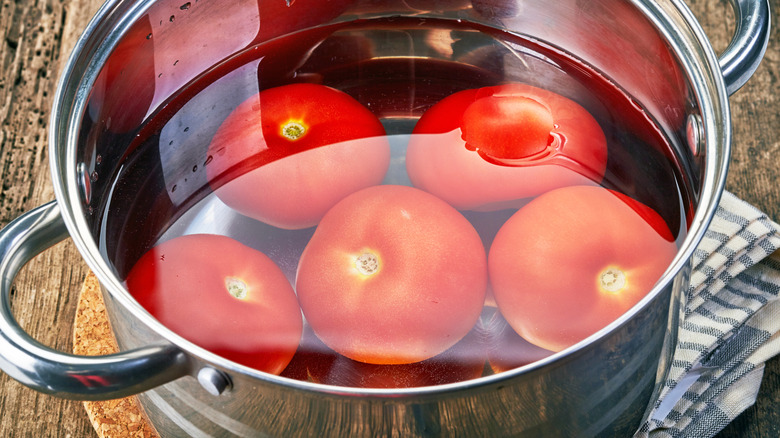
Peeling tomatoes seems like a challenging task, but it must be done if you want to turn them into a basic sauce or can them. The skins are relatively tough, and the fruit beneath is tender enough to fall apart with minimal pressure from a knife or peeling tool. Don't even get us started on how easily the juice squeezes out, either. In fact, the process is daunting enough that many people simply reach for canned tomatoes to avoid the mess and effort, which can feel futile if you don't do it the right way. Speaking of which, the best, easiest way to peel tomatoes starts with blanching them, so don't make the mistake of attempting to get the job done without doing so.
Blanching tomatoes may sound fancy to some, but it couldn't be simpler. To start. Bring a pot of water to a rolling boil. While you wait, score small X patterns into the bottom of the tomatoes you wish to peel. When the water is ready, drop them in and leave them for about 30 to 40 seconds; anything longer than that and you run the risk of the fruit becoming too mushy to handle. Then, extract them from the water with a slotted spoon and put them directly into an ice bath. After about two to three minutes, you can start pulling them out and using your hands to quickly and easily slide the tomato skins off.
5. Overlooking the donut ring method when peeling apples
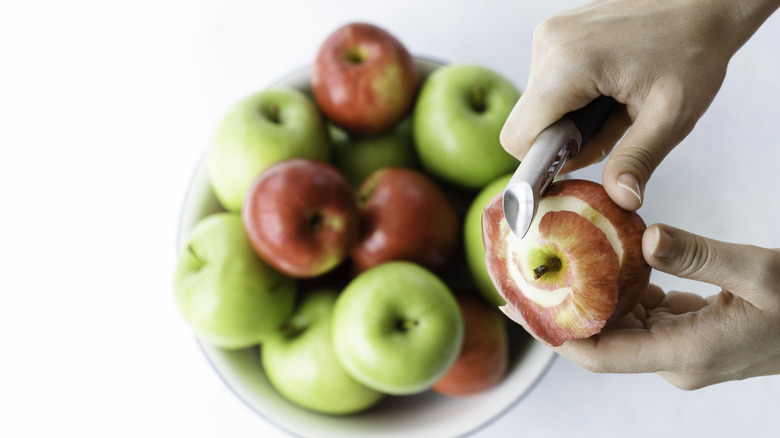
You don't have to peel apples to enjoy them — the skins are edible, after all. Still, if you want to hone in on the tart, sweet fruit below without the peels getting in the way, or add them to a recipe that calls for skinned ones, removing them is always an option. However, there are many methods people employ, some of which are much more effective than others. With this in mind, choosing not to utilize what has been deemed the donut ring method is a mistake. It is quick, easy, and helps minimize waste as well. Since that's the goal, you're going to want to commit it to memory.
Whether you prefer to use a paring knife or a vegetable peeler, the donut ring method is the way to go when it comes to peeling apples. Regardless of your preferred tool, start by cutting a ring around the top and bottom of your apple. Then, use your knife or peeler to slice vertically from top to bottom, connecting the two initial circles.
Once you are all done, you don't have to toss the stem and skin into the trash, either. Instead, you can completely eliminate waste by making a Peel-To-Stem Apple Pie. We know this sounds counterintuitive since we spend so much time removing them in the first place, but don't knock it until you try it.
6. Forgetting blanched pear skins can easily be rubbed off
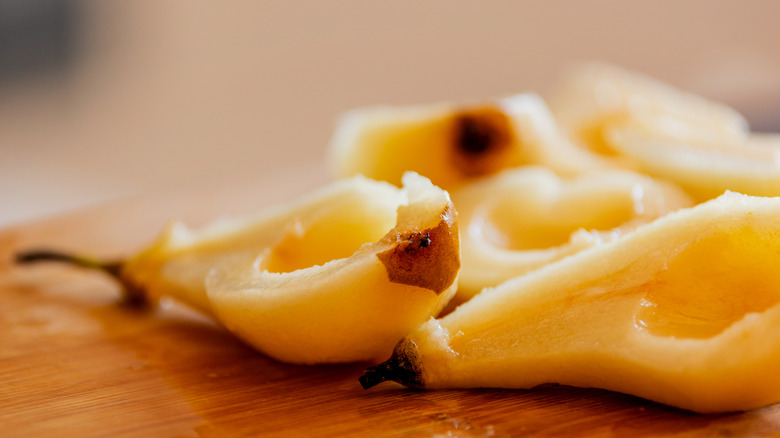
Pear skins are edible, but there are plenty of times when peeling them is in order, such as when you are making a pie or canning them. The skins aren't very tough, either, so using a vegetable peeler isn't off the table. However, if you need to peel more than one, there's a much easier way to achieve your goal: Blanching and shocking them. This isn't the first time we've said this about peeling fruit, but with pears, it truly is a game-changer that allows the skins to simply slide right off with the brush of your fingers. So, choosing not to use the method when peeling batches of pears would be a time-consuming blunder you don't want to commit.
To properly blanch pears, submerge them in a pot of water that is boiling or just under. As long as the water is piping hot, it'll work its skin-peeling magic. Leave the fruit in the pot for about 10 seconds, maybe 15 at most. Then, remove one and drop it into a bowl of ice-cold water. Before removing the rest of the pears from the pot, check them to make sure you left the extracted one in the hot water long enough by rubbing the skin. If it comes off easily, transfer the remaining pears to the ice bath. If not, pop the initial pear back in the hot water for a few more seconds before removing them all.
7. Not cutting the base off first when peeling pineapple
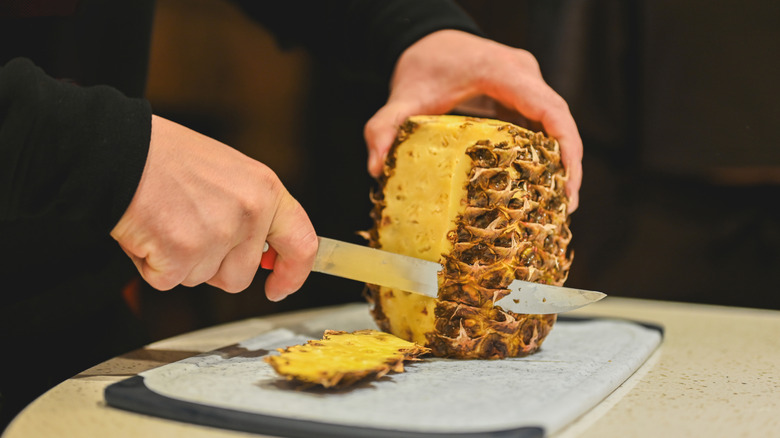
Pineapple is arguably the best tropical fruit of them all, but even if you don't feel that way, it is a tricky fruit to peel. The outer layer of eyes is extremely dense and hard, so it's not like a vegetable peeler will do the trick. A sharp knife is undoubtedly a must. However, where you begin the cutting process matters, and not starting by creating a flat base is not the way to go. If you skip ahead of the step, the pineapple's curved bottom makes slicing precarious and unstable at best.
Thankfully, creating a stable base on a pineapple is easy-peasy, and then the rest of the peeling process effortlessly falls into place. Simply lay the fruit on its side and grip the top while slicing through the base to create a flat end piece. Then, do the same on the top and stand the entire fruit upright. From there, cut the hard core out by slicing from the top to bottom on all four sides, leaving a small rectangular cube in the center. After that, you can slice the fleshy parts of the pineapple into cubes, long slices, or however you like.
8. Trying to peel a papaya without halving it first
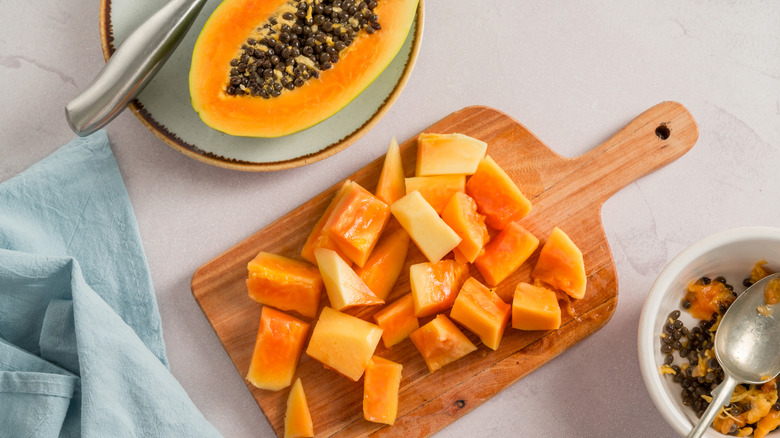
Papayas have a distinct musky flavor backed up by lots of sweetness. While some say it is an acquired taste, there's almost nothing that compares once you develop it. Even so, it contains lots of small black seeds, which, while edible, bring a strong, mustardy, peppery, bitter element to the table that most people don't want to munch along with the fruit itself. With this in mind, knowing how to peel a papaya properly is essential. The first mistake people often commit is trying to skin a papaya whole. It may be easy to do, but once the fruit is peeled, it becomes slippery, making it challenging to handle and remove the seeds. That's why it is important to cut the ends off and halve it first.
After halving a whole papaya, the seeds inside are fully exposed, allowing you to easily scoop them out with nothing more than a spoon. Whether you save them to add to another dish or not is up to you, but if it's the sweet, fleshy fruit you are after, the job is nearly done at this point. All that's left is to slide a paring knife just above the skin to separate it from the fruit. Then, you can slice or chop it however you like.
9. Not taking advantage of the under water method when peeling a pomegranate
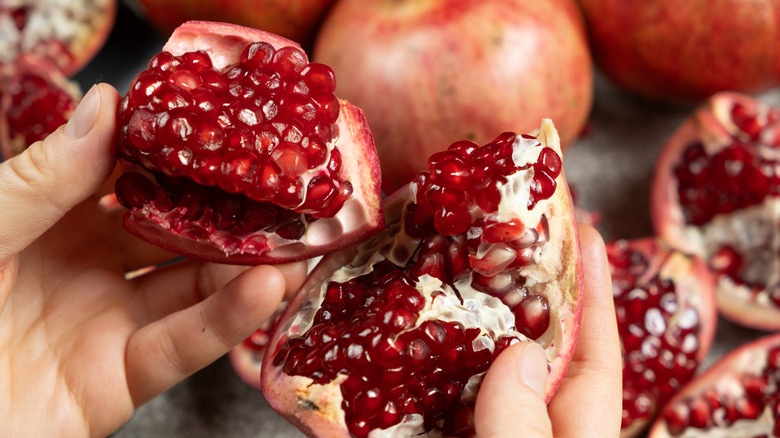
Pomegranates are nutrient-dense and rich in antioxidants, making them a healthy fruit to enjoy. They also boast a deliciously unique sweet, tangy, tart flavor profile that many love. Unfortunately, though, getting to the tasty edible seeds within the fruit isn't as simple as you might hope. Pomegranates contain loads of pith, the seeds don't separate super easily, and the potent red fruit stains like no other, so if you happen to break open a few seeds along the way, your hands or clothes could show the signs of it for quite some time. Thankfully, there is a quick fix for all of these issues: Peeling them underwater. When you do, the colorful juice dilutes before it gets a chance to stain, the pith floats to the top, and the seeds come apart significantly easier. The underwater method also reduces waste, making it the absolute best way to go.
There isn't any fancy trick to using the underwater method for peeling pomegranates. Simply crack open the fruit and submerge it in a bowl of water. Using your hands, start to break apart the seeds and watch as the pith and outer peel float to the top. When all of the seeds are separated, use a slotted spoon to remove the floating waste. Finish off by extracting the seeds and placing them on a paper towel or clean cloth to dry.
10. Choosing not to use the spoon and scoop method for avocados
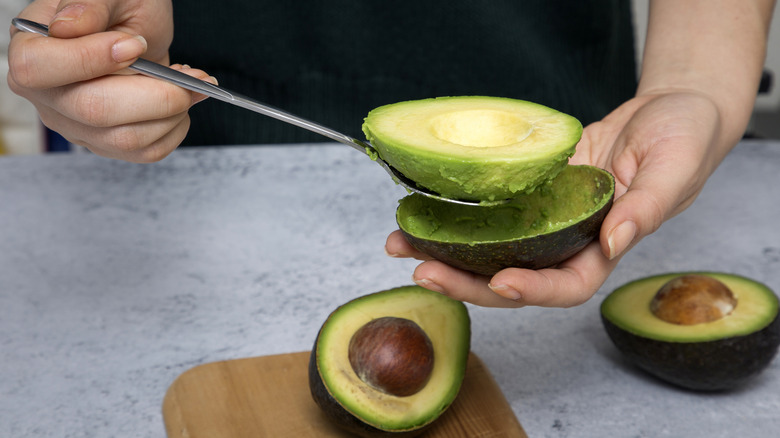
Avocados feature a whole slew of health benefits, such as being high in fiber, nutrients, and healthy fats. They are even widely considered a superfood, so knowing how to tap into their potential, i.e., being able to peel them like a pro, is something everyone should know how to do. Regardless, the tough outer shell and large, hard seed in the middle of the avocado mean there are some good and bad ways to peel them. Not using a spoon to help you manage the task is one such mistake you don't want to commit because, plain and simple, it makes the job more complicated than it needs to be.
The best way to peel an avocado starts by slicing into the fruit lengthwise around the seed until you create a complete ring. Then, holding one hand on either side, gently twist, and the two halves should come apart easily, at least if it is ripe. Next, smack your knife into the seed with enough force that it sticks. Twist the knife, and the seed should come right out. Now the two halves are ready for you to slice or cube as desired. Choose your shape and use your knife to create either strips or a grid pattern, taking care not to puncture the skin below. Then, you can easily use a spoon to scoop out the avocado chunks and enjoy.
11. Peeling bananas from the top down
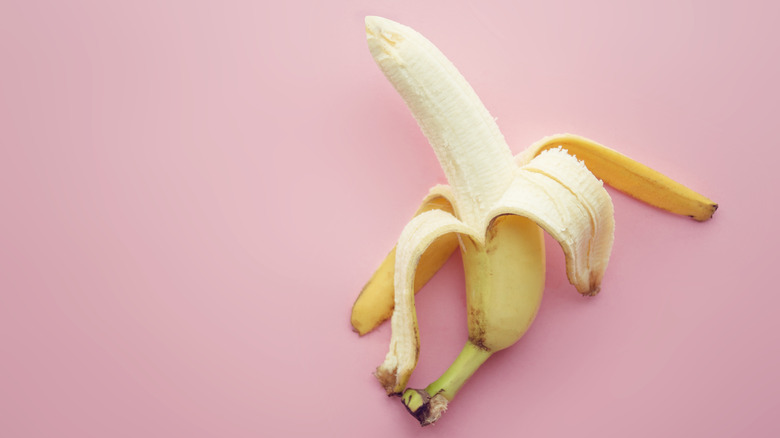
Interestingly, the way people peel a banana is somewhat of a controversial topic. Do you start at the stem at the top or the nub at the bottom? Many people simply grab a banana and start peeling from the stem without even thinking about it. However, plenty of others claim that is the wrong way, and instead, reach for the bottom nub and hold the stem like a handle — just like monkeys do. While the debate may never end on Reddit and other online forums, we are fans of the "monkey method."
When you use the stem as a handle, you can grip a banana much more firmly without worrying about potentially bruising the delicate fruit inside the peel — something that happens more easily than you might think. In addition, all it takes to split open the skin near the bottom nub is a gentle pinch. Then, you can simply peel back small strips and start munching or dicing as you please. When you go about it the opposite way — what many think is backwards — it takes more force to split the stem from the skin, and it's much easier to smush some of the fruit inside. No, thanks. Neither way may be 100% wrong, but give the monkey method a try and something tells us you'll never look back again. Besides, who can argue with a cute little built-in handle?