

Forget The Crock-Pot: 10 Reasons A Dutch Oven Is Better For Slow Cooked Meals
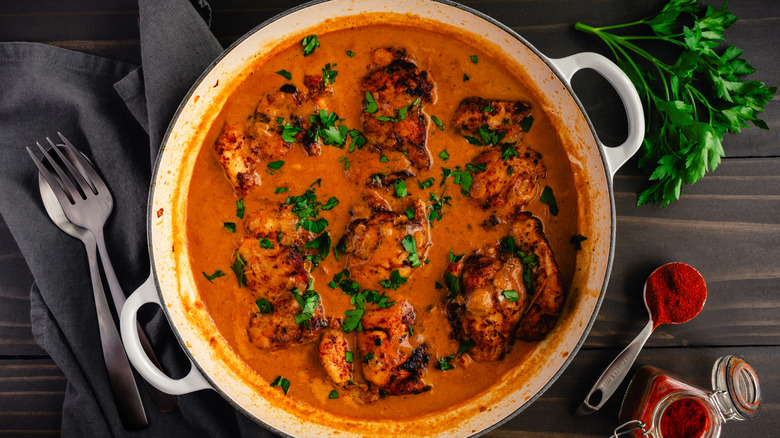
The dutch oven is a beautiful thing. Whether you prefer cast iron, stainless steel, or ceramic, this versatile vessel is one of those essential, timeless pieces of cooking equipment that every home cook should have in the kitchen. And it's a particularly amazing tool for meals that require long, slow cooking — stews, sauces, soups, slow-roasted meats, and so much more — even more amazing than the go-to Crock-Pot.
There's a time and a place for a Crock-Pot, and it can be just the man for the job when you need a time-saving, convenient, and trustworthy cooking method that allows you to "set it and forget it." But the bottom line is that the Crock-Pot comes with its limitations, and it can only accomplish so much... while the dutch oven, which allows for full control and a myriad of techniques while cooking, is far superior for producing delicious, complex dishes.
With several years of experience as a personal chef and decades before that as a home cook, these are the many reasons why I've found that, especially when it comes to a homemade slow-cooked meal, cooking with a dutch oven always wins.
1. Versatility is king
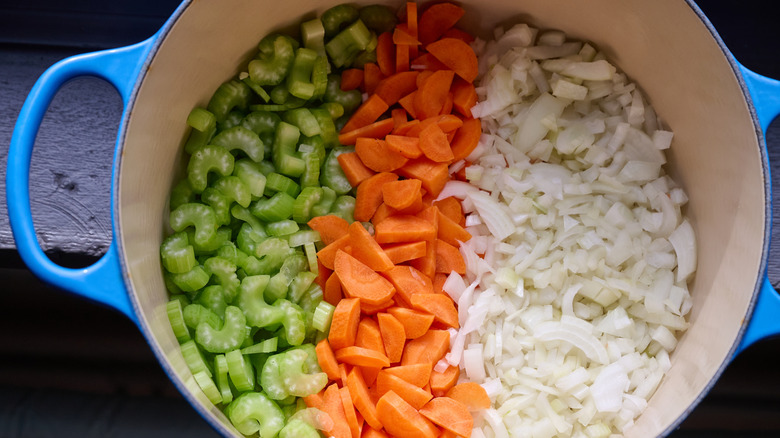
The sheer amount of versatility that comes with a dutch oven makes it a much more valuable player in the kitchen, because you have a plethora of cooking techniques available at your fingertips. Whether you need to sear a piece of meat, sauté your mirepoix, roast a whole chicken, bake an easy casserole, simmer your favorite pasta sauce, or braise short ribs until they fall apart... this single pot can truly do it all.
And even outside of slow cooking, a dutch oven can be used for countless other applications, from boiling water and making tasty mashed potatoes to baking bread and heating apple cider or mulled wine. The possibilities are really endless, which makes this versatile pot a no-brainer whether you're slow cooking or not.
On the other hand, while the Crock-Pot is great at cooking something low and slow, that's pretty much all it can do. It's a singular vessel that cooks food at a low, steady temperature, and most of the brand's traditional slow cooker models offer just three settings: low, high, and warm. These options essentially just alter the overall cooking time necessary for your dish, but the Crock-Pot can't perform any of the other techniques involved in so many classic dishes.
2. A direct sear levels up your meal
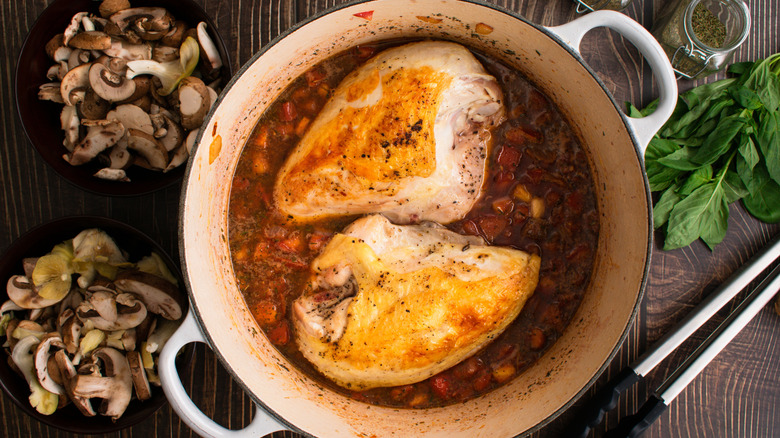
With a dutch oven, you have the opportunity to directly sear your ingredients — and this is everything when it comes to maximizing the deliciousness of your dish. Whether you're cooking a large cut of beef that you're about to slow-roast or a few small chicken thighs that you're going to braise, the ability to get a nice brown sear on your meat in a hot, oiled dutch oven creates that beautiful crispy crust you want when you dig into a piece of meat.
And the same goes for vegetables and other ingredients as well; searing your food first before you slow cook it not only creates better texture at the end, but also gives your dish a head start on flavor. Why? Because searing your food means browning your food, and brown means flavor. It's a crucial step for dishes like a classic beef bourguignon or a beef stew, a comforting pot roast, and a meaty ragu, because it allows you to render any fat, develop more depth of flavor, and add a savory complexity to the overall dish. And that's simply not an option if you're cooking your food in a Crock-Pot.
3. Fond brings the flavor
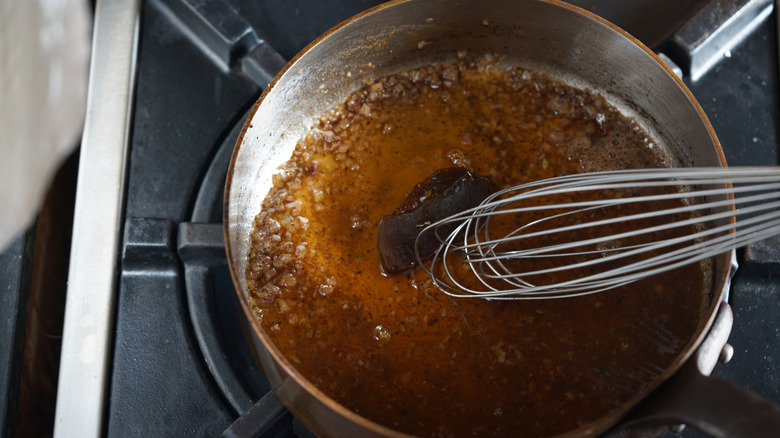
You may or may not have heard of the term "fond" in the context of cooking, but it's an important part of any flavorful, slow-cooked dish. The fond is a technical French cooking term that essentially refers to all of those browned bits that you scrape off of the bottom of your pan after you cook or caramelize your ingredients. Whether it's drippings from a piece of meat, the browned vegetables that start off your recipe, or even the remnants of a heated tomato paste, those little golden nuggets left behind are loaded with flavor and add dimension to whatever dish you're making... and they wouldn't be possible with a Crock-Pot.
Thanks to the Maillard reaction — a chemical reaction that occurs when the proteins and sugars in your food are heated — whenever you brown an ingredient, it develops new flavors and aromas that transform it into something even more delicious than it was before.
This is especially useful when you're making a sauce, a gravy, or a glaze, because once you add liquid to deglaze your pan, the fond dissolves into that liquid to create the base of whatever dish you're building — providing a savory, flavor-packed element to your dish that takes it to the next level.
4. More control means more precise cooking
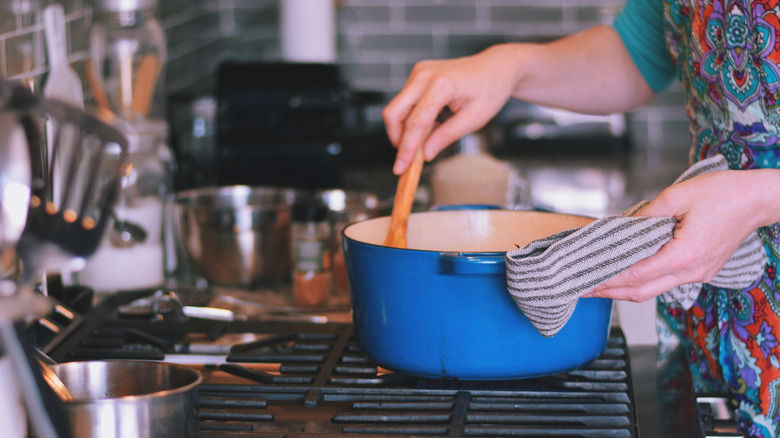
Once you plug in that trusty Crock-Pot, you've only got a couple of settings to work with. While you can choose whether your food is cooked low, high, or warm... that's exactly where the Crock-Pot stays for the next however many hours, so each heat level only gets you so far. There's no control over the heat source, and no variability. But a dutch oven gives you both of those things.
You can cook with a dutch oven over the stovetop, which obviously allows you to choose between a high heat, a medium heat, or a simmer. You can also throw the whole pot in the oven, introducing a whole plethora of new temperature options. And you can even use both cooking sources to cook the same dish. You're in complete control of how high the heat is and where it's coming from, which (as long as you're paying attention) will allow you to cook your ingredients more precisely.
Think about something like a beef bourguignon. There are so different elements to this one recipe — searing the meat, deglazing your pan, boiling the alcohol out of the wine, simmering the braising liquid, oven-roasting the ingredients low and slow so the flavors can come together, and reducing the final dish down to that luxurious, gravy-like consistency. You need varying levels of heat to successfully cook this dish, and a dutch oven allows you to cook each and every element to perfection.
5. Reduce, reduce, reduce
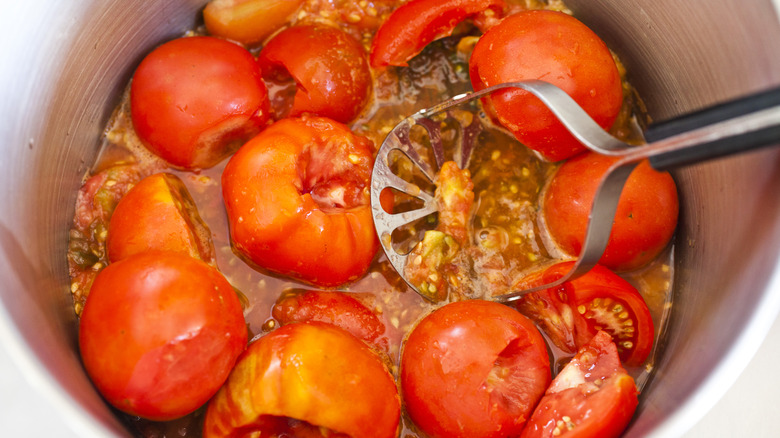
One thing you definitely can't do with a Crock-Pot that you can with dutch oven: Reduce. Because you can cook in a dutch oven with the lid off and control the heat, you're able to reduce down whatever you're cooking until it reaches your desired consistency; with a Crock-Pot, you cook at one speed with the lid on, so whatever thickness or viscosity you get in the end, there's no changing it.
What exactly does reduction mean in the culinary sense? It essentially means that you're using heat to evaporate the moisture in your dish. To accomplish this, you cook your ingredients with the lid off or ajar (something you can do with a dutch oven, but not a Crock-Pot), which in turn both further concentrates the flavors of your dish and usually results in a thicker consistency if cooked long enough.
Maybe you're making a tomato sauce from scratch and need to slowly cook the tomatoes down until they become a delicious, concentrated sauce. Maybe you're reducing a pan sauce or a gravy down to that perfect consistency that you can drizzle over your meat. Or maybe you're creating a reduction of red wine or balsamic, transforming it into a rich glaze to elevate your meal. Whatever you're making, being able to reduce while you cook can be a game changer.
6. You can tackle complex, multi-step recipes
Remember the myriad of cooking techniques that you can execute with the dutch oven? Well, more versatility also means that you can cook more complex meals. The option to sauté, caramelize, sear, deglaze, reduce, and more makes the dutch oven a better cooking vessel — especially for multi-step recipes that require more cooking stages — because it allows you to build a dish with more flavor and depth.
With a Crock-Pot, while you can cook some of your ingredients separately before you add them, you pretty much just have one go at it before you slow cook everything (that's the whole point of the "set it and forget it" thing). So the final result, while it can still be delicious for certain applications, is by nature simple and one-dimensional. On the other hand, a dutch oven leaves you with many options and techniques to explore that'll only enhance your final dish.
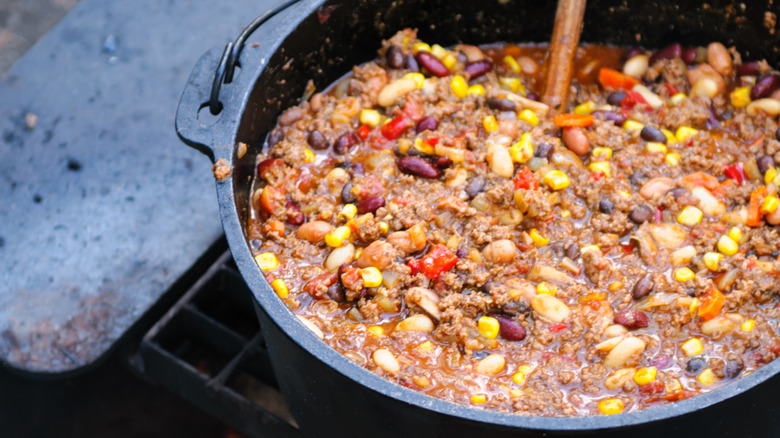
A great example of this is something like a chili. While you can certainly throw all of your ingredients into a Crock-Pot, slow cook it for hours, and create a perfectly good chili in the end, the different cooking stages that you can accomplish with a dutch oven will make the final dish that much more delicious. You can char your peppers, sear and brown your meat, sauté your vegetables, and reduce everything down to finish it off, which all results in a more complex, flavorful chili.
7. Good heat retention means better cooking
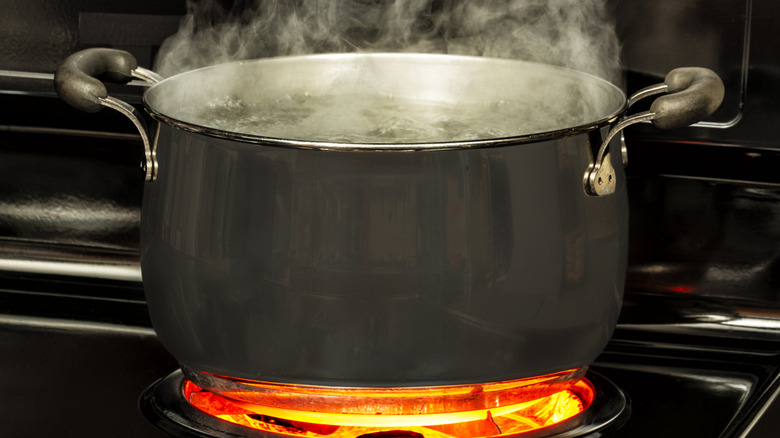
Dutch ovens, especially those made of cast iron, offer great heat retention. That's because the sturdy, dense cast iron material has high thermal mass, which means it's able to absorb and retain heat and then distribute it slowly and evenly. This stable, consistent temperature makes a dutch oven the ideal vessel for slow cooking and braising.
A Crock-Pot, while it's obviously great at cooking slowly and is still able to cook evenly, is typically made of a ceramic or stoneware insert inside a metal shell; it doesn't actually retain heat well and it relies on continual electricity to keep that heat distributed. But a dutch oven, whether you're using it to slow cook or executing other cooking methods along the way, will respond quickly to heat changes and will evenly distribute varying levels of heat, retaining it even after the heat source has been removed.
8. More flexibility means better texture
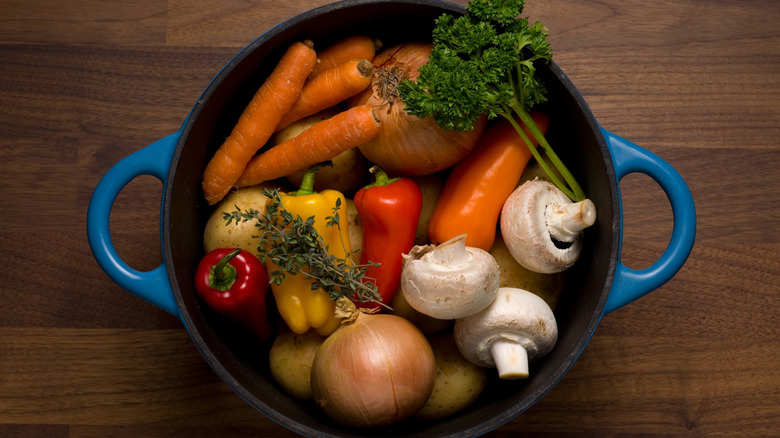
Since you have control over the entire cooking process with a dutch oven, you also have complete flexibility as you go. As opposed to a Crock-Pot where you'd typically dump all of your ingredients in at once, when you're slow cooking something with a dutch oven you can choose and adjust the exact order in which you add your ingredients — and that ultimately leads to better texture and better cooking.
Different proteins like beef or chicken obviously cook at a different rate than vegetables do, and even different vegetables have varying cook times depending on the type. More delicate or watery vegetables like zucchini or bell peppers will cook much faster than hearty or starchy ones like onions, potatoes, or squash.
So you may notice that with a Crock-Pot, if you're combining several different types of ingredients (which you usually are), some ingredients will become overcooked or even mushy by the time the dish is done. But with a dutch oven, you can cook down things like onions and carrots first, and then add your softer ingredients later (and adjust the heat accordingly as you go) so that in the end, each and every ingredient has the texture it's intended to.
9. The oven is your friend
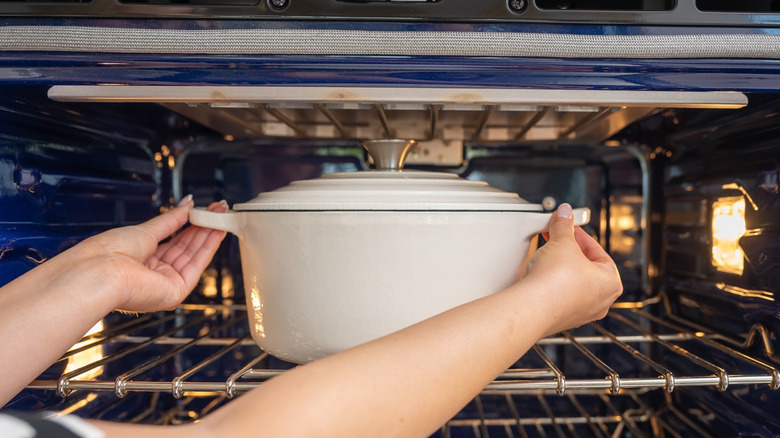
Having the option to stick your whole entire dutch oven in your oven is huge, because it can make a meaningful difference when it comes to the overall texture and flavor of your meal. While a Crock-Pot is essentially a one-stop shop, a dutch oven is great for something you're cooking low and slow (like a braise), because you can sauté, simmer, and deglaze to your liking to build the initial base of flavor on the stovetop before you transfer everything to the oven to further concentrate and tenderize.
Even if you're not using the oven for the majority of your dish and it's simply a last step to finish things off, having the ability to pop your dish in the oven still goes a long way to elevate the meal. That's because blasting your dish with a higher, circulating oven temperature can provide that final crisp to your edges, give your meat or veggies more of a beautiful brown finish, or melt and meld your cheese together with everything else until your hard-earned dish is bubbling in all its glory.
10. Presentation is everything
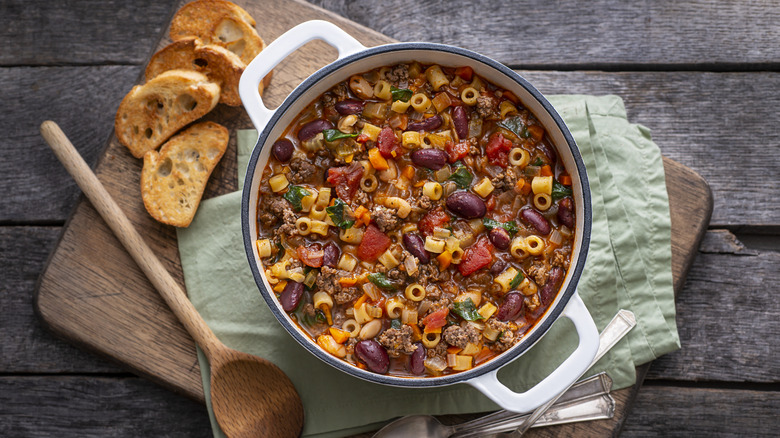
Last but not least, while the good old fashioned Crock-Pot may be perfectly dependable and convenient... one thing that it is not is pretty. But a dutch oven? It basically comes with built in presentation: You can pull that thing right off the stove or out of the oven and plop it down on some trivets, making it the centerpiece for your kitchen table, and it'll look perfectly presentable.
Presentation may not be everything to everyone, but it's definitely important. Especially if you find yourself hosting others. The dutch oven is the ideal choice when you want to make a meal for a crowd that's somewhat low effort but will still look nice when you serve it. A Crock-Pot just doesn't have the same charm.
The best part is that there are so many colors and styles of dutch ovens available out there that you can really make this piece of equipment your own; it can become more than just a cooking vessel. Whether you go for a Le Creuset or a Lodge, and whether it's a rustic natural cast iron, a classic white enameled coating, or a boldly colored dutch oven that gives your kitchen a pop of personality, you can choose this trusty pot to match your own personal vibe and decor. And your dishes will not only taste great, but they'll also look great inside of it.
Methodology
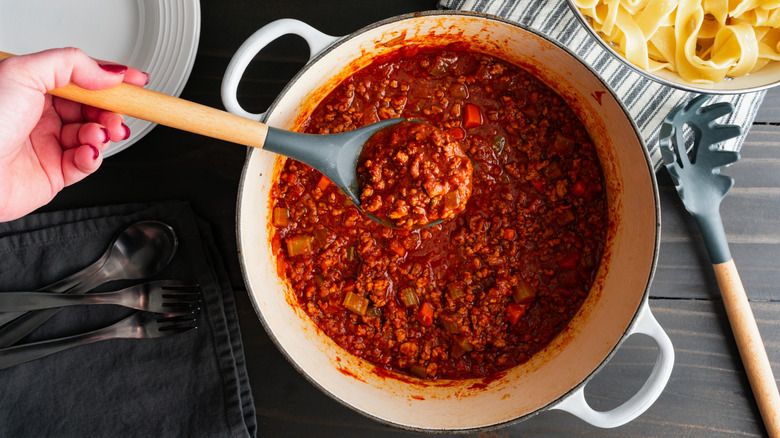
The reasoning above is based on years of experience cooking with both Crock-Pots and dutch ovens. As a home cook for decades, a personal chef for several years, and a current employee at a cooking school, I've carefully considered the advantages that a dutch oven has to offer as opposed to a traditional Crock-Pot, specifically when it comes to slow cooked meals.