

Le Creuset Vs Lodge: How They Compare In Quality
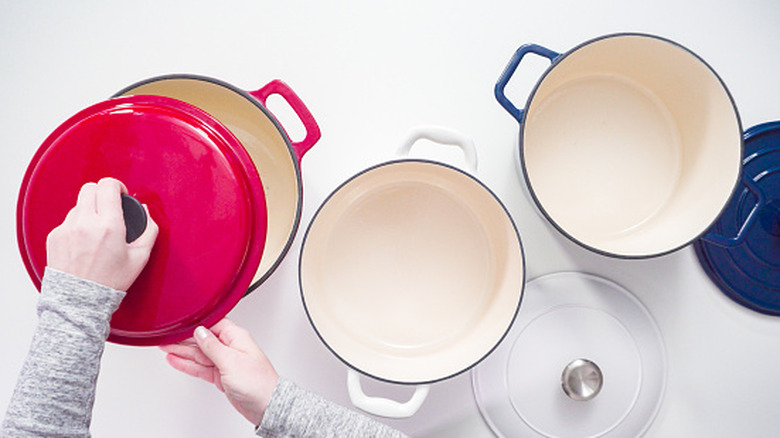
We're not exaggerating when we say a Dutch oven is a kitchen must-have. Whether you're baking artisan bread or braising meat low and slow for a beer beef stew, these bad boys have got you covered. If you're in the market for one, it's always worth doing your research first, as not all brands are created equal. Two of the most recognizable names are Le Creuset and Lodge — chances are you know one lucky person with one already sitting pretty in their kitchen. Both offer real durability, but when it comes to quality, it's almost universally accepted, dare we say factual, that Le Creuset comes out on top.
There are plenty of factors to weigh when comparing Dutch oven quality, but one of the most important is the strength of the enamel layer. Dutch ovens are made from cast iron, which is prized for its heat retention and durability, but is also known for being the diva of the pan world, with many easy mistakes to avoid; it rusts easily, reacts with acidic ingredients, and needs regular seasoning to prevent sticking. Enameling solves this by adding a protective, glass-like coating that makes the pan far more food-friendly and forgiving to work with. Both brands are known to hold up well over time, but some customers have reported their Lodges cracking, scratching, and even rusting, which points to a lower-quality enamel finish.
Of course, other factors come into play too, but once you consider the significant price gap between the two brands, the decision becomes more of a cost-benefit call than anything else. If you want a Dutch oven your grandkids can inherit one day, invest in a Le Creuset. But if you're simply after a durable kitchen workhorse that won't break the bank, a Lodge will serve you well.
Le Creuset have been making Dutch ovens for over a century
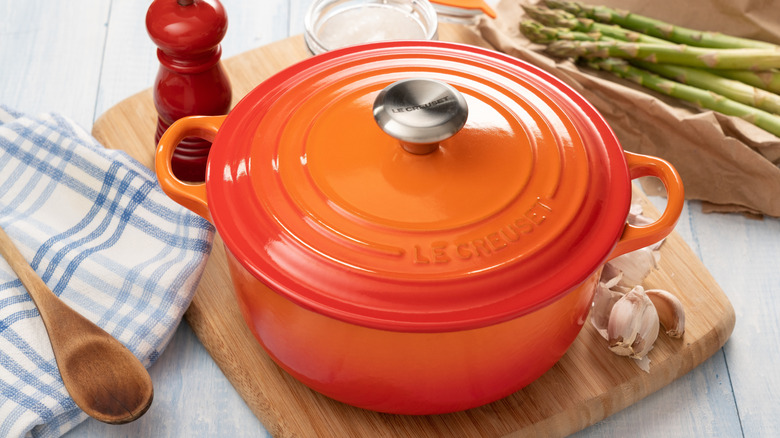
The Le Creuset Dutch oven is the it girl of kitchen cookware. Beyond being the perfect Christmas gift or your favorite food influencer's (including Ina Garten's) go-to pan, it's also known for living up to its reputation as exceptionally high quality — and we should hope so, as just one of these pans is capable of setting buyers back over $400. With prices this steep, it's perfectly reasonable to expect the pan to cook the food itself. But while we're not quite there yet, Le Creuset does back its quality with a lifetime warranty, covering manufacturing defects like flaws in the cast iron or enamel, so if something goes wrong through no fault of your own, they'll replace it free of charge. This is the kind of guarantee that only makes sense if you actually back the quality of what you're selling.
A large part of Le Creuset's quality comes down to heritage. First created in 1925 in Fresnoy-le-Grand, in Northern France, the company has been crafting its iconic enameled cast-iron pans for just over a century. In fact, the brand's very first color, a bold orange now known as Flame, was inspired by the glow of molten cast iron inside the foundry itself. Today, all enameled cast-iron cookware is still manufactured at the same original foundry, using largely the same time-tested methods. As each pan is crafted, it undergoes rigorous quality checks, including when the molten cast iron is removed from its sand mold, and again after the enamel is baked on. In total, around 15 different people inspect a single pot before it's allowed to leave the foundry, ensuring an unprecedented level of consistent quality.
Lodge pans are great, but they can't match Le Creuset
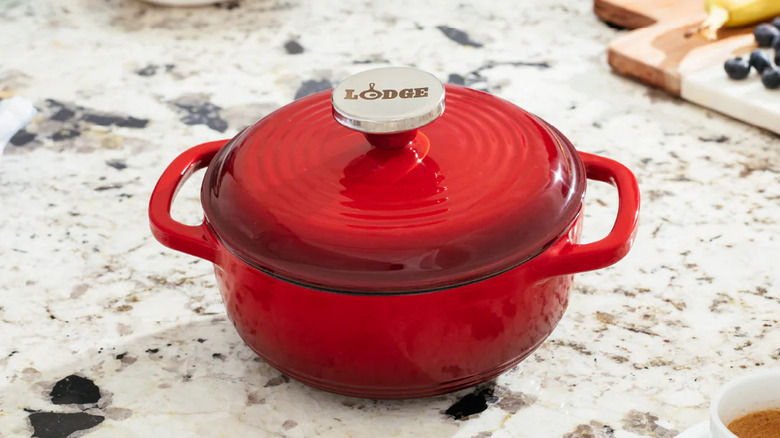
For a buyer looking for a budget-friendly, good-quality Dutch oven, look no further than Lodge. It's considerably cheaper than Le Creuset, with one of its pieces setting you back around $80 to $100. But while the price point is certainly attractive, customers are missing out on Le Creuset's superior craftsmanship. Unlike most of Lodge's cast iron, the majority of Lodge's enameled cookware is made in China, which isn't something buyers will necessarily immediately equate with top-tier quality. That said, the factories producing them work under contract with Lodge and are subject to oversight from U.S.-based inspection teams to help ensure quality standards are met.
It's been frequently noted that Lodge's enamel quality isn't quite as high as Le Creuset's. Even comparing them side-by-side, you'll notice that Le Creuset features smooth, spotless enamel, while Lodge tends to come with a bumpier texture that wouldn't make it past Le Creuset's meticulous quality inspections. Beyond appearance, the difference in quality shows up in performance too, with one Redditor sharing, "I've owned both a Le Creuset and Lodge for about three years now[,] and the Lodge has much more noticeable wear, including small chipping and much more wear on the inside of the Dutch oven. The Le Creuset is still looking great with some light wear inside. It's definitely built better."
For a cautious buyer, that's a real concern. If you're after a pan that can genuinely last generations, a strong enamel coating simply isn't optional. Enamel isn't the most forgiving material; chips can happen for a variety of reasons, including thermal shock, physical impact, or abrasive cleaners. So if you're purchasing a Lodge with the intention of it becoming a family heirloom, be prepared — it requires much more care than a Le Creuset.