

Skip Expensive Ribeye Steak: 7 Budget-Friendly Alternatives
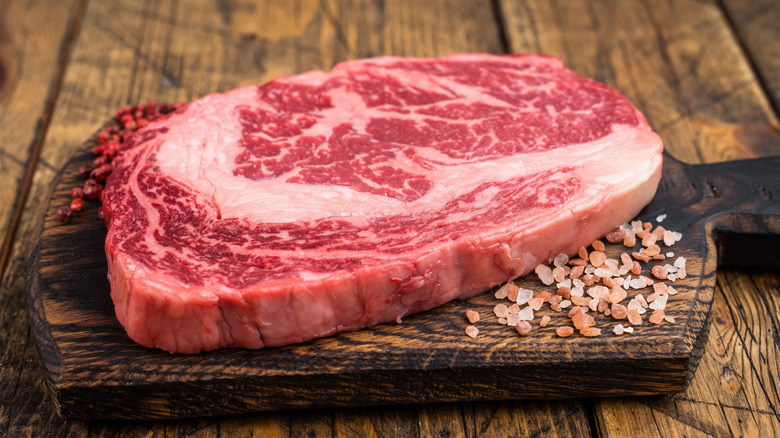
Ribeye, a popular cut known as the "king of steaks," may be difficult to replace, but it's certainly not impossible. Rising beef prices or limited supply don't mean you have to give up steak entirely, especially if you get a bit creative with different cuts that emulate all the things that make ribeyes great.
Ribeyes often fetch a relatively high price because they encapsulate the two things that almost everyone loves in a good steak: marbling and tenderness. Perfect whether you marinate, sous vide, then sear them, or just toss them cold directly onto the grill, they're also one of the most forgiving cuts of meat you could hope to work with. Still, while they're top-tier across the board, there are plenty of other types of beef that can be just as good for far less money. While some of them aren't quite as readily available in typical grocery stores, you shouldn't have to look too hard to find a viable alternative.
The key is to identify what the steak does and does not have in common with ribeye. Tenderness is probably the easiest quality to compensate for, as a solid marinade, careful cooking method, or even the right seasoning can render a tough hunk of beef into something buttery and smooth. While you'll never be able to insert intramuscular marbling into raw meat, you can take steps to impart heartiness and juiciness with additional ingredients, spending a little bit of time on your dinner to save you a ton of money.
Flat iron shares many traits with ribeye
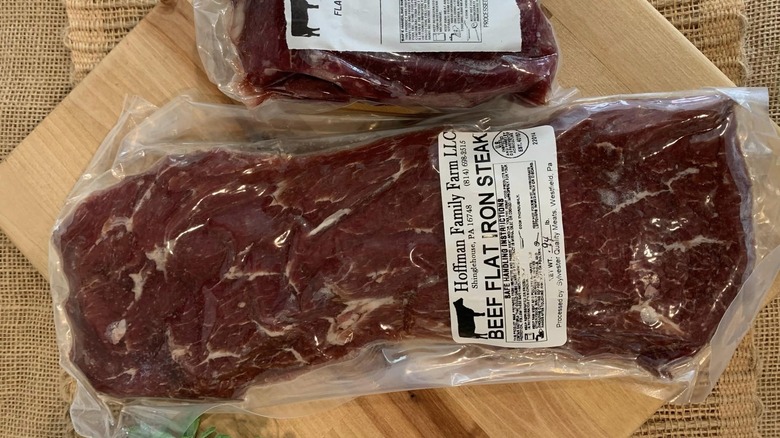
A flat iron is Jamie Oliver's favorite steak for good reason, and while its price is steadily creeping upward, you can still save a bundle by switching from ribeyes. Tender, marbled, and beefy, you may also see it labeled as a butler's or feather steak, but it's still the same delicious bit of beef from the cow's shoulder.
Enjoy rich marbling and value with Denver steak
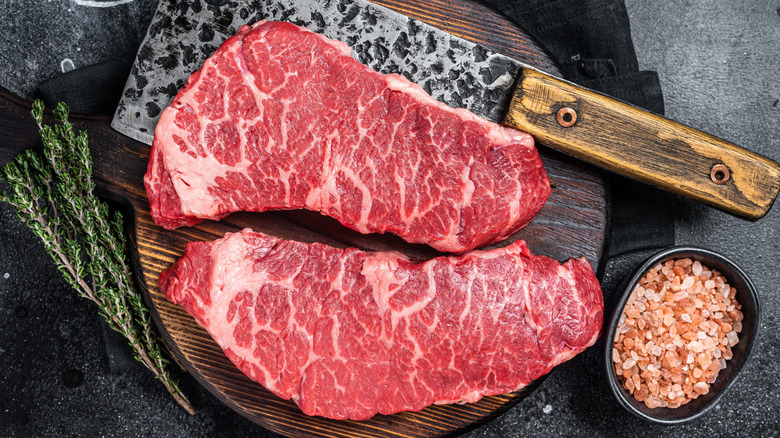
A relatively new cut that's becoming increasingly easy to find, the Denver steak is another affordable ribeye alternative. It's a surprisingly tender cut from the shoulder and is often best cooked to around medium rare or medium doneness, but it has enough juiciness to be delicious at a range of temperatures.
The teres major is small but tender
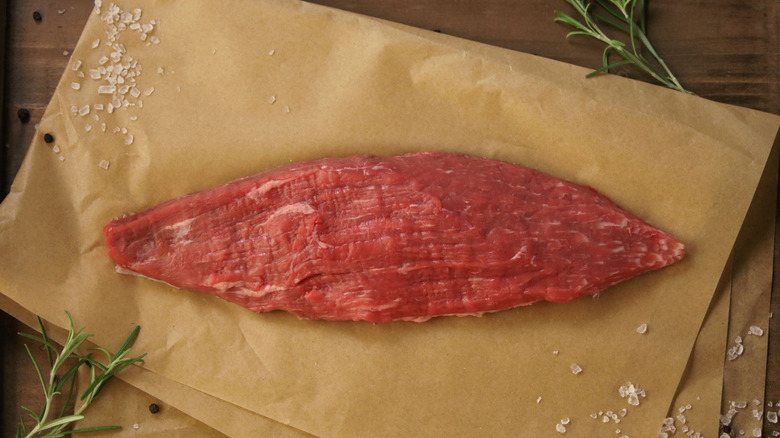
A butcher's cut you won't see sold in most places, the teres major is a perfect substitute for filet mignon but still has quite a bit in common with ribeye. Though nearly as lean as tenderloin, it has the same complex, meaty taste a ribeye does but in a much smaller size, making it perfect for a weekday dinner for two.
Chuck eye brings ribeye quality to your budget
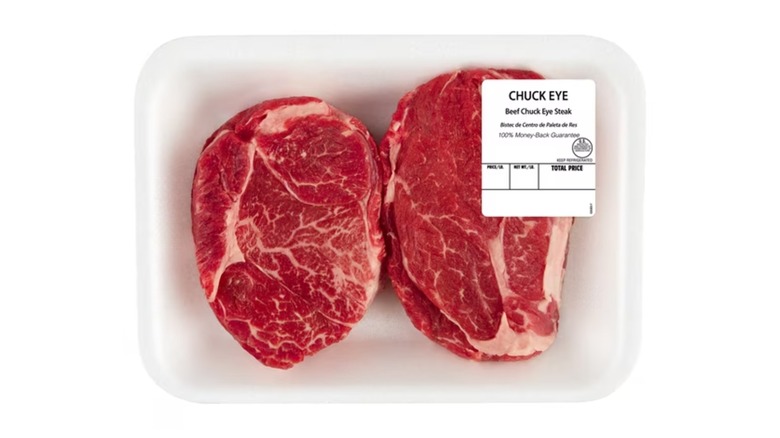
Though you may be more accustomed to tossing chuck meat into a slow cooker, this particular part comes from the shoulder near the rib section, giving it much in common with a ribeye. Typically tender and marbled, it's a fairly large piece of meat that's great for making leftovers.
Skirt steak can excel in various recipes
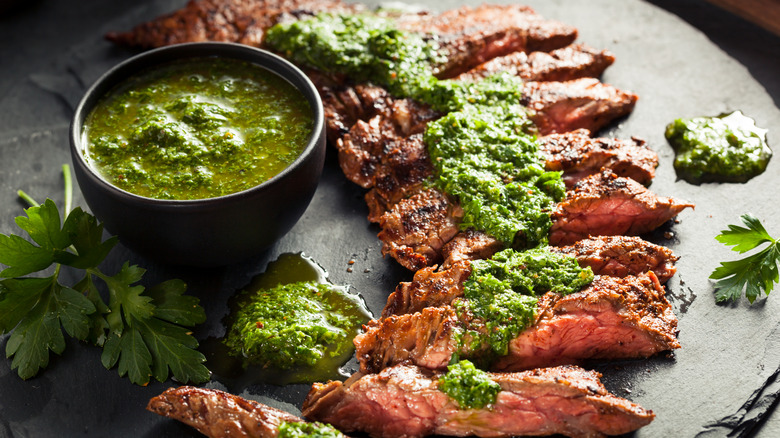
While a slab of skirt steak isn't the best substitute for a whole ribeye, it is great at taking a ribeye's place in recipes, whether that's a hearty stir-fry or steak sandwiches. Bobby Flay recommends it over ribeye because it's not only more affordable, but also tender and rich, especially if you marinate it beforehand for maximum juiciness.
Shoulder steak rivals ribeye when properly prepped
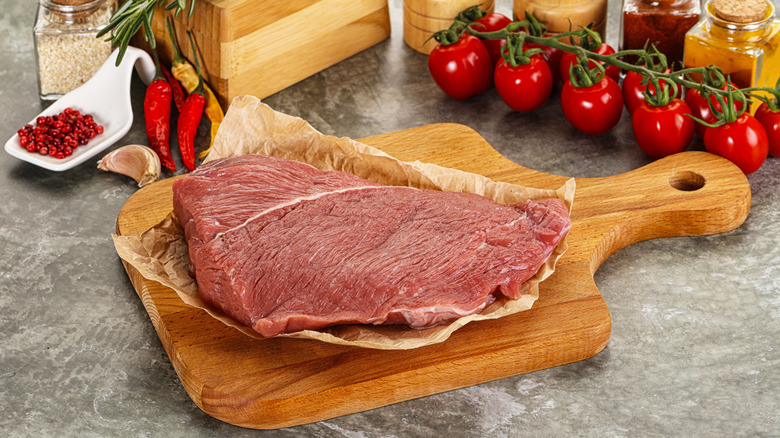
A shoulder steak may not have quite as much intramuscular fat as a ribeye, but with a little marinating, it can be quite tender and flavorful. It doesn't lack the earthy, meaty beefiness of a good steak, but it can be a bit tough, so prepping it in advance can give you something delicious at a fraction of the cost of ribeye.
Country-style ribs offer rich, beefy flavor
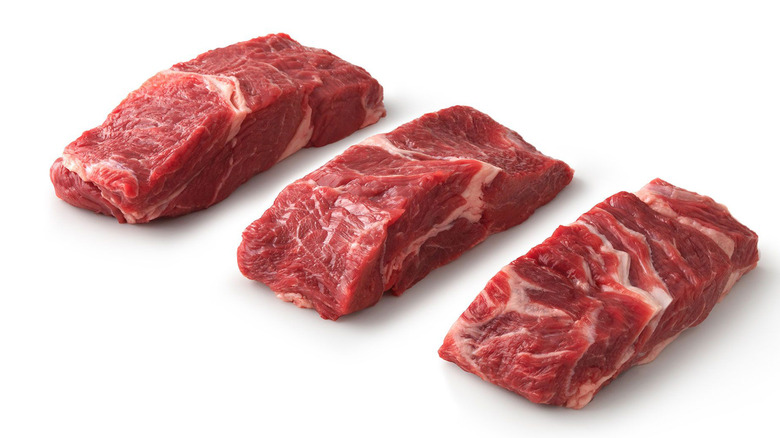
Despite the name, country-style beef ribs are typically cut from the chuck, or shoulder, and can offer some of the rich, beefy flavor associated with ribeye. While they aren't the plate-covering slab of steak you may be accustomed to, slow-cooking them and then finishing them on the grill can produce a rich, tender alternative to a traditional steak.