

Jamie Oliver's Favorite Steak Is Way More Affordable Than Ribeye

Jamie Oliver's no stranger to steak, though some people may think his preference is a bit unusual for a master chef. Rather than a ribeye or filet mignon, Oliver actually prefers a flat iron steak, a budget-friendly cut that's surprisingly tender.
Both ribeye and flat iron are well-marbled, tender, particularly meaty slabs of red meat. However, while ribeye can cost upward of $20 a pound, flat iron is less than $12 a pound. It's a rather underrated cut of steak largely because it comes from a cow's shoulder, much like blade steak. Most of the most well-known and in-demand cuts come from the ribs or backstrap — areas that don't see a lot of exercise and therefore stay quite tender. However, Oliver likes it not only for its affordability, but because it lacks the connective tissue that makes blade steak so difficult to chew.
Like ribeye, you can also find flat iron in quite a few different sizes and under more than a few names. You may see it called feather blade, butler's, or oyster blade steak, but you can always differentiate it from a blade steak by looking for blade steak's telltale line of gristle running down the middle. When kept whole, the entire cut is much like flank steak: a large flap of meat perfect for grilling. However, it's dead easy to simply slice it up yourself, much like a prime rib roast, for perfectly portioned steaks.
How to prepare a flat iron steak
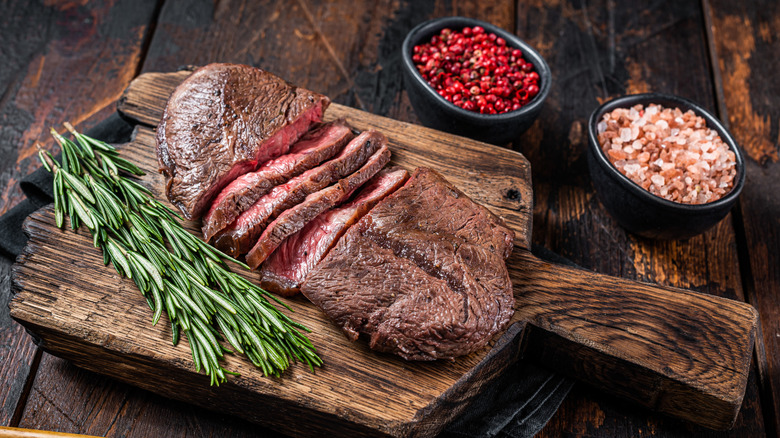
While flat iron lends itself well to all the ways that create a delicious ribeye, the biggest issue tends to be that these steaks are a bit on the thin side. Even so, Jamie Oliver adheres to many of the dos and don'ts of cooking a steak, focusing primarily on temperature control.
Since flat iron is thin, you may struggle to keep it rare without blisteringly hot temperatures. If, however, you prefer to keep it closer to medium, Oliver likes to use a piping hot pan and flip the steak every minute. This technique ensures all the juices stay in the center of the meat, and since flat iron is a touch leaner than ribeye, this will guarantee it doesn't dry out. It also helps to let your steak rest outside of the fridge for 30 minutes to an hour, ensuring the middle isn't so cold that it won't develop along with the crust.
If you're a huge fan of char, flat irons are also perfectly built for grilling. A simple three-ingredient steak marinade helps conserve moisture and keep the meat juicy under high radiant heat, while still allowing you to scorch the outside as much as you want. Since it will inevitably have a shorter cooking time than thicker cuts, it's absolutely vital you pat your beef dry before it goes anywhere near heat. Excess moisture steams rather than sears steaks, giving it a grayish discoloration and preventing those beautiful Maillard flavors from forming.