

12 Foods Pirates Ate While Out At Sea

Oh, to be a pirate. The land-lover's world is a distant memory, and you can feel the salty breeze in your face while singing "a pirate's life for me." It's a fantasy many of us have entertained at one point or another, especially in the years after the "Pirates of the Caribbean" movies were released. The freedom, the excitement, the rum — all of it is laid out in romantic detail. But what about the foods that pirates ate?
To answer that question, I turned to four experts on the subject: Robert Jacob, author of A Pirate's Life In The Golden Age Of Piracy, Dr. Rebecca Simon, author of The Pirates' Code: Laws and Life Aboard Ship, Matt Frick, curator of the St. Augustine Pirate & Treasure Museum, and William McRae, the voice of the Pirate & Treasure Museum. Through their collective research and topics of interest, they paint a fascinating portrait of the surprisingly rich and varied foods a pirate might consume throughout their career. While these legendary outlaws were mostly scavengers, they tended to eat well, seeing as how plentiful and well-supplied the ships they would plunder often were. But what exactly did that entail? Let's get into it.
1. Sea turtles and manatees
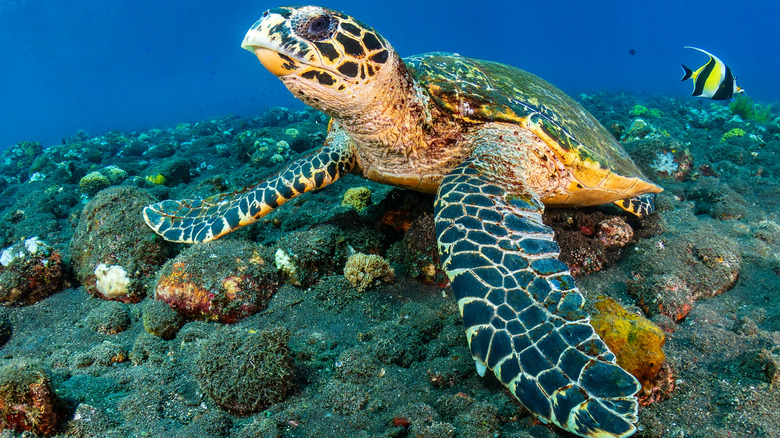
Much of what pirates ate was gained through capturing and plundering other ships, but that doesn't mean they couldn't provide for themselves when the opportunity arose. Fish were, of course, plentiful on the open ocean and were eaten in large numbers, but so were other marine life. Namely, sea turtles and manatees.
"Turtles were a big part of any sailors' diet during this time because they were plentiful, tasty, prevented scurvy, and said to cure impotence," according to Rebecca Simon. If that sounds horrifying, just remember that turtle was the favorite food for some of the most venerated U.S. presidents. As an added benefit, pirates wouldn't have to eat them immediately upon netting them. "They could be kept in the hold where there was almost always water to keep them alive until they were cooked or used in soup or dishes such as salmagundi," Matt Frick added (more on salmagundi later). He also notes that manatees were often speared from the side of ships, due to how slow-moving they are. Manatees being known as "sea cows" at the time wasn't simply a reference to their docility and love of grazing — according to those who ate them, they also tasted like beef.
2. Fresh meat
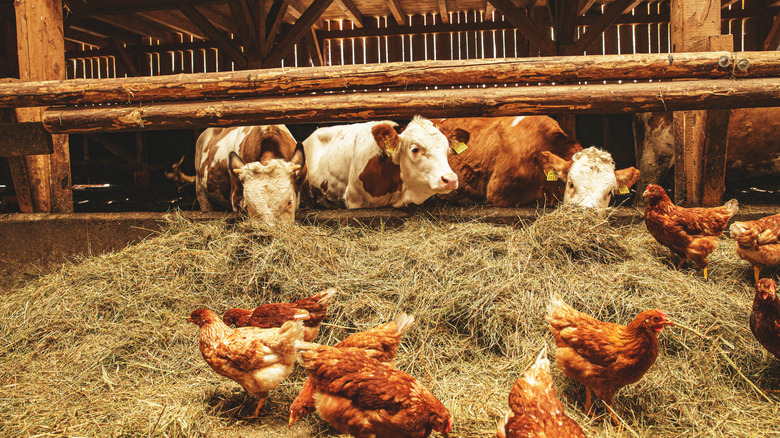
One of the more surprising aspects of life at sea is how prevalent fresh meat was — all the pirates had to do was choose the right target to raid. Chickens, pigs, and cows were common animals to find on board ships, but that was hardly the end of the meat options available to pirates, depending on the ships they raided. Ducks, pigeons, sheep, and goats were all commonly stored and eaten animals at the time, according to William McRae. Similarly to sea turtles, the livestock was stowed below deck, where there was enough light and ventilation to keep the various creatures alive.
While re-supplying meat for pirates was as simple as taking another ship, that left one unpleasant job. "Mucking was important," McRae said, "because of the creation of methane gases." Rebecca Simon notes that due to how much work they took and space they took up, live animals were usually eaten quickly by pirates, and were often the first to go overboard if the crew needed to lighten its load.
When they weren't stealing the livestock off other ships, there were other ways they scored their meat. "Buccaneers of the mid-1600s were known for hunting boar and smoking the meat on land," said Rebecca Simon, especially when they were careened. Careening was a semi-regular task for sailing crews involving intentionally beaching the ship in order to scrape the barnacles and re-calk it to make it water-tight, otherwise teredo worms could eat through the wood.
3. Fruits
Though pirates got a majority of their supplies through plunder and raids, Robert Jacob notes that there were some pirate-friendly ports during the time that were used for re-supply. New York City, Charleston, South Carolina, and Nassau in the Bahamas were all familiar favorites for corsairs and freebooters in the 1600 and 1700s.
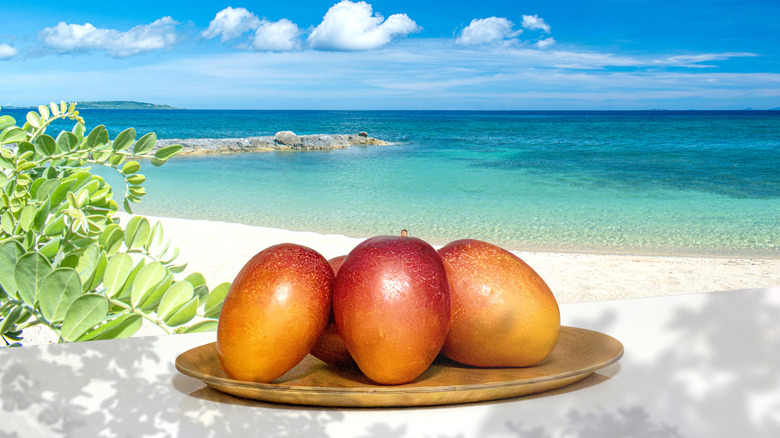
The latter port would have been an ideal place for a pirate crew to load up on fresh fruit before casting off again. "Historical logs and accounts from privateer Bartholomew Sharp or William Dampier- – noted pirates — feasted on mangoes, pineapples, breadfruit" (one of the fruits with more potassium than bananas), "guavas, papayas, and avocados," William McRae writes, adding that they would also eat swamp cabbage, also known as heart of palm, which is the state tree of of Florida to this day. Raisins were included in navy sailors' daily rations and were often cooked with flour to make pudding, and as we now know, if they were part of a sailor's diet, they were part of a pirate's diet. Plantains were also a common food, as they were versatile in terms of how they could be prepared and could provide a substitute for bread if the ship was low on carbs.
4. Spices
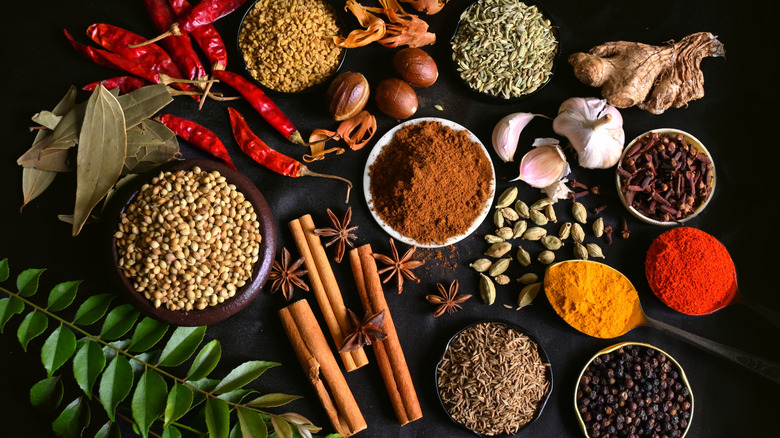
Just because pirates chose to leave society and its rules behind doesn't mean they had to sacrifice the finer parts of civilized living: namely, using spices to improve the on-board food. There were common spices, with the most obvious being salt and pepper, but there were also more interesting offerings. "Other spices such as turmeric and cinnamon would be used sparingly because those were good to sell because they were rare and thus expensive and highly desired commodities," according to Rebecca Simon. Robert Jacob notes that, like with all provisions, what pirates had access to depended on the nationality of the ship itself. Capturing a Spanish vessel would like mean getting access to onions and garlic, which an English ship would be less likely to carry.
There was another reason it was important to use spices in good quantities, though. "Pirate life meant eating food that quickly went rancid, moldy, or rotten in the hot sea air," said William McRae. That's why pirate cooks would use the more intense spices, such as garlic, mustard, and black pepper — not only to preserve meat, but also to hide the taste of food that was going bad.
5. Salt pork and ham
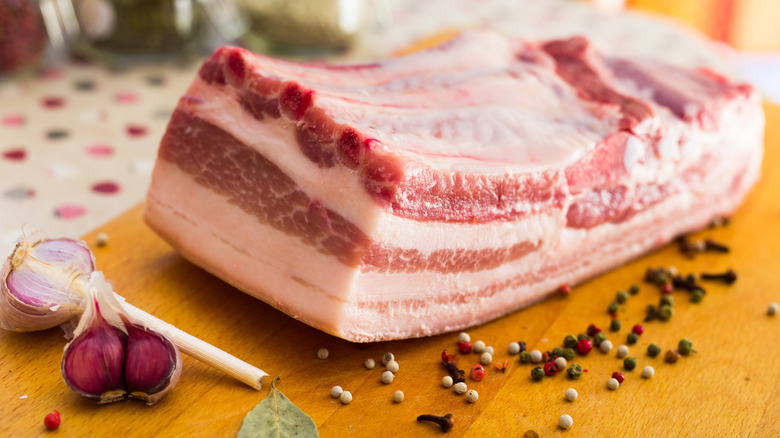
Salt was important not just for flavor (whether adding or hiding), but also for preserving meat, which could be added to stews or eaten as is. It was, of course, the eponymous ingredient in salt pork, the preserved meat eaten by cowboys in the Old West and pirates on the high seas alike in the days before Igloo coolers.
"Salt pork was... common because the salt/brine kept it so well preserved," Rebecca Simon said. "When it was available, it was used in virtually every dish for flavor, meat, and the fat." If you're unfamiliar with the versatile food staple-of-yesteryear, Salt pork is similar to, though not the same as, bacon, with one easy way to tell the difference. Salt port is large pieces of unsmoked pork packed in salt bricks or brine where bacon is thin strips of smoked pork. The lack of smoky scent is the key way to tell that you're sniffing salt pork, not bacon.
6. Citrus to fight scurvy

If you have read or seen anything remotely related to sailing in the 17th and 18th centuries, you've likely read about how citrus was used to fight scurvy. It's part of the fascinating history of the lemon, which manages to touch both the golden age of piracy and the rise of Sicily's mafia.
"Scurvy was the scourge of the sea," Rebecca Simon said. "People did not know the cause of it but there was a connection made with vitamin C because citrus fruits, dried or fresh, were stored whenever possible." The experts agree that pirates who frequented the Caribbean were often impacted by scurvy, due to the plentifulness of fruit that they had access to. "Oranges, lemons, and limes were encountered in port and consumed, which helped combat vitamin deficiencies like scurvy, though sailors often enjoyed their tang mixed into their rums also," said William McRae.
7. Grog
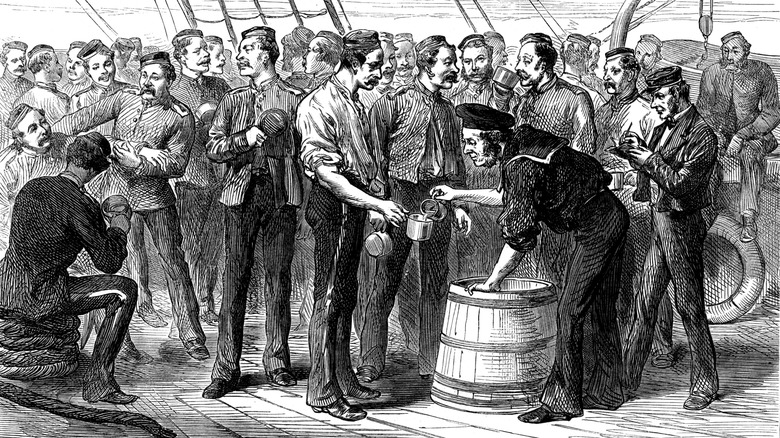
Speaking of using scurvy as an excuse to drink some citrus-flavored booze, one of the most famous drinks of the time was grog. "Grog is a specific drink invented by Admiral Vernon of the British Royal Navy. He was affectionately called "Old Grog" by his crew because he wore uniforms made of grogram woll (a cheaper material not usually worn by officers)," explained Robert Jordan. Grog, like El Draque, was an old-world precursor to modern cocktails, and it sounds pretty delicious.
Better still, it was something of a health drink — lucky sailors! The recipe was simple and easy to remember, according to William McRae: four parts water, three parts rum, two parts molasses or sugarcane, and one part citrus. Each ingredient served a valuable purpose in the mixture. "The rum made the water more drinkable, sugar was a nice flavor and energy boost, citrus even more flavor and prevented scurvy." It was a valuable source of hydration for pirates, given that the salty air would cause wooden barrel-stored water to go brackish in time. Now you can drink like a pirate at home with the excuse that it's technically a health tonic.
8. Booze, but not as much as you'd expect
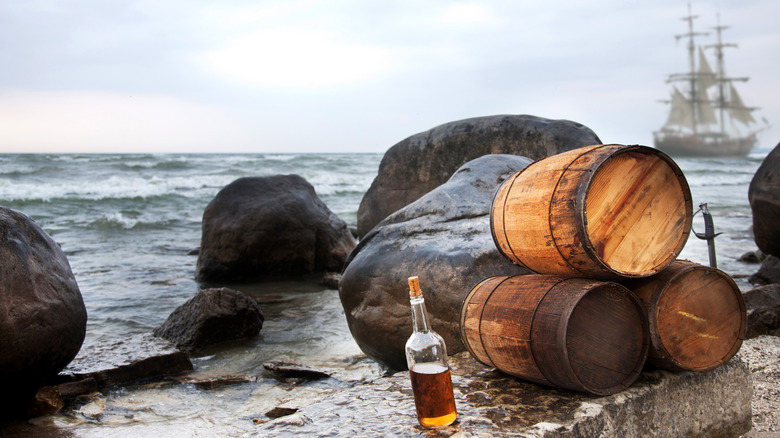
Apparently, Jack Sparrow may have skewed the public's view of just how drunk pirates tended to be on a day-to-day basis. Certainly they drank, and when they captured a ship, they often beelined straight for the good stuff — which might not be of the variety you'd expect.
Robert Jordan said, "Dutch ships would have a certain amount of gin, which was invented in Holland." But while it's true that pirates were known to drink all their newly-plundered alcohol as quickly as they could, that doesn't mean that they stayed sauced all the livelong day.
"Drinking to excess on board ship was forbidden (despite what you see in the movies)," William McRae notes, though it appears that different captains had different opinions on the usefulness of the good "Some pirate captains, such as Edward Teach (Blackbeard) banned alcohol while Bartholomew Roberts felt it was good morale," Rebecca Simon explained. "There might be rations of rum... for morale purposes either daily, weekly, and with extra portions for rewards or successes."
9. Indigenous-influenced foods
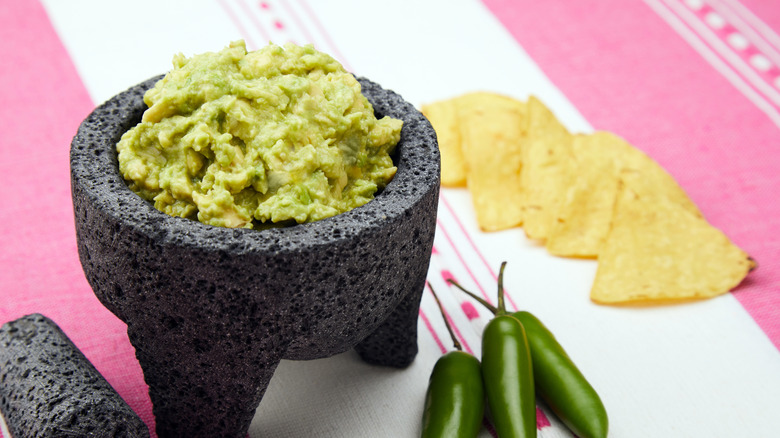
Pirates cruising around the Caribbean took more than plunder, they also incorporated food techniques from the indigenous people living on the lands whose coasts they sailed. Two of the more notable ones are traditions that have passed all the way down the line to us: guacamole and open pit barbecue.
"Guacamole was a common food in Mexico. The Spanish used it and pirates stole it from them," Robert Jacob said. The English pirate William Dampier wrote about it in his book "A New Voyage Round The World," noting that in addition to lime juice, sugar or piloncillo was a common addition to guac, which was often served with plantains and a glass of bumbo, a grog-like drink made with rum, sugar, water, and nutmeg that was popular among pirates.
Not only was barbecue incorporated into the pirate lifestyle, but the old-school cooking method invented by the Taíno, the largest indigenous group in the Caribbean before the arrival of the colonialists, gave us a new word to add to our vocabulary. "In the Taíno language, barbecue was called "boucan," Jacob said. The early English settlers were called "boucaneers" and when they turned to piracy, the term developed into "buccaneers." To cook like a buccaneer or a Taíno, one "would smoke meat (cattle, pigs, manatees) on a frame of saplings called a "boucan" over an open pit," Matt Frick explained.
10. Hot chocolate
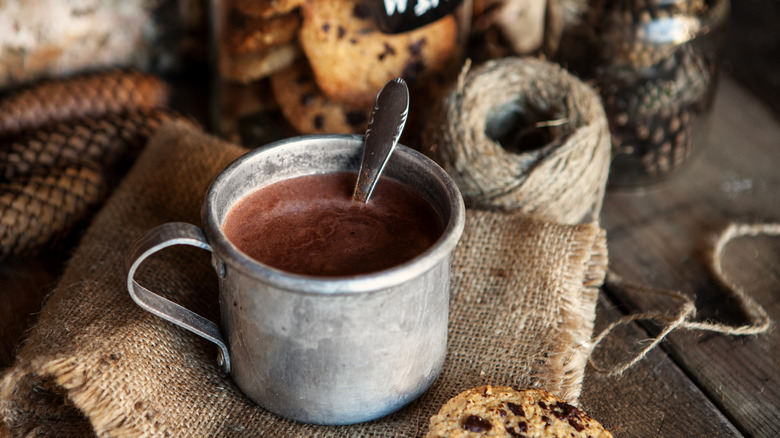
Surely, at some point in your life, you've pictured a pirate swigging from a bottle of booze. You might have even pictured them drinking coffee or tea, likely plundered from an English ship. But there's another beverage they enjoyed mightily when they got their hands on it, which also came from Indigenous culinary practices.
"Hot chocolate was a favorite drink of pirates," Robert Jacob said. In fact, the pirate/botanist (what a job description) William Hughes was responsible for bringing hot chocolate to the British elites, publishing the drink he called "the American nectar" in his book "The American Physitian" in 1672. Hot chocolate, as opposed to hot cocoa, uses melted chocolate as the base of the drink, but that was hardly the end of the ingredient list. Chili peppers, nutmeg, cassava, cinnamon, cardamom, and orange flower water were just some of the options to sweeten, enhance the flavor, or add nutritional value to the drink.
11. Dried food, including hardtack
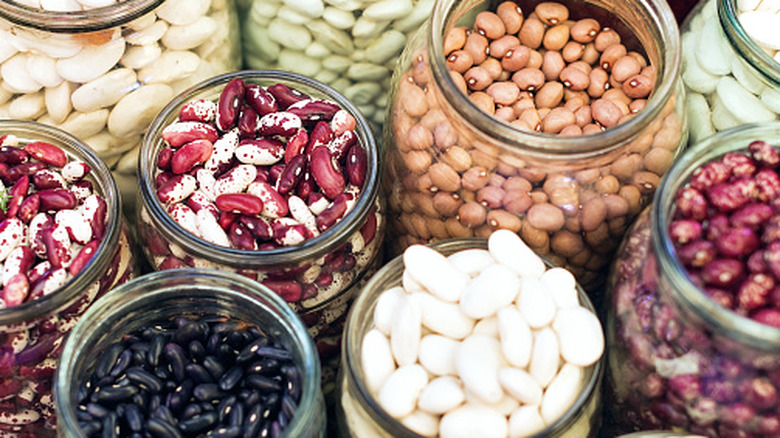
The nature of pirates' business is such that they were able to resupply often — meaning, every time they took a new ship. Ships sailing from the other side of the Atlantic had to be more mindful of bringing non-perishable foods, but they were also an active part of any pirates' larder.
"Beans of all kind were a huge source of food," Rebecca Simon said. "They could be dried and would last ages and ages." Dried peas, often served with pork, were a big part of British ship food supply, and would have therefore also been heavily in use by pirates. Then there was that staple of any seafarer or trail-wandering cowboy's diet: hardtack.
Hardtack was somewhere between a biscuit and a cracker, made from flour and baked until they were so hard they needed to be softened by dunking it in beer or soaking it in a stew before it could be edible. While it wasn't the most appealing carb to serve alongside dinner (it was often referred to as "tooth duller"), it could last years, making it a good thing to have in the pantry for when the going gets tough.
12. Salmagundi
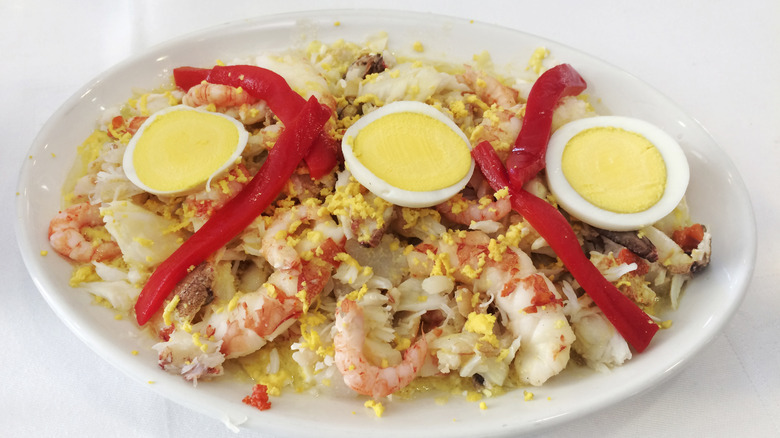
Our final entry on the list of typical pirate dishes is the fun-to-eat (and fun-to-say) favorite of the 17th century: salmagundi. This dish is what would now be considered a "composed salad," similar to chicken or tuna salad.
For those unsure of what composed salad entails, basically, it's a term that means the dish can contain, well, anything. "[Salmagundi] typically includes a mix of chopped or sliced meats (like roast chicken, ham, or cold beef, also turtle, pigeons, doves, duck, even seagull and parrot)," said William McRae. Then there was the seafood: anchovies, pickled herring, shellfish, shark, or (dorado), which is considered one of the best grilling fish, were all common options.
The dish didn't only contain meat, though — after all, this is kind of a salad. Salmagundi could have any combination of boiled eggs, raw and/or cooked vegetables, pickles, fruits, and nuts, swamp cabbage, mushrooms and more. These would be cooked together using wine or vinegar as the broth, according to McRae. The appeal of a salmagundi is that it could accommodate anything the pirates happened to have on hand, which, of course, was anything the ships they marauded happened to have on-hand.