

Pirates Used This Old-School Cooking Method To Prepare Their Food
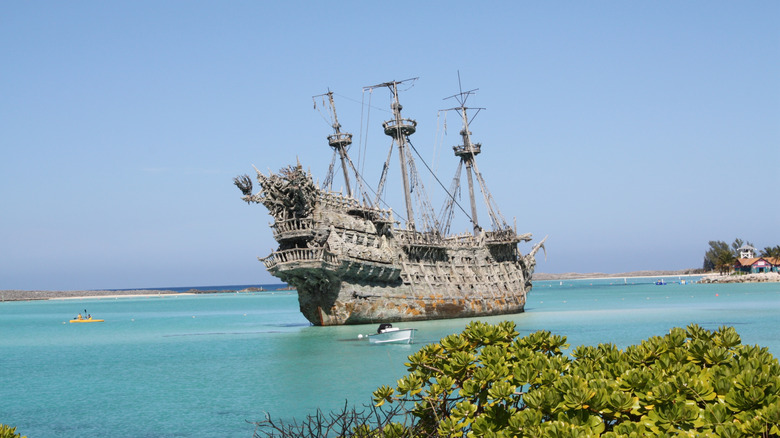
The Golden Age of Piracy conjures up images of rogue Jack Sparrow-esque sailors pillaging their way through the seven seas, buried treasure forgotten to time, and tales of mystical sea creatures. But while their romanticized exploits dominate modern media, considerably less thought is given to their less-exciting daily reality — like what they ate. Interestingly, the term "buccaneers" offers a clue into how pirates prepared their meals.
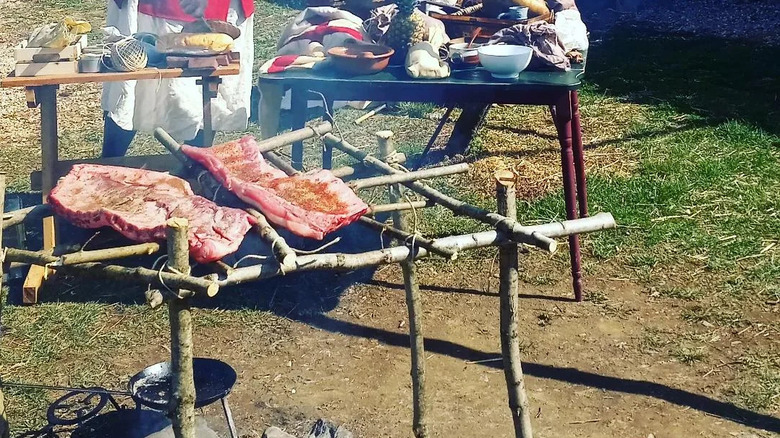
Particularly associated with pirates operating in the Caribbean and Pacific coast of Central America, buccaneers didn't spring out of nowhere. Before it came to be associated with rowdy behavior, it once referred to an old-school cooking method. In the 17th-century Spanish colony of Hispaniola (modern-day Haiti and the Dominican Republic), it was well documented that pirates living on the island would cook meat on a boucan — a traditional wooden grill used by indigenous people of South America and the Caribbean to slow-smoke and dry meat. The rustic method was borrowed by pirates and became so synonymous with them that French sailors eventually referred to them as "boucaniers," with buccaneers being the anglicized spelling.
The original buccaneers weren't your typical Blackbeard-style pirates, though. Rather, they were French hunters living on the island who occasionally engaged in piracy. Their primary source of meat was the island's wild game, such as feral cattle and pigs. Buccaneers would even roast entire sea turtles over the boucan. As simple as this method is, the proto-pirates would marinate meats, use different woods (and even animal bits, like fat) to flavor their food as it cooked away over an open flame. They became such a headache for the Spanish that they even attempted to kill all the game on Hispaniola to starve the marauders. This wasn't the smartest of ideas, however, as the lack of food made the buccaneers only more dependent on piracy as a means of sustenance, leading to a surge of attacks on Spanish cargo ships in the mid-17th century.
What other foods did pirates eat?
Life on the high seas was far less exciting than depicted in modern media. Before engines made faster travel possible, sailors and pirates alike could spend months away from land and civilization. With a large crew to feed and no refrigeration, they had to get creative about how they stored food and what they brought on board. Unsurprisingly, they also conducted raids on merchant vessels to acquire fresh food, water, and luxury provisions like spices and alcohol.
Here's a fun fact: The pirate diet had more in common with the cowboy diet than you'd expect. Despite navigating completely different environments, pirates and cowboys shared a common enemy in food spoilage, and both leaned heavily on salt pork as a result. This staple was able to keep for months because heavy salting draws moisture out of the meat, creating an environment hostile to bacterial growth. It also served as one of the primary sources of protein during a long sea voyage. It was often paired with another pirate classic, peas pottage (boiled peas cooked into a porridge, usually with some type of ham or salt pork). This hearty dish provided a calorie-dense, nutritious meal suited to the rigors of life at sea.
Rum and pirates go hand in hand, but the drink wasn't just about having a good time. It served a genuinely practical reason too. Scurvy was a common foe among pirates, caused by vitamin C deficiency due to poor access to fresh citrus fruits like lemon or lime. The cane-syrup based spirit came in handy as pirates would mix the bitter, acidic citrus juice with the spirits, making it more palatable. Fresh water would also often turn stagnant after considerable time sitting in wooden barrels, so diluting it with rum also helped kill bacteria and make foul-tasting water drinkable.