

14 Common Mistakes You're Making When Pairing Food And Wine

We may receive a commission on purchases made from links.
Some of us may be familiar with classic food and wine pairings like cabernet sauvignon and steak or Champagne and caviar. However, going beyond these familiar combinations can quickly become overwhelming because of the number of wine varieties, as well as the ingredients, seasonings, and sauces you can pair them with. What began as a fun task can leave you wondering whether you're going about it the right way.
To help take some of the guesswork out of food and wine pairing, we spoke with five wine and sensory experts, including Christopher Tanghe, Master Sommelier and co-owner of Walter's Wine Shop and Upwell Wine & Coffee in Seattle; David Glancy, Master Sommelier and founder of San Francisco Wine School; certified sommelier David Alpher; wine educator Amanda McCrossin; and Randy Mosher, a chemosensationalist and author of "Your Tasting Brain: A Sensory Approach to Wine, Beer, and Other Pleasures." Together, these experts shared the most common mistakes they've noticed people making when pairing food and wine, and how to avoid them.
Selecting wine based solely on the protein
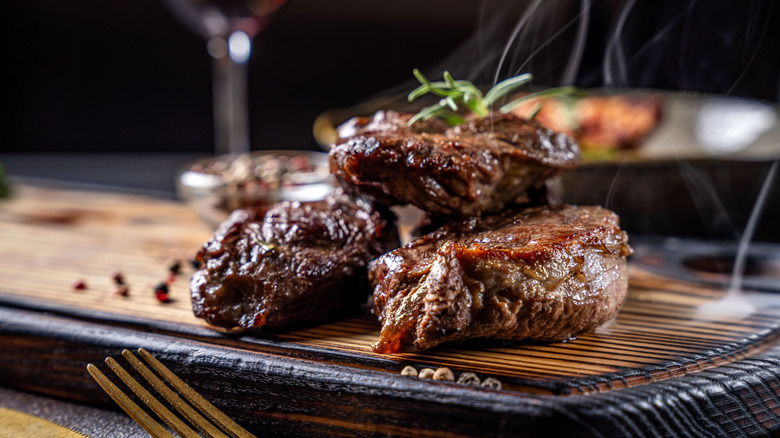
People often let the meat or the main ingredient of the dish they're serving dictate their wine choice. However, according to David Alpher, certified sommelier, considering only the broad categories of the food – like fish, white meat, and red meat — doesn't quite go far enough.
Alpher explains the cut of meat is an important consideration, as specific types of cuts can vary in terms of tenderness, flavor intensity, and fat. He explains that cuts like tenderloin and filet mignon are tender and mild, whereas porterhouses and Denver steaks have stronger flavors. This flavor profile and mouthfeel directly affect how different cuts of steak pair with wine. For instance, Alpher says cabernet sauvignon can work with the more strongly flavored cuts, whereas pinot noir may be a better match with a more delicate filet so as not to overwhelm the flavors. Rather than stopping at the protein, a better technique is to consider the specific cut, flavor intensity, fat, and preparation when deciding how to pair it with wine.
Assuming there is one correct wine for every food
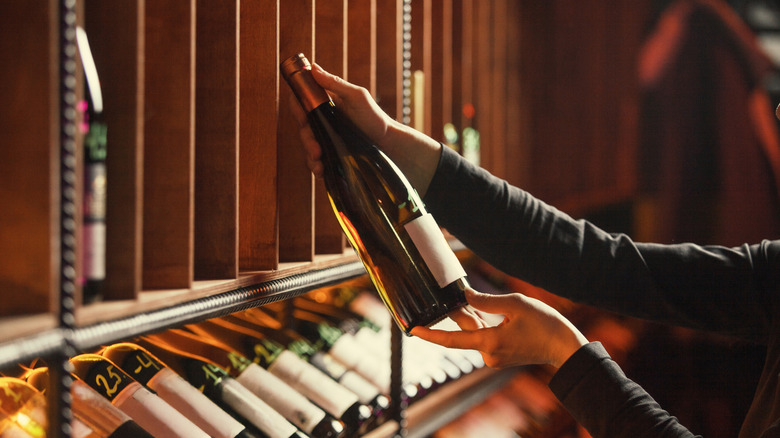
Many people fixate on finding the perfect bottle for every dish. However, Master Sommelier David Glancy explains that only looking for one wine is one of the biggest mistakes people can make when pairing wine and food. Some may get paralyzed by the fear of picking the wrong bottle, while others may unnecessarily limit their options when there could be a number of viable possibilities.
Glancy explains that the same food or dish can work with multiple wines, each for its own set of reasons. For people new to food and wine pairing, he recommends offering two wines with each dish, one contrasting and one complementary, and comparing the two experiences. "For example, with a creamy dish you could serve one crisp wine and one creamy wine and start a discussion at the table over the merits of each," he says.
Master Sommelier Christopher Tanghe agrees and recommends experimenting to see what does and doesn't work for your palate. "There are a mind boggling amount of combinations so just have fun with it," he says. Pairing principles can help narrow down your choices, but Tanghe recommends using them as a springboard rather than an endpoint.
Serving food that's more acidic than the wine
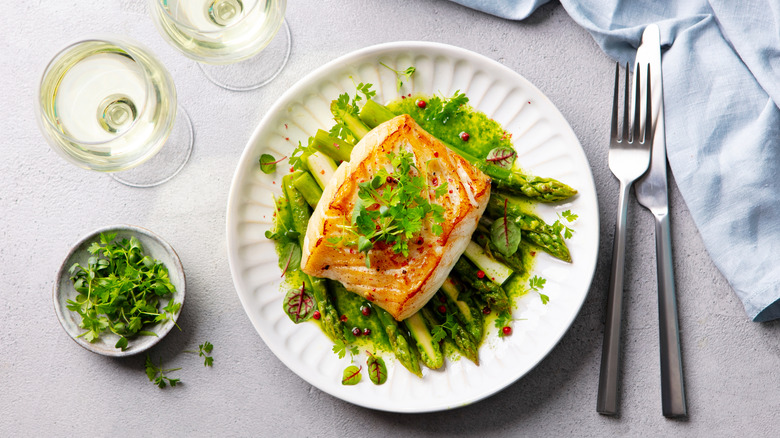
If you've ever had a disappointing wine with dinner, it may not be the wine's fault, but rather because of the acidity of the meal served alongside it. According to David Alpher, a wine will likely be overpowered and taste sort of lifeless if the dish has more acidity than its paired wine.
An example of this less-than-ideal match would be a salad with a fruit vinaigrette dressing paired with a Napa chardonnay, which, as Alpher explains, tends to have medium acidity. "The tartness of the dressing will overpower it easily, and the wine is likely to be a disappointment no matter how much you paid for it," he says. In this case, Alpher recommends a sharp, high-acid wine to stand up to the acidity in the food, such as a sauvignon blanc or chenin blanc. For a fruit-based dressing, Alpher recommends a Kabinett riesling for its light sweetness and high acid to create balance.
You'll know you've gotten it wrong if you find yourself with a flabby wine, Christopher Tanghe says. Reach for a higher-acid wine next time so it can keep up with the acidic dish.
Thinking that you need fancy food to go with wine
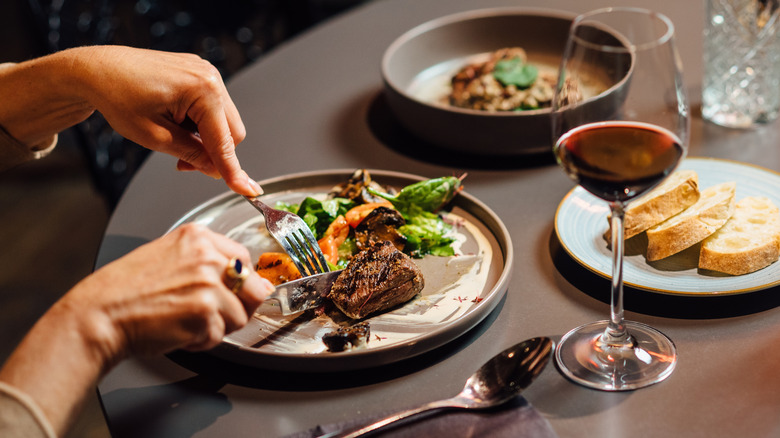
According to Christopher Tanghe, some common mistakes people make with wine pairing are assuming that the food needs to be fancy in order to work and that the wine needs to be expensive. Focusing on the price tag rather than the flavors can potentially rule out some really great pairings.
Amanda McCrossin, certified sommelier, recommends focusing on what is actually on the plate. "A pairing should be based on the flavors of the dish rather than the price tag," she says. Tanghe agrees, pointing to some unusual but successful pairings he's come across: "Popcorn and Champagne is amazing. A burger with Beaujolais is totally appropriate for a Tuesday evening. Doritos and Amontillado Sherry? Hell yes!"
In the end, the experts agreed that a nice bottle doesn't have to accompany an elaborate meal. It can also relieve some of the pressure around saving that "good" bottle for the perfect moment. As McCrossin puts it, "Wine is meant to be enjoyed."
Assuming any wine will work with a cheese board
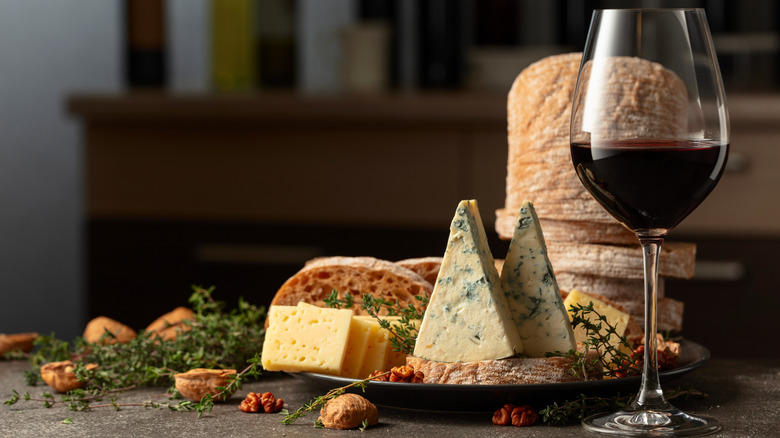
Wine and cheese may seem like a natural pairing, but finding the right pairing here is harder than it looks. As Christopher Tanghe explains, since cheese varies so much based on the type of milk, rind, and even the diet of the animal, there is a lot to take into account when creating wine and cheese pairings. While you can still serve a cheeseboard with wine at your next dinner party, you shouldn't assume that the wine you serve will pair equally well with everything on the board.
One combination that can be particularly troublesome is red wine and goat cheese, according to David Alpher. The two can interact to create an unpleasant metallic flavor. That being said, there are ways to make the pairing work. "If you really want to have red wine with a cheese plate and you have goat cheese on there, make sure you get a soft (low-tannin) red like a Beaujolais or a Malbec."
Not considering personal preference

When all is said and done, the experts agreed that one of the biggest mistakes people can make is taking wine pairing too seriously and not taking into account what they actually enjoy. Christopher Tanghe puts the solution quite simply, "Drink what you like!"
While that seems easy enough, Amanda McCrossin offers some practical advice, explaining that you can still look at the pairing principles for guidance but take personal taste preferences into account too. David Glancy gives the example of strategically pairing wine with something spicy: "I might like an off-dry, low alcohol wine with spicy food to balance the flavors with each other. Someone who loves spicy food might prefer gas on the fire instead of tamping it down," he says.
In the end, Glancy says it's important to recognize that not everyone perceives flavors in the same way. But even if they do, they may simply enjoy different things — and that's where you can change the pairing to align more with what you like.
Sticking to the so-called rules

Another common problem that shows up in wine and food pairing is strictly adhering to the traditional "rules." You may have heard of some of the traditional pairing principles, such as red wine goes with red meat and white wine goes with fish. While traditional pairings can be a helpful starting point, they don't have to be treated as hard-and-fast rules.
Amanda McCrossin explains a better approach: using the pairing traditions as a starting point, but also considering the full range of flavors and textures on the plate. The goal is to find a wine that works throughout the entire dish rather than one characteristic, as is often done with the red-wine-and-red-meat rule.
McCrossin points out that lighter wines can also pair with steak if other flavors on the plate help balance out its richness. "So, don't shy away from a Rosé, Riesling or even a Vinho Verde when pairing with beef in the summer!"
Overlooking the sauces and seasonings
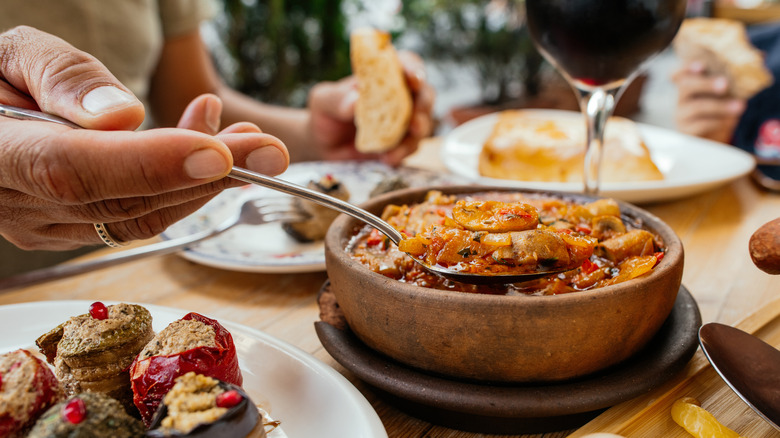
The other elements on the plate, aside from the protein, play a big role in its overall flavor profile. For instance, one important thing to remember when pairing pasta and wine is that the sauce can influence the pairing more than you might think.
Amanda McCrossin gives beef tacos as another example of this. "The beef is obviously an important component, but the seasoning, toppings, sauces, and acidity from something like lime can have a major impact on the overall flavor profile. Instead of choosing a wine simply because it works with beef, you want to consider how that wine will interact with all of those additional flavors," she says.
David Glancy says that sauces and seasonings are more important than the color of the protein or vegetable when thinking about pairing. For instance, the same chicken recipe could call for a red or white wine depending on whether it's served with lemon or barbecue sauce. There are also some instances where looking at the sauce when deciding a pairing is especially important. "Sweet sauces with savory dishes will immediately throw pairings for a loop — more than anything else, there's a case where you need to pair to the sauce," David Alpher says.
Pairing a complex wine with a complex dish
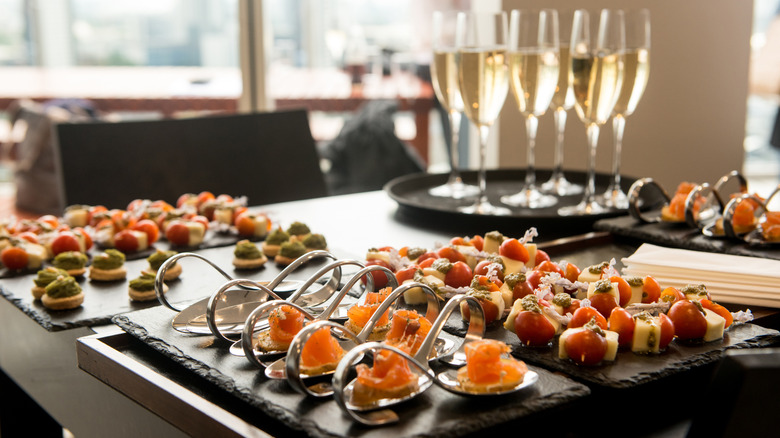
For some, it may be tempting to find an aged or super complex wine to serve alongside an elaborate meal. After all, ordering a special bottle with an equally impressive dinner can seem pretty natural. But Christopher Tanghe says this is not always the best approach when it comes to pairing food and wine. "The more elements you have in both, the harder it becomes to make them harmonize."
Chemosensationalist Randy Mosher explains that adding more elements can further complicate a pairing. "There's so much going on in your mouth with a pairing that it's never a zero sum game. Some elements contrast; others blend together. Some mask, balance, synergistically enhance or combine to create some surprising new flavor."
When you pair a complex wine with an equally complex dish, all of these interactions have to work together, which can make the task of pairing more difficult. Tanghe suggests a straightforward approach: "Keep one simple and one complex," he says.
Believing chocolate and red wine are meant for each other
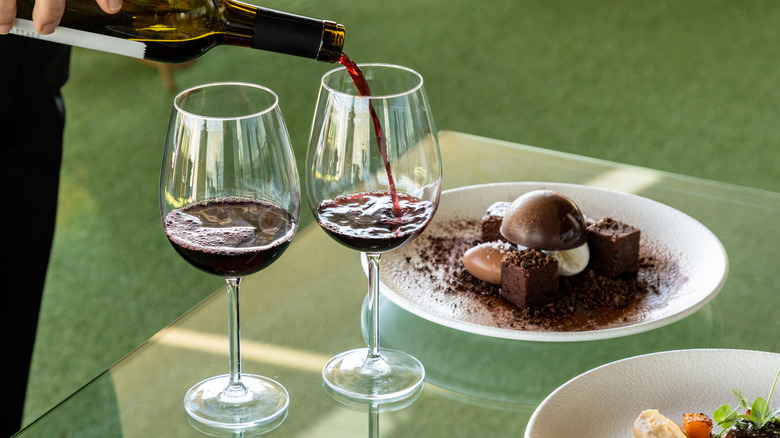
You've likely come across a chocolate and red wine pairing before. Despite its popularity, Christopher Tanghe shares that this combination is extremely difficult to make work because there are many variables involved in the pairing. "It all depends on the origin of chocolate, the percentage of cacao, the tannins in the wine, and how tannic the chocolate is," he says.
One example where the two may clash is with a sweet milk chocolate and a dry, tannic red wine. David Glancy explains that this combination can make the wine taste even more bitter. "I would prefer a dark salted chocolate with a fruit-forward, but dry red with moderate tannins. It's a matter of structure mixing bitter with bitter and sweet with sweet," he says.
Suffice it to say, there's no guaranteed match when putting red wine and chocolate together, as the style and structure of the wine and the type of chocolate all play a role. Tanghe does, however, have one recommendation. "Barolo Chinato is the best pairing I've found with most chocolate of quality," he says.
Serving wine at an improper temperature

Another factor that may determine whether a pairing works is temperature. Not taking this into account is a big mistake, as the pairing can disappoint if the wine is served either too warm or too cold. Christopher Tanghe says, "Temperature is so important so that the wine expresses itself in the glass and on the palate as intended. Most red wines are served too warm and whites too cold."
David Alpher shares how improper temperature can affect the wine itself. A wine served too warm, he says, can taste flat, flabby, or jammy. But a wine that is too cold is a bigger issue. "If it's too cold, whatever would have made this a great pairing is going to be entirely lost on everyone." He says that when a wine is enjoyed straight from the fridge, around 37 degrees Fahrenheit, it may not have notable tastes or aromas.
Randy Mosher explains that temperature impacts the volatilization of aromatics, meaning the aromas are not released as readily. "So, a too-cold white might need to warm up a bit before its pairing attributes come to life," he says. White wines are best served between 45 and 55 degrees Fahrenheit, depending on the style, and some red wines can also benefit from being served slightly chilled. Lighter-bodied reds are best served between 50 and 55 degrees Fahrenheit, while full-bodied reds are best served between 59 and 64 degrees Fahrenheit.
Not paying attention to sugar
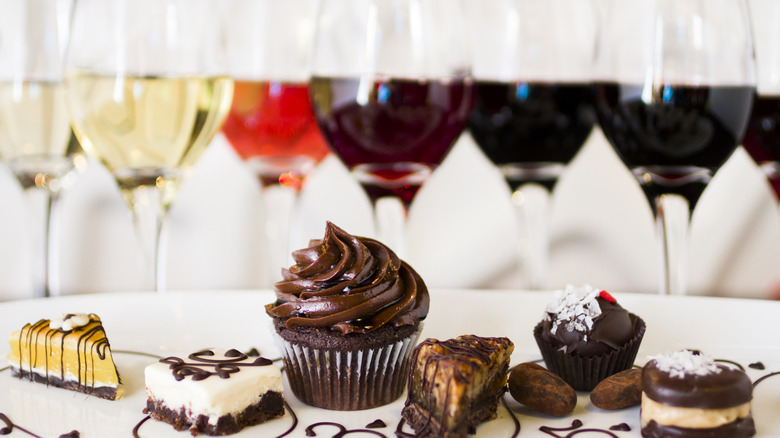
Forgetting to consider the sugar content of the wine and the dish can be a big mistake, according to our experts. David Glancy explains that other structural concepts of wine are more flexible, but he recommends keeping the sugar levels of the food and wine equal. However, this is not universal. Glancy recommends matching sugar levels, whether they are dry, off-dry, or dessert-sweet, while Randy Mosher recommends choosing a wine that's sweeter than the food.
This is because a phenomenon that Mosher calls a "contrast effect" can occur with flavors like sweetness, sourness, and bitterness. "The brain perceives relatively, not absolutely. So, a wine with a little sweetness, when put with a sweet dessert, will feel much less sweet and quite a bit more sour," he says. This is why a wine that tastes somewhat sweet on its own can taste less sweet alongside a dessert, and why he recommends selecting a sweeter wine.
Assuming what grows together, goes together always works
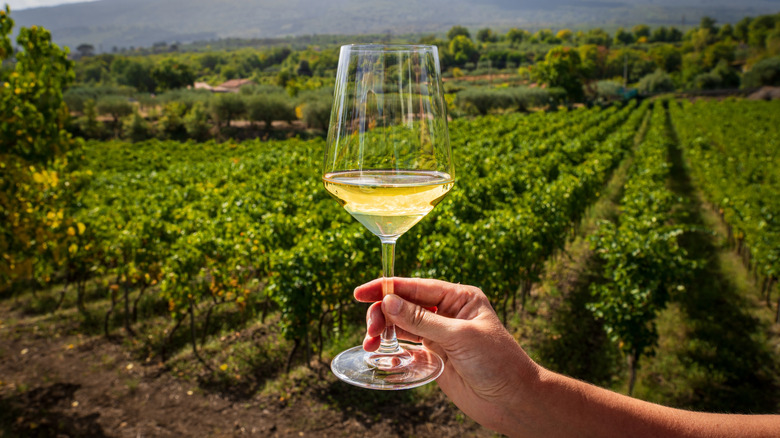
In the wine realm, there's an old saying: "What grows together, goes together." This is the idea that wine and food grown in the same geographic region will taste good together.
While this can be true in some well-known cases, Randy Mosher points out that it's not a guarantee. He explains, "The stories are great, but it's folly to assume everything in one cultural or geographic pocket works with everything else, given the huge range of flavors possible even in the simplest of cuisines (are there really any simple cuisines?)." It's more important to consider the specifics of the dish and wine, and to ask yourself whether the regional pairing would work from a flavor perspective.
At the end of the day, while this regional tradition can be used as a guidepost for pairings, there's more to consider. "Using this as the only guiding principle and ignoring the common sense specifics of what's actually happening in our mouths is to invite a train wreck to your dinner party," Mosher says.
Ignoring texture and mouthfeel
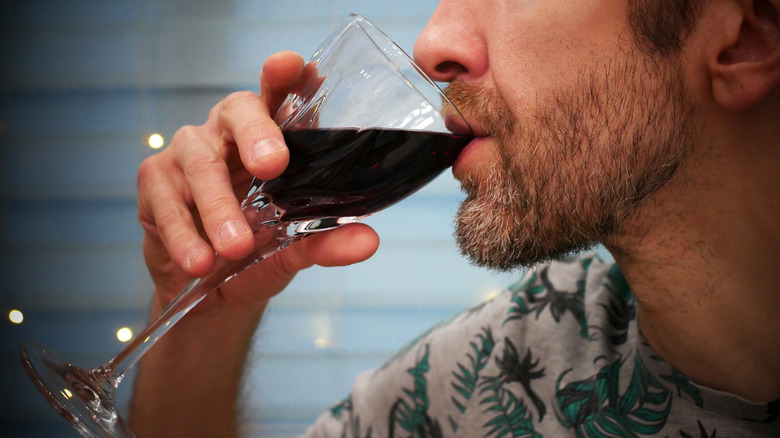
Flavors and aromas aren't the only components to consider when pairing wine and food. Randy Mosher says that failing to consider taste and mouthfeel separately from smell is one of the mistakes people make with pairing wine and food. "Aromas are often where the magic is, but taste/mouthfeel elements really form the structure of the pairing. Like a bad bridge, a tasting can fall apart if the foundation is weak," he says.
The mouthfeel of the wine and food can be affected by elements like acidity, fat, and tannins. Mosher explains that fat can interact with different elements present in food and wine. For instance, the tannins in wine can interact with meat proteins, which Mosher says can make the wine feel less tannic. Another example is alcohol, which can actually cut the fatty mouthfeel.
It's important to realize that pairing isn't just based on the flavors and aromas of the meal and wine. There are physical sensations present in the mouth that can greatly affect how the combination feels.