

12 Simple Mistakes You Could Make When Smoking Pork
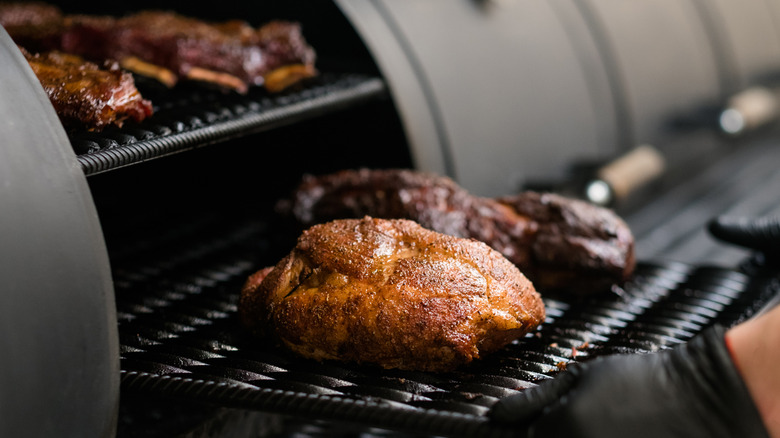
Saturday potluck is coming, and you've got easy ideas. But "easy" is how you end up like aunt Susan, who brought those disaster deviled eggs and was never heard from again. Then inspiration strikes: You'll roll in with a truckload of slow-smoked pulled pork. It's nowhere near the ghastly lineup of potluck foods that go untouched, pork steaks are blessedly cheap, and you've got that swanky beginner-friendly meat smoker just itching to strut its stuff. Except, unfortunately, that ensemble of ingredients and equipment is just the beginning, and it won't get you very far on its own.
You can't hack your way through, either. At least, not if you're chasing the holy grail of smoked pork: tender, juicy meat on the inside and a flavorful, crisp, smoke-kissed exterior. Sounds like a reasonable dream, but it's really up in the clouds if you're not willing to spend hours of your life negotiating with the pork. And this isn't idle babysitting. There's turning, basting, checking for doneness, managing temperature, watching the bark, surviving the stall, and generally crossing a vast unfriendly terrain before your pork butt comes out looking anywhere near presentable.
That kind of endeavor could use a cheat sheet. So we've rounded up some of the biggest rookie mistakes made when smoking pork, along with tips to help you sidestep them like a pro pitmaster.
1. Cranking up the heat during the stall
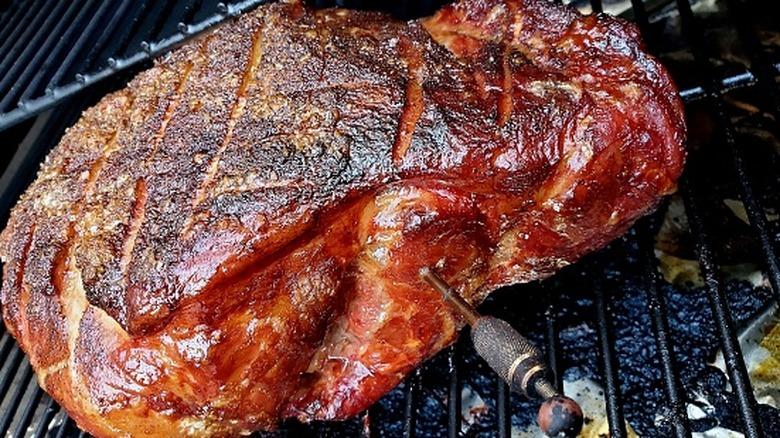
Smoking pork will test your will. You'll be cruising along, the smell of barbecue wafting through the air, the thermometer climbing beautifully — and just when you're dreaming of that 200 F sweet spot, everything grinds to a halt. You'll give it a few minutes to get back in line, but it won't. Grill-masters call this phenomenon the stall: an hours-long drag that happens around the 150 F to 170 F mark. Moisture rises from the interior to the surface, evaporates, and cools the meat even as the smoker keeps dutifully pumping out heat.
The worst thing you can do at this point is panic-crank the heat. The collagen-rich connective tissue in the meat starts converting into gelatin around the same time. Cranking the heat might cause the fibers to contract too rapidly, squeezing out moisture and drying out the meat. The stall rewards patience, so gather your wits and do the impossible: Wait it out.
Now, that might be a tall order, especially if your guests are already hovering nearby, pumping anxiety into the atmosphere. In that case, grill-masters recommend turning to the Texas crutch: a maneuver where you wrap the meat in foil or butcher paper to stop surface evaporation and help it move through the stall faster. Just make sure you've got a decent bark before you swaddle the pork, because all that trapped humidity will soften it some.
2. Using a dirty, choked-down fire
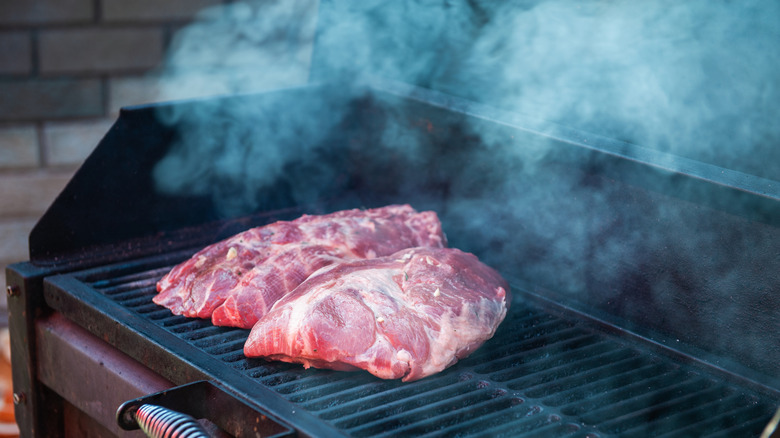
Wood is a high priority when smoking pork. You probably already know the basics: Steer clear of softwoods, use chunks for long smokes, and save chips for shorter bursts. But knowing the best wood to use is only the foundation. The real trick is knowing how to burn it. First up: Make sure your wood has enough oxygen, else it'll cough out dirty, white smoke that can leave your pork tasting ashtray-adjacent. Keep your exhaust open enough for clean smoke. You might not see it clearly, but it's there — and you can probably tell from the aroma: wispy, woody, and sweet.
A well-ventilated fire might burn a little hotter than you'd like for a low-and-slow cook, but don't count on the vents to bring the temperature down. If you need to lower the heat, pull out some fuel. Though you can probably save yourself the hassle of dialing down the temperature by building a smaller fire in the first place. Start with a few chunks, then feed the fire a little more if the temperature starts to drag. And don't forget to let your fuel fully ignite before you add the meat. A good trick is to start your fuel on the side and only add it once it's burning cleanly. For charcoal, that usually means it has taken on a light coat of white ash; for wood, it should be fully lit and past that dirty, smoky sputtering phase.
3. Mishandling the fat cap
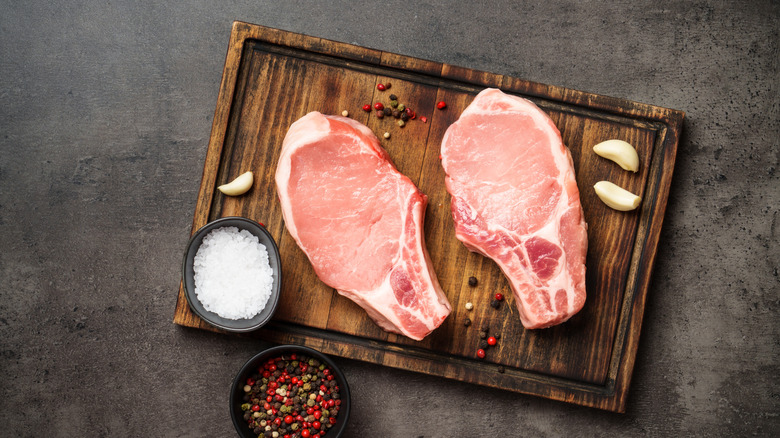
Pork brings plenty of fat to the party. And not just the streaky marbling running through the meat. Cuts like pork belly and shoulder also tote a thick layer of exterior fat known as the fat cap. Naturally, because this is barbecue, there's a raging debate over whether that dense pork parka belongs in the smoker.
On one hand, the fat cap can insulate the meat during cooking, cutting down on moisture loss. But too much of it can block seasoning from reaching the meat underneath, which means you're basically building bark on fat instead of pork. A thick fat cap also won't always render fully, so to save everyone from grease mouth, most people end up peeling off the excess before serving — along with most, if not all, of that pricey seasoning. Tragic.
Your best bet is to trim anything that likely won't render properly: thick chunks, hard flaps, and ragged edges. A little restraint is needed, though. You still need a passable amount to insulate the meat. A good rule of thumb is to leave about ⅛ inch of fat, though even as little as 3 millimeters can still offer some protection. You'll also want to point the fat cap toward the harsher heat source, usually the bottom. That way, the intense heat helps render the fat while the exposed meat still gets its fair shot at bark formation.
4. Peeking too often
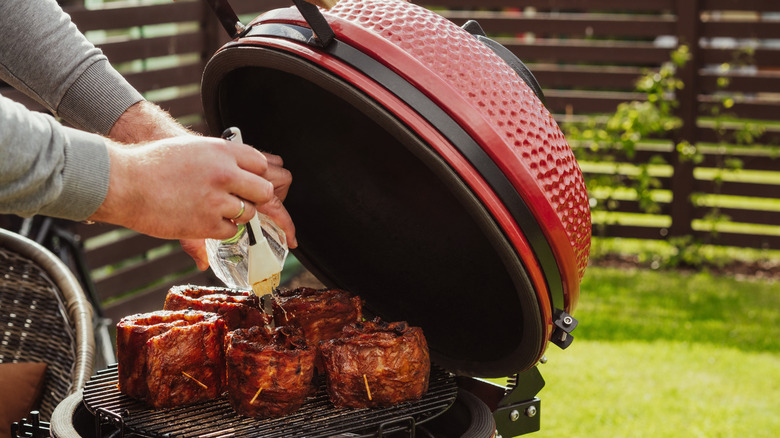
Smoking pork is an art requiring tremendous skill and patience, so naturally, your first try might feel a little nerve-racking. Instead of letting the smoker do its thing, you may find yourself hovering nearby, supervising the meat every two minutes just to make sure it's still cooperating. But if you've got the fundamentals right — a stable temperature, clean smoke, and meat that went in with a pleasing amount of rub — there's no need to babysit.
In fact, all that hovering can backfire. Your smoker holds temperature not just because of the fire below, but because hot air circulates through the cavity, much like an oven. If you keep peeking every five minutes, that hot air escapes into the great beyond, leaving your smoker to claw its way back to temperature again and again. And if you're cooking without a thermometer, you might end up overshooting the cook trying to make up for all that lost heat and time.
Of course, you can't keep your hands off the smoker for the entire cook. You'll still need to spritz, rotate, wrap, and probe for tenderness near the end. Just make quick work of it. A one- or two-minute purposeful peek every couple of hours is unlikely to derail the temperature too badly, and most smokers will recover from that pretty quickly.
5. Using too little or too much rub
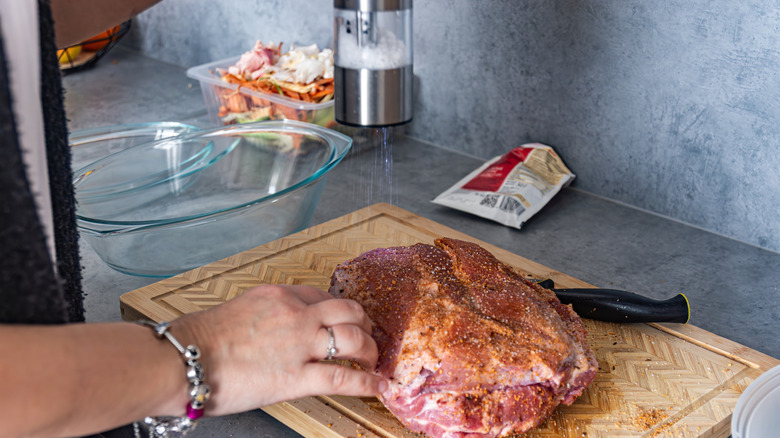
A good dry rub is indispensable when smoking pork. The classic version starts with salt for flavor penetration, though you'll want to ease up — or skip it entirely — if you've already brined the meat ahead of time. From there, build in sugar for sweetness and bark, then layer on spices like chili for heat, paprika for color, and garlic and onion for savory depth.
So, how much is enough? Don't be too restrained. A fairy-dust sprinkling might feel safe, but the tradeoff is pork that tastes deeply unremarkable. Rub also does a lot of the heavy lifting in building that chewy, lacquered bark you love so much, so going too gentle can leave you with a wimpy crust that falls apart if you so much as think about wrapping. But don't overcorrect and bury the poor thing, either. Too much dry rub can overwhelm the meat, turning the bark gritty, muddy, bitter, or wildly salty.
A good rule of thumb is to stick to about 2 to 3 teaspoons of rub for every pound of meat, then use a shaker to coat the pork evenly. You might not get that much rub to cling properly if you smear it directly onto the meat, which is why grill-masters recommend a slather. A light coat of olive oil, mustard, or even mayo before the dry rub should help everything stick beautifully.
6. Over-smoking
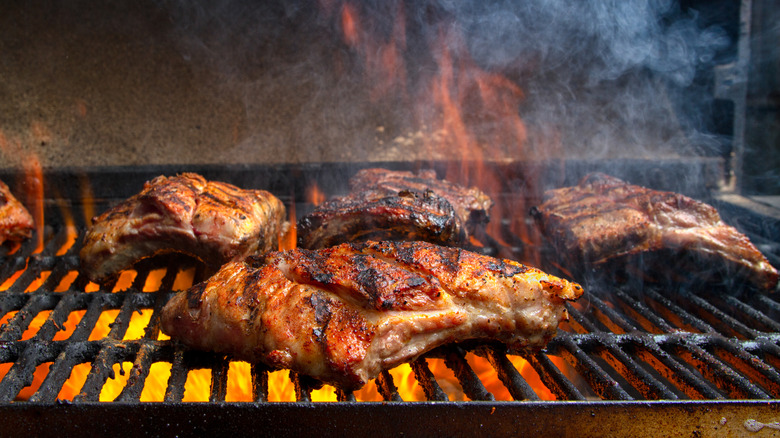
Smoke doesn't clash with pork the way it can with delicate proteins like chicken or fish. But it isn't invincible. In excess, smoke compounds like creosote can overwhelm even a hunky pork butt, leaving the meat bitter, harsh, and almost medicinal.
So how do you sidestep the over-smoking trap? Start by showing some restraint with heavyweight hardwoods like hickory and mesquite. They're great choices of wood for smoking pork, sure, but they bring a lot of flavor, and if you get too trigger-happy, they can bury the meat in smoke. Use them in moderation, or, if you know you're prone to feeding the fire, stick with friendlier options like pecan, oak, apple, or cherry.
You'll also want to pay attention to your wood's moisture content. A little moisture in your wood is fine — even useful — but you don't want it dripping. Green or wet wood can cough out heavy white smoke, which can leave your pork tasting bitter. A modest 15% to 20% moisture content should give your smoke enough heft to cling to the meat without the off-flavor tradeoff.
There's also a limit to how long you should smoke your meat. You want to smoke early and steadily, not for the entire cook. Grill-masters recommend pulling back on the smoke once the meat climbs to 100 F; roughly three hours into the cook. And once you've wrapped, smoke is basically theater, so save your wood for the next cook.
7. Saucing too early or too heavily
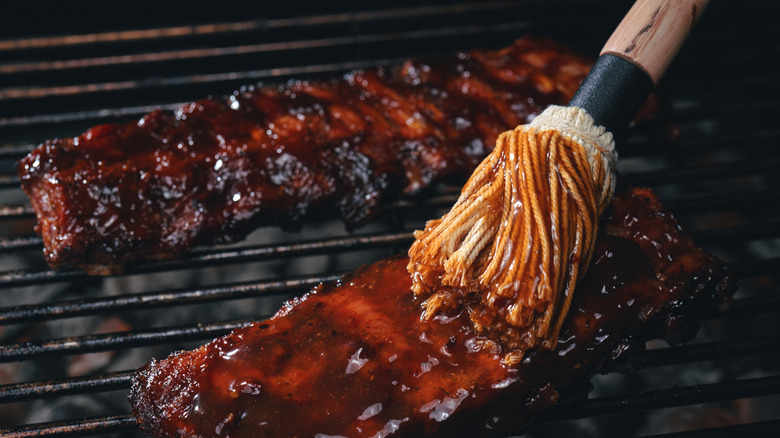
Purists will argue that properly smoked pork doesn't need sauce at all, but you don't have to deprive yourself just to prove you belong in the barbecue in-crowd. Just don't go in heavy-handed. Sauce should complement the smoke, rub, bark, and rendered fat; not steal the whole show. For ribs, a thin, even glaze works best. If the sauce is dripping or making a break for the plate, you've probably gone too far. Pulled pork is even more sensitive to sauce overload, so start with a small splash and build from there. You want the pork lightly dressed; glossy enough to shine, but not so drenched that the mahogany bark disappears.
When you go in with the sauce matters, too. Smoking doesn't bring quite the same blazing heat as grilling, so you're not risking burning if you brush your sauce on too early. But if your smoker is running hot — especially above 250 F — save the sauce for the tail end of the cook (otherwise, your BBQ sauce could burn). Any earlier, and the sugars in the sauce can scorch, darken, or even carbonize, leaving a gluey, sticky, bitter residue on your meat. That doesn't mean you should wait until the meat is already on the platter, either. Sauce needs a little time to warm, tighten, and latch onto the bark. Aim for the final 15 to 30 minutes of the cook; just enough for the sauce to set into a glossy glaze.
8. Not using a meat thermometer
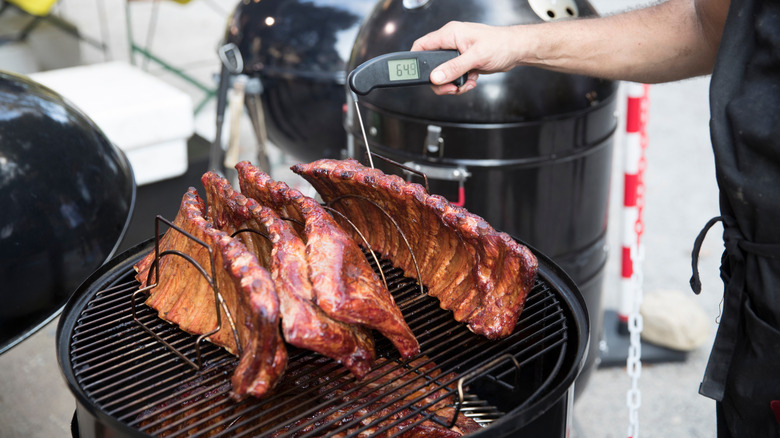
Once you've toughed out a couple of pork butts, you might start leaning a little harder on intuition to get you through the cook. But there's one place where your barbecue "spidey senses" will absolutely betray you: checking for doneness. Visual cues and timing can get you in the ballpark, but if you want to know what's actually happening inside the meat, you need a properly-calibrated meat thermometer. Besides helping you dodge overcooked pork, it also tells you when the meat has reached a safe internal temperature — 145 F for whole cuts of pork, per the USDA — which matters because undercooked pork can carry harmful bacteria like salmonella and leave you battling a ghastly case of food poisoning.
For huge hunks of meat like pork butt, use a leave-in probe thermometer inserted into the thickest part of the meat. That way, you can monitor the cook without throwing the lid open every 10 minutes. But don't forget: Pork butt has weird internal geography. Fat pockets, dense muscles, seams, and bone can all throw off a single reading, so don't yank the meat just because the leave-in probe says so. Toward the end, go in with your trusty instant-read thermometer and check multiple spots to make sure everyone inside that meat boulder is on the same page.
9. Starting out on a cold smoker
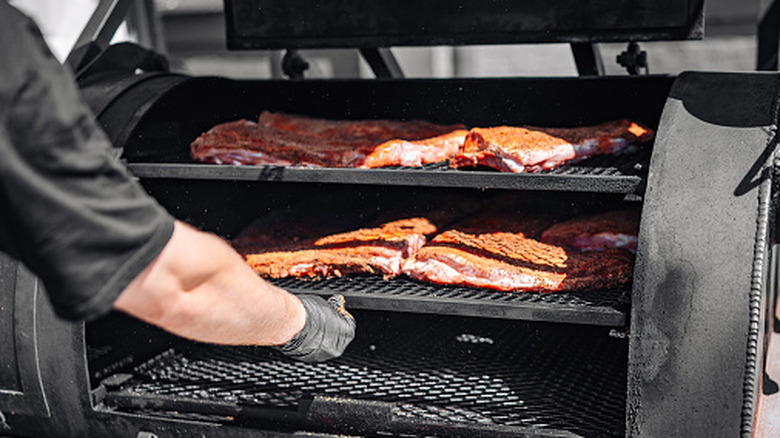
Once the rub's set, the instinct is to slap the pork onto the grates, light the fire, close the lid, and get on with your life. But however thin your patience is running, you really do need to give your smoker time to settle into the low-and-slow zone — around 225 F to 275 F — before you go in with the meat. If you start out cold, the pork will spend the first stretch of the cook sitting in a lukewarm environment, which can delay bark formation and drag out the cook longer than necessary. You'll also have a much harder time stabilizing the temperature, especially if you've gone in with fridge-fresh meat.
Now, maybe you're willing to make those tradeoffs, depending on how quickly your smoker can crawl up to temperature. But there's one thing you probably don't want to gamble with: flavor. The beginning of the fire is when smoke is at its roughest. At that point, your wood or charcoal may still be belching out heavy white smoke, and because damp meat is basically a smoke sponge, your pork can soak up all that dirty startup smoke before the real cook even gets going. A preheating phase gives the fire time to burn cleanly, sparing you from serving pork with bitter, sooty notes.
10. Wrapping too early or too long
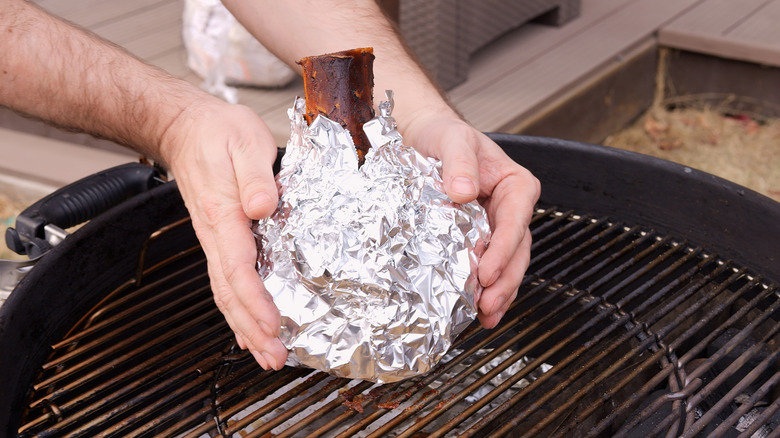
For some purists, wrapping smoked pork is close to heresy, as is anything that gets in the way of the boss of smoked pork: that crisp-chewy bark. But it's really not as bad as that. Done right, it can be a useful move, especially during the stall, when it helps insulate the meat, trap moisture, and nudge the internal temperature upward faster than it would unwrapped.
Timing matters, though. Most grill-masters wrap around the time the meat hits the stall, usually near the 160 F to 170 F mark. But if your bark hasn't set into a sturdy, dark mahogany crust yet, give the pork more time. Wrapping locks in moisture, which can decimate a flimsy bark. Aluminum foil is the typical choice, but if you want to give your bark more of a fighting chance, use butcher paper. It breathes more than foil, so the pork still gets some help through the stall without being trapped in steam.
You also don't want to keep the meat wrapped longer than necessary. A long wrap can push the texture toward mushy, especially with ribs, which usually need a much shorter wrapped stage; often around an hour or so. Pork butt is more forgiving and can survive a longer wrapped finish, but don't overdo it. Once it's probe-tender, the wrap has done its job.
11. Treating all cuts the same
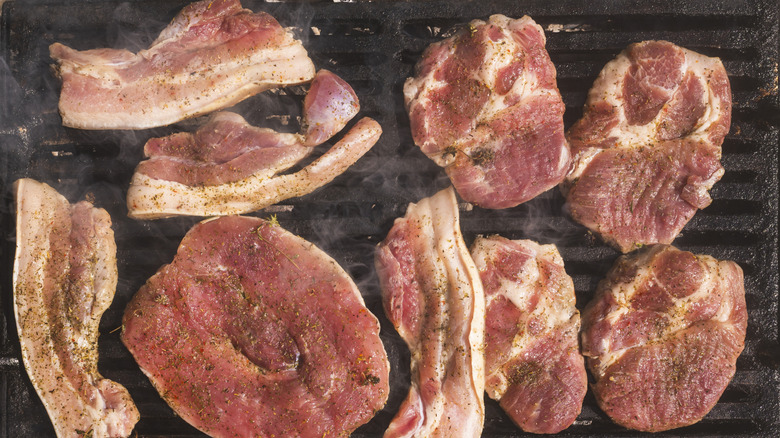
Low-and-slow cooking can dramatically transform the flavor and texture of pork, no arguments there. But it's not ideal for every cut. Pork shoulder, for instance, has enough marbling and connective tissue to survive a low-and-slow cook, which is why shoulder is such a reliable choice for pulled pork.
Leaner cuts like loin, tenderloin, and chops, however, don't come with the same fat-and-collagen safety net, so they're not ideal candidates for a long smoke. That doesn't mean they can't be smoked — check out our smoked pork loin recipe if you need proof — but they need a gentler, shorter approach. Unlike shoulder, belly, and jowl — which need to climb to around 200 F for the collagen to convert to gelatin — these should leave the smoker at 145 F, or else they'll dry out.
Even cuts that love the smoker have limits. Ribs, for instance, can't hang out in the smoker as long as a pork butt or shoulder. They've still got a decent amount of connective tissue, but not a lot of mass, so they're usually ready to pack it up in about six hours or less. You'll also want to pay attention to the type of ribs you're working with. Baby backs are leaner and more tender, so they usually need a shorter smoke. Spare ribs have more fat and collagen, which means they can handle a longer, slower cook.
12. Using the wrong kindling for your fire
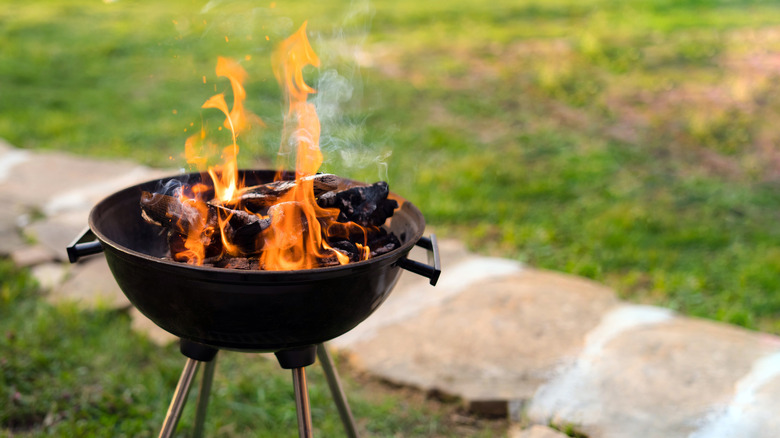
Nobody wants to spend hours coaxing a fire to life, especially when you've already got an all-day smoke ahead of you. You can start your fire all kinds of ways, but a little discernment goes a long way. Don't, for instance, douse your charcoal or wood with lighter fluid. It might give your fire one heck of a jumpstart, but it can also leave your food with a gross chemical flavor. The other big villain is instant-light charcoal. It's convenient, sure, but it's usually treated with lighter fluid and can belch out dirty, acrid smoke that will inevitably hitch a ride onto your meat.
Don't get thrifty with your kindling, either. Mystery found wood, lumber, and painted scraps may be coated, treated, glued, or otherwise loaded with things you absolutely do not want seasoning your ribs. And, of course, scraps of resinous woods like pine and cypress are completely out of the question; they can leave food tasting sharp, bitter, and weirdly medicinal. If you're trying to keep things simple, reach for a chimney starter and some newspaper. If you're feeling fancy, a hot-air starter works, too.
Static Media owns and operates Food Republic and Tasting Table.