

The National Dish Of Every Team At The 2026 World Cup

The 2026 World Cup is upon us, and soccer fans across the globe have been reveling in the skill, sportsmanship, and barrage of goals thus far. And though the action is thrilling, this tournament goes beyond exciting matches and balls in the back of the net. It's also about cross-cultural connection and appreciation. And what better way to connect than with food?
With that in mind, we've compiled a list of the national dishes of every single country participating in this year's World Cup. Not all of these national dishes are necessarily official, and several countries have scores of prominent plates that are associated with them. We've mentioned those in some spots, but in the interest of fairness, we limited ourselves to one dish per country. This list features a seemingly endless array of cuisines, cooking methods, flavor combinations, and, as it turns out, a whole lot of stew.
Algeria: Couscous
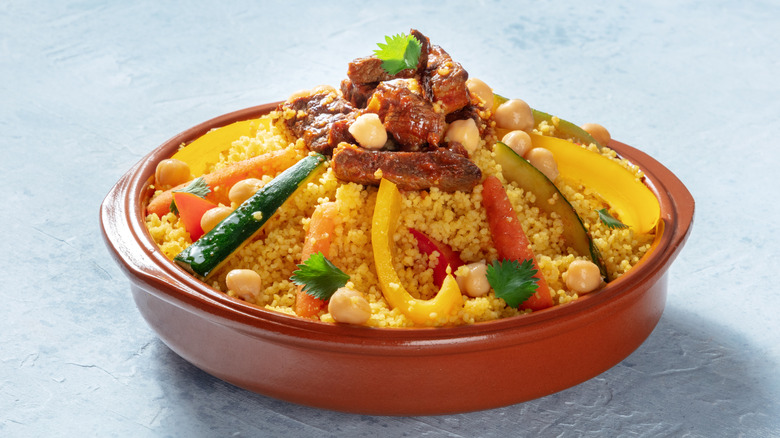
Couscous, as you'll soon learn, is considered the national dish of several countries participating in the this year's World Cup. However, each has its own variations and characteristics. In Algeria, there are many regional renditions, but spices like cumin, coriander, cinnamon, and turmeric are big players, and so are add-ins such as raisins and chickpeas.
No matter the specifics, it is a dish that's meant to bring people together, and it serves as a symbol of hospitality. It is also customary to eat it with your hands.
Argentina: Asado
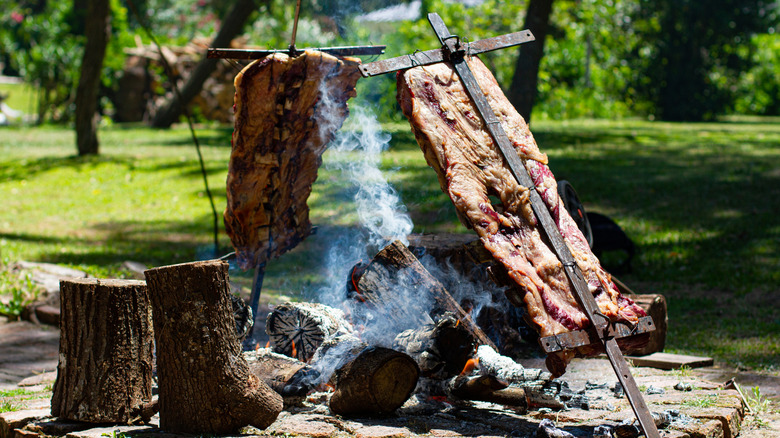
Argentina is known for many things — including winning the last World Cup — but when it comes to food, asado is the undisputed national dish. It's more than a single recipe, too. In fact, it refers to the country's specific style of barbecue, which involves cooking meats over hot coals for hours.
The slow process results in tender, juicy meat that only requires a pinch of salt. Beef is the most iconic meat, including cuts like flank steak, sirloin, and ribs, but sausages can also be prepared asado-style. Best of all, asado is also an excuse for Argentinians to socialize, so it is often paired with a lively gathering that lasts all day long.
Australia: Roast lamb
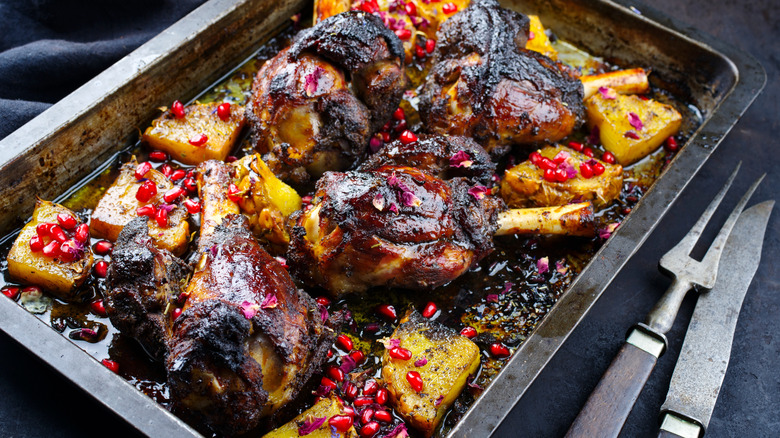
There are lots of things to know about Australian food as a whole, but if you want to get in on the most iconic dish of them all, look no further than the country's roast lamb.
Cooked to juicy perfection and enhanced with various seasonings, roast lamb is delectable all by itself. Still, it is also common to roast veggies alongside it and serve it with gravy. Either way, though, it is a favorite in Australia for Sunday dinners and special occasions.
Austria: Wiener schnitzel
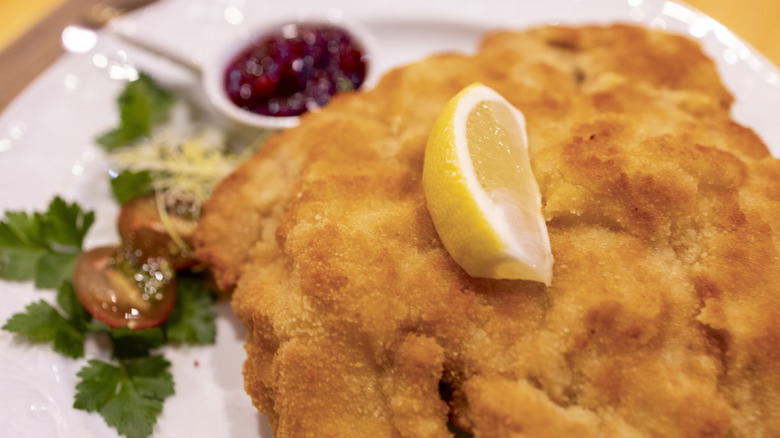
Wiener schnitzel, Austria's national dish, is a satisfying main course that meat lovers everywhere can get behind. In fact, even if you aren't familiar with the name, you may have enjoyed one before. Wiener schnitzel is a thin, tenderized veal cutlet that's lightly breaded and fried.
This cutlet is often served with fresh greens and lemon wedges for a bit of extra flavor, and possibly potato salad as well. Lingonberry jam is also a typical sweet accompaniment to delicious contrast the cutlet's saltiness. Still, wiener schnitzel can stand on flavor and texture all by itself.
Belgium: Moules-frites
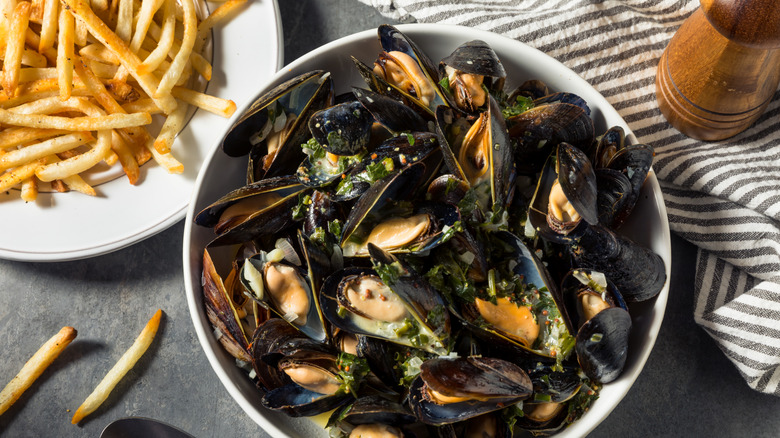
Moules-frites, which translates to mussels and fries, lay claim to the title of Belgium's national dish. (Sorry, it's not chocolate or waffles, though we've got love for both.) The mussels in the dish are typically steamed with white wine, garlic, and shallots, giving them a mouth-wateringly delicious aroma and taste.
The fries are done in true Belgian fashion as well — double-fried — so they are soft in the center and super crispy on the outside. Once you've shelled all those mussels, grab some bread (or those fries) to dip in the flavorful broth and wash it all down with a Belgian beer.
Bosnia and Herzegovina: Cevapi
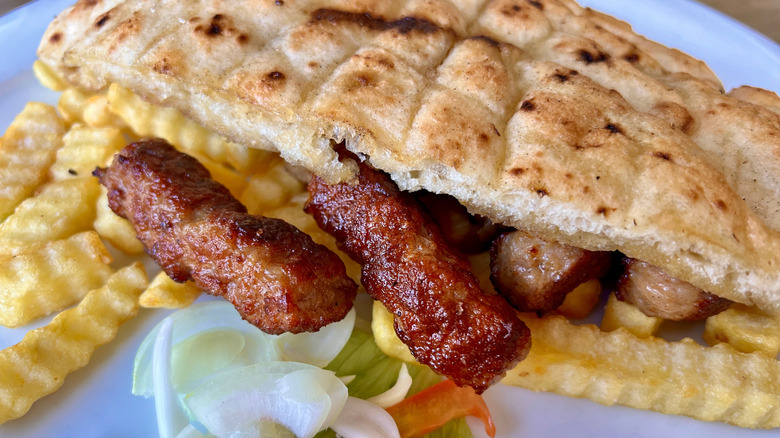
Heading over to Bosnia and Herzegovina, you find another national dish that focuses on meat. This time, it's cevapi, grilled minced meat sausages made from beef, pork, and lamb that are cooked low and slow over a charcoal fire.
The cooking method results in the smoky taste for which it is known, but the meat is also seasoned with paprika, garlic, and cumin for even more flavor. On the side of cevapi, you often find Bosnian bread, onions, ajvar (a pepper relish), and kajmak (a spreadable cheese).
Brazil: Feijoada
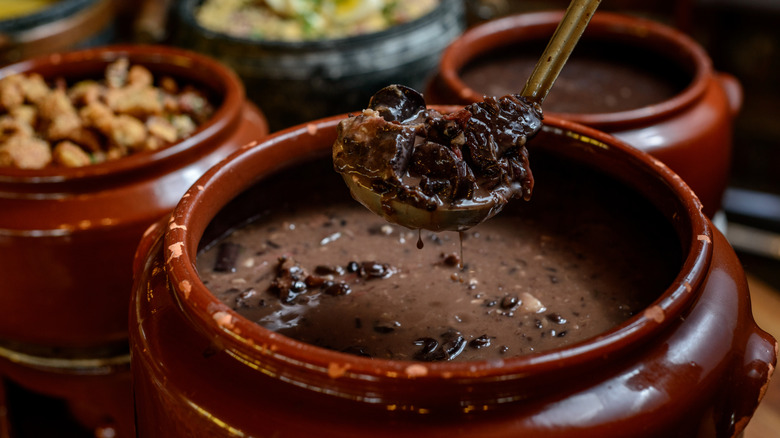
Feijoada is considered one of the most influential international dishes of all-time. It also just so happens to be Brazil's national dish. Primarily a rich black bean stew, it also features smoked pork, sausage, and beef, making it nothing if not hearty.
Similar to Curaçao's national dish (more on that shortly), feijoada is the product of enslaved people in the region using scraps to put together a complete meal. Today, it is beloved by Brazilians everywhere.
Cabo Verde: Cachupa
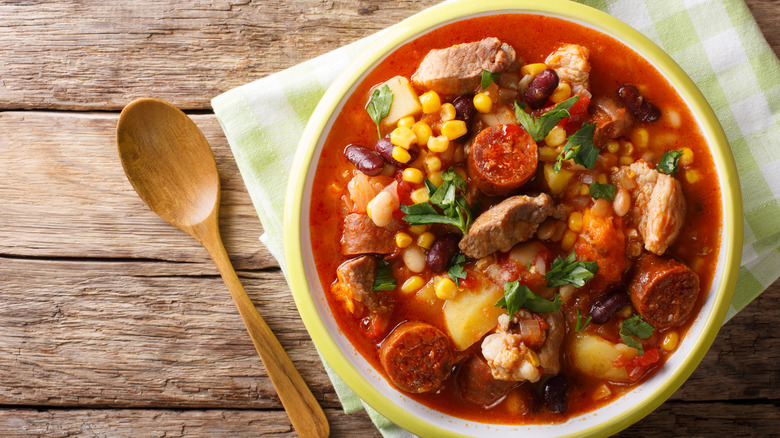
Cachupa, Cabo Verde's national dish, is a stew containing beans, hominy, vegetables, a variety of spices, and meat — usually pork, beef, sausage, or fish. As is the case with many traditional recipes, there are lots of variations found in the country, including by region.
Regardless of what meat is used, it is a corn and bean-heavy dish at its base. Root vegetables, including sweet potatoes, yuca, and squash, are also frequent flyers.
Canada: Poutine
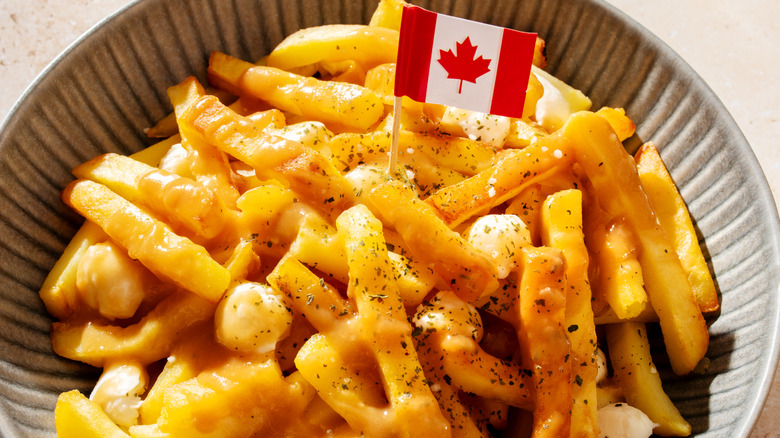
Whether you have ever been to Canada or not, you've likely at least heard of poutine. Originally from Quebec, the simplest recipe features a bed of crispy french fries topped with squeaky cheddar cheese curds and thick brown gravy.
While this may sound somewhat simple at first, trust that its flavor is anything but. Plus, there are countless riffs on the recipe, so you can load it up with veggies, different gravies, and much more.
Colombia: Bandeja paisa
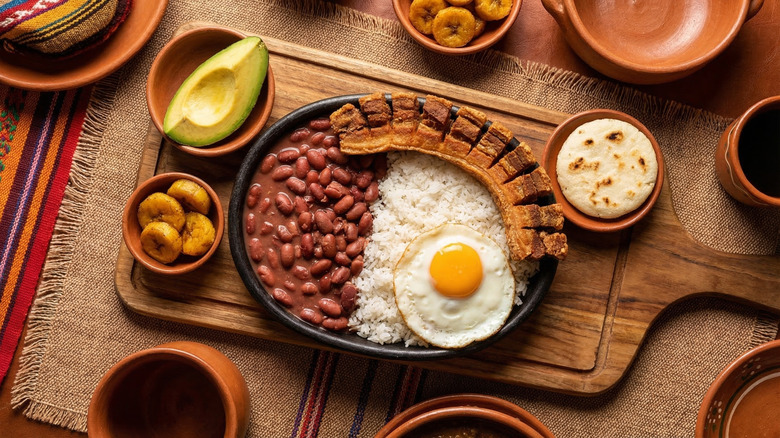
Colombia has a delectable culinary landscape as a whole, but the bandeja paisa ultimtaely lays claim to the title of the country's national dish. The most common elements found on a platter of bandeja paisa include grilled meats such as chorizo, pork rinds, and blood sausage, as well as rice, beans, fried plantains, an egg, avocado, and arepa.
As one might imagine, certain plates have a hard time holding this much food. That's why you'll sometimes find bandeja paisa served on large trays.
Congo DR: Poulet moambe
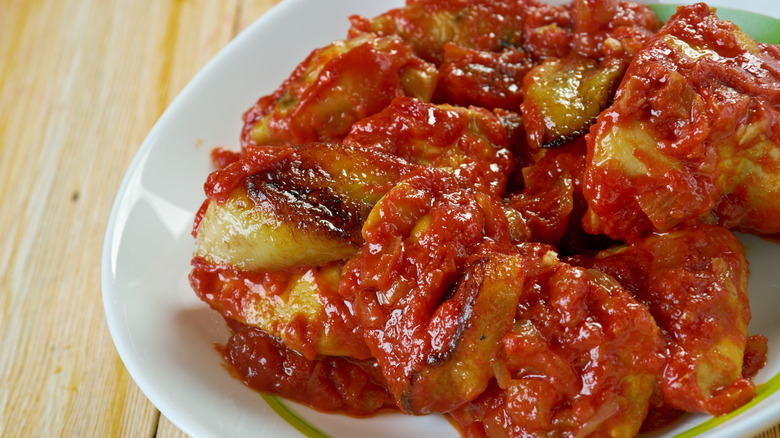
Poulet moambe, also known as moambe chicken, is a hearty stew that's tasty enough to be called the Democratic Republic of the Congo's national dish. It consists of chicken cooked in a palm nut cream sauce (called moambe) with onions, tomato paste, and aromatic spices.
Peanut butter can also be used in the sauce, but it takes the humble dish away from its traditional roots. Regardless, seasonings like cumin, lemon, paprika, and garlic are customary elements used to deepen flavors.
Côte d'Ivoire: Attiéké
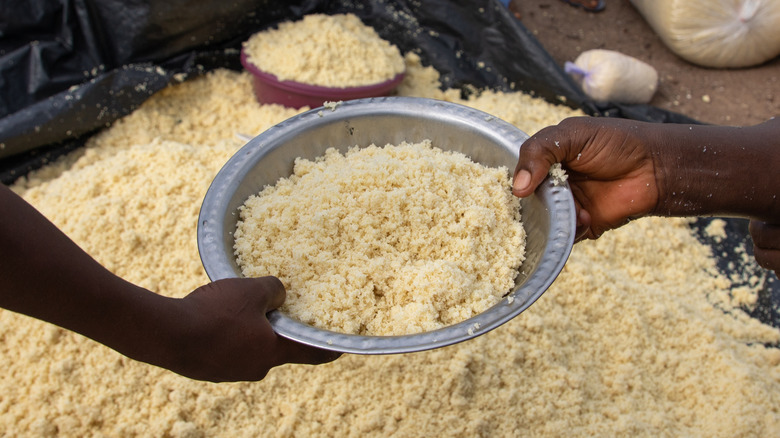
The national dish of Côte d'Ivoire is attiéké. Similar to couscous in texture but made from cassava root, it takes days to prepare; the process is typically spearheaded by Ivorian women and has been passed down for generations.
It starts by peeling, grating, and fermenting cassava root. The resulting pulp is then pressed, dried, and steamed to form the attiéké, which can easily be paired with a range of other hearty ingredients. Grilled fish is one of the most common.
Croatia: Peka
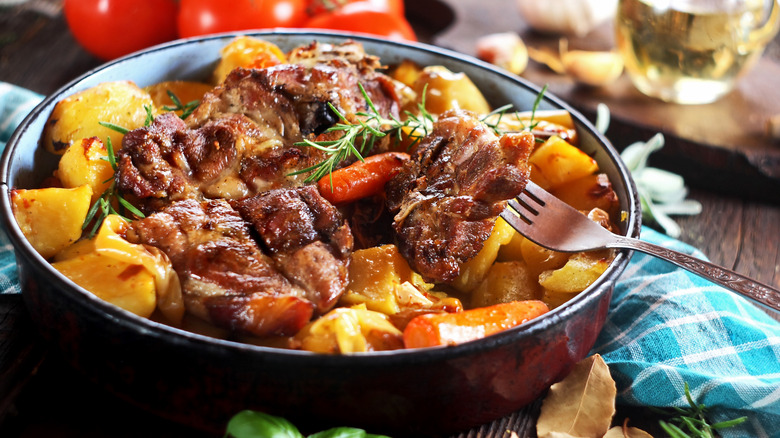
Croatia's vast landscape leads to a collection of different signature dishes, but look no further than peka for the national dish. As it turns out, it isn't just a recipe; it also denotes a style of cooking.
Peka is made in a pan with a bell-shaped lid and hot coals from a fire are placed on top, allowing the food within to cook slowly and develop lots of flavor in the process. As for what's in the pot, you'll likely find some type of meat — octopus, veal, lamb, or chicken are typical — potatoes, veggies, seasonings, and olive oil.
Curaçao: Keshi yena
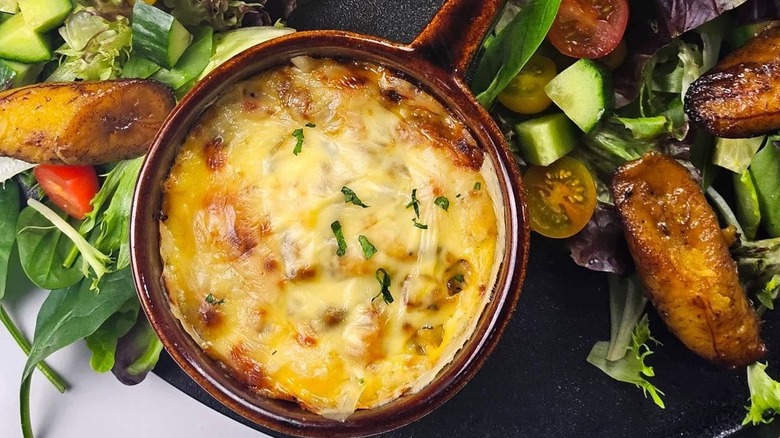
Just off the northern coast of South America, you find Curaçao, a Caribbean country whose culinary flavors do not disappoint. Proof of that can be found in the nation's national dish, keshi yena. This is another beloved dish has harrowing origins, as it was likely created by resourceful enslaved people incorporating what scraps and leftovers they could find from slaveowners' kitchens.
Naturally, there are countless variations of keshi yena, but spiced meat and various vegetables make up the bulk of the recipe. After that, every rendition has one thing in common: It's baked inside a hollowed-out cheese wheel.
Czechia: Vepřo knedlo zelo
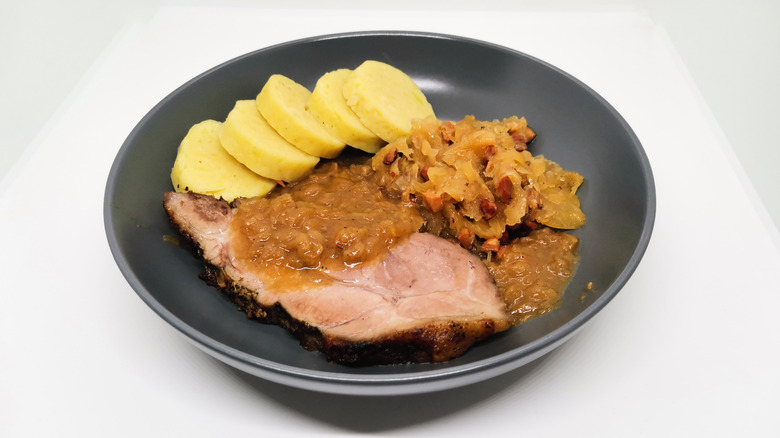
The combination of roast pork, dumplings, and sauerkraut is recognized as the national dish of Czechia, where it's called vepřo knedlo zelo. The components, all served on one plate, provide all the elements needed for a winning dish: doughy goodness, tang from the sauerkraut, savoriness from the meat, and some gravy to bring it all together. Sunday dinners and casual outings at beer halls are some of the most popular settings for it.
Ecuador: Encebollado
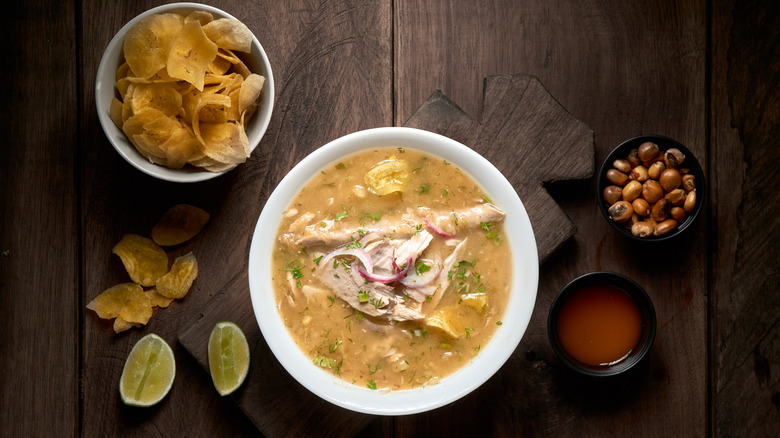
Ecuador has several famous dishes, and more than one is in the running for the country's national dish (we're looking at you, ceviche). That said, we must go with encebollado, a fish stew bursting with bright flavors. It is often made with tuna, but other fish find their way into the recipe as well. It also features choclo (an Andean corn variety with extra-large kernels), pickled onion, and tomato salsa.
Egypt: Koshari
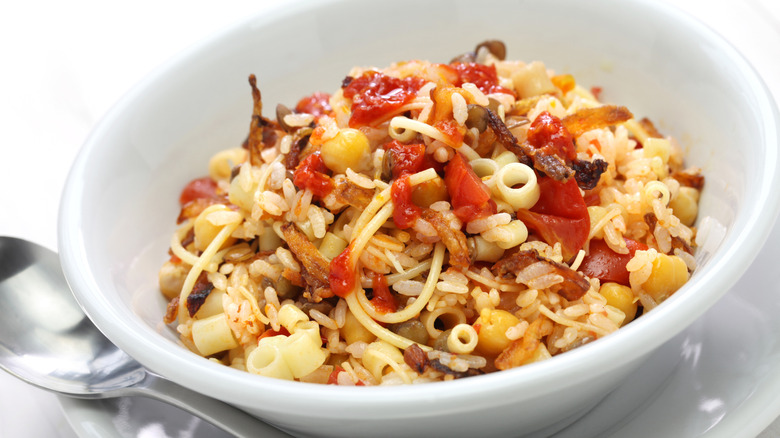
Egypt's national dish, koshari, is not only a recipe residents make in their homes, but also a classic beloved street food dish. Made with a mix of lentils, macaroni noodles, rice, chickpeas, fried onions, and a flavorful tomato sauce, it combines several elements that many cuisines don't typically use in tandem. That unique mixture make this both a textural and vegetarian delight (provided you can handle a little heat).
England: Chicken tikka masala
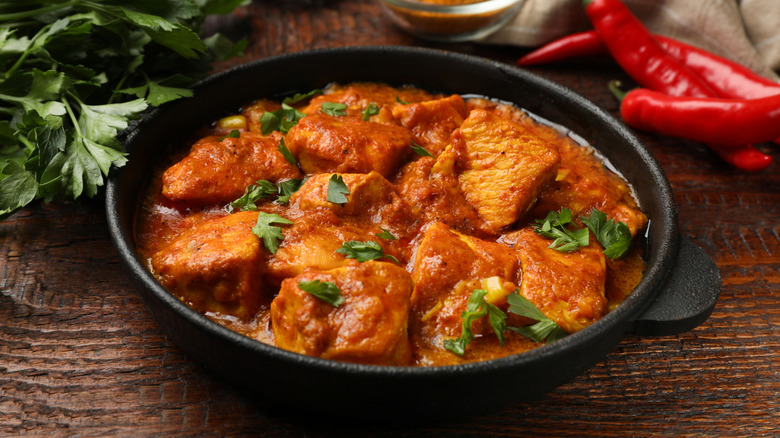
Fish and chips and Sunday roast are in the running, but unofficially, chicken tikka masala is the unofficial national dish of England. The United Kingdom's colonial rule over India made the latter's cuisine a staple, dish was purportedly invented in Scotland by a Pakistani immigrant. Now, though, it's ubiquitous in England and throughout the U.K.
Chicken tikka masala features chunks of chicken stewed in a savory curry sauce with lots of seasonings, cream, tomatoes, and herbs. When ready, it offers a savory, spicy dish laden with deep flavors that are as comforting as it gets.
France: Pot-au-feu
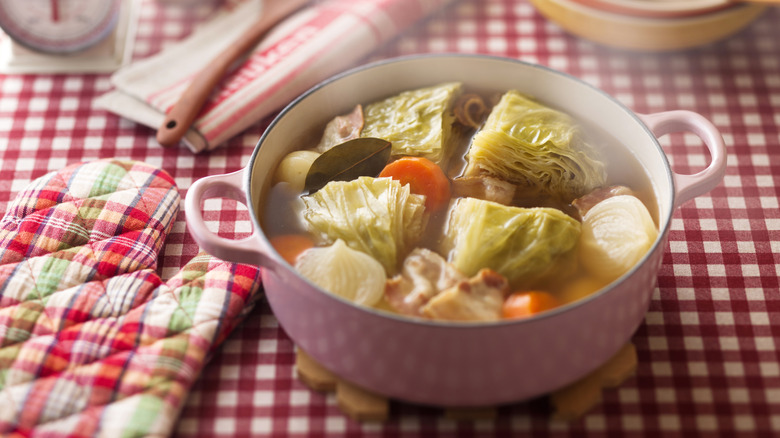
With its world-renowned culinary variety and innovation, the simplicity of France's national dish is as surprising as it is fitting. Pot-au-feu is a filling beef stew with root vegetables and marrow bones (used as a thickening agent).
The root vegetables vary based on the season and availability, but parsnips, turnips, carrots, and celeriac are often included. Leeks, cabbage, and cauliflower are also viable options. No matter the exact configuration, though, pot-au-feu was traditionally cooked in a single pot over a hearth, allowing it to simmer for hours while the flavors take hold.
Germany: Sauerbraten
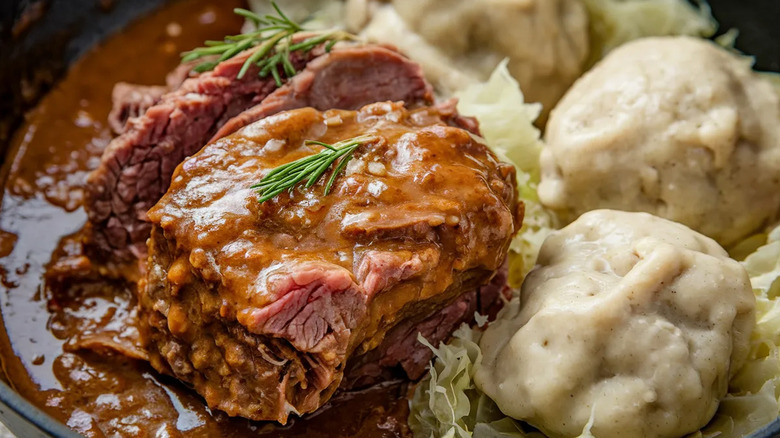
German cuisine is known for rich meats, and while there isn't an official national dish, sauerbraten is certainly in the running. It's a pot roast made with beef, venison, or veal that has been marinated and cooked until tender. It is also topped with a sweet, tangy gravy, which helps impart its signature taste. Our apologies to bratwurst, which is also often considered the national dish (and which many might have expected here), but we'll take a plate of sauerbraten.
Ghana: Fufu
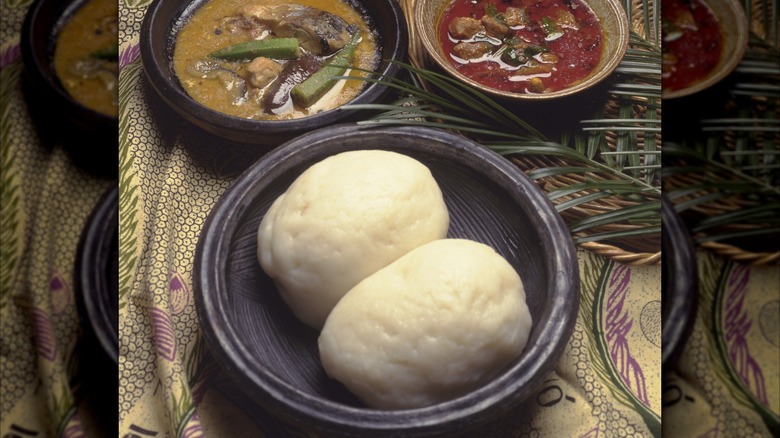
Ghana doesn't have an official national dish, but there are two top contenders: fufu and jollof rice. Both are Ghanaian recipes everyone should try at least once. But, per our rules, we can only select one, so fufu — dumplings made from plantains and cassava — is the choice.
Considered a staple, it's typically enjoyed by rolling the starchy dough in your hands and dipping it in hearty soups and stews. Peanut and okra stews, among many others, are ideal for this.
Haiti: Griyo
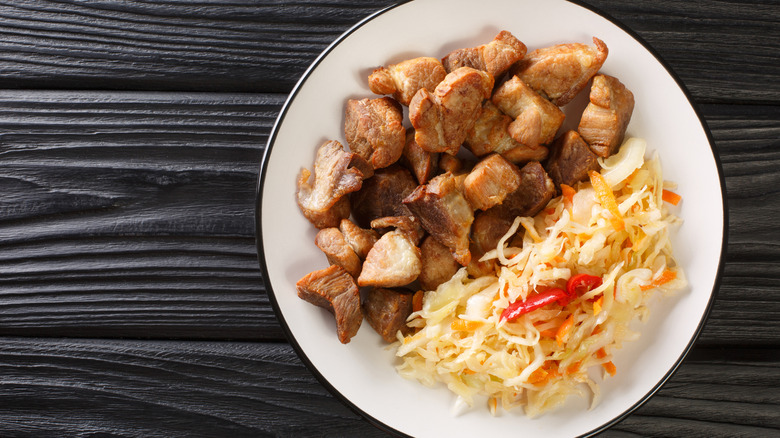
Haiti's national dish, griyo, isn't necessarily a complete meal all by itself, but that's okay because it's so delicious. Griyo is composed of chunks of pork shoulder marinated in lemon or lime juice and epis, a specialized Haitian spice mix, before being fried.
The exact seasonings in epis vary, but staples of the blend include green herbs, aromatics like garlic and onion, and spicy peppers. Once ready, griyo is typically served alongside red beans and rice, fried plantain, and pikliz, a slaw made of cabbage, Scotch bonnet peppers, and other veggies.
IR Iran: Ghormeh sabzi
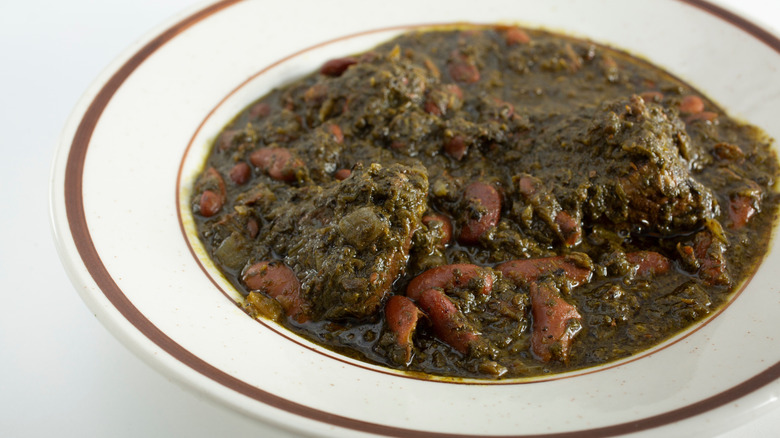
Considering current global tensions, most of us know at least a little something about Iran, but that knowledge likely doesn't extend to the country's cuisine. It's time to put a stop to that. May I present the nation's national dish: ghormeh sabzi.
Typically served with basmati rice, ghormeh sabzi is a stew featuring fresh herbs (including turmeric, parsley, cilantro, and fenugreek leaves), garlic, dried limes, spinach, red kidney beans, and pieces of lamb or beef. Together, the ingredients provide diners with a warming, filling bowl.
Iraq: Masgouf
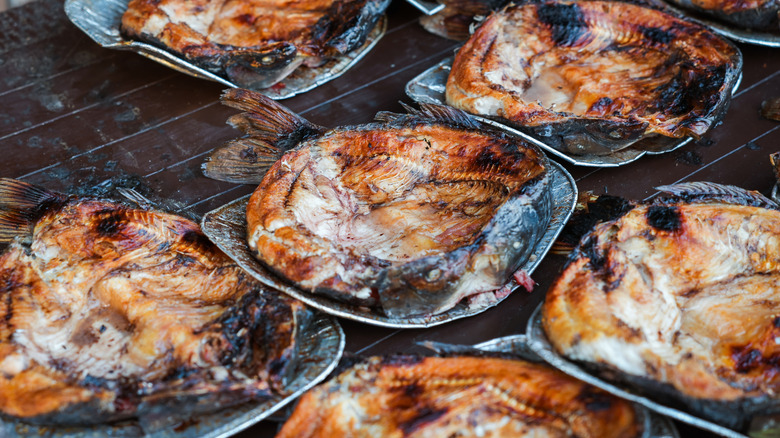
Carp has been a culinary cornerstone in Iraq for more than 4,500 years, and it's the main ingredient used to create the country's national dish, masgouf. Talk about a long culinary history.
Traditionally — and often still to this day — masgouf is prepared with fresh carp that's kept alive until right before cooking. It is packed with salt and cooked beside an open flame and until tender and juicy. Then, it's slathered with sauce and served alongside bread with lemons, tomatoes, and parsley.
Japan: Karē raisu
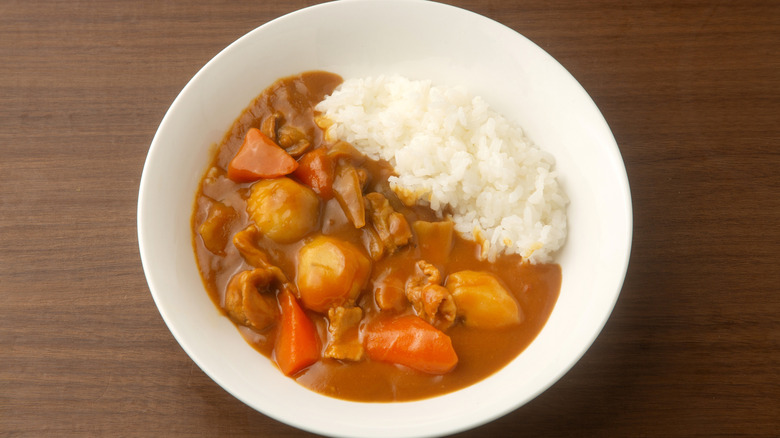
Japanese food is a favorite the world over. But while sushi might be the first thing that comes to mind for Americans, Japan's unofficial national dish is actually curry rice, or karē raisu.
As opposed to spicier curries, this recipe is rich, mellow, and has a touch of sweetness. The thick curry sauce's ingredients include onions, potatoes, and carrots, and it is poured over a bowl of rice with either beef, chicken, or pork. Not only is it delicious, but cooking your own is also a way to help you make the most of leftover vegetables.
Jordan: Mansaf
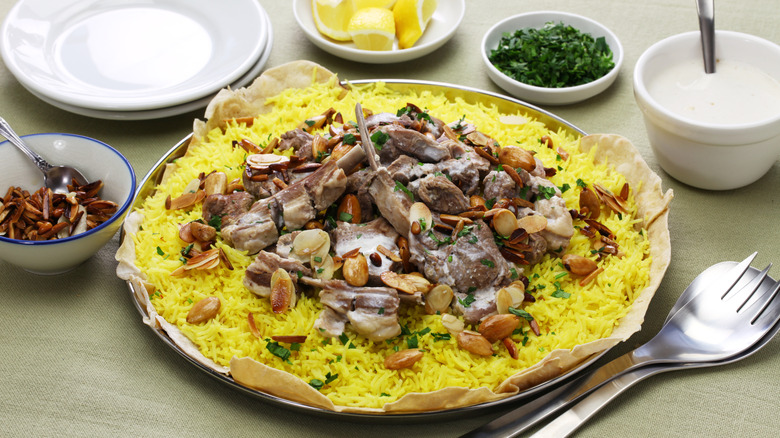
Whether or not you can reliably point out Jordan on a map, mansaf is a dish we should all be familiar with. It starts with a piece of thin flatbread, called shrak, laid on a dish. This is topped with a bed of rice and chunks of lamb cooked in jameed, a yogurt sauce made from fermented goat's or sheep's milk.
The result is a deliciously unique comfort food that embodies Jordan's culinary culture. Mansaf is traditionally eaten communally, with diners creating a ball of the rice, lamb, and shrak in their right hand.
Korea Republic: Kimchi
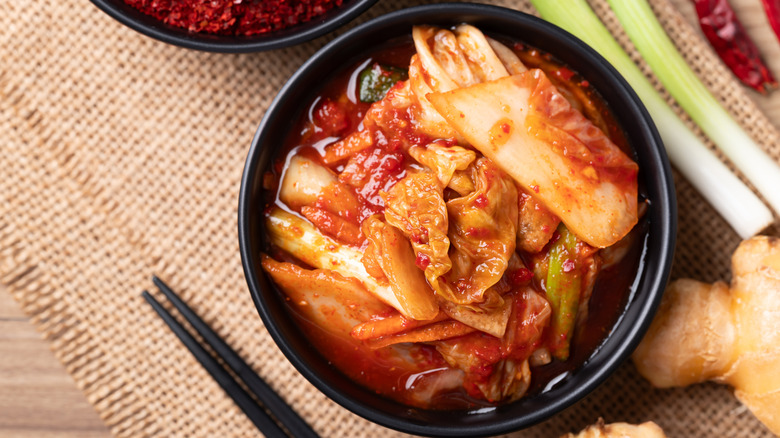
Kimchi is a dish that some fans of spicy food might already be acquainted with. It's a salted and fermented vegetable dish that has been popular and has evolved over several centuries.
Today, there are hundreds of variations on the recipe stemming from personal preferences and the passing of time. Though countless vegetables can be used in kimchi, most know it as a red, spicy, pickled napa cabbage dish that can be eaten on its own or paired with all kinds of Korean foods, including the country's famous barbecue.
Mexico: Chiles en nogada
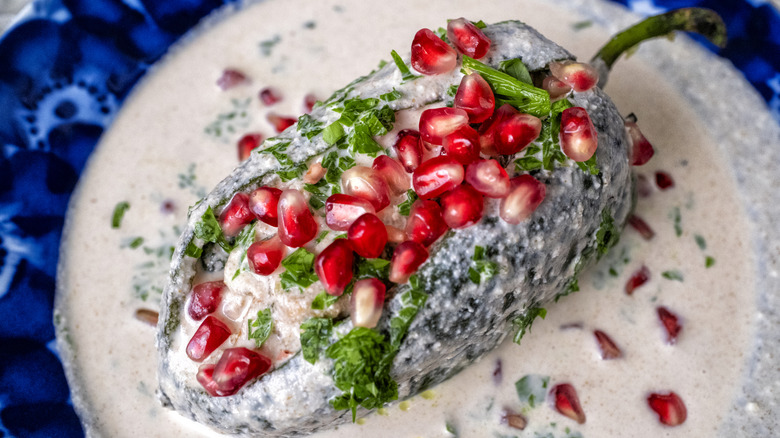
Mexican food is another global favorite, but the country's national dish isn't one that you find everywhere, like tacos and burritos. Instead, chiles en nogada takes the coveted title. It consists of chile peppers stuffed with meat and dried fruit, like apples, apricots, pears, cranberries, and raisins.
After baking, the chiles are smothered with a white walnut sauce (nogada), pomegranate seeds, and fresh parsley, the colors of which represent the red, white, and green of the Mexican flag. The flavors come together to bring you a mix of sweet, savory, and spicy that can't be beat.
Morocco: Couscous
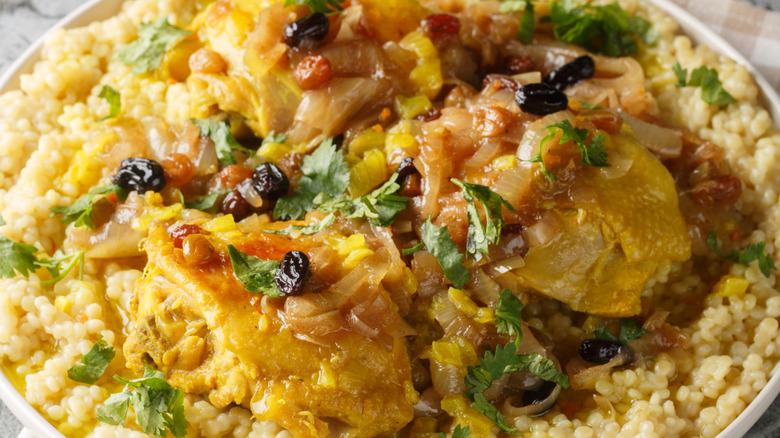
Morocco is another country that names couscous its national dish. While it is a staple in everyday diets, it is also customary for it to be served on Fridays and enjoyed as a group.
As is expected from a base like couscous, Moroccans have many variations on the dish. However, seven-vegetable couscous, including chickpeas, cabbage, turnip, carrot, zucchini, pumpkin, and eggplant, is one of the most iconic Moroccan renditions. In addition, seasoning it with spices like saffron, cumin, parsley, coriander, turmeric, ginger, and cinnamon are always winning picks.
New Zealand: Meat pie
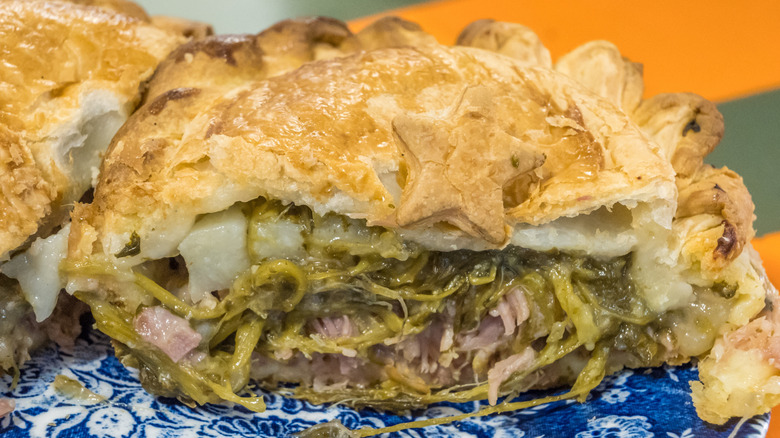
There are a handful of traditional New Zealand dishes that draw people in, but the national dish of the country could only be the meat pie. It's not official — pavlova, and hāngī also lay claim to the title — but meat pies are one of the most commonly enjoyed foods in the nation, and rightfully so.
In case the name doesn't give it away, meat pies are handheld pastry pockets full of minced meat and gravy. More specifically, beef and lamb are the most common fillings, but butter chicken, mincemeat, and cheese is also a beloved combination.
Netherlands: Stamppot
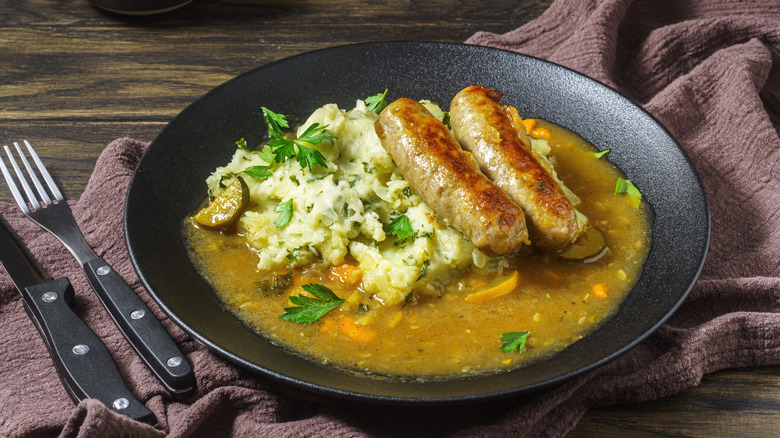
Stamppot, consisting of mashed potatoes, veggies (like sauerkraut, kale, or endives), and smoked sausages, is the national dish of the Netherlands. It's a filling, hearty recipe that's guaranteed to keep you warm on a cold night.
In addition to the vegetables varying from one recipe to the next, so do the sausages. The usual suspects include Dutch rookworst, Spanish chorizo, and Polish kielbasa.
Norway: Fårikål
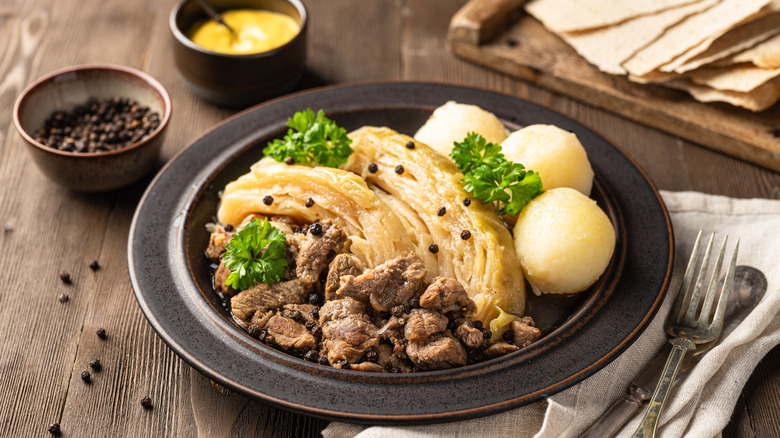
The official national dish of Norway is fårikål, which translates to mutton and cabbage. As the name suggests, it is a stew originally made with mutton, large chunks of cabbage, black peppercorns, salt, and water. Today, lamb is often substituted for mutton.
It cooks for several hours until the meat and cabbage become fork-tender. It's then typically served alongside boiled potatoes to make a complete meal. Some people serve it with the broth, others don't.
Panama: Sancocho
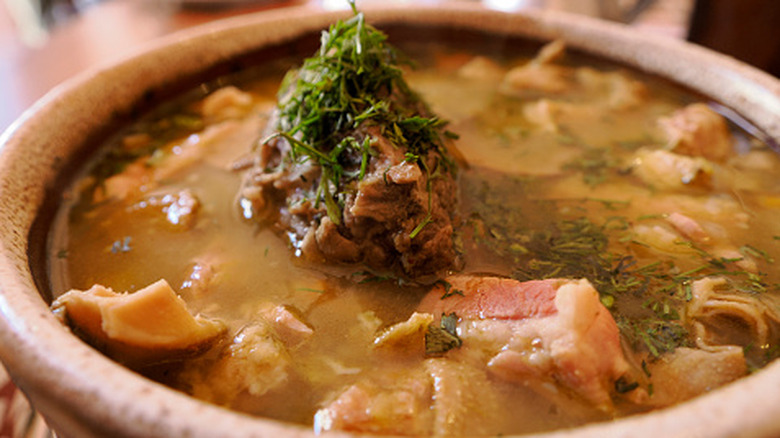
Traveling down to Panama, you find another yet another bowlful: sancocho, a savory chicken soup fit to cure everything from a hangover to the common cold. It's popular in a number of Latin American countries and cuisines.
In addition to chicken, Panamanian sancocho is made with corn, starchy root vegetables like yams, and cilantro. However, the exact veggies often vary based on seasonal availability. It is also customary to serve it with white rice.
Paraguay: Sopa Paraguaya
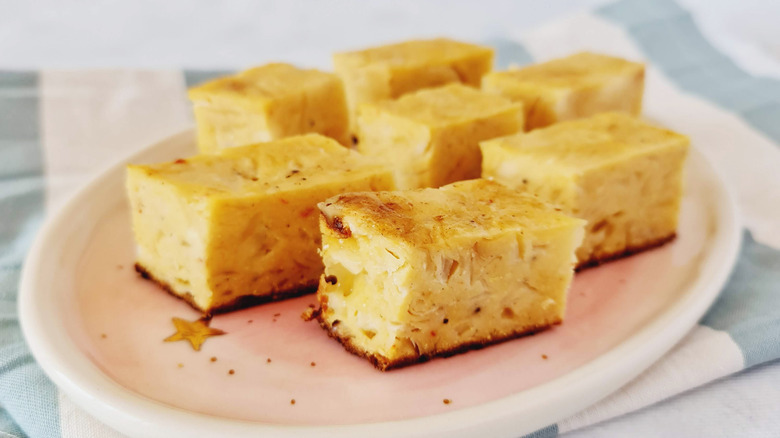
There are plenty of soups and stews on this list, but believe it or not, sopa Paraguaya isn't one of them. Though the name directly translates to "Paraguayan soup," this national dish is actually a special type of bread. Made with a corn flour base, it also features cheese, sauteed onions, eggs, milk, and salt.
Once baked, it turns into a dense, cheesy, creamy bread with hints of sweetness and lots of umami goodness to back it up. Think of it like a souped-up (pun intended) cornbread.
Portugal: Cozido à Portuguesa
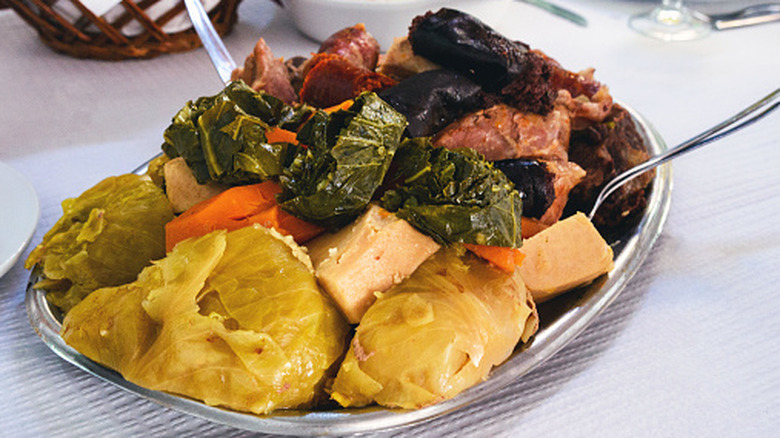
Though salted cod (bacalhau) is dubbed the national ingredient of Portugal, cozido à Portuguesa is generally considered the national dish. Another recipe that's boiled in a single pot, it features both cured and fresh meats, like chicken, pork, sausages, and beef.
The proteins are complemented by a litany of veggies such as beans, carrots, cabbage, and potatoes. Like many other stews on this list, it's usually served with rice to help you savor every last drop of juicy goodness.
Qatar: Machboos
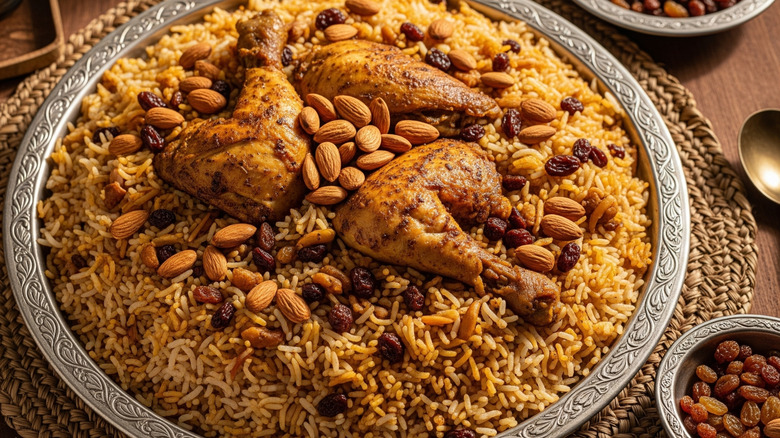
Machboos is an aromatic meat, vegetable, and basmati rice dish with a smoky flavor that's delicious enough to make it the national dish of several countries off the Arabian sea, including Qatar. The meat used to make the recipe varies, but chicken is a classic pick.
This single-pot dish is cooked with onions, tomatoes, and green hot peppers. An assortment of spices, aromatics, and herbs — like parsley, garlic, ginger, turmeric, cumin, and saffron, to name a few — are also included in the mix.
Saudi Arabia: Kabsa
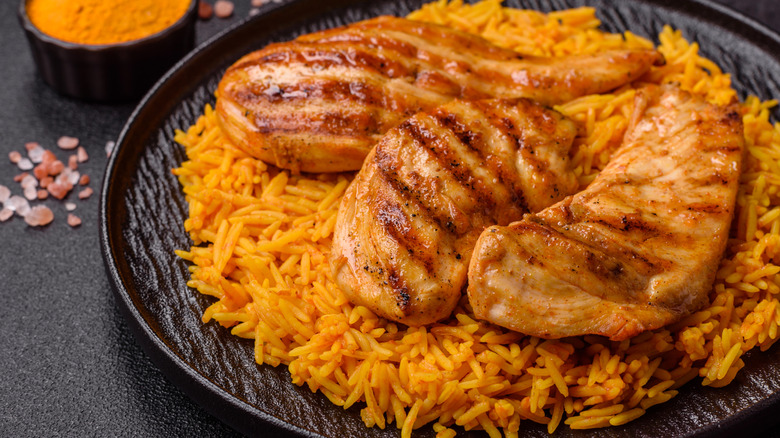
In Saudi Arabia, kabsa is the undisputed national dish. Typically cooked in one pot, kabsa consists of long-grain rice, a collection of savory spices, and either beef, chicken, or lamb. It's quite similar to machboos (some even consider them interchangeable), though Saudi kabsa tends to be a little smokier in flavor.
The seasoning includes black lime, cinnamon, and cardamom, leading to a comforting, filling dish that Saudis enjoy on special occasions and for family gatherings of all kinds. Once prepared, it is customary to serve it on a giant platter, perfect for sharing, and people eat it with their right hand, no cutlery required.
Scotland: Haggis
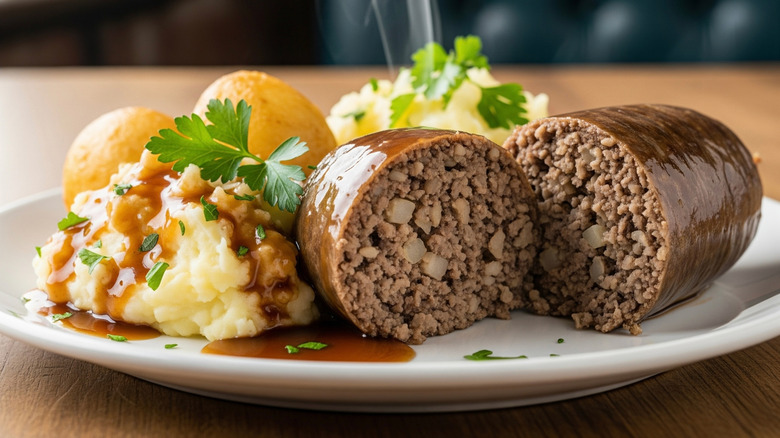
Haggis, Scotland's national dish, is somewhat of an acquired taste. In fact, the traditional recipe is banned from sale in the U.S. due to it containing sheep lung. Even so, it is a beloved recipe ingrained in the culture of Scotland and its origins date back as far as the 15th century.
So, what exactly is it? Well, it features sheep offal, onions, oatmeal, and suet blended with stock. The crumbly mixture is then encased inside a sheep stomach and often served alongside mashed potatoes and turnips with whiskey sauce.
Senegal: Thieboudienne
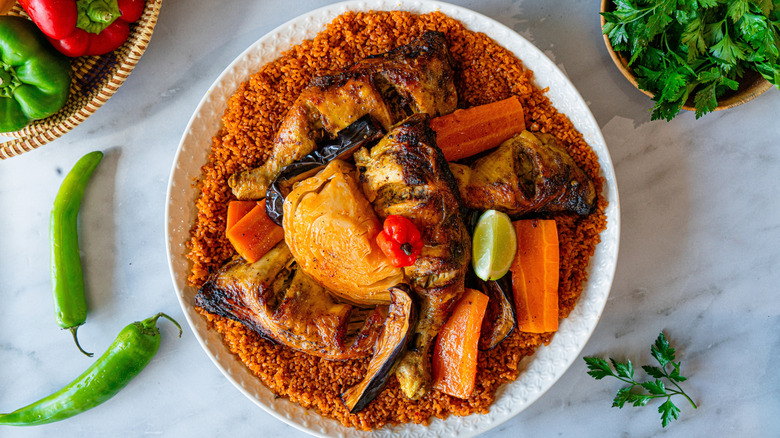
Senegal's national dish is thieboudienne, which translates to "rice with fish" in Wolof. The most authentic recipes are made with smoked grouper or snapper, whole or filleted, and served with an assortment of veggies and broken rice, which is cheaper to acquire in the region.
Thieboudienne is all brought together with a savory, spicy sauce or marinade featuring aromatic spices. The signature seasoning, however, is netetou, a fermented, ground bean spice that boasts a ton of umami flavor.
South Africa: Bobotie
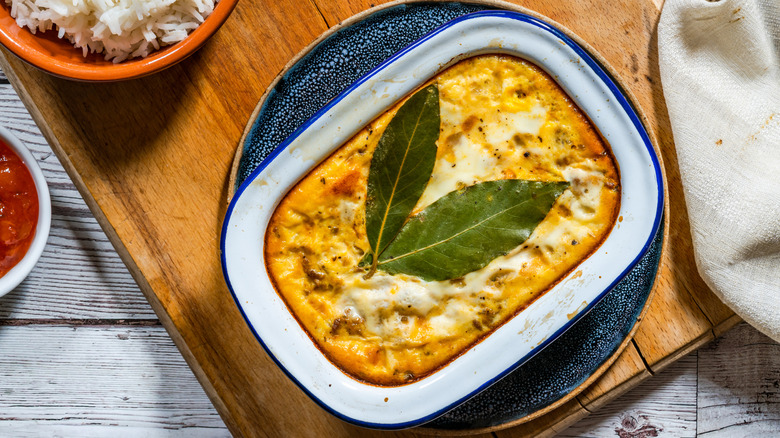
South Africa's national dish, bobotie, comes to us from the country's Cape Malay community. Typically served with yellow rice, it's a minced meat casserole (lamb or beef are customary) with lots other tasty elements incorporated to make it a crave-worthy, unique recipe.
The meat is prepared with curry spices, onions, either raisins or sultanas, and milk-soaked bread. The whole lot is then smothered with an egg and milk mixture and baked until golden brown on top. Lentils can also be substituted for a vegetarian take on the classic.
Spain: Paella
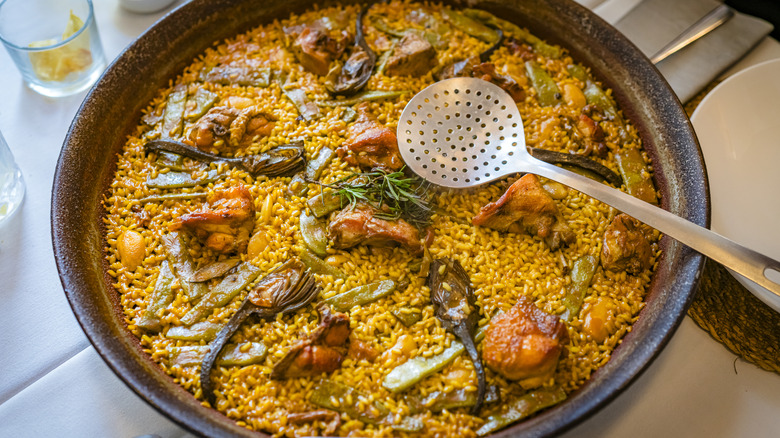
Spain is yet another nation with countless dishes to choose from, but perhaps none sums up the country's culinary landscape quite like paella. The term paella refers to not only the complete recipe, but also the large metal pan it is cooked in.
This culinary creation is cooked for an extended time and consists of short grain rice, meat, clams, mussels, yellow onions, red bell peppers, and broth with lots of garlic and saffron to boost flavors throughout. Just be sure you've got another person (or several people) to share it with.
Sweden: Köttbullar
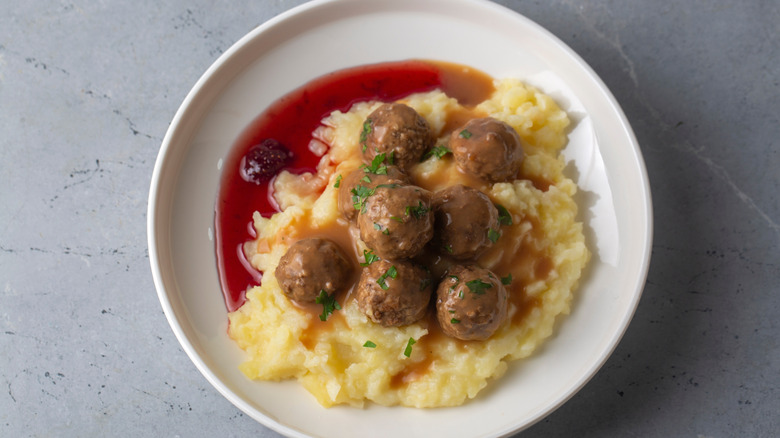
Köttbullar, commonly referred to as Swedish meatballs in the U.S., is the unofficial national dish of Sweden. While simple overall, the recipe offer diners a comforting meal with lots of flavor throughout.
The meatballs are made with a blend of ground beef and pork (which ensures they stay tender), bread crumbs soaked in cream, white pepper, nutmeg, and allspice. Traditional accompaniments include lingonberry jam to add sweetness and mashed potatoes laden with cream.
Switzerland: Rösti
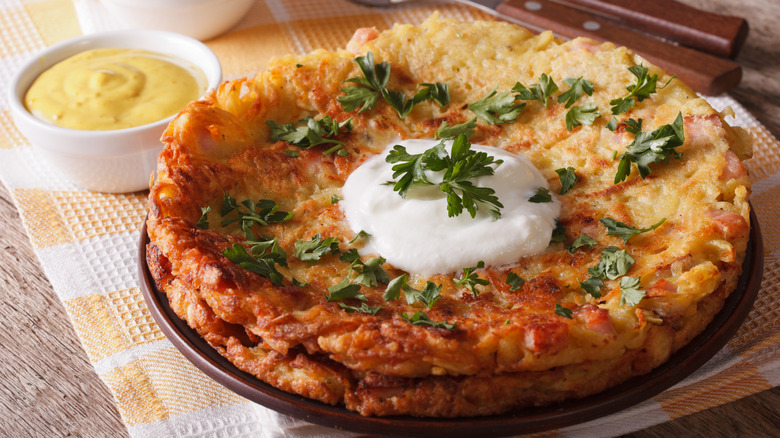
In Switzerland, the national dish isn't so clear-cut, but rösti is considered by many to be the mainstay recipe of the country. To make it, potatoes are first cooked whole before being peeled and grated so they can be formed into a round cake. After that, they are fried in butter, creating a delicious potato pancake that's crispy on the outside and pillowy on the inside.
Like almost every national dish, rösti varies by Swiss region. It can be enjoyed as a main dish accompanied by meat and vegetables, or solo as a snack.
Tunisia: Couscous
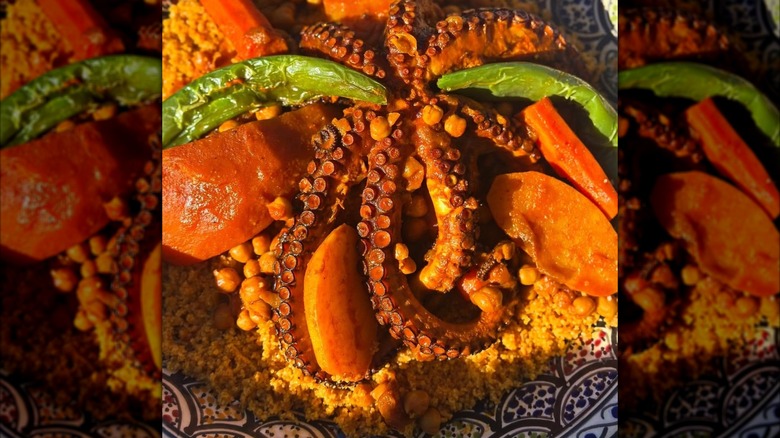
Moving over to Tunisia, couscous makes another appearance on our list as a national dish. Often referred to as koski, Tunisian couscous can be anywhere from fine to large in size. Regardless, it is typically accompanied by a hearty meat and vegetable stew. As for the protein, Tunisians use everything from fish to octopus to lamb to chicken to give their national dish everything it needs to become a complete meal.
Türkiye: Kuru fasulye
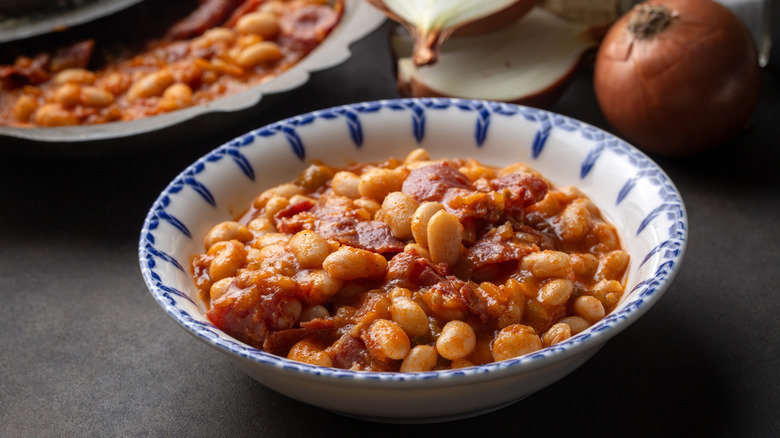
Kuru fasulye is hearty stew consisting mainly of white beans. It's slow-cooked with a base of tomato paste, onions, and basic seasonings, such as black pepper. You know it's ready when the beans become super soft, allowing them to absorb lots of yummy flavor.
One of the reasons Turkish people enjoy kuru fasulye so much is because it's incredibly simple to prepare. Additionally, the recipe has been passed down for generations, so it evokes a sense of home (as any good stew should).
USA: Burger

The United States of America is home to scores of different regional and ethnic cuisines, and it's hard to choose a single national dish from that variety. That said, it should come as no surprise that the humble burger is our choice, whether from a fast food joint, an upscale steakhouse, or a simple backyard grill (though we'll leave adding cheese up to you).
Typically made with ground beef, these patties are served on soft buns and layered with sauces and fresh veggies. While endless regional variations and recipes exist, mayo, mustard, ketchup, lettuce, sliced tomatoes, and onion are undeniably the most famous burger accoutrements of them all.
Uruguay: Chivito
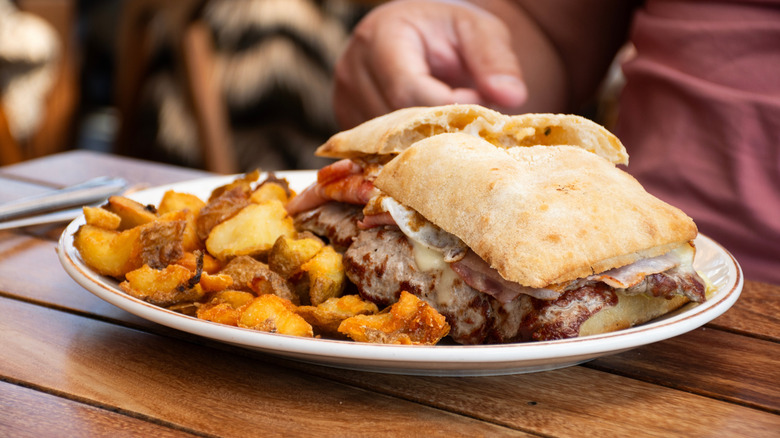
Uruguay's chivito has been called the best national dish ever by many, but what makes it so special? Well, the mix of savory and salty components that make up this sandwich really say it all.
The chivito is comprised of steak, ham, mozzarella cheese, bacon, lettuce, and tomato, all between two pieces of bread. A mix of ketchup and mayo also gives it a saucy edge, and a fried egg goes on top as well. In some cases, olives are also included. It's meaty, flavorful, and filling.
Uzbekistan: Plov
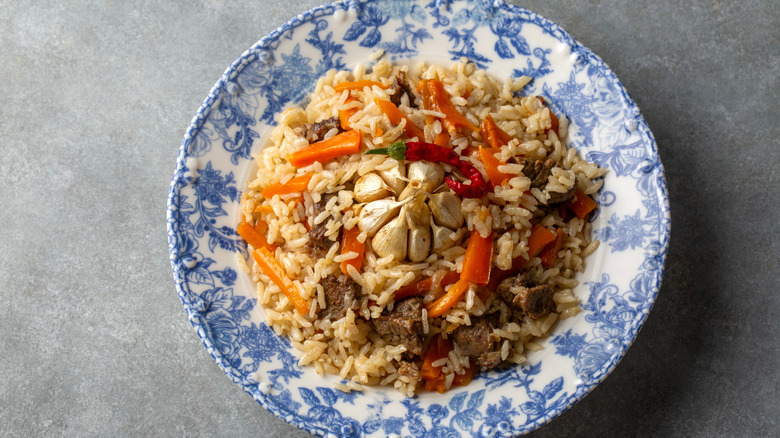
Uzbekistan is another country that names a rich, meaty rice recipe as its national dish. It's called plov, and has many variations, but in its most classic format, it features browned lamb or beef cooked with aromatics like onions, carrots, and usually an entire bulb of garlic served together with basmati rice.
Dried fruits such as raisins and barberries are also common additions. When used, they give plov a hint of sweetness that brings the entire dish together.