

Spot A Bad Seafood Restaurant With These 10 Warning Signs
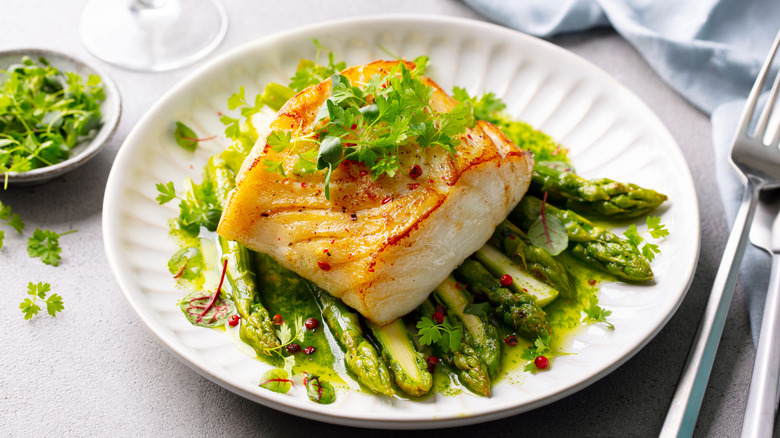
Few foods pull their weight quite like seafood. It's got an absurdly broad culinary range. Fry it, steam it, grill it, boil it, or skip the heat entirely and serve it raw; you'll have a stellar meal no matter what.
But for every delightful thing that can happen to a good piece of fish, there are about a dozen ways things can go spectacularly wrong. Leave it on the heat too long, and you'll end up with something dry, rubbery, and stringy. Treat it carelessly, and you'll lose half of it to the pan. And choose badly, and you might have to spend a couple days battling with food poisoning.
This is where seafood restaurants come in. Barring being extra careful with how you handle your seafood at home, picking out a good seafood spot is pretty much the only thing standing between you and bad seafood. This all raises one question: How can you tell the difference between a seafood restaurant that knows exactly what it's doing, and one that's just winging it? It's a tricky business, which is why we've pulled together a few clues to help you sniff out a bad seafood spot.
1. Strong fishy or ammonia-like odor
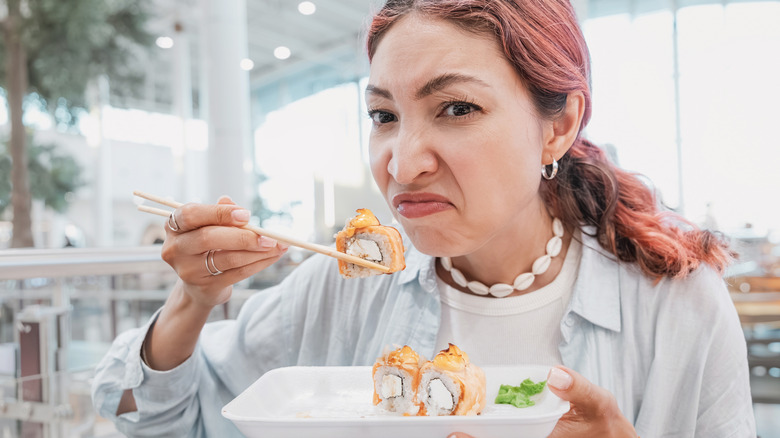
Fish carries the unfair reputation of smelling fishy. Most people picking up fresh fish from the grocery store do a sniff test. But, truly, fresh fish shouldn't smell fishy at all. At best, it smells clean; maybe faintly briny.
The trouble is seafood has a small freshness window. The moment a fish leaves the water, cold-adapted enzymes and surface bacteria begin breaking down its fat-rich flesh. That's when the fishy smell begins to appear. The notorious smell of bad seafood comes largely from trimethylamine (TMA), a gas formed when bacteria decompose trimethylamine oxide (TMAO), a chemical compound that keeps fish alive in the ocean. When TMA builds up, it turns pungent — the signature of fish gone off.
If entering a seafood restaurant instantly evokes the docks at low tide, it's time to start backtracking. Fish may be aging in storage, or waste and trimmings could be decomposing in the kitchen. Staving off seafood decomposition also demands strict temperature control, so if a restaurant smells strongly of decomposing fish, it might mean the place doesn't give a hoot about keeping its seafood cold. A fishy aroma can also betray lax sanitation. De-boning and de-scaling areas that aren't properly and frequently cleaned can also develop an ammonia stink.
Odors from the kitchen shouldn't permeate the dining room — if the restaurant is well-ventilated. So if a seafood restaurant smells rank, the establishment likely doesn't have a proper HVAC system; a signal you need to leave.
2. Overly large or static menus

Seafood lends itself to a dizzying number of dishes — from old-school staples like clam chowder to modern riffs like tuna poke. It's natural to want to try them all. So walking into a seafood restaurant with a menu that seems to contain every fish dish ever invented can feel like striking gold.
Don't rush to tie the napkin around your neck. A sprawling menu is one of the biggest red flags you can encounter. When a restaurant promises dozens of species at once, it usually means the kitchen is stocking multiple kinds of fish simultaneously. Since not every item sells at the same pace, some of those fillets are bound to linger in storage longer than they should.
In the worst cases, that aging fish may find its way onto unsuspecting plates. Even when it doesn't, the alternative is often the trash, which is hardly an outcome you want to support if sustainability is even mildly on your radar.
One more detail worth noting: Not every species is fished year-round. Alaska pollock, for instance, appears in short seasonal windows, while mahi-mahi usually shows up during spring and summer. So a seafood restaurant with an enormous, unchanging menu may be holding certain fish for even months at a time. And when supply runs dry locally, shady establishments might turn to seafood from less transparent sources to keep the illusion going.
3. Too many highly vulnerable fish on the menu
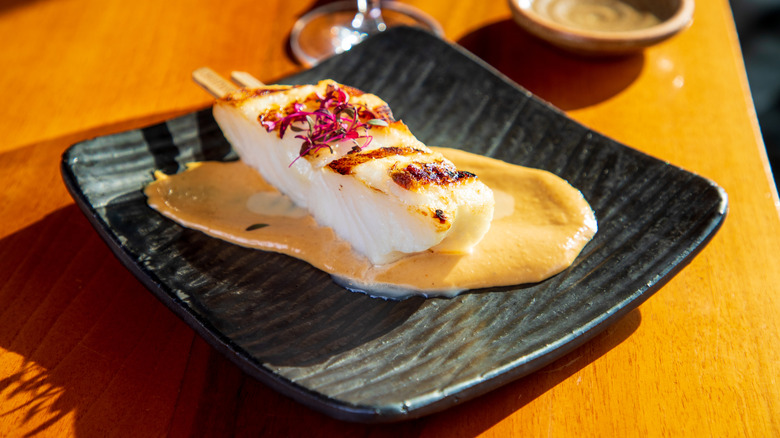
There may be no shortage of seafood dishes out there, but not every species belongs on your plate. Populations of slow-growing species like bluefin tuna, Chilean sea bass, and orange roughy have taken a particularly hard hit from decades of aggressive harvesting, especially in poorly regulated waters.
Seafood restaurants with a sustainability streak are increasingly ditching these vulnerable species in favor of quicker-growing or under-the-radar options like barramundi, sablefish, and Arctic char. But in some establishments — especially sprawling chains — novelty still outranks sustainability, which is why menus can end up dotted with fish that conservationists would rather see left in the water.
What does a menu littered with vulnerable species suggest? For one, it raises some serious questions about sourcing. Many of these fish move through tightly-controlled supply channels. They're monitored by traceability programs like the Seafood Import Monitoring Program, which tracks the trade of vulnerable species, including mahi-mahi, grouper, red king crab, Pacific cod, red snapper, abalone, shrimp, and swordfish. In practice, this means vulnerable species are often in short supply and frequently seasonal. A restaurant that seems to offer them in abundance may be relying on long-frozen reserves, opaque sourcing, or substitution with more readily-available species. Those are all pretty great reasons to steer clear of a restaurant.
4. All seafood menu options are fried
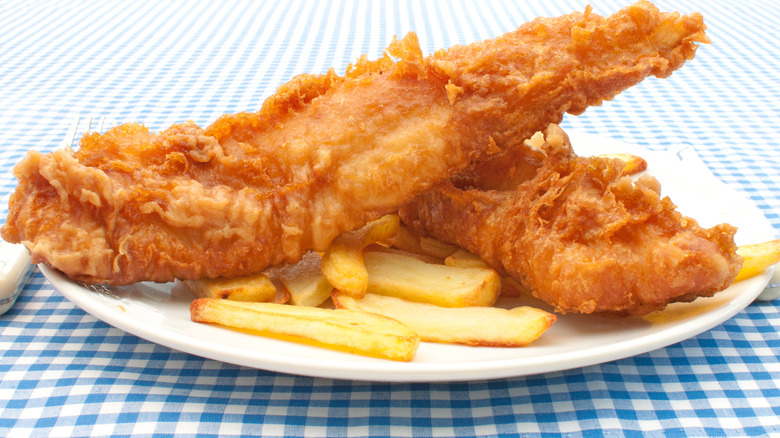
You can't deep-fry every variety of seafood, but for the ones that take well to it, the payoff can be spectacular. You might assume the spot with the longest list of fried seafood is the safest bet. Not quite. In a strangely roundabout way, menus overloaded with fried options are often a sign you're not in the strongest hands.
Researchers have found that deep frying is a remarkable equalizer, capable of boosting the flavor of everything from catfish to dried mackerel. Seafood gradually loses structural integrity the longer it sits around, turning soft, stringy, and pasty. Those glaring textural issues slip by largely unnoticed when it's plunged in hot oil. The exterior turns crispy, the interior rigid, and the flavor perks up so dramatically that there's no telling whether the flesh was pristine or past its prime beforehand.
Any hopes of detecting the tell-tale signs of seafood spoilage — funky fish smells and color changes — also tend to end at the fryer. Bold seasonings can cover-up a lot of sins, you know? Meanwhile, the Maillard reaction works its magic on the color, turning dull-looking fillets dazzling shades of golden brown; any discoloration goes by completely unnoticed. To be clear, not every fried-fish haven is up to something shady. But if you can't order something unless it's been dunked in hot oil, consider it a subtle red flag worth clocking.
5. Live seafood tanks
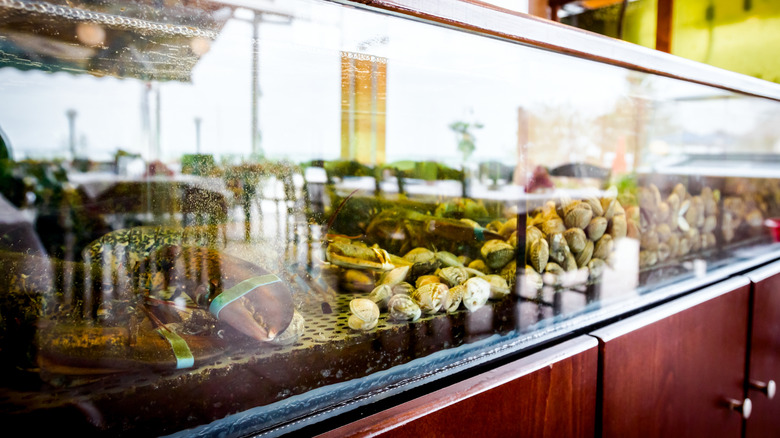
The visual allure of live tanks can be misleading. Scientific studies in the International Journal of Food Microbiology suggest these systems may act as reservoirs for human pathogens and antibiotic-resistance genes, particularly when maintenance protocols are relaxed. Biofilms can accumulate on interior surfaces, creating protective niches where bacteria evade sanitation and continue to proliferate. Seafood held in these conditions can pose genuine health risks for diners, including the possibility of food-borne illnesses.
Yes — fish in live tanks can still be in rough shape. Both fish and shellfish are highly sensitive to environmental conditions, such as ammonia buildup, oxygen depletion, and pH fluctuations. The trouble is that in many restaurants, tanks function more as visual spectacles than as tightly managed food-production systems. Without rigorous monitoring, water quality can deteriorate quickly, placing animals under significant stress and making them more vulnerable to disease or even death.
There's also no evading the fact that live seafood tanks are pretty inhumane. While there's still no full scientific consensus on whether fish and shellfish experience pain in the same way as land animals, researchers widely agree that they are highly susceptible to stress –something they're likely to experience in buckets when crammed into tight, poorly-maintained tanks. And, although conditions may be less dire in high-end restaurants with better monitoring systems, it might be worth skipping the show altogether and choosing a restaurant that doesn't turn your dinner into living decor.
6. Visible grime on tables, counters, or display cases
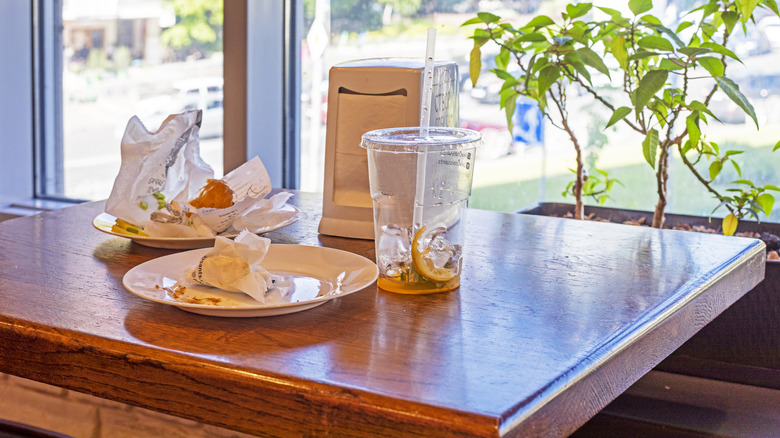
There's no getting away from sanitation — whether you're meal-prepping in your kitchen or juggling a dozen slippery surfaces in a seafood restaurant. Some establishments take hygiene seriously. But even the best can slip, and others fall behind entirely. Fortunately for diners, such lapses tend to be legible at first glance; dull display glass, tacky countertops, tables still dotted with leftover food, or even visibly soiled tablecloths.
Nobody wants to eat seafood — especially raw seafood — on grimy surfaces. But it goes even deeper than that. Scientists have found that lax sanitation up front is often a reliable proxy for overall hygiene practices. If the dining area looks dirty, it raises serious questions about conditions in back-of-house spaces diners can't see.
Of course, sanitation issues are the last thing you want in a seafood spot. Seafood flesh is naturally coated with cold-adapted bacteria, which multiply rapidly once exposed to the out-of-water environment. This makes seafood prep areas a prime breeding ground for pathogens. Without regular disinfection, dirt and residue from handling surfaces can form stubborn biofilms, putting nearly every fillet at risk of contamination. Fish also contain a lot of unsaturated fats — prime fodder for bacteria — which is why they start going south so quickly after harvest. Additional bacterial contaminants from lax sanitation can turbocharge tissue breakdown, accelerate decomposition, and compromise the quality of nearly every fish served at that establishment.
7. Staff who can't answer basic sourcing questions

It's worth shoving aside any aversion to small talk to ask a few questions, especially when it comes to sourcing. At the best establishments, staff are eager, almost tripping over themselves to explain where, how, and when their seafood was sourced. At sketchier spots, answers can feel vague, oddly rehearsed, or quietly evasive. Those are all glaring signs that sourcing is treated as a backend logistical detail rather than a pillar of quality.
But why does it matter whether a seafood restaurant can track its fish from catch to plate? For starters, the seafood industry runs on a notoriously convoluted supply chain involving fishers, brokers, processors, exporters, importers, distributors, and restaurants. A fair share of unsavory activity can creep into that mishmash, from illegal fishing and fraud to human rights abuses. Knowing exactly where your seafood comes from helps you avoid unknowingly supporting those practices.
Uneducated staff should also raise fair doubts about how seriously the establishment takes quality control and regulatory compliance. Traceability matters for food safety. Regulators rely on sourcing data to trace contamination and issue recalls. If a restaurant can't track its seafood properly, diners could end up eating products linked to recalls involving hazards like histamine spikes, salmonella, listeria, or even foreign objects.
8. Raw seafood sitting in warm ice displays
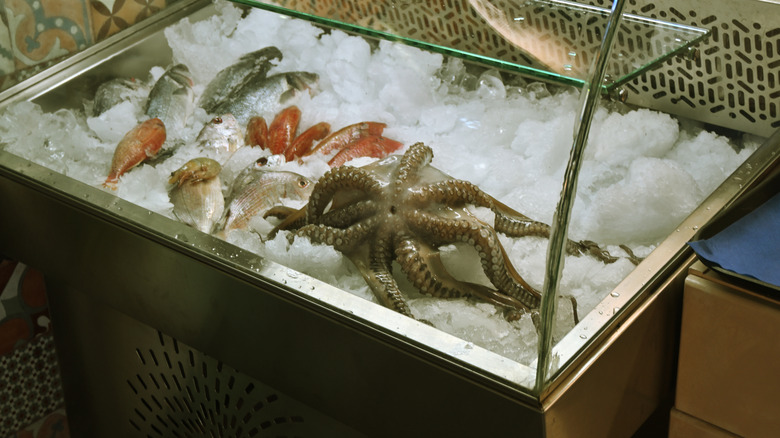
Proper seafood handling is no small feat. The biggest hurdle is temperature control — optimizing it just enough to prevent spoilage without freezing the life out of the seafood. Restaurants tackle this in a number of ways. One of which is keeping fresh stock chilled in ice displays maintained near 30 F. Chilling fish to that temperature slows bacterial growth and tames enzyme activity, giving seafood a chance at a decent shelf life.
The trick is execution. Piling fish up high is a huge non-starter, as there become obvious temperature gaps between fish hugging the ice bed and the ones lounging on top. Evidently, the magic only works in thin layers, with ice sprinkled generously above and around the fish. Ice must also be replenished regularly if the cold chain is to remain intact. And beware: Lighting within display cases can nudge temperatures above the 30 F sweet spot, giving bacteria a green light to multiply.
What does this mean for you? Don't rush past the display case. Take a moment to examine how the seafood is arranged, how much ice there is, and whether it's strategically surrounding the fish. Feel the case — is it warm to the touch? Check the ice — is it slushy, watery, or dirty? These are telling signs the restaurant may not be keeping its cold chain intact.
9. Extremely low prices on premium fish
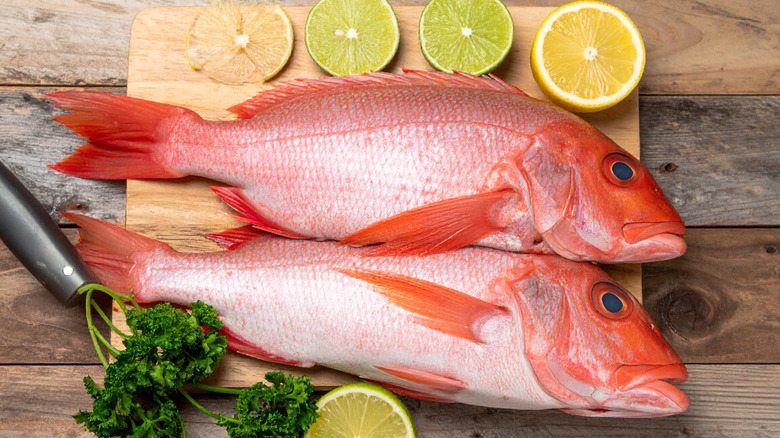
Fish don't travel in the same circles. On one end, you've got premium players like red snapper and wild salmon. On the other end are cheaper stand-ins like rockfish and tilapia. What eventually ends up on your plate often depends on how much your wallet is willing to take. But no matter how well you've mastered the art of turning cheap fish into gourmet-adjacent dinners, premium fillets are hard to resist. So stumbling into a seafood spot selling them at ridiculously low prices can feel like striking gold.
Not so fast! Researchers have found that these coveted cuts are sometimes stealthily swapped out for cheaper lookalikes.
Suspiciously low prices should also raise serious sourcing questions. Mislabeling isn't always about species substitution. Sometimes, suppliers misrepresent details like country of origin to dodge costly tariffs, quotas, or regulatory scrutiny. Because discretion is the name of that particular game, such suppliers may be willing to offload fish at bargain prices, savings that restaurants can pass on to you.
But before you start celebrating your seafood savvy, consider the bigger picture. Fish mislabeled in this way are far more likely to be illegally caught, meaning your "steal" may be contributing to overfishing and unsustainable harvest practices. It also doesn't reflect well on a restaurant's standards if it's willing to source from poorly-documented supply chains.
10. Seafood with soft, mushy texture
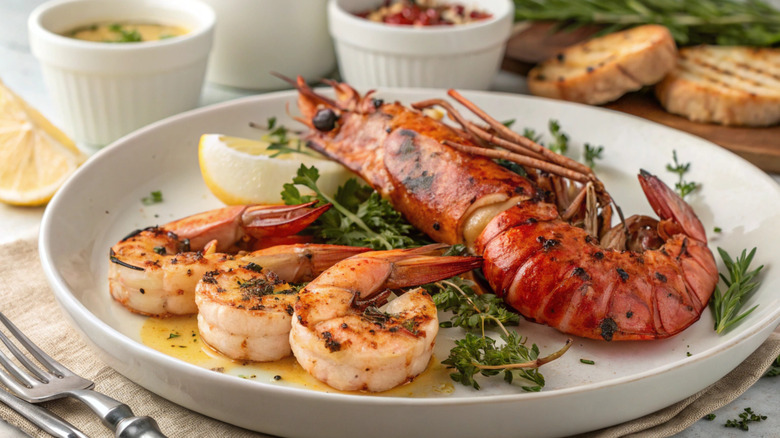
You've stopped at the ice display a little longer, squinted discerningly at the prices, and sniffed around for fishy business. But there's one more thing you need to check out before you give the place a stamp of approval: how the fish actually tastes.
While odor and color changes can often be obscured by clever preparation, fish well past its due date tends to come with some not-so-subtle giveaways. The first — and perhaps most telling — is texture. Specifically, soft texture. After harvest, fish undergoes a cascade of biological processes, many of which gradually erode structural integrity if not curbed through proper chilling and serving fresh stock almost the moment it lands. Aside from bacterial and enzyme activity, the flesh also undergoes proteolysis — the breakdown of muscle proteins — which reduces the flesh's ability to retain moisture resulting in mushiness.
Many fish are also rich in unsaturated fats, which makes them particularly vulnerable to oxidative damage when kept in storage for too long. A mushy fillet can, therefore, hint that an establishment is relying on stock that's been left to linger in storage. It may also suggest heavy reliance on frozen stock that has endured multiple freeze–thaw cycles. Freezing forms ice crystals within the tissue. When thawed and refrozen, these crystals can merge into larger ones that physically rupture muscle cells, leaving the flesh structurally compromised.