

7 Korean Street Foods You Need To Try
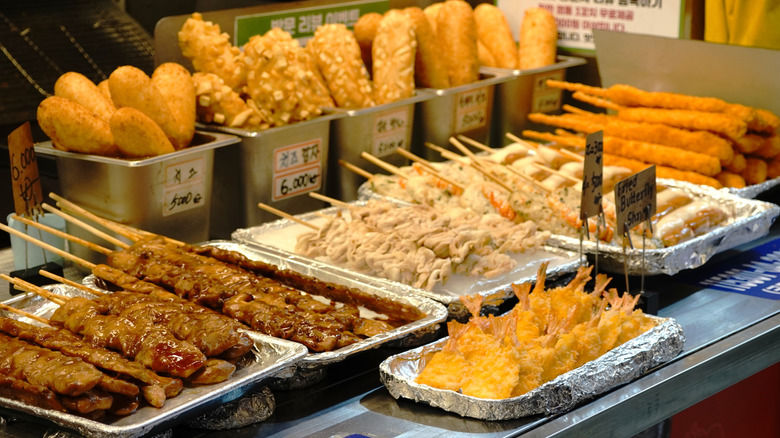
If you're looking to get the true, authentic taste of a place, you probably won't find it in the fancy-pants, closed-toe shoe establishments peppered around the city center, as delicious and worthy of praise as these restaurants are. Your answer instead lies right outside your window, in the food stalls and street carts that sell snacks that keep the city alive. This rings that much more true with Korean street food, a cuisine built upon sticky, sweet, spicy surprises.
Korean street food has become increasingly popular in the past few decades, morphing from its humble midcentury beginnings in cheap, comforting food stalls to making appearances on must-try tourism lists. Nowadays, Korean street food embraces global food trends, meaning you'll find many a fried thing on a stick in the food stalls of Seoul. You'll also come across classics like tteokbokki, the sushi-doppelgänger gimbap, or a crispy-sweet stuffed pancake known as hotteok. Korean street foods like these carry with them a rich history and a sensational attractiveness which is more than supported by fantastic, surprising deliciousness. Whether you're planning a trip or looking for some interesting snacks stateside, these are the Korean street foods you need to try.
Hotteok
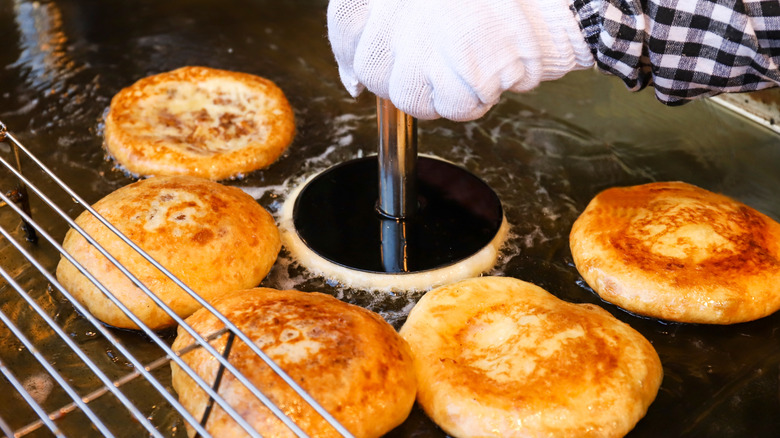
When your fingers are numbing from the cold and the fire inside you is dwindling as you walk through the busy winter streets, the only cure is something hot, gooey, crispy, and sweet. Luckily, hotteok, one of the most popular Korean winter street foods out there, is here to check all those boxes and then some. A flat, yeasted pancake filled with cinnamon, sugar, and ground nuts or seeds, hotteok is best eaten hot and oozing fresh out of the pool of margarine it was fried in. Continually pressing the pancakes down as they are being fried makes for an especially crispy yet tender pancake.
Since the pancakes are made from a yeasted dough rather than a simple batter leavened by baking soda or baking powder, hotteok can be time consuming to make at home. However, you are one simple pop of a biscuit-can away from some caramelized, syrupy homemade pancakes; with a few simple steps, you can give those canned biscuits a hotteok-inspired makeover.
Salt bread
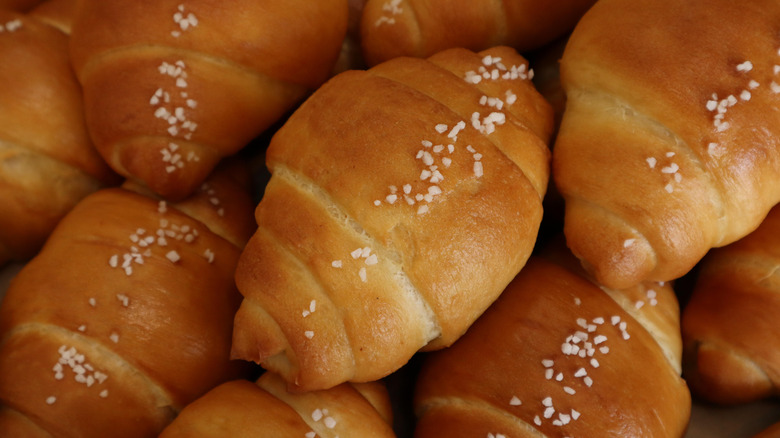
On the saltier side of the yeasted-bread spectrum is sogeum-ppang, or salt bread, a tubular doppelgänger of a croissant that hides a fluffier, saltier, and more robust crumb beneath its crust. Though it lacks the signature flaky, laminated layers of a croissant, salt bread is just as buttery, as the enriched dough is wrapped around a block of butter, which melts and crisps the bottom of the roll as it bakes. This also means the roll has a hollow center, perfect for stuffing with cheese or red bean paste. For the bread makers at home, try substituting a compound butter, either savory or sweet, to stuff in the center before you bake them.
The irresistible rolls actually originated in Japan in the early 2000s (where it's known as shio pan), though they quickly made their way overseas. Literally packed with butter, this South Korean salt bread will change bread for you forever.
Mandu
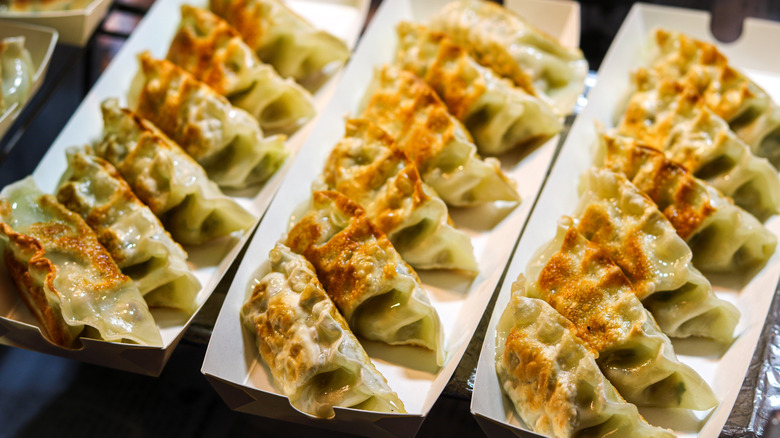
The popular dumplings known as mandu are compact little bundles that can be eaten by the bucket like popcorn if you're not careful. Fried or steamed, mandu are as conveniently on-the-go as street food can get. One of the most popular fillings in these seamlessly pleated pockets is kimchi, whose funky bite adds a little interest beyond some typically mellow dumpling innards. Other aromatics like garlic and scallions add edges to the flavor of these dumplings, while mushrooms or pork contribute some meaty heft. These are all wrapped in a chewy but not gummy wrapper, so thin you can see into the filling like an enticingly opaque window.
Despite being a popular and accessible street food in South Korea, mandu are also sold frozen, which means you can bring the food stalls to your kitchen when the street seems a little bit far. These are also very commonly made at home, giving street food stalls a nostalgic homeliness for anyone lucky to take a bite.
Gilgeori toast
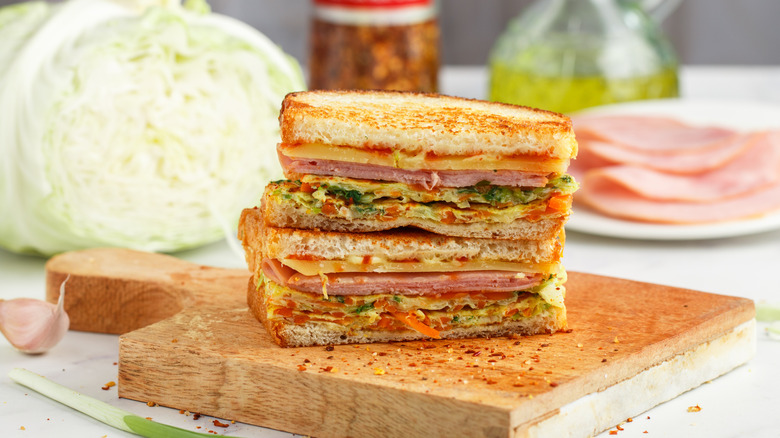
If gilgeori toast is anything to go by, the key ingredient to unshackle your breakfast sandwiches from the dungeons of monotony is nothing other than a big sprinkle of sugar. This Korean street toast is essentially a vegetable omelet between two toasted slices of white bread, drizzled with ketchup and dusted with sugar. Its unassuming components — often cabbage, onion, carrot, scallions, and some optional ham and cheese — augment each other to create something perfectly delicious.
Gilgeori toast, which translates literally to "street toast," is an incredibly affordable snack in South Korea, making it perfect for students or other workers who need to travel light across the city and eat fast. The gargantuan omelet is griddled until lacy and crisp but still soft, then slid between two grilled pieces of bread that don't even begin to contain the omelet within. More sugar and ketchup than you might think gets loaded on; in this case it is in your best interest to embrace this seeming excess of sweetness, but once you give in, you'll never have it any other way.
Tteokbokki
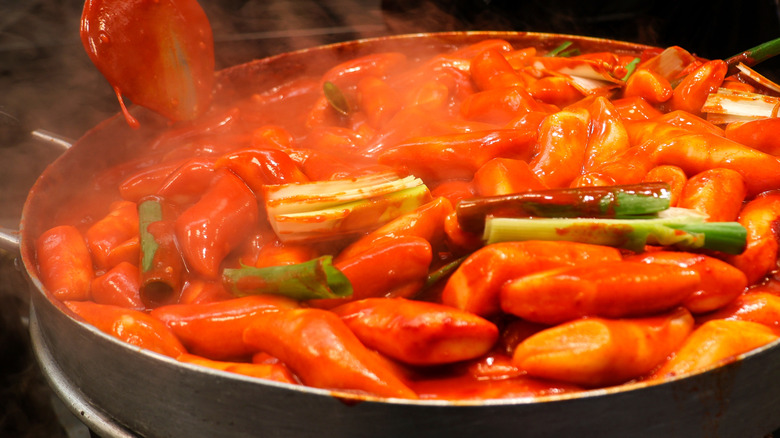
If any of the foods on this list could claim a global icon status, it would probably be tteokbokki, a sticky coagulation reminiscent of gnocchi but more chewy and bold. These stubby rod-shaped rice cakes are plunged into an incandescent sauce made primarily from the red pepper paste known as gochujang as well as gochujaru, the Korean counterpart to chili flakes. Anchovies and dashi broth add some fishy complexity, making a dish that looks unassuming but packs seriously deep flavor. Tteokbokki also makes a great side dish to other Korean classics like mandu or gimpap.
Variations of this dish date back centuries, but the modern version we all eat and love comes from the middle of the 20th century, when the United States began flooding the country with flour after the Korean War. Originally made with soy sauce, the current iteration of tteokbokki was created when Ma Bok-rim, a street food vendor with near-mythical status in Korean history, added gochujang to her rice cakes instead of the usual soy sauce. Now, rice cakes without a bright, spicy-sweet red sauce seem in need of some serious dressing up.
Tornado potato
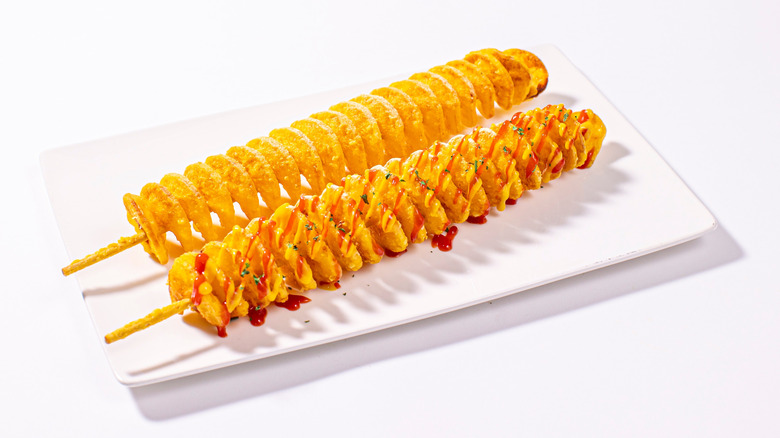
It's not often that you get to eat some street food that is both deliciously crispy and an architectural spectacle. Enter the tornado potato, a spiralized French fry on a stick that elicits sensational drools around the world. Popular at South Korean food stalls but duplicated globally, tornado potatoes are as dangerously mouthwatering and toweringly lengthy as their name suggests.
The potatoes are cut in a spiralizer and then carefully pierced and extended along a stick before being coated in a light and loose batter and fried until mottled with the brown, crispy bubbles of a properly crisped potato. It is common to dust them with a cheese powder when they're hot from the fryer, or another salty, umami-forward seasoning like onion powder. A tornado potato is the perfect street food: crispy, on a stick, and just outrageous enough to make you simultaneously proud and self-conscious to be eating it in public.
Gimbap
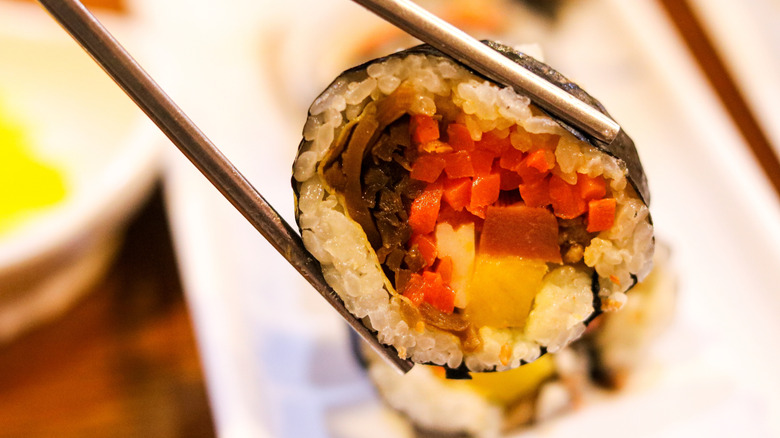
With its signature kaleidoscopic visual of deep green seaweed tucked around a band of white rice, both of which snugly cradle a colorful filling, you'd be forgiven for mistaking the Korean snack gimbap (or kimbap) for the Japanese mainstay that is sushi. However, gimbap scratches other, more distinct itches entirely. For one, rather than the vinegar-spiked rice that envelops your usual sushi, the rice in gimbap is seasoned with sesame oil. This makes for a culinary cushion that veers less towards brightness and more towards depth.
Perhaps the most notable difference is that gimbap has cooked fillings at the center of each roll, as opposed to the raw fish you often see in sushi. Common and delicious fillings include sautéed vegetables like carrots, browned bulgogi or ham, or a crispy omelet sliced thinly. Also, while sushi might warrant more of a sit-down situation, gimbap is perfect for a casual street meal and picnics as well.