

10 Classic Cocktails That Ruled '70s Dinner Parties
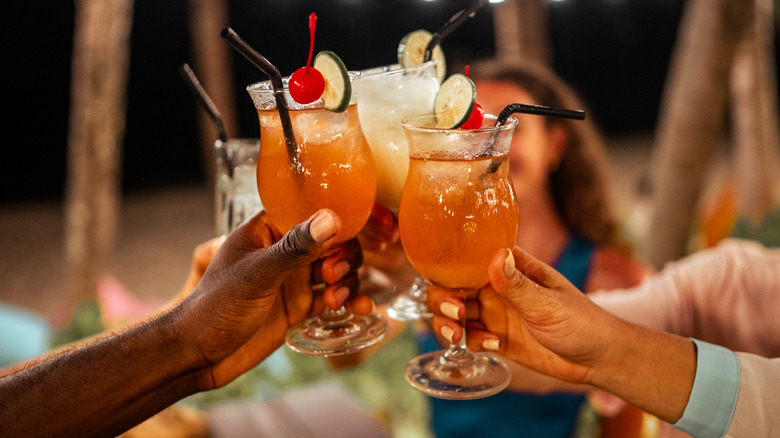
Thoughts of the 1970s immediately draw images of bold, colorful fashion choices and over-the-top nights at the disco. This same vibe follow with the cocktails of the era. From wild nights at Studio 54 all the way to dinner parties at home, vibrant drinks made their mark in the culture of this decade. These beverages frequently skewed on the sweeter side, with a few signature mixers and liqueurs emerging as favorites. Often, they came with cheeky, innuendo-infused names, and some were even served in signature glassware with fancy garnishes. Many of these recipes were documented in an essential cocktail book published during this time called "Jones' Complete Bar Guide," which is still regarded as an incredible resource for both bartenders and home-based mixologists alike.
While the heavy cream and sugar-laden cocktails of the 1970s might not have the same panache as the hand-crafted, high-end beverages we see on menus today, they bring with them a sense of nostalgia and whimsy. So put on your bell bottoms and turn on the lava lamp, it's time to pour, shake, and stir your way back in time. No matter which one of these cocktails you choose for you next dinner party, the Magic 8 Ball says, "Outlook good."
Harvey Wallbanger
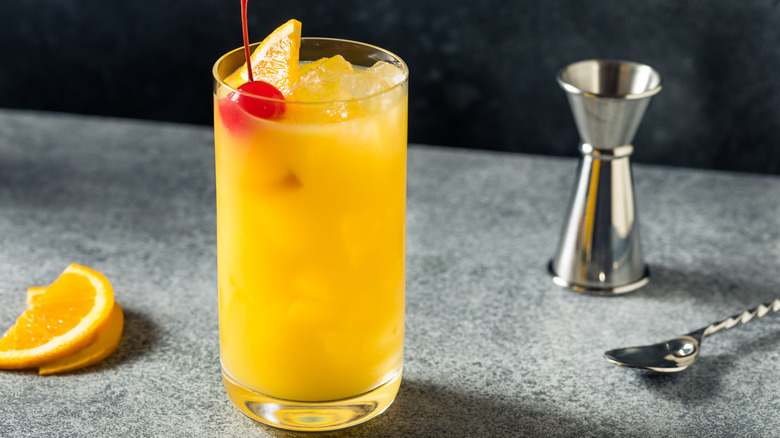
One of the most iconic cocktails from the 1970s, the Harvey Wallbanger is easy to prepare, as the ingredients are simply layered with no shaking or stirring required. Fill a tall glass with ice and start with a shot of vodka, followed by three ounces of orange juice. Then, float just half an ounce of Galliano liqueur on top before adding an orange wedge and maraschino cherry as garnish. Ultimately, this cocktail is a riff on a screwdriver with the addition of Galliano. This spirit was a hit in the 1970s thanks to a clever viral marketing campaign featuring a cartoon surfer with the namesake "Harvey Wallbanger." The cocktail was encouraged as an alternative to a Bloody Mary for brunch and Galliano ended up becoming the most imported liqueur in the United States at the time.
Sold in an eye-catching long and slender bottle, Galliano features notes of vanilla as well as an unusual blend of spices such as star anise, juniper, lavender, and cinnamon. After investing in a bottle, why not also whip up a Harvey Wallbanger cake? Adding the same signature blend of vodka, orange juice, and Galliano to a boxed cake mix results in a '70s dessert staple.
White Russian
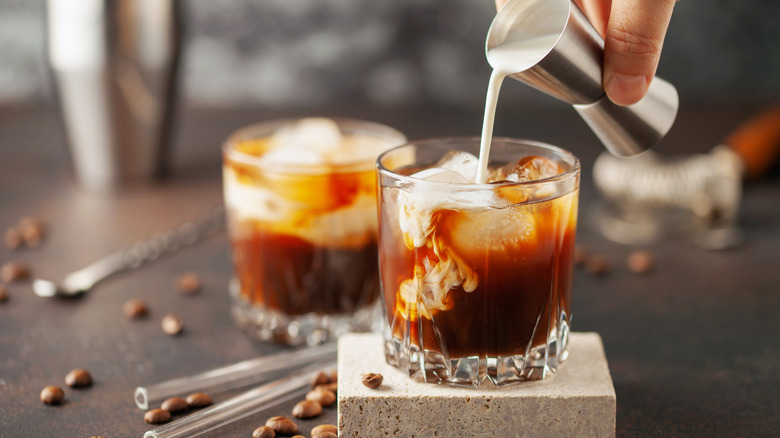
Anyone who is a fan of "The Big Lebowski" is familiar with the White Russian. However, this dessert-like cocktail was popular long before its resurgence in 1998 after being prominently featured in the film. Vodka seemed to be part of every liquor cabinet in the 1970s, in part because of the endless ways to mix it with sweet and creamy ingredients. To make a proper White Russian, simply combine equal parts vodka, coffee liqueur, and cream in a rocks glass with ice. Of course, a non-dairy alternative in your White Russian is certainly acceptable for anyone who is lactose intolerant but still wants to be part of the party. If you're tending bar and want to add a bit of flair to this easy beverage, try incorporating the creamy element slowly by pouring it over the back of a spoon. This will create that marbled look, allowing most of the cream to float on top.
Kahlua is the most popular coffee liqueur when making a White Russian; it's quite sweet with notes of vanilla and caramel and comes with a strong coffee kick. If you really want to take your White Russian to the next level, try making your own homemade Kahlua before your next dinner party.
Amaretto sour
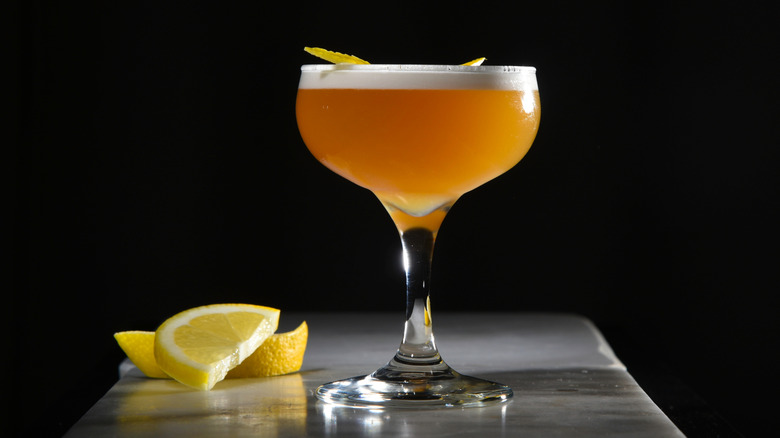
The amaretto sour was another 1970s cocktail staple that owes its rise in popularity to a viral marketing campaign. Disaronno, the Italian spirit used in the now classic drink, was marketing itself in the United States and created the original sweet and tart cocktail by simply mixing Amaretto and lemon juice. The zing from the sour lemon pairs perfectly with the sugary marzipan and almond notes in the liqueur.
Later, the fresh lemon juice was swapped with a pre-made sour mix to give busy bartenders a way to make it as quickly as possible. Today, the two-ingredient cocktail from the '70s has taken on new life in the hands of mixologists. Some modern versions add bourbon and even an emulsified egg white to form a foamy top to the drink. A twist of lemon or maybe a brandied cherry is the only garnish necessary.
Tequila sunrise
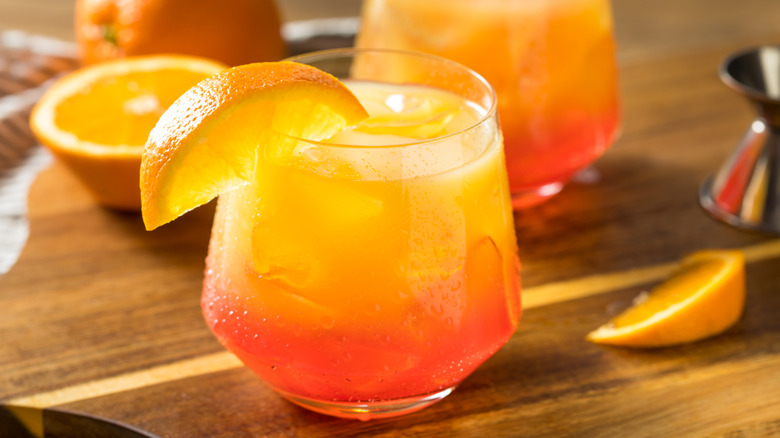
A 1970s bar cart was not complete without a bottle of grenadine. The sweet, bright red syrup does not contain alcohol, but it imparts a vibrant hue to any drink when used as a mixer. A classic tequila sunrise is the perfect example of using grenadine to layer ingredients beautifully. To make a tequila sunrise, fill a glass with ice and add two parts orange juice and one part tequila, and stir. Next, slowly pour about half an ounce of grenadine over the top of the drink. This heavy, pomegranate-flavored syrup will slowly sink to the bottom of the glass, creating the gorgeous sunrise effect from the orange and red colors in the drink. And of course no '70s drink is complete without the quintessential garnish of an orange slice and maraschino cherry.
With all the mixers and sweet additions to party drinks of the era, it can be hard to justify using the most expensive top-shelf booze. When making a tequila sunrise, don't reach for the most expensive label since a cheaper bottle of tequila will do just fine. A blanco or silver tequila is preferred here since it is not aged and pairs well with the other bright flavors.
Grasshopper
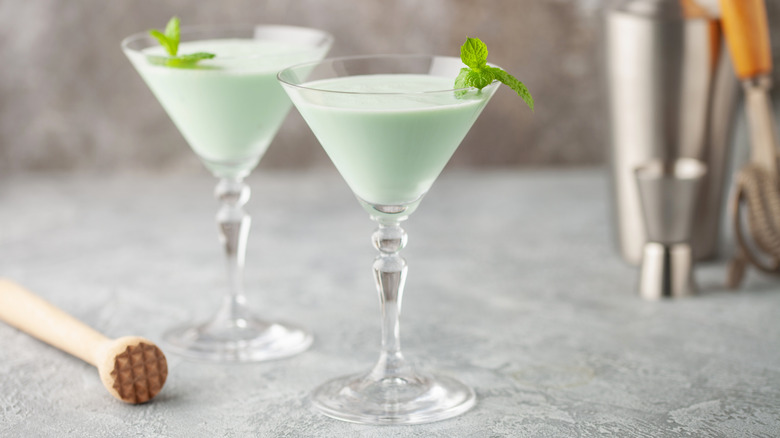
There are a few 1970s dinner party drinks that are also frequently associated with Wisconsin supper club culture, and the grasshopper is a perfect example. The equivalent of a boozy milkshake, a grasshopper is made with equal parts crème de menthe and white crème de cacao, along with two parts heavy cream, all shaken with ice in a cocktail shaker. Once perfectly combined, it is then strained into a chilled martini glass and served simply and elegantly with a mint sprig. The flavor is like mint-chip ice cream that is sure to get you feeling groovy after a few sips.
Since this drink is cool and refreshing as well as rich and creamy, it is typically enjoyed after dinner rather than with the meal. If you aren't at a Midwest supper club or partying like it's 1979, the grasshopper still holds up as the perfect holiday drink due to its minty flavor profile and gorgeous green hue. The dessert vibes aren't lost on the legions of fans who enjoy a well-made grasshopper. In fact, the creme de menthe and chocolate flavors are also often used in a pie of the same name.
Piña colada
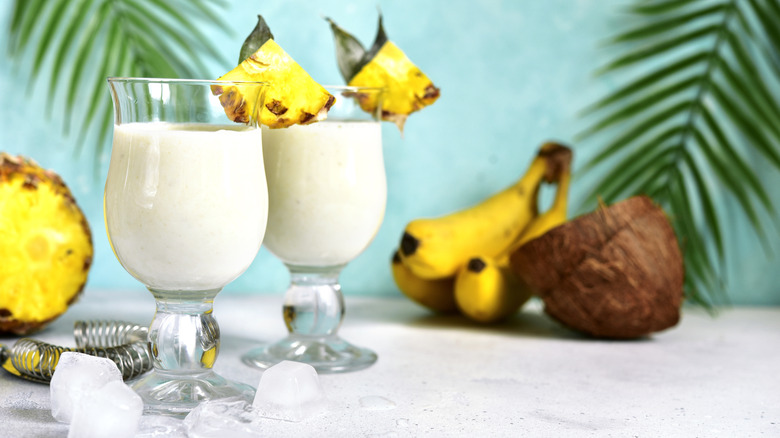
Many of the '70s dinner party cocktails inspire vacation vibes with their tropical flavors and breezy names. The legendary piña colada is no exception. This blended drink takes a little more effort to create than some of the other super-simple beverages of the generation. A basic piña colada can be made by combining white rum, coconut cream, and pineapple juice in a blender with ice, but the basic formula can be improved upon by adding freshly squeezed lime juice and some simple syrup for an extra sweet drink.
The key to the perfect piña colada is not only in the ratio of ingredients used, but also in the icy, blended consistency of the drink. It should be not only cold and refreshing but also sippable through a straw without being too thick. To avoid watering down your cocktail with too much ice, chunks of frozen pineapple can be used to keep it both cold and flavorful. The best part about serving a piña colada at a party is that they can easily be prepared in larger batches to serve a crowd. Perfect for clinking glasses and singing along to the 1979 Rupert Holmes song, "Escape." If you like "the piña colada song," this party drink is right up your alley.
Pink Squirrel
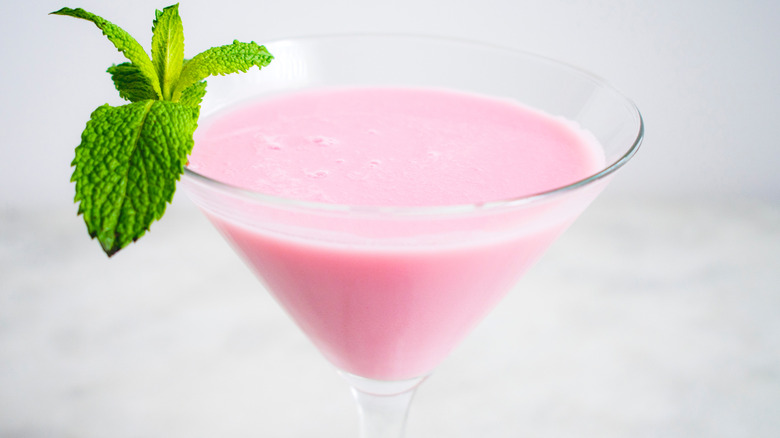
Another throwback drink from the Wisconsin supper clubs in this era is the Pink Squirrel. This cocktail was invented in Milwaukee a few decades before the 1970s and gets the signature pink hue from a little-known spirit called crème de noyaux. This French liqueur is made by distilling fruit stones from apricot, peach, and cherry, creating an almond flavor reminiscent of amaretto. Traditionally, red coloring is added to the spirit, resulting in a pink drink when the other ingredients are combined in the cocktail. The cutesy name comes from the color of the drink as well as the nutty flavor.
It is prepared almost exactly like a grasshopper, with crème de cacao and heavy cream, except here crème de noyaux is used instead of crème de menthe. Everything is shaken with ice and then strained and served in a martini glass. Sometimes, bartenders lean on the dessert-like quality of the drink and use vanilla ice cream in place of the heavy cream.
Slow Screw
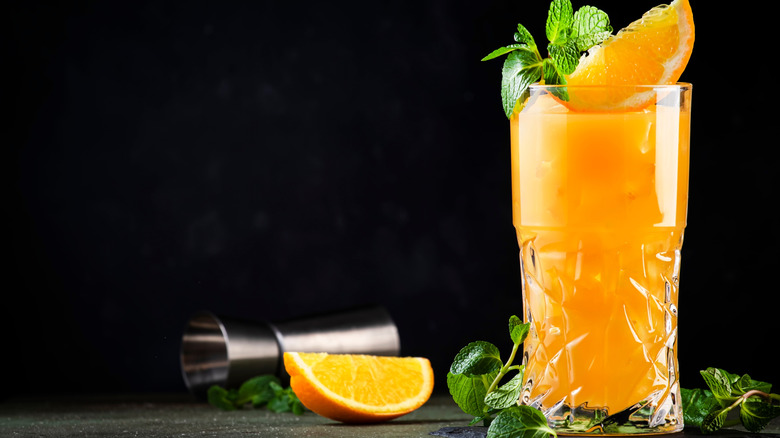
The cocktail culture of the 1970s also loved innuendo-inspired names for the drinks, with the Slow Screw being one that folks loved to order and sip with a smirk. A traditional screwdriver cocktail is a simple combination of vodka and orange juice. The exact origin of the curious name is debatable, with some claiming soldiers during World War II used an actual screwdriver for stirring together the ingredients when a spoon was not available.
A Slow Screw swaps gin for vodka. Here, a Collins glass is filled with ice, and sloe gin, dry gin, and orange juice are stirred together before being added, with a simple orange wedge as a garnish. Other variations on this riff can also be made by swapping the spirit used. A Slow Comfortable Screw uses Southern Comfort, while a Slow Screw Up Against the Wall incorporates Galliano. If you really want to throw your bartender for a loop, ask for a Slow Comfortable Screw Against a Cold Hard Wall with a Kiss. You will receive a strong drink filled with half the bar, including vodka, gin, Southern Comfort, amaretto, Galliano, rum, and, of course, some orange juice. Or maybe you'll just be met with a confused look.
Blue Hawaii
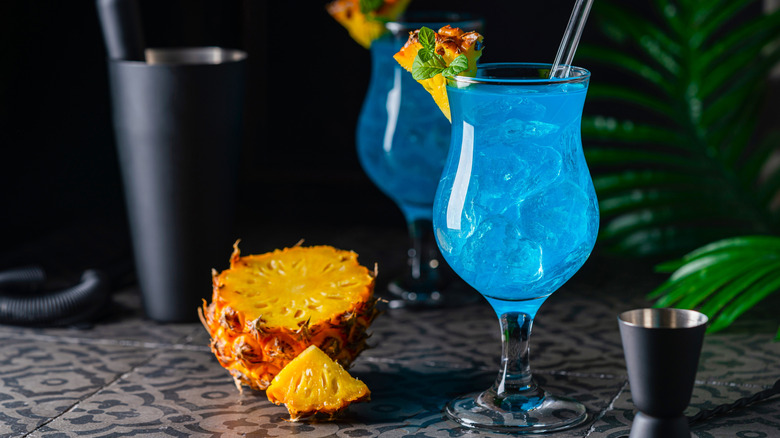
Among the most colorful of the 1970s dinner party drinks is the Blue Hawaii, made with blue curaçao. The vibrant blue hue is said to be inspired by the waters of the Pacific Ocean. This vacation in a glass is prepared with pineapple juice, vodka, white rum, blue curaçao, and lime juice. Of course, a wedge of fresh pineapple is the perfect garnish. Though it was originally invented in the 1950s, it's no surprise that the Blue Hawaii is more commonly associated with the colorful cocktail decade that came generation later.
When ordering this drink, be sure to speak clearly, because there is another beverage from the same era known as a Blue Hawaiian, where the vodka is swapped with coconut cream. Either way, you will enjoy a fruity cocktail with an unnatural neon color that will wash away all your worries with the first tropical sip.
Godfather
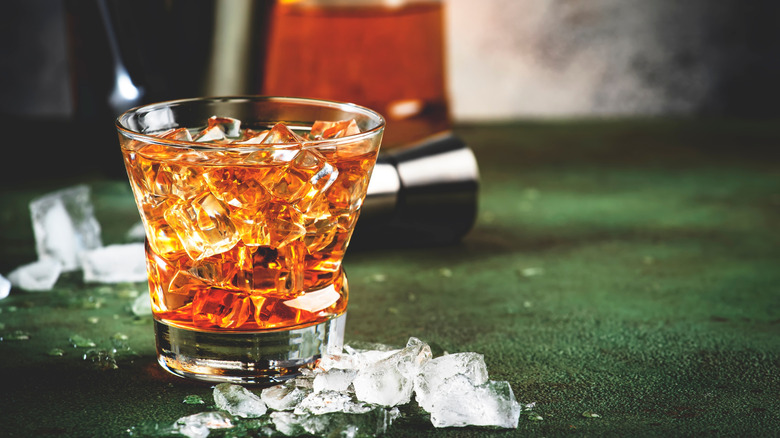
Many of the 1970s cocktails were inspired by the music of the generation, but this strong drink has ties to one of the most iconic films of the era. "The Godfather" was released in 1972, and this cocktail soon followed. If you love a classic Old Fashioned but want something a little sweeter, this one's for you.
This is essentially a riff on an Old Fashioned, but with an Italian twist by using amaretto for sweetness. And ... that's it. All you need are two ingredients for a smooth, satisfying cocktail that doubles as an offer you can't refuse. Simply fill a rocks glass with ice and add your favorite whiskey or bourbon — Scotch is also a popular choice — along with the essential Italian ingredient, amaretto. The sweet almond flavor from the amaretto perfectly balances the strong whiskey. No garnish is necessary, but some like to add a twist of orange. Forget the cannoli — I'll take a Godfather cocktail after dinner.