

10 Mistakes To Avoid When Cooking Ham
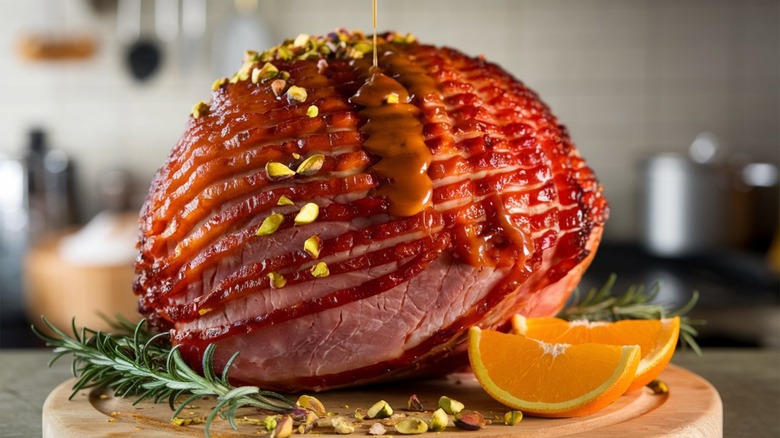
It's that time of year again when we all start dreaming of holiday meals... yum. One of the most iconic dishes to grace many of our holiday tables is a beautifully baked ham. When done right, it's tender, juicy, flavorful, and a touch crispy on the outside, but getting it spot-on every time isn't always so straightforward. As Dennis Littley, a chef and the culinary expert behind Ask Chef Dennis, put it, ”Ham is one of the easier holiday mains to prepare, but people still run into the same problems every year. The good news is that most of these mistakes are simple to avoid once you understand what the ham actually needs in the oven."
In addition to chef Littley, I also checked in with Michael Handal, a chef at the Institute of Culinary Education, to uncover some of the most common ham cooking mistakes made by home cooks. What they divulged seems almost silly when you consider how easy the missteps are to avoid, but I guess hindsight is always 20/20. Thankfully, though, a few small adjustments make a world of difference regarding the texture, flavor, and overall appeal of baked hams. So, if you're looking to up your game this holiday season and make the best baked ham of your life, you're in the right place.
Choosing the wrong ham
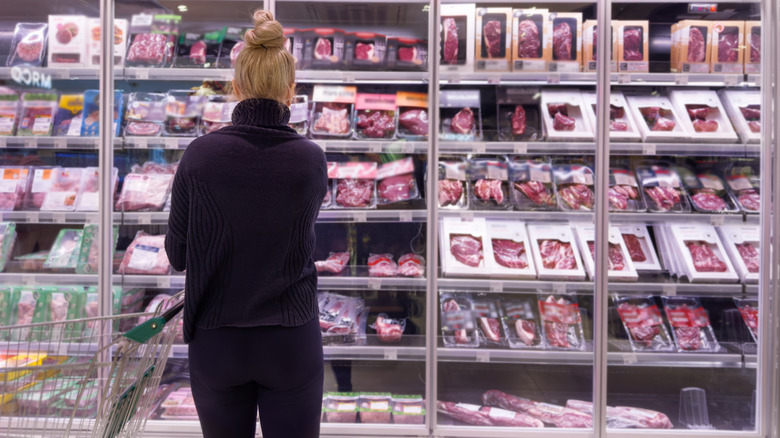
Oftentimes, the first ham cooking mistake can happen before you even get home from the store. As chef Dennis Littley told me, "Problems often start with choosing the wrong ham." Uh-oh, we can't have that. So, what does he recommend? Well, for starters, you need to understand the different types of hams being sold at your local grocery store: "Bone-in hams hold moisture better and have richer flavor. Hams loaded with added water or heavy injections often cook unevenly and taste overly salty or bland," says Littley. So, it's always important to start by reading the labels found on hams and opting for one with natural juices. That way, you set yourself up for success from the very beginning.
Chef Michael Handal also elaborated on different types of hams, and you better believe he thinks it's important to pick the right one as well. He told me that cured cooked hams, "have been flavored with spices, sugar, and preservatives and have been cooked. They may have also been smoked." He went on to say that they are the most common ones sold at grocery stores, and they are referred to as "city hams." Cured uncooked hams, on the other hand, have not been pre-cooked (it says it in the name, after all). He noted that, "These will be clearly marked with a 'cook thoroughly' label and will include cooking directions." So, to avoid any surprises when you get home, always read the label before purchasing.
Cooking ham at too high of a temperature
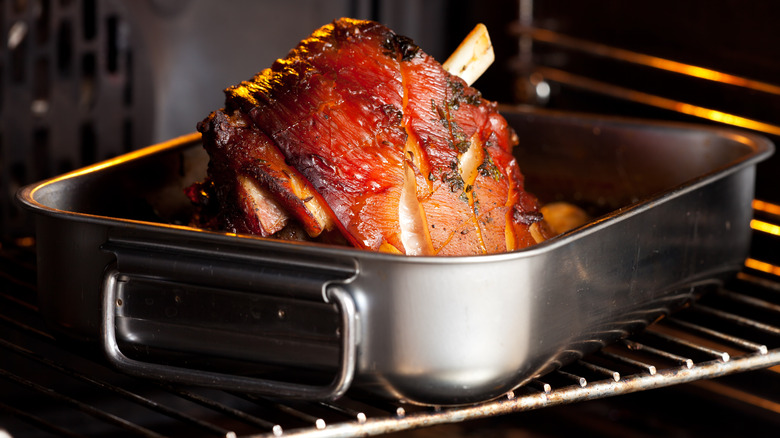
Once you have the type of ham you want to make all sorted and purchased, the next mistake you want to sidestep is accidentally cooking it at too high a temperature. In fact, chef Dennis Littley told me it's one of the biggest issues home cooks face when preparing a ham. Not us, though. So, how do we prevent it? Littley said, "Since most hams are already fully cooked, your job is just to warm them gently. Anything above 325 F usually dries out the exterior long before the center is heated through." With this in mind, "Keeping the oven at 300 F to 325 F gives the ham enough time to heat evenly and stay moist."
In addition to keeping the temperature fairly low, chef Michael Handal said it is important you give yourself enough time for the re-heating process, "A fully-cooked ham will still need 10 to 12 minutes per pound." Don't underestimate the timing, or your entire holiday meal could be thrown off. If you decide to go for an uncooked ham, you'll need even more time to get the job done right. After all, you'll need time for roasting, glazing, and resting. According to Handal, "A shank-cut of pork will weigh between 8 to 10 pounds, and could require four hours of cooking time, plus 30 to 40 minutes of glazing, plus 10 to 15 minutes to degrease pan juices and adjust seasoning." Wow, alright. That's quite the difference, but it's nothing we can't manage, right?
Not scoring the surface of a ham before cooking
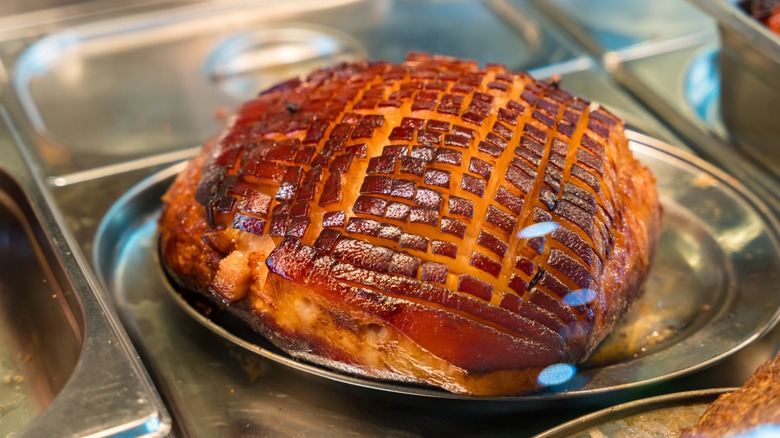
When it comes to pork roasts, there are two ways to go regarding the skin, says chef Michael Handal. He told me your first option is to remove it, something that leads to a smoother-textured baked ham in the end. Your other option is to leave the skin on, and if you like a baked ham with a glazed, crunchy exterior, it's the only way to go. Still, there's a crucial step that goes into achieving the tender, juicy texture inside paired with crispy skin on the outside; not executing it is a mistake you don't want to make. What is it? Forgetting to score the surface before baking, of course.
According to chef Dennis Littley, "Many home cooks also skip scoring the surface, which makes a noticeable difference," and it's more than safe to assume he means that in a negative manner. He went on to say, "Light crisscross cuts let the heat penetrate and give the glaze something to cling to instead of sliding off. It's a small step but helps with both flavor and texture." Um, we love a small change that leads to big, tasty results. Sign us up!
Not timing the glaze properly
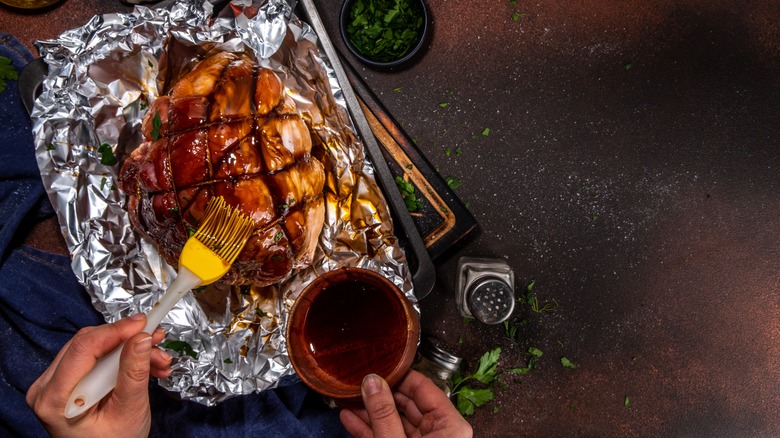
A beautifully baked ham is quite the sight, at least when it's done right, and one of the most eye-catching elements is the glaze. A proper scoring on the surface doesn't hurt, either, but the shiny glaze is enough to draw most people in all by itself. Careful, though, because you have to time the delectable glaze just right, and not doing so is another common ham cooking mistake our experts warn against.
As chef Dennis Littley said, "Timing the glaze is another common problem. If you put it on too early, the sugars burn." To prevent this, he adds his glaze for the final 20 to 30 minutes of cooking time and bastes it once or twice. According to him, "That's all you need to get a good shine and deeper flavor without any burnt spots." Chef Michael Handal confirmed that mistiming the glaze on ham is a misstep to avoid. However, he recommends adding it for the last 30 to 40 minutes it is in the oven.
Now that you know all about how to time the glaze perfectly, you just have to figure out what ingredients you want to use to make your drool-worthy ham flavor-booster. Don't worry, though, you have lots of tasty options. Anything from honey to citrus to maple syrup and beyond has what it takes to help you build a glaze worth remembering. Heck, you can even use sweet sodas, like ginger ale, to make a glaze.
Placing your ham directly on the pan for cooking
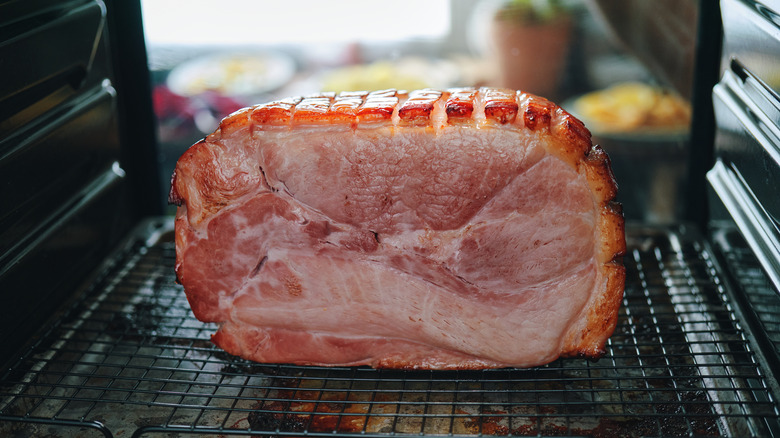
Next up on our list of common mistakes to avoid when cooking ham is placing your ham directly on the pan with nothing underneath. You may think simply plopping your next baked ham into a pan for cooking and letting it rip is the way to go, but our experts disagree. For starters, chef Michael Handal told me you should, "Pre-line the roasting pan with aluminum foil to prevent burning during the final stage of the re-heating process." Burnt ham? No, thanks.
Chef Dennis Littley chimed in on the matter, as well, "I also see people place the ham directly on the pan, which can cause uneven heating." He recommends you place your ham on a rack inside the pan or make a bed of veggies out of onions and carrots for it to sit on. Either way, the elevation helps heat circulate around the ham more uniformly. He also told me, "Adding a splash of broth, apple juice, or water to the bottom of the pan keeps the pan moist and protects the ham as it warms." I didn't realize hams needed so much care to get right, and something tells me you didn't, either (you are seeking answers to how to make a better ham, after all) — but by all means, protect the ham at any cost.
Thinking you can skip the thermometer, something that easily leads to over-cooking ham
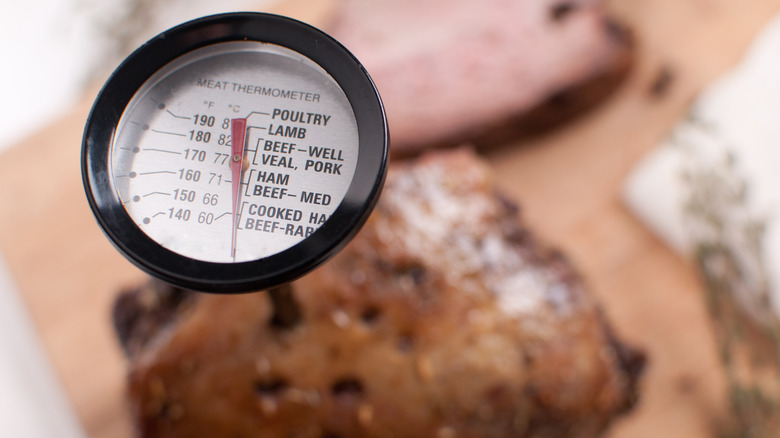
If you don't already own an oven thermometer and a meat thermometer, your desire to make the perfect baked ham is more than enough reason to invest in one of each. As it turns out, both of our experts told me not using a thermometer (or two) is a mistake you want to steer clear of. As Chef Dennis Littley said, "Because ham is pre-cooked, many people assume they don't need one, but that's how overcooking happens." He recommends warming pre-cooked hams to 140 F, with help from our trusty temperature tool, of course, "Anything above that and the meat starts to tighten and dry out."
Chef Michael Handal agrees wholeheartedly with Littley, although he said you can push pre-cooked ham's internal temperature as high as 145 F. Either way, you want to confirm with an instant-read meat thermometer. He also noted that, "An oven thermometer is an excellent investment here to confirm actual oven temperatures." Maintaining proper temperatures inside your oven is paramount to achieving moist slices that lack any semblance of a rubbery or unappealing texture. He said 320 F to 330 F should do the trick when reheating large cuts of ham. Anything higher and you run the risk of drying it out and ruining the texture. Say less, am I right?
Under-seasoning ham
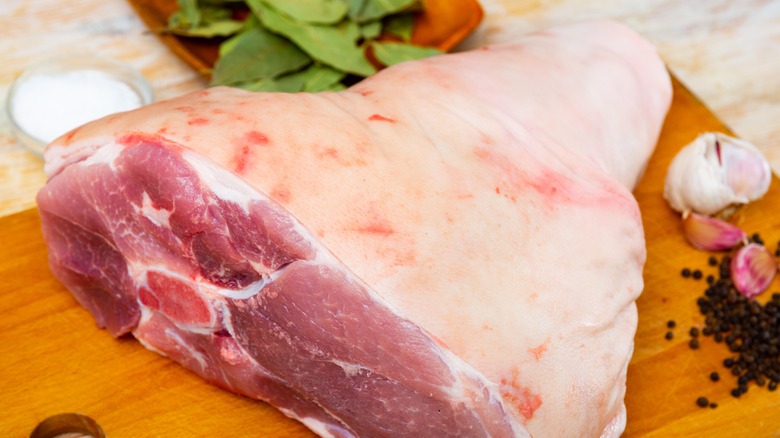
Unfortunately, "A lot of cooks under-season ham, assuming its saltiness is enough," says chef Dennis Littley, but adding extra flavor is where it's at. In fact, he went so far as to say, "Without extra seasoning, the final result can taste flat once it cools, especially when served alongside bolder holiday sides." Um, no thanks. Flavorful ham is definitely the goal, so what does he recommend we do to fix the misstep? Well, his favorite seasonings to add "are mustard, garlic, citrus, maple, brown sugar, spices, or even a touch of bourbon."
Chef Michael Handal also stressed the importance of seasoning ham thoroughly. If you buy a ham that's pre-glazed, he told me you should give the glaze a taste test. They are often extremely sweet, and, "a small dollop of Dijon mustard can add a nice amount of tartness and spice to the glaze." He also added that uncooked hams have not been seasoned, and, "A mix of dry spices and salt will get your roast headed in the right direction. He told me, "Many of the warm spices, such as cinnamon, allspice, clove, star anise, and nutmeg, complement fresh pork."
Our experts made some outstanding flavor recommendations, but that's not where the fun stops. Blood orange and honey glazed ham is another tasty combination, and so is pecan bourbon and cane syrup. Feel free to play around until you find the perfect flavors for your baked ham preferences, and you'll be glad you did.
Leaving your ham uncovered the entire time it is cooking
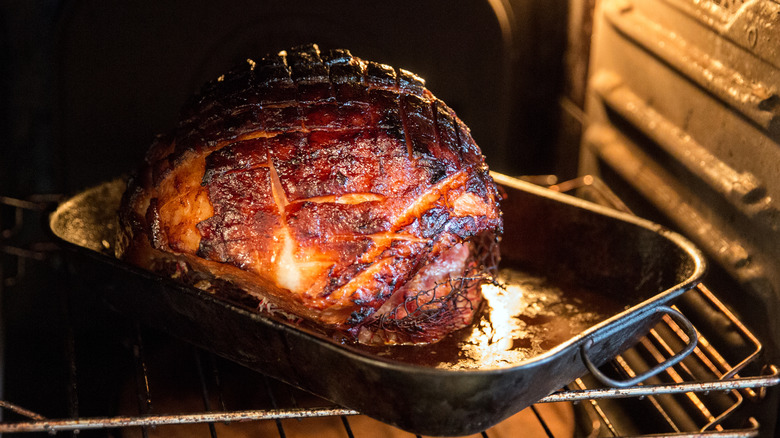
Another mistake both of our experts said is pretty common and also easy to avoid is leaving your ham uncovered throughout the entire cooking process. Maybe it's because you're running low on aluminum foil, or maybe you just spaced it with all the other things going on in the kitchen, but forgetting to cover your baked ham should be avoided at all costs.
As chef Dennis Littley told me, "Leaving the ham uncovered the entire time is another habit that dries it out. Cover it for most of the heating process, then uncover it at the end when you apply the glaze so it can caramelize properly." Chef Michael Handal couldn't agree more. He said we should, "be sure to keep the roast tented for the first three hours or so of cooking to prevent drying and/or burning."
Nobody wants a dry ham, especially considering all the work that goes into making a delicious one. Actually, now that I think of it, it is a lot of work considering many of them even come pre-cooked, but I digress. Don't mess up your next baked ham by forgetting to cover it for the majority of the time it is in the oven. Otherwise, you'll be setting yourself up for a serious letdown when the time comes to actually sink your teeth into it.
Not allowing your ham to rest after cooking
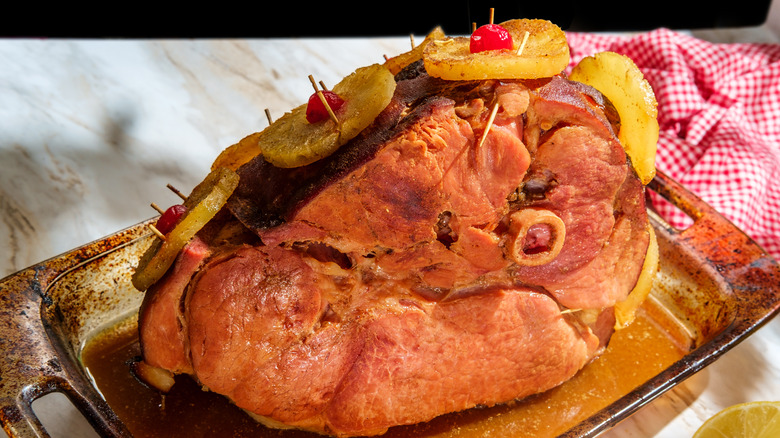
Once your beautifully baked ham comes out of the oven, many home cooks assume there isn't anything left to mess up, but according to our experts, there are still a couple of ways for you to ruin it. Sounds ominous, but these last two mistakes (this and the one coming up) are the easiest ones to avoid, so don't get anxious just yet.
Despite our best efforts, we are not all masters at planning our meals so every dish finishes cooking at the same time, like a pro chef. When it comes to making a large holiday meal, with baked ham included, you can basically forget about it. However, the mistake many home cooks make is pulling their baked ham out of the oven and assuming it's time to dive right in and eat it straight away. Don't do it. According to chef Dennis Littley, "Another easy mistake to fix is carving too soon. Even a cooked ham needs a short rest after heating. Cutting into it right away lets the juices run out." He recommends allowing your baked ham to rest for 10 to 15 minutes before slicing. When you do, it prevents overly dry slices and helps keep the meat as tender as can be.
Chef Michael Handal backed Littley up on the whole resting thing. Even so, he recommends leaving it to rest for even longer, 20 to 30 minutes, so the juices have enough time to redistribute throughout.
Slicing your ham the wrong way
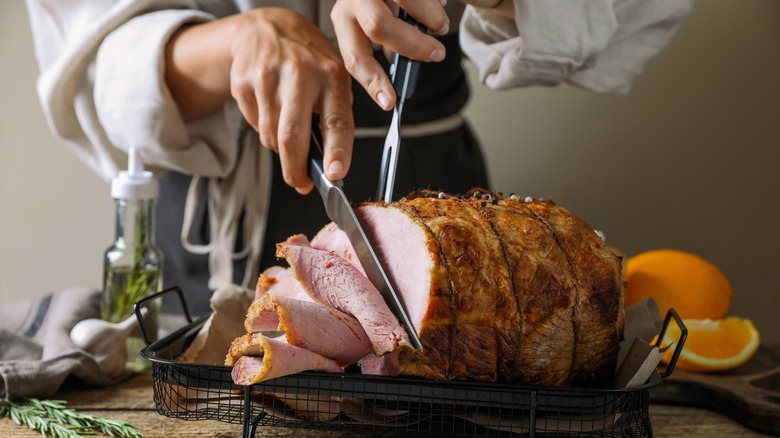
After all the hard work that goes into cooking your baked hams properly, the last thing you want to do is screw it all up at the very last moment. Unfortunately, it might be easier than you think, though. I mean, you probably thought after you let it rest (our previous tip), you'd be good to go, but don't get ahead of yourself just yet. The final mistake home cooks fall prey to, and you certainly want to avoid, is slicing your ham the wrong way.
According to chef Dennis Littley, "Slicing the wrong way is a small but important detail. Cutting with the grain gives you tougher, chewier slices. Cutting against the grain gives you softer, more even pieces that are easier to eat." If you are not a ham aficionado (most of us are not), cutting with the grain could seem like the way to go, but as Littley told us, that simply is not the case. Instead, always cut your baked hams against the grain. After all, we all want softer pieces that are easier to eat, duh.
We've covered a lot of ground thus far, but by now, you should be ready to cook a ham like a pro. Just remember to avoid the mistakes we've discussed while following a few standard rules for baking ham, and your next one will have what it takes to not only turn some heads but keep people coming back for more.