

Forget Mayo: Spread This Ingredient On Burger Buns For A Crispier Bite
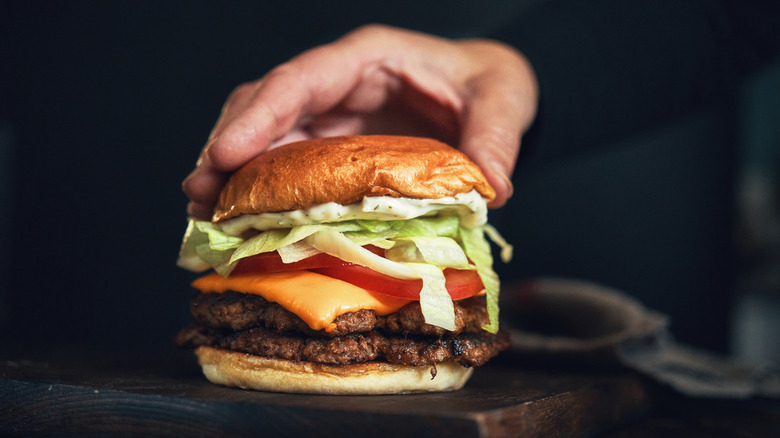
Everybody loves a burger, and there's no shortage of tips out there for elevating the patty. However, one fundamental component that gets far less attention is the bun. And dare we say, it's just as important as the meat. It makes up a huge part of every bite, so it deserves proper treatment. Most of the time, people will spread on some mayonnaise and call it a day. While that's certainly better than leaving it plain, there's so much more you can do to take your bun from an afterthought to main event. For example, rather than boring old mayo, swap in duck fat for a seriously crispy bite.
Duck fat is the rendered fat from duck skin and meat, which is liquid when warm and semi-solid when cool. While it's rarely seen in burgers, it's prized in culinary circles for its rich, savory flavor and silky texture, and it's used for roasting potatoes and deep-frying chicken to the famously indulgent duck confit. On a bun, it adds a deep savoriness that becomes the backbone of your burger's flavor. It also has a higher smoke point than butter — around 375 degrees Fahrenheit versus butter's 350 degrees Fahrenheit — so it can easily handle a hot skillet without burning. That helps the buns develop a beautiful crisp, providing a satisfying textural contrast to the soft, juicy patty. Even better, a fat-infused crust also helps keep the bun from getting soggy.
To add duck fat to your burger buns, melt a small amount in a cast-iron skillet over medium heat. Once it's hot, place your buns cut-side down and toast for a minute or two until golden brown and crisp, keeping a close eye on them, so they don't burn.
More ways duck fat can elevate your burgers
Toasting the cut side of your burger buns isn't the only way to bring in the flavor of duck fat. If you're looking to go the extra mile, try baking your own buns and swapping the butter or oil in the dough for duck fat. They're easier to make than you'd expect, and the fat gives the buns a savory richness that carries through every bite. For an extra hit of flavor and an even more golden crust, brush the tops with a little melted fat before baking.
If you'd rather keep things simple, try frying your burgers in duck fat. This has an impressive two-for-one benefit. Firstly, its relatively high smoke point allows for a deep, flavorful sear. Secondly, since the fat is doing so much of the flavor work, you can keep your seasonings simple — a small sprinkle of salt on the outside right before they hit the pan is all you need. This also helps you avoid the classic mistake of salting your meat too late.
Beyond using duck fat as a cooking fat, you can also work it directly into your ground beef. The duck fat will infuse the meat with a richer flavor while rendering and keeping it moist as it cooks, which makes it especially forgiving for beginners. Just keep in mind that if you're mixing it into the meat, you should always start with a lean blend, something around 90-to-10. If the blend is already fatty, adding more risks turning rich, flavorful patties into a greasy mess.