

14 Affordable HomeGoods Finds That Can Upgrade Your Baking
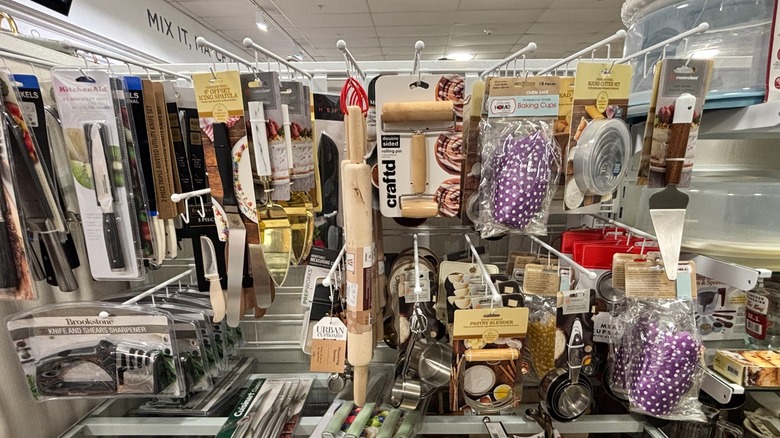
HomeGoods is a baker's dream, with aisles like a treasure trove of epicurean delights and gadgets. On one shelf you may find a collection of infused olive oils; on another, a stack of imported crackers and flatbreads. Keep your eyes peeled, and you may stumble across a discounted Staub dish or some Le Creuset cookware. HomeGoods brings out the inner bargain hunter in all of us; everything in the store is a relative deal, so much so that customers often end up leaving with a few extra throw pillows, candles, and packets of freeze-dried ice creams.
But if you enter HomeGoods with a plan, you can essentially re-outfit your entire kitchen with new baking equipment for about the same cost as an average dinner for four at a casual eatery. I chose the items on this list specifically for their baking benefits and price at my local HomeGoods, located in Merrick, Long Island. With only a couple of exceptions, every tool/device on this list costs less than $15. Some of the products you'll recognize; others, you may want to run out and grab immediately after reading about them. All of them, however, will help upgrade your baking in one way or another.
Cookie or Ice Cream Scoop
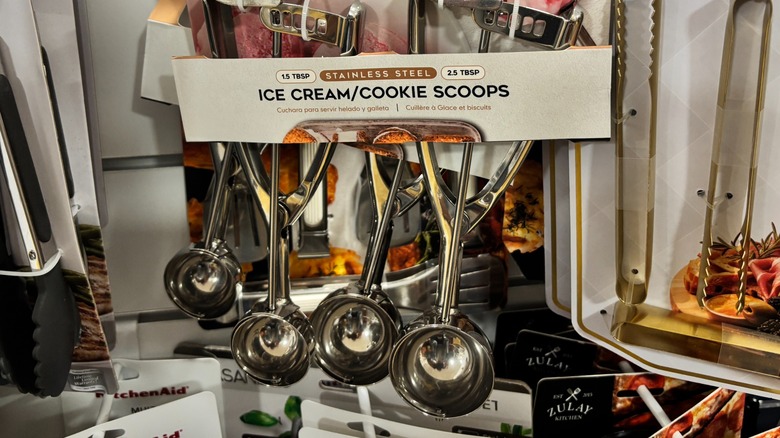
Homemade cookies are the ultimate comfort dessert, delivering sweet and buttery nostalgia with every bite. Some home bakers embrace the mismatched shapes and sizes that come with eyeballed spoonfuls of dough, but others look for uniformity in their cookie dough balls. For extra precision, use Ina Garten's cookie dough tool of choice: a cookie-slash-ice cream scoop. This household gadget lets you grab exact portions with every dip into the dough. And thanks to its spring-loaded release, a cookie scoop speeds things up, picking up and dropping the raw cookie in one continuous motion rather than sliding each dough blob off the spoon with a bare finger.
This consistency helps with both spacing and baking. Otherwise, mismatched heights and circumferences may cause one cookie to brown while the other ends up underbaked. The handy gadget also doubles as an ice cream scoop, which we prefer the larger of the two sizes for. Grab your vanilla ice cream, and you can easily achieve the perfect cookie-to-ice cream ratio in a homemade ice cream sandwich. And since the package comes with two separate scoops, no rinsing is required.
Springform Cake Pan
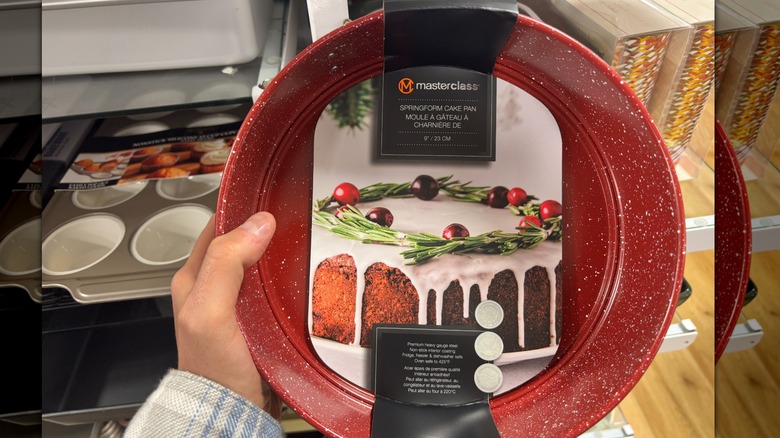
A springform pan is for home bakers who want to take their cheesecakes, tortes, and frozen desserts to the next level. This pan uses — you guessed it — a spring to help you separate the mold from delicate cakes or desserts without having to invert the pan. Using this type of pan is a pro tip for crafting the perfect ice cream cakes, delicate chocolate tortes, or savory dishes, like a towering casserole or deep-dish style pizza.
When using a springform cake pan, there are a few factors to consider. First, measure to see whether you have an 8-inch, 10-inch, or another size so your cake doesn't come out flatter or taller than you want. Second, as with other baking dishes, a light spritz of oil around the inside and bottom of the pan helps ensure nothing sticks. Lastly, when freeing your desserts, let them cool completely (especially cheesecake) before unlatching and removing them; otherwise, the soft center may sag at the sides or collapse.
Disposable Dough Proofing Covers
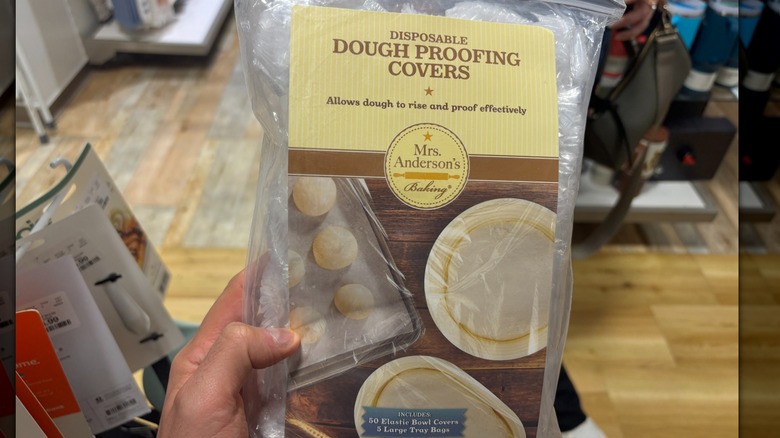
When strolling through HomeGoods' endless inventory of obscure, interesting, and practical baking gadgets, it's easy to pass the disposable dough covers without a second thought. But this would be a big mistake. Disposable dough proofing covers aren't flashy, but they're good at their job — keeping dough moist and warm. Without moisture, dough loses its elasticity and springy body and develops a dry, crusty film that crinkles as you shape it. And if the dough gets too cool, the yeast will struggle to convert the starch and sugar into carbon dioxide, the gas that's needed for bread to rise.
Bakers use all sorts of devices to cover their proofing bowls, from shower caps to dish towels to plastic wrap. A disposable dough proofing cover is more precise; its porous construction is designed specifically to retain heat and moisture without cutting off all air flow. These are easier to control than other covers, but do pose a bit of a sustainability issue. However, some home bakers rinse them out afterward and reuse them a few times before tossing. And with 50 covers per bag, one package might even last you the whole year.
Holiday Cookie Cutters
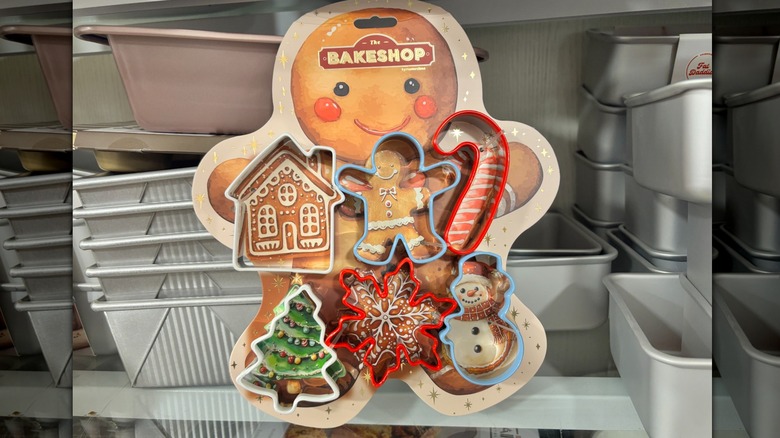
Does a cookie taste better when it's shaped like a snowman or a candy cane? Not necessarily. But shaped cookies certainly pluck an emotional chord that gets us in the spirit of the holidays. A cute, seasonal cookie cutter is a must-have for any home baker. These transform ordinary oatmeal cookies, snickerdoodles, and gingerbread into edible works of art. With a little freehand icing, you can breathe new energy into your baked goods and bring these simple desserts to life.
HomeGoods always has a decent selection of cookie cutters, but this winter holiday pack contains every shape you need. Using cookie cutters isn't difficult, but there are some rules to follow before cutting into your dough, the first and most important being to chill your cookie dough before cutting. Some other pointers include pressing — not twisting — the cutter, flouring after each cut to prevent sticking, and chilling your freshly punched cookies as well to prevent them from spreading in the warm oven and losing that adorable holiday shape. Although they're primarily for cookies, you can use the cutters on fruit, sandwiches, pancakes, and excess pie dough to add even more celebratory flair to your special desserts.
Cookie and Icing Gun
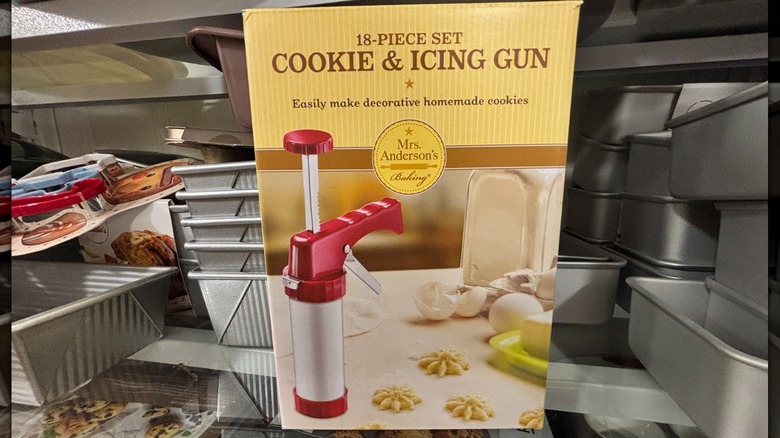
It may look like it's for caulking kitchen tile, but a cookie and icing gun is an indispensable gadget that belongs in your baking repertoire. It's essentially a sushi roll-sized extruder designed to push dough and icing through different-shaped disks. This device is ideal for bakers who like to adorn their cakes, pies, and cookies with adorable embellishments. And at just under $10, it's a great bang for your buck. What's cool about the cookie gun is that it allows you to make perfectly uniform cookies without touching a rolling pin.
However, it does have its limitations. Load your cookie gun, also called a cookie press, with room-temperature dough so it moves effortlessly through the mechanism. They're also used almost exclusively for sugar or spritz-style cookies. Anything chunkier — chocolate chip, oatmeal raisin, etc. — will get caught in the mechanisms and clog the press. This particular cookie gun also includes a set of nozzles specifically for icing. Just fill the tube and pat it gently to eliminate air bubbles to minimize any minor icing sprays or splatters.
Ceramic Pie Weights
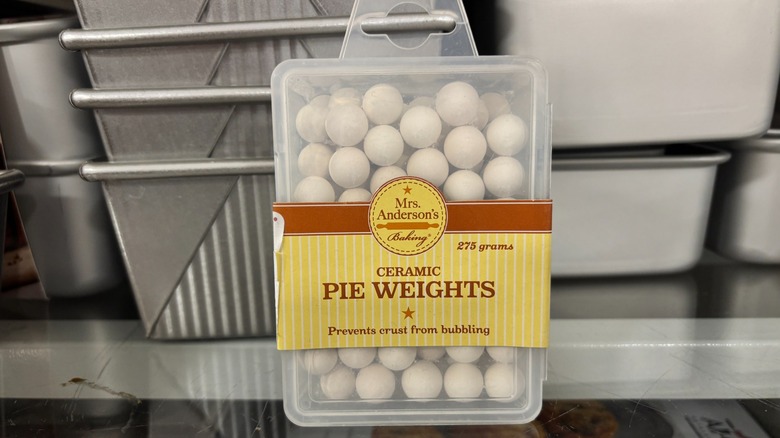
The beauty of the pie weight is in its simplicity. Pie weights are designed to do just as their name says — weigh down crusts as they bake. Homemade pie dough uses a lot of butter, which gives it a soft, flaky texture and that signature golden-brown exterior.
As the crust bakes, the butter and inherent moisture begin to steam, causing the dough to rise and expand, disrupting its shape, especially toward the pie's center. Note that this only applies to pie crusts that are blind-baked (par-baked prior to filling). Pie weights also help the sides and outer crust maintain their shape. That's why it's recommended to fill your pie or tart dough with enough weights to reach up the sides of your crust; a common pie crust mistake is filling only the bottom. Otherwise, the crust will shrink and contract during baking. The more pie weights you use, the more secure your crust will be during and after baking, which means it will perfectly hold your tasty filling.
Biscuit Cutters
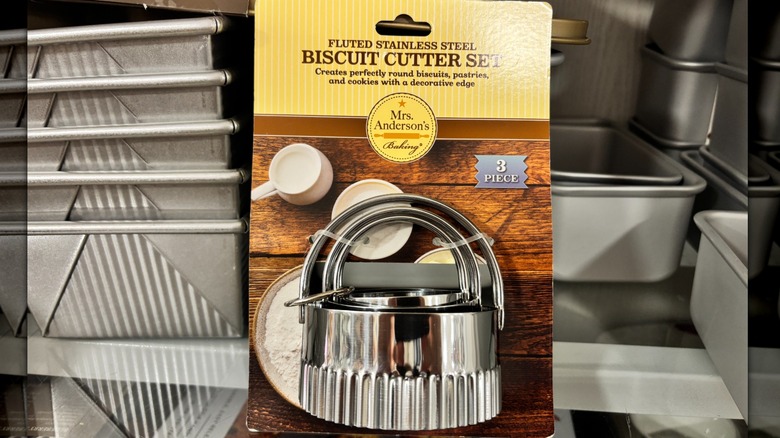
They aren't the most advanced of gadgets, but a good set of biscuit cutters is crucial for quality, consistent baking. You may think that a biscuit cutter is just a device for making uniform rounds of dough, and that any mason jar or empty aluminum can will have the same effect. Although these improvised tools are charming, they lack the quality that makes a biscuit cutter so special: a sharp edge. If you use, let's say, a mason jar, its rounded lip will — ever so slightly — smush the dough as it cuts.
Now, this may not seem like a major distinction, but that slight compression can actually prevent the layers of the dough from catching steam, resulting in a stunted biscuit. A biscuit cutter's thin edge slices cleanly through chilled dough, a key step in baking tall, fluffy biscuits. Equally important is using the right amount of pressure when punching out your biscuits. Use enough force that you don't need to twist to free the dough. This motion can also seal the layers and prevent your biscuits from reaching their desired height. This set contains three different cutters, perfect for making biscuits of all sizes.
Silicone Baking Mat
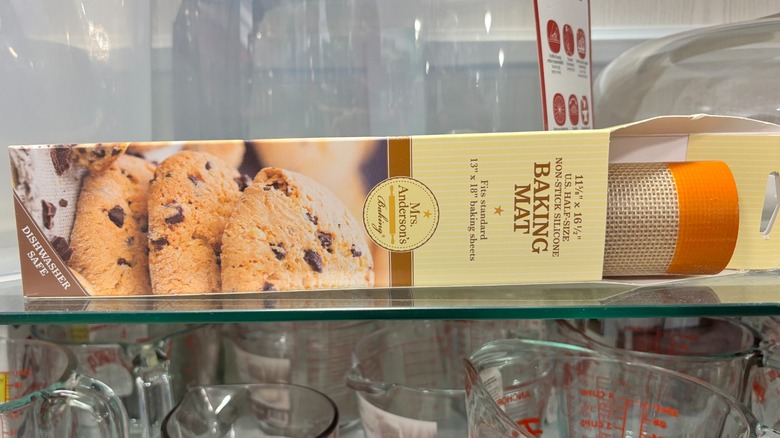
A silicone baking mat is an indispensable tool for all types of baked goods and confections. These are typically made with food-grade silicone, a material that's designed to withstand hundreds of trips in and out of the oven. They're also more cost-efficient and environmentally sustainable, saving you from buying roll after roll of parchment paper. Another advantage is that, unlike parchment paper, the surface is especially slick — great for peeling off sticky candies or stuck dough.
They're also pretty durable. Most silicone mats (depending on the brand) are safe to use in the freezer, microwave, or ovens up to 450 to 500 Fahrenheit. And while some areas of your typical baking sheet develop hot spots, a silicone baking mat helps distribute heat, so that your pastries and doughs bake evenly without browning too quickly on the bottom. Most baked goods can go on a silicone baking mat; however, some cookie varieties tend to spread out or get too greasy. In these situations, stick with parchment paper.
Other uses for silicone baking mats include making caramels and candies, melting cheese into crisps or tuile, or roasting meat and fish that are prone to sticking. Just don't use it if you plan on broiling; the flames can melt the mat. And if you need to clean off a particularly stubborn stain, a quick scrub with hot lemon water can do wonders for a silicone baking mat to remove grime and eliminate off odors.
Adjustable Measuring Cup and Spoon Set
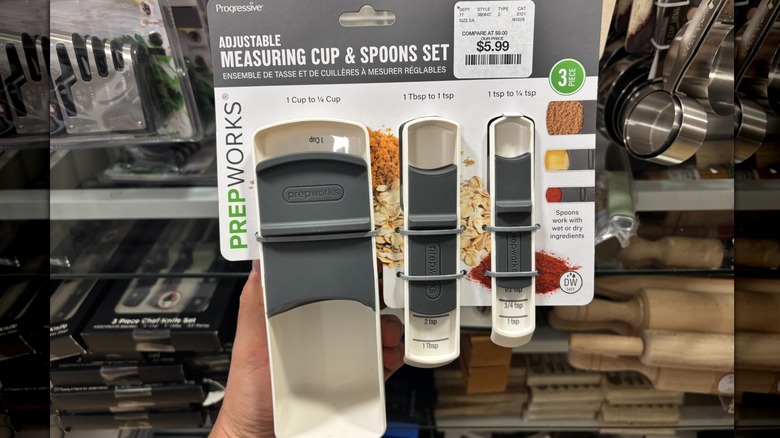
Unlike throwing together a lasagna, chili, or indulgent nacho platter, baking cookies, cakes, and pie dough requires an extra degree of precision. A set of measuring cups helps you minimize this user error. The one drawback is that these cups can be cumbersome, taking up more space in your kitchen drawers than you'd like. With this adjustable measuring cup set, you don't need to dirty a half-dozen scoops and teaspoons; you can use just a few for every measurement.
The benefit of an adjustable slider is that it lets you nail specific measurements all with one device. Using a measuring cup seems intuitive, but a few packing techniques can help you measure your dry and wet ingredients more accurately. With all-purpose flour, for example, resist scooping it directly into the cup; instead, fluff it gently before measuring to avoid overpacking. Granulated sugar, on the other hand, just needs a quick leveling with your finger or a butter knife.
Wire Baking Rack
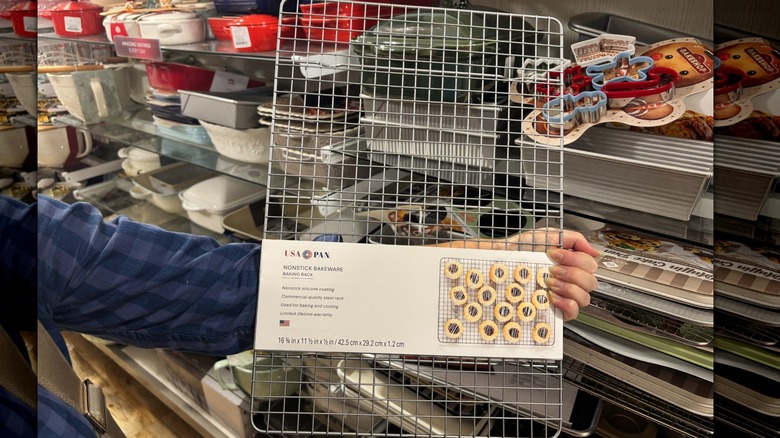
A wire baking rack can instantly elevate the quality of your breads, cookies, and baked goods. This simple device helps eliminate the most common baking slip-ups, and the first time you use it, you'll kick yourself for not buying one sooner. So what does a wire baking rack deliver? First, increased airflow. The enemy of a crisp bottomed cookie or scone is moisture. Instead of steam being trapped in your cookie or scone after it's pulled from the oven, a wire rack lets the moisture flow out freely, ensuring a browned, crispy bottom.
Freeing the steam also helps with cooling, which prevents the carry-over cooking often culpable for dried-out cakes and pastries. If you're into decorating, a wire rack can help you get the most of your glazes. Assemble your freshly-fried doughnuts or fritters and drizzle them with your icing. The wire rack prevents pooling around the base of the pastry, allowing for a more complete coating. And although this article is about baking, a wire rack is also useful for resting meat pulled from the oven.
Non-Stick Cupcake Pan
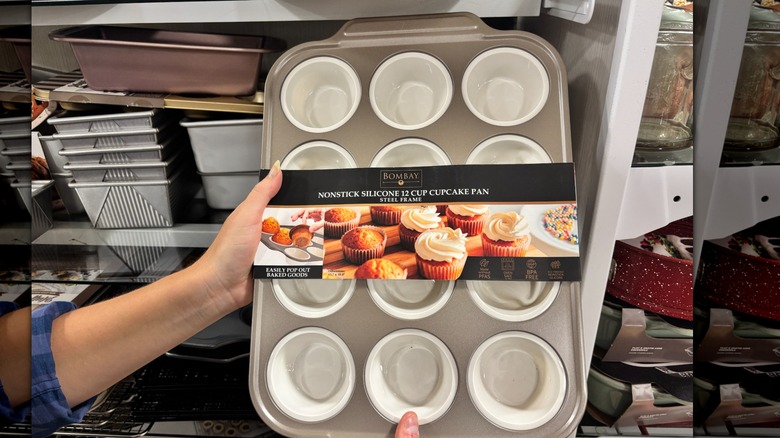
In many ways, a cupcake is up there with the ideal pastry: easy to decorate, totally customizable, naturally portioned into individual servings, and capable of pacifying hordes of hungry children at any picnic or birthday party. On one hand, a cupcake is easy to put together. Plenty of boxed mixes require little more than an egg or some oil. The only potential hiccup is sticking the landing — or should I say unsticking.
That's where a non-stick cupcake pan comes in handy. The food-grade silicone helps prevent the bottom of your cupcakes from adhering to the mold and separating during removal — one of the most common cupcake pitfalls. After baking your cupcakes or muffins, let them cool for about 20 minutes. Once the batter has set, press the bottom of each mold, and they'll pop right out. You can even add cupcake liners, which slightly defeats the non-stick benefit but makes for a quicker cleanup. For something savory, use your non-stick muffin pan to bake breakfast egg bites or mini frittatas.
Cooking Torch
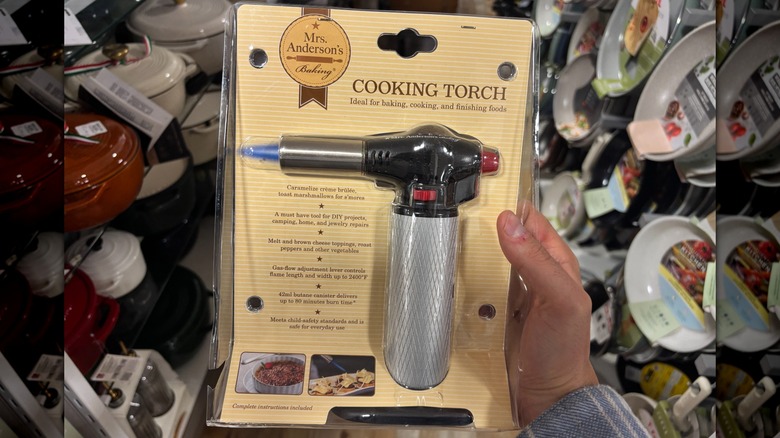
A cooking torch isn't a toy, but boy, is it fun to use. It's essentially an oversized butane lighter, with a flame that shoots out anywhere between 2 and 6 inches, depending on how you adjust the fuel. You can do a lot with a cooking torch, but its most common use is melting or caramelizing sugar for desserts like crème brûlée, flan, and custards. The high heat works faster than a broiler and is easier to handle, especially if you're working on individual portions or if a dish can't go in the oven, like to light up and toast a baked Alaska with liquor. Anything that requires fire-roasting can benefit: marshmallows, meringue, fruit coated in sugar, s'mores — you name it.
At $24.99, it's one of the pricier items on this list, but it's still a steal for a quality torch. The utility of a cooking torch extends beyond sweets and into the realm of savory, too. In seconds, you can roast poblano peppers or jalapeños for a spicy cheddar scone or blister some tomatoes for a vegetable tartlet. It's also a handy tool for melting cheese on freshly baked bread, giving any softer cheese that intense, fiery aroma and toasted umami flavor. Lastly, if a pastry, loaf, cake, or pie is stuck in its baking dish, a quick once-over with the cooking torch helps free it from its pan or mold.
5-Speed Hand Mixer
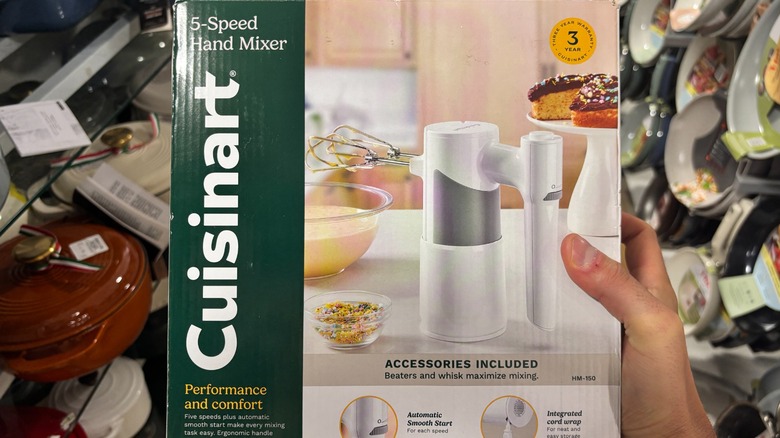
At $29.99, this is the priciest item on the list, but it's still a bargain relative to its value and utility. Even if you own a countertop KitchenAid mixer, a hand mixer still has a place in your cabinet. By incorporating air at a high speed, you can whip heavy cream into a fluffy topping or aerate egg whites until they're firm enough for meringue, soufflé, or chocolate mousse. It's also great for combining dry and wet ingredients into smooth doughs and batters, which is essential for lump-free cakes, breads, and muffins. Need to cream butter for cookie dough? A hand mixer can help with that, too. You can even add extra volume to your average jar of frosting with a quick mix.
When using a hand mixer, there are a few pointers to keep in mind. Use a deep bowl wide enough for you to move your mixer around comfortably. Start on a lower speed and gradually increase it to achieve your desired volume or consistency. In general, lower speeds are better for mixing batters, making doughs, mashing potatoes, or shredding meats, while the top speed is normally reserved for whipping cream and egg whites.
Seasonal Syrups
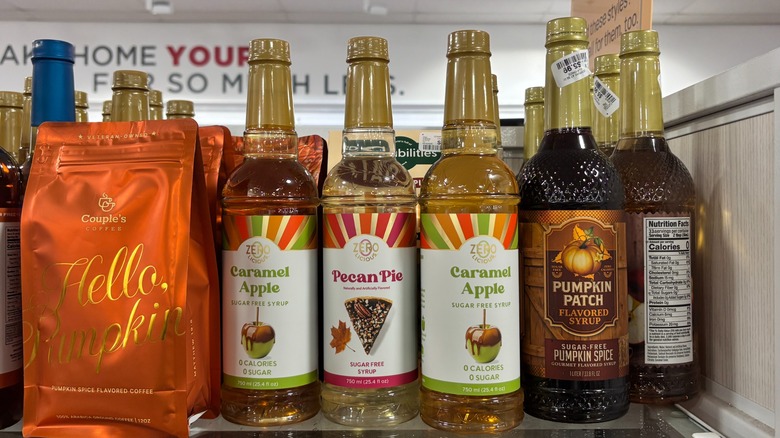
HomeGoods carries a rotating selection of gourmet goodies. Now, many of these — marinated artichoke hearts, snack mixes, saltwater taffy — are enjoyable on their own, so although they're appropriate for baking, they don't qualify for this list. Their seasonal syrups, however, serve no better purpose beyond flavoring doughs, cakes, coffees, and frostings. Depending on the time of year, you might see different varieties, but from September through December, you'll most likely find fall- and holiday-inspired bottles sitting on the shelves.
You can use syrups as the primary flavorant or to enhance or emphasize an existing ingredient. There are a few different ways to incorporate these into your baking, like swapping out water or milk for syrup in a glaze. The simplest and most effective method is to dip or brush your warm cake with syrup to help keep it moist and reinforce the flavor profile. Reducing the syrup further can help if you intend to drizzle it over a cake or incorporate it into an icing. Syrups also work as a sugar replacement; however, you may need to slightly adjust your recipe to account for the added liquid. Some varieties contain zero calories or zero sugar, so be wary if you're sensitive to the taste of artificial sweeteners.