

Filet-O-Fish Vs McCrispy: The McDonald's Sandwich With More Protein
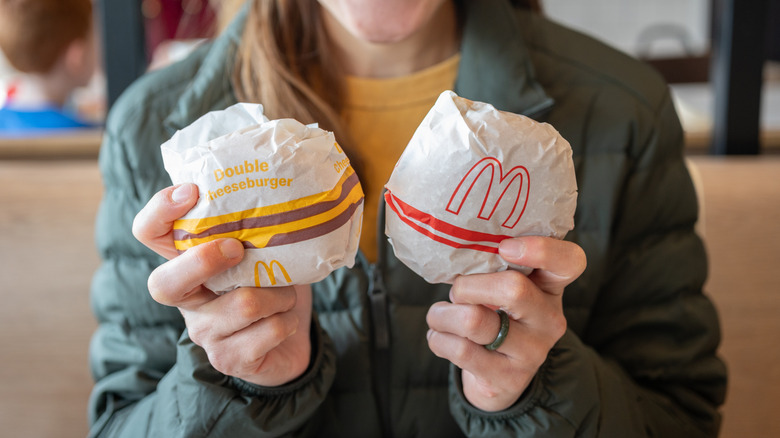
If there is one food obsession that defines the 2020s, it's definitely protein maxxing. As we collectively strive to get stronger and improve our nutritional intake, hitting our protein target — generally estimated at a minimum of 0.3 to 0.4 grams per pound of body weight, and higher for people actively training, pregnant, or breastfeeding — is increasingly encouraged. You can get protein just about anywhere, and when it comes to McDonald's, it's easy to wonder which of the two popular sandwiches wins out: the Filet-O-Fish or the McCrispy?
The unambiguous winner when it comes to pure protein per serving is the McCrispy. Made out of chicken breast fillet, it offers more than 1.6 times the protein content of the Filet-O-Fish, at 26 grams of protein versus the 16 grams found in the fish sandwich. The math is simple: The McCrispy has substantially more lean meat, while the Filet-O-Fish has a decidedly smaller breaded patty made out of wild-caught Alaskan pollock.
The reality, however, isn't as simple as the McCrispy having more protein. The Filet-O-Fish offers other nutritional benefits, and both are valid options. While McDonald's items, as with other fast food chains, might not be renowned for their nutritional properties, experts argue that all foods can be part of a balanced diet in moderation. So to help you decide which aligns with your tastes and health goals, we break down the differences between the two popular sandwiches.
Filet-O-Fish: Less protein, but more Omega-3s and less sodium
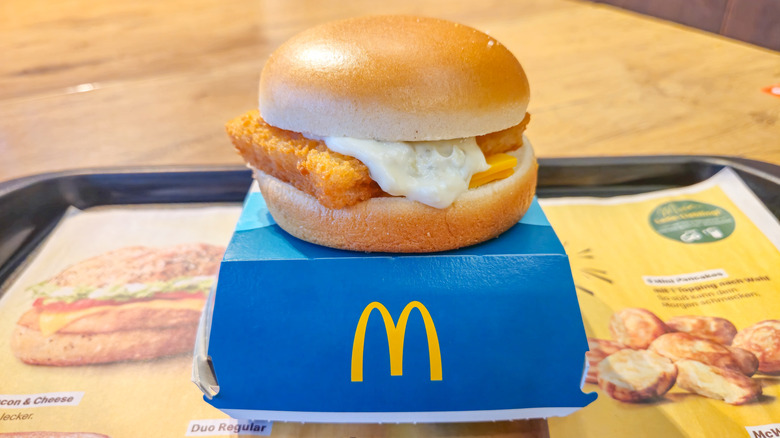
The Filet-O-Fish isn't exactly the most popular item on the McDonald's menu. The chain is better known for its meat offerings, like beef burgers and fried chicken, than its battered catch of the day. However, the fish sandwich does have staying power. First introduced in the early 1960s, it is known for its rectangular battered pollock patty, tartar sauce, and distinctive melted American cheese slice. The recipe has changed a bit with different fish species used over the years. It also varies slightly in some international markets, especially the UK, where it uses cheddar rather than American cheese.
Now, as for its protein content, a Filet-O-Fish will offer you 16 grams, in the same ballpark as a classic cheeseburger (15 grams). It's relatively modest by McDonald's burger's standards, but then again, it's a pretty small burger compared to some of the others on the menu.
But this doesn't mean the Filet-O-Fish doesn't have other nutritional perks. Pollock is packed with Omega-3s, and those fatty acids are important for heart health and reducing both triglycerides and bodily inflammation. The Filet-O-Fish also has slightly less saturated fat (4 grams) and much less sodium (580 milligrams, about 25% the daily recommended intake) than a McCrispy, which could make it a better choice for people with blood pressure or other cardiovascular sensitivities.
McCrispy: Wins on protein, but has some drawbacks
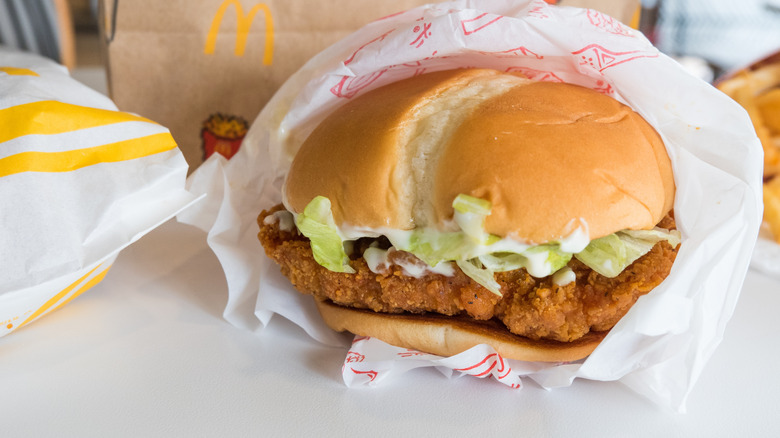
The McDonald's McCrispy is the chain's supreme chicken sandwich. First introduced in the US in 2021 after debuting in Singapore more than 20 years before, it features white-meat chicken breast with a Southern fried-style crunchy batter, crinkle-cut pickles, salted butter, and lettuce leaves wedged inside a potato roll. It towers over it's humbler sibling, the McChicken. Despite its crisp bite and undeniably meaty texture, its spicy version still ranked as our second least favorite fried chicken sandwich offered by fast food chains, with our taster noting that it was more like a large chicken nugget than a proper cut.
Personal preferences asides, the facts show that a McCrispy's protein content is no joke. At 26 grams per sandwich, significantly working toward the recommended daily intake for many American adults. The patty is undoubtedly doing the heavy lifting here. Chicken breast is an exceptional source of lean protein, and with a sizeable patty, it's little surprise that the McCrispy is one of the most solid protein options at the chain.
That said, it does have some potential drawbacks, especially when compared to the Filet-O-Fish. The sandwich's saturated fat (5 grams) is slightly higher than the fish burger, and its cholesterol (70 milligrams, or 23% of the recommended daily intake) and sodium (1,140 milligrams, or 50% of the recommended daily value) are substantially higher.