

11 Mistakes To Avoid When You're Cooking Chicken Thighs
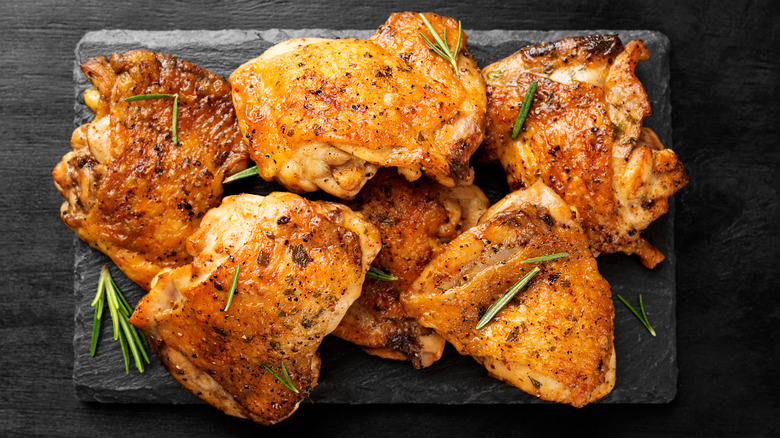
It doesn't get simpler than chicken — or so you think. Although you can find it in every supermarket around the country, chicken can be surprisingly nuanced and complex, so much so that many top chefs will judge a restaurant based on its ability to properly prepare its poultry. And while each cut of the bird has its merits, chicken thighs are the crown jewel. They're meaty, succulent, and packed with flavor. That is, as long as they're properly cooked.
Chicken thighs are a forgiving protein that take well to all sorts of flavor combinations and cooking methods. Still, a few tips and tricks can help you dodge the most common poultry pitfalls. To identify the biggest mistakes home cooks make when cooking chicken thighs, we surveyed a number of restaurant chefs and culinary professionals. From seasoning suggestions to ideal cooking temperatures to the best techniques for achieving crispy chicken skin, these insights will help you avoid any slip-ups and successfully prepare your next package of chicken thighs.
Treating them like chicken breasts
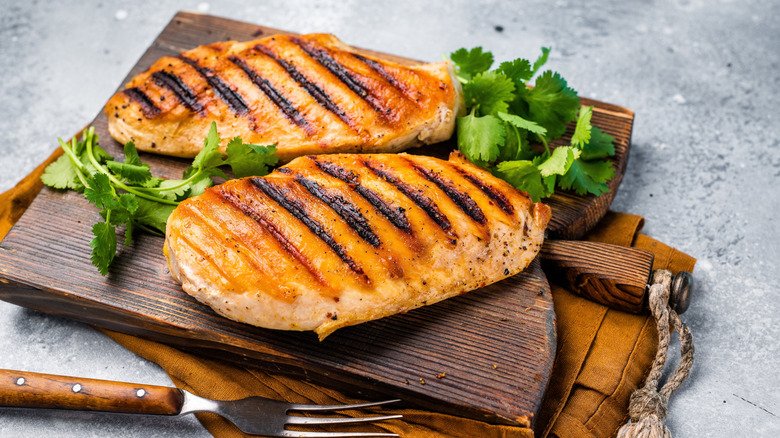
Chicken breasts and chicken thighs are very different cuts of poultry. The chicken's breast muscles are used primarily for quick movements, like flapping its tiny wings. As a result, the muscle development and fat distribution are different than on the legs and thighs, which hold the animal upright. That's why chicken breasts are considered leaner than thighs, and why it would be a mistake to confuse the two of them.
So how does this knowledge help you cook juicier chicken thighs? Compared to chicken breasts, thighs have more fat and connective tissue. This means that not only are they more flavorful than the leaner chicken breast, but they can also withstand higher heat and longer cook times. While general food safety standards say to cook poultry to a minimum internal temperature of 165 degrees Fahrenheit, Brianna May, recipe developer and food blogger at Bites with Bri, recommends cooking your chicken thighs past that point to between 175 and 185 degrees Fahrenheit. This ensures that the chicken is not only cooked all the way through, but that the connective tissue and collagen have been sufficiently broken down, which helps keep the thigh meat moist and juicy.
Not knowing when to remove the skin
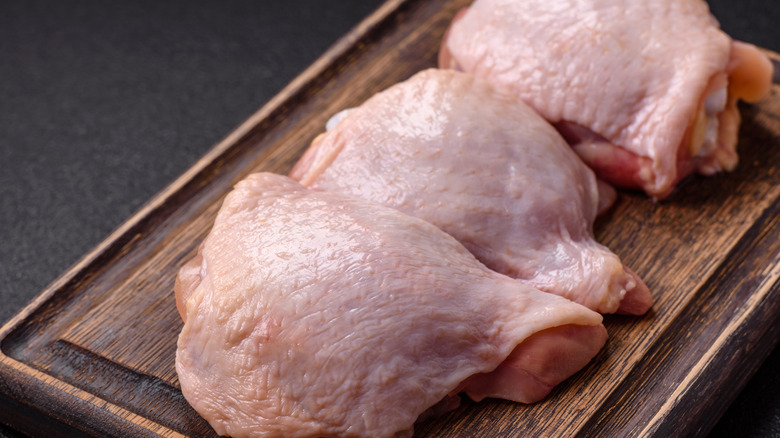
Chicken skin can be a turnoff for home cooks, but when thoughtfully prepared, it can be the tastiest part of your chicken thigh. The key is knowing when to keep the skin on and how to prepare it and when to remove it. Fernando Desa, corporate executive chef at Goya, says he likes skin-on thighs when he wants to maximize flavor and enhance the presentation. "If you're roasting, grilling, or pan-searing, I recommend keeping the skin on. That's where you get a lot of flavor and texture," he says. Other preparations like broiling, pan-frying, or smoking, which can take hours, are also suitable for skin-on thighs.
That raises the question: When do you remove the skin? Desa says it's best to take it off when you want to eliminate excess fat or when using wet cooking methods, like braising, stewing, or slow cooking. And while properly rendered skin is delicious, others believe it can get in the way of additional seasonings. "Personally I always take the skin off, by doing so you are putting the seasoning [and/or] sauce directly on the meat giving it better flavor," says Mike Krohn, creator of Healthy2HogWildFood. But if you do decide to remove the skin, don't throw it out! Use it for cooking fat (schmaltz) or turn it into a crispy garnish for matzo ball soup, filling for tacos, or a chicken skin, lettuce, and tomato sandwich.
Only using boneless thighs
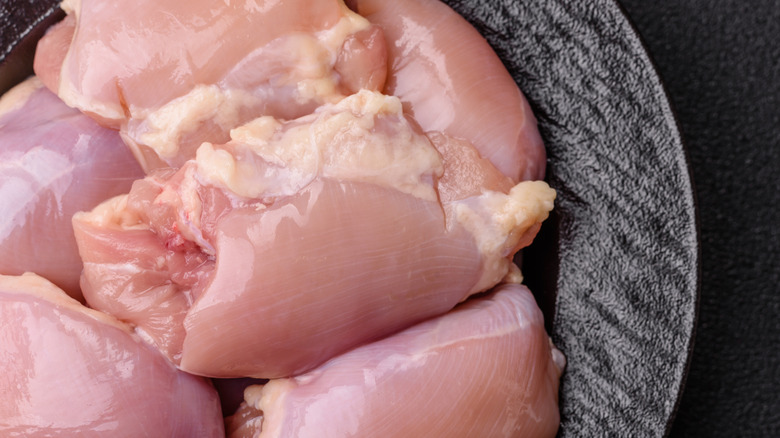
Boneless thighs have their advantages over bone-in thighs, primarily that they're easier to handle, cook, cut, and eat. But this convenience has its trade-offs. The first one is juiciness. Meat on the bone is generally harder to overcook, with the bone acting as a natural insulator that slows the cooking process and keeps the meat moist. There's also a lot of marrow and cartilage stuck around the bone. When cooked slowly, these bits render and permeate throughout the meat, infusing it with a deeper flavor. The last advantage is presentation. A single piece of chicken thigh that includes the bone is more elegant in appearance than one without.
Bone-in thighs are ideal for certain applications, and less so for others. Gerardo Duarte, chef at Mayahuel in Astoria, New York, recommends using bone-in thighs for longer preparations, like stews, broths, and moles, since the bone adds extra flavor to the cooking liquid. This same theory applies to dishes like arroz con pollo, where the bone's flavor infuses the rice and broth. Because the bone helps prevent the chicken from drying out, bone-in thighs are also great for longer, low-heat cooking techniques like slow cooking or braising. You see this method in the French classic coq au vin, or even in basic homemade chicken soup.
Sticking to one cooking method
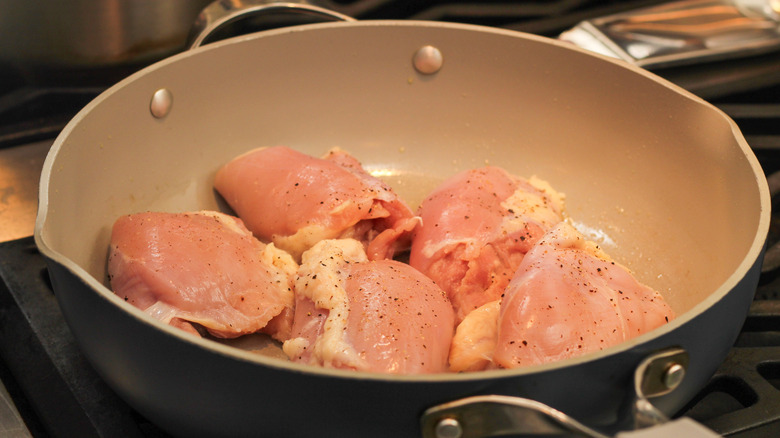
The beauty of chicken thighs is that they're one of the few proteins that can be grilled, smoked, fried, braised, shredded, baked, and slow-cooked. And those are just the basics. With so many different techniques at your disposal, sticking to just one would do the thighs a disservice. If you're in a hurry, chef Justin Robinson, culinary instructor at Auburn University, recommends a quick sear-bake combo: "Sear first for flavor, then finish gently in the oven if needed to reach your target temperature," he says. This method gives you crispy skin and an even cook without drying out the thigh.
If time isn't an issue, chef Luke Owens of Native Fine Diner in Greenville, North Carolina, proposes a low-and-slow cooking method, like braising, saying that this results in more flavor and a better texture. Smoking the chicken thighs or even barbecuing over live fire are two other methods to infuse your chicken with a charred flavor. For boneless thighs, grilling, air frying, or broiling can be a fast and effective way to get beautiful color without overcooking the chicken. Owens recommends using boneless thighs for things like sandwiches, stir-fries, and marinated kebabs.
Over-marinating
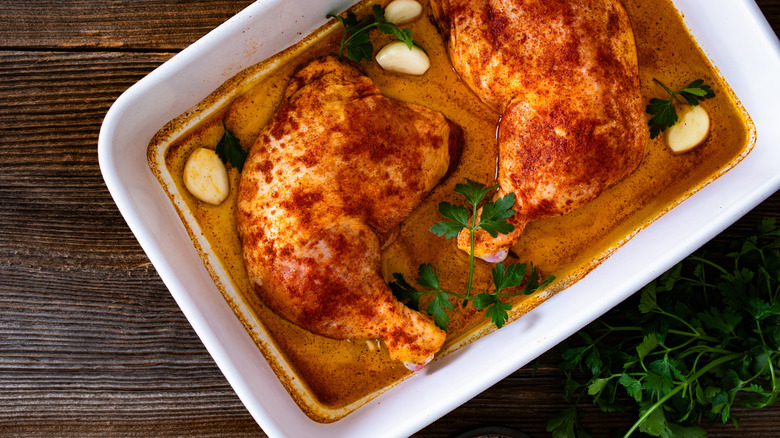
Marinating — steeping an ingredient in a seasoned liquid to infuse it with flavor — seems straightforward, but it isn't without its challenges. One that trips up both amateur and professional cooks alike is the idea that the longer you marinate food, the more intensely seasoned it becomes. While this theory may apply to oil-based marinades, Fernando Desa warns to be careful with very acidic marinades — including those with lemon juice, vinegar, or other acids — which "can change the texture [of the chicken] if it sits too long." Acid "cooks" the chicken, scrambling the proteins, causing the meat to get unpleasantly soft or mushy, so you don't want to leave it sitting in these solutions for more than about four hours.
That being said, chicken thighs are sturdy enough to tolerate intense marinades — as long as you follow those loose timing parameters. Chef Juan Lobato of Mezquila Bar & Restaurant recommends a citrus-based blend of lime or orange, garlic, chile, and spices, which will impart a bright, sunshiny note and undercurrent of heat. Chef Francisco López of Alma suggests an equally bold option, relying on mustard, granulated garlic, granulated onion, black pepper, rosemary, and salt. If you want to experiment with your own custom marinade, seasoning blends, sweet sauces, and oil-based mixtures are more forgiving and less time-sensitive.
Overcooking your chicken thighs
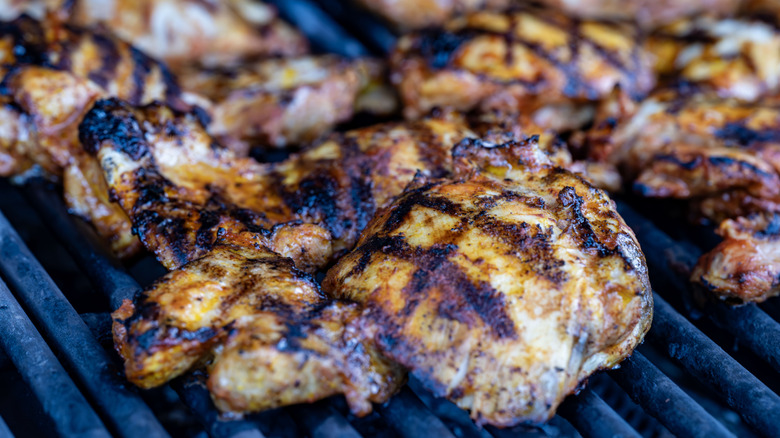
Chicken thighs are forgiving, but you can't just set them and forget them. While you don't want undercooked chicken, cooking your thighs for too long can make the meat fibers tough, fibrous, and dry. Instead, go for that sweet spot in between, where the meat is firm yet moist. "You need to give them enough time to cook properly while keeping them juicy," says Juan Lobato.
The best way to prevent overcooking, whether you're a professional chef or a home cook, is to use a meat thermometer. This simple kitchen tool is invaluable and will completely revolutionize how you prepare proteins. Gerardo Duarte uses one in his kitchen to ensure the meat is the exact temperature he wants it. And just like a steak or pork loin, it's also important to rest your chicken thighs for a few minutes after pulling them off the heat to ensure they stay juicy and are cooked all the way through.
Forgetting to pat the chicken dry
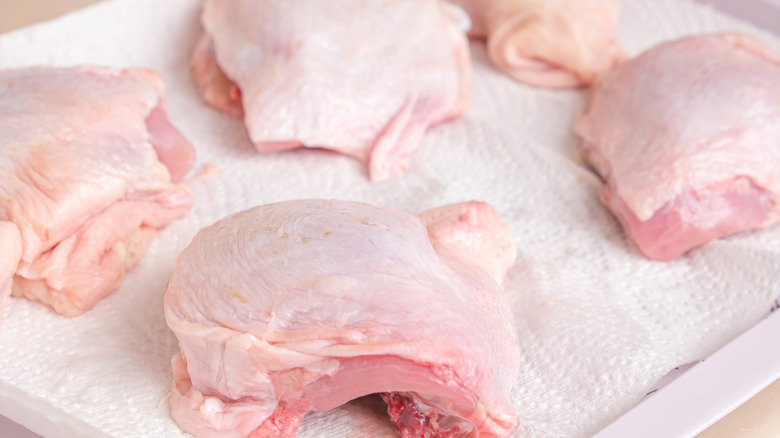
Nearly every expert interviewed for this piece stressed that moisture is the enemy of beautifully seared proteins. But if you've ever worked with chicken thighs, you're aware that the meat and skin are inherently, well, a little wet and slimy. Well, there's a simple solution, and it's likely sitting somewhere in your kitchen right now: a big roll of paper towels. Before you season, grab a few paper towels and pat your chicken thighs until they're as dry as possible. This helps you achieve a delightful golden-brown crust and crisp skin when seared, grilled, or broiled.
However, other methods can help you sufficiently dry your chicken. When preparing chicken thighs, Brianna May suggests a dry brine, which, unlike a wet marinade, uses a salt-based seasoning to draw out excess moisture from the meat. This not only helps achieve a crispy exterior but also seasons the chicken and accentuates its natural flavor. Another technique is to leave your meat in the refrigerator uncovered overnight. The circulating cold air helps dry the skin and prepare it for a quick sear the following day, resulting in a beautifully brittle exterior crust.
Failing to render the skin
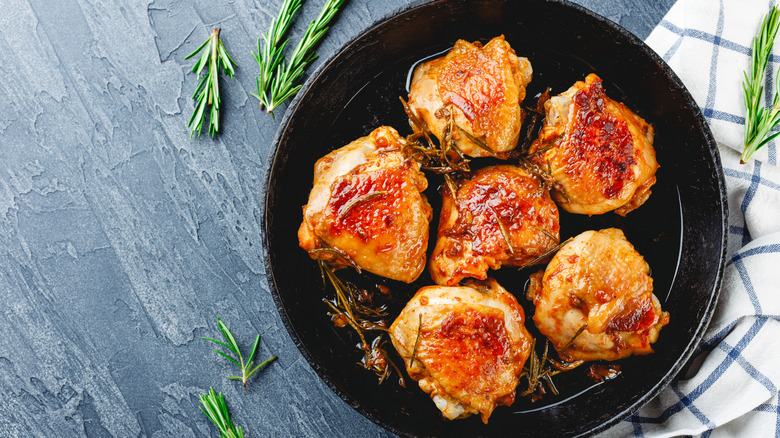
Chicken skin can be an excellent flavor enhancer, but it can be a nuisance if you don't know how to prepare it. Many people struggle with chicken skin correctly, either undercooking it so it's soft and flabby or overcooking it so that it's rubbery and burnt. The key to achieving crisp, crunchy skin involves a process called rendering. Professional kitchens use this method, but it's pretty easy to learn and execute at home. The culinary experts interviewed for this article each had a slightly different process for rendering chicken skin. Still, the basic technique is fairly standard.
The first step, as mentioned above, is to pat the skin dry. Removing any moisture helps the chicken skin crisp faster. Next, warm a pan to medium heat. Place the chicken thigh skin-side down and let the fat render out slowly, according to executive chef Pietro Alleto of Patsy's Pizzeria Flatiron, Allora Ristorante, and Carne by Allora.
You may be tempted to move or inspect the chicken to gauge the cook — don't! Moving it around only disrupts the cook time. You'll know your chicken is done when it develops a deep golden-brown color and releases from the pan with minimal effort. "The goal is properly rendered fat, tender meat, and consistent texture," says Alleto.
Placing the chicken in a cold or overcrowded pan
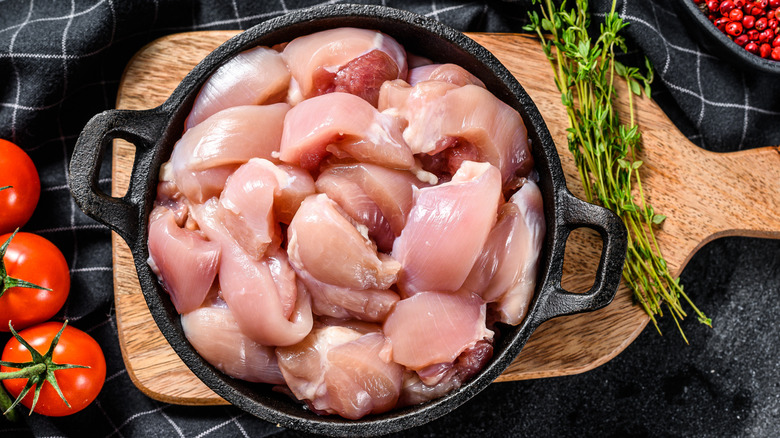
Whether you're cooking chicken thighs, bell peppers, or broccoli, crowding the pan is never a good idea. A full pan causes steaming, slowing the cooking process and preventing the meat from achieving a hard sear. To combat this, Fernando Desa cautions against using a pan that's too small. "If you overcrowd the pan, the chicken will steam instead of sear, and you won't get that beautiful golden-brown crust," he says.
Getting your pan to the proper temperature is another important step for cooking chicken thighs successfully. Desa highlights the importance of getting the pan up to temperature to sear the meat and suggests folks use an oven-safe cast iron or stainless steel pan. "They retain or distribute heat well and allow you to develop a beautiful crust," he says. In some cases, slowly bringing a cool pan to temperature can help gently render the skin of a thicker chicken thigh.
Adding sugary sauces too early
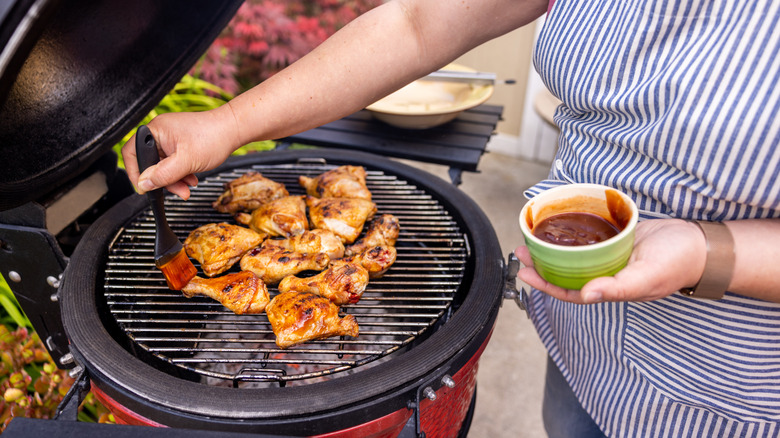
Chicken thighs take well to a variety of flavors and seasonings. When grilled, cooked over live fire, or quickly seared on the stovetop, the meat develops a satisfying char and subtle bitterness that pairs beautifully with sweet sauces and marinades. However, you have to be careful with sauces and seasonings that contain a lot of sugar, like in our recipe for sweet and savory maple ginger chicken thighs, to avoid burning them.
"I'd watch [for] seasonings with a lot of sugar if you're cooking over high heat. They'll burn before the thigh is finished," says Luke Owens. "I'd rather build that sweetness into a glaze or sauce toward the end." Brianna May has similar advice, noting that sugary sauces, brown sugar, and honey can burn or lead to flare-ups, which is why it's best to add them later in the cooking process.
You can also prevent scorching your sauced chicken by using a combination of direct and indirect heat. Instead of searing the chicken on the hot part of the grill, start it on the cooler section for the initial cook, then finish the thighs on high heat to achieve those gorgeous grill marks.
Skimping on seasoning
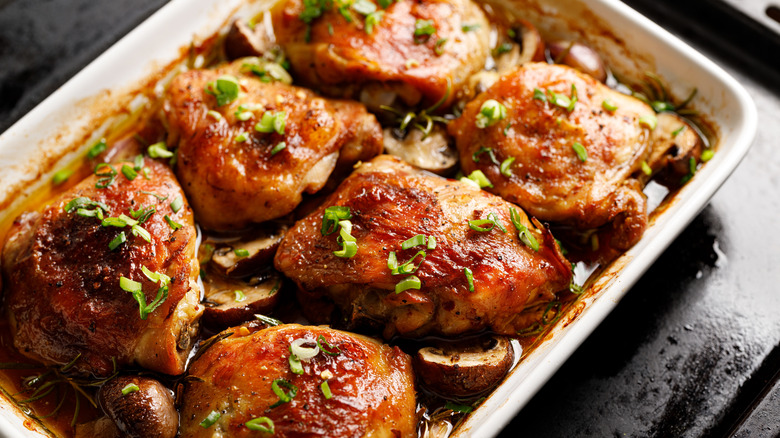
Chicken thighs are inherently tasty, with a meaty, poultry taste that can stand on its own. But there are plenty of ways to season chicken that you will wish you knew about sooner.
Which ones you choose comes down to your personal taste preferences. Some of the experts we spoke to opt for minimal seasonings. A blend of salt, pepper, and granulated garlic; a coating of adobo; or a mix of olive oil and a sprinkle of sugar are all excellent options that will upgrade the flavor of your chicken thighs.
Mike Krohn likes a lemon pepper seasoning or barbecue rub, while Justin Robinson says "don't be afraid to build layers of flavor with spices, herbs, citrus, or a marinade." Luke Owens, meanwhile, encourages cooks to try all types of spices — from cumin and coriander to paprika and chiles — because when it comes to seasoning, as he says, "there aren't too many wrong directions." No matter the combination, you'll want to try to coat the meat evenly and give the seasonings extra time — ideally more than 30 minutes — to permeate the chicken. And whatever you do, don't skip out on the salt. Even if you forget to season the meat at first, you can always add a few shakes of this or that after cooking.