

12 Classic School Lunches From The 1970's
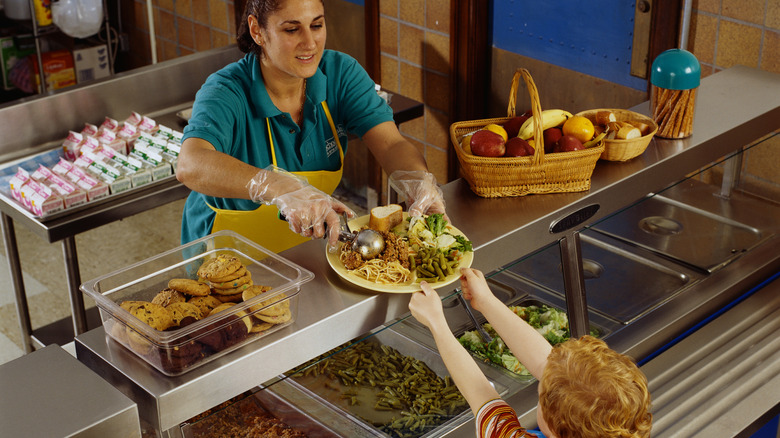
School lunches in the 1970s reflected a mix of food supply practices and government policies that shaped American children's food culture nationwide. The classics most recalled by students of that era differ greatly from today's more nutritionally-driven school lunches, but the echoes of those well-loved meals still linger around dinner tables and in American food culture. Exploring these school lunches from the 1970s is like walking into the past and glimpsing how some of the ingrained American foods we still know and love today started with kids' love for their home-packed or cafeteria meals.
The 1970s were the beginning of the end of a long-time practice of government-funded school meals, causing schools and their cafeterias to source inexpensive foods more often than not. But it was also a time when cafeteria food was still cooked primarily on-site and was served warm on iconic trays. By the end of the decade, a shift in government funding led to outsourcing, often to fast food or vending machine offerings. That makes these lunches truly a nostalgic piece of American history that, while it may never be reclaimed, remains as a clear influence on food traditions even today.
1. Nobody ditched on pizza day
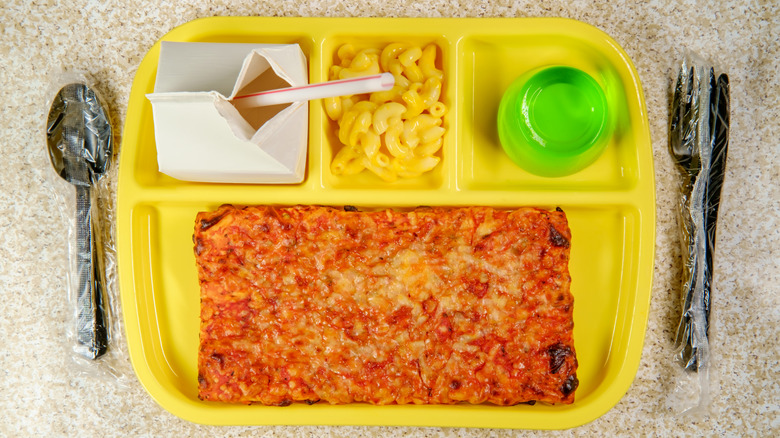
The food an abundance of Internet commenters say they most looked forward to most was the square pizza slice. Sheet pans of baked pizza, with sauce and cheese covering edge to edge, represented an optimized, efficient way for lunch workers to make as many meals as possible at a faster pace. Affordable lunch programs in the '70's also meant that many schools had to find ways to supply lunches with limited funding. The familiarity of pizza made it a hit with kids while mass production on huge sheet trays reduced time and effort in the kitchens for the lunch staff.
Recipes changed between schools, of course, but across the nation, American students in the '70s could expect to get pizza at least once a week. Some former students recall delicious rectangles, while some others talk about sopping up grease from the pepperoni with paper towels before diving in. One thing we know is that the power of the sheet-pan pizza memory is enough to make it a crave-able product for those who want to remember their own school pizza lunches, or try one for the first time.
2. Somebody brown-bagged a bologna and cheese
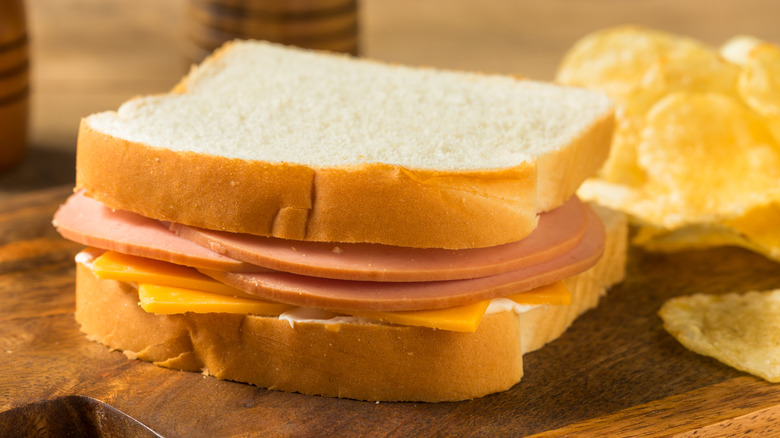
Oscar Meyer has been around since the late 1800's. But the economic difficulties of the 1970s, combined with the rising popularity of inexpensive lunch meat, pushed it into becoming a regular lunchtime staple. A bologna sandwich was cheap, easy, and filling. It often appeared in lunch boxes and brown-bagged home lunches across the country.
Even today, many people still recognize the Oscar Meyer jingle, but it first rose to fame in the '60s and '70s — and even became popular enough to be a radio request. This popularity made bologna a loved addition in lunchboxes through the '70s and beyond. Sandwich must-haves varied by household, but common features included a slice of cheese, white bread, and sometimes a fresh veggie or two. Considering you can still pick up a package of bologna from Oscar Meyer (and several other brands) at most grocery stores today, this 1970s lunchtime favorite is a nostalgic one that's here to stay.
3. Mystery meat was really a thing (according to students)
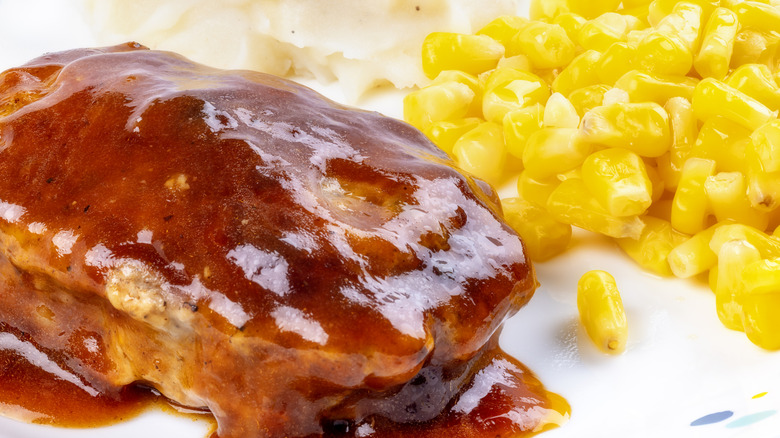
Mystery meat is a '70s trope, seen in movies, referenced in popular culture, and still known by that title today. The truth behind the actual "mystery" of mystery meat, though, isn't as scary as it might sound. While memories of ground meat-based meals like meatloaf, Salisbury steak, or meat with gravy in the 1970s often triggered a reference to mystery meat, odds are good it was simply ground beef.
The '70s were a time of financial strain for school lunch programs, while leading up to that, cafeterias would have been used to serving an abundance of ground beef-style meals holding over from the 1946 National School Lunch Program. The program utilized agricultural surplus to reduce the cost of supplying and feeding students across America for several decades. Lunch workers had to get creative with what they had on-hand, including canned and dried goods that would have lent themselves more to meatloaf than a burger with fresh produce. As a result, it wasn't uncommon to see ground beef show up on lunch menus more than once throughout the week.
All jokes aside, not everyone remembers their Salisbury steaks as horrible mystery meat. Some remember it as one of those wonderful meals lunch workers made from scratch, and many students even looked forward to meatloaf day.
4. Sloppy joes were a tasty economic winner
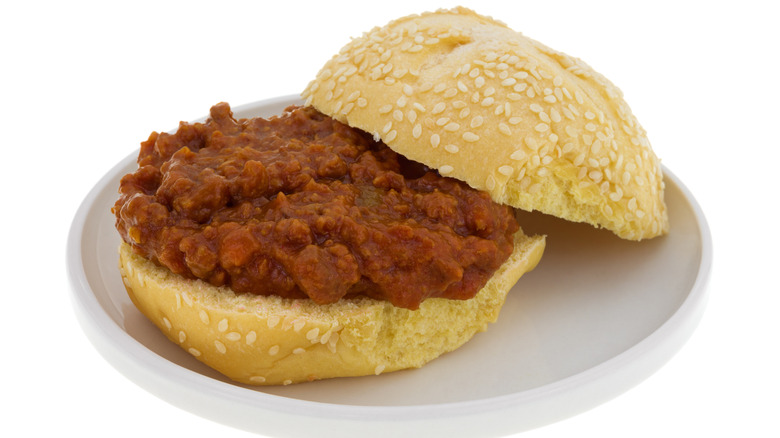
Unlike the mystery meat reputation of some remembered ground beef-based school lunches, many people fondly remember the sloppy joe as a top contender for lunchtime favorite. The sloppy joe has been around for a long time, including in school cafeterias; the practice of using agricultural surplus to supply schools after World War II had made ground beef a staple that cafeteria workers were familiar with. The shift in the '70s to provide wider access to affordable school lunches kept the sloppy joe on the menu, and students weren't complaining.
Some former students recall looking forward to sloppy joes even more than pizza day, while others keep it close as a close second favorite. This food was so well-loved that there are adults still trying to find a sloppy joe recipe similar to the classic lunch to recreate flavors that were apparently captured best in a school cafeteria.
5. PB&J sandwiches had yet to be banned
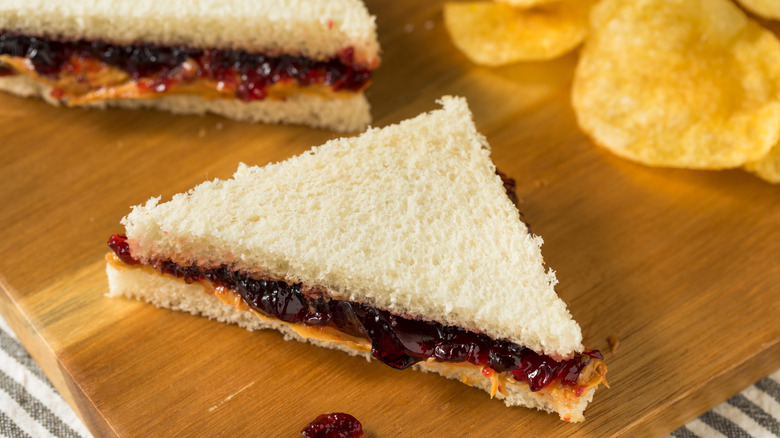
Allergies have made many schools nut-free across the country, making the once-regular lunchtime standby a memory for many adults, including those who were school age in the '70s. While we think of PB&J as a well-loved cornerstone in the '70s, it seems that whether those memories are fond or not had a lot to do with the bread that held the essential peanut butter and jelly all together.
Wonder bread was a popular choice in many households, and, back then, it had the reputation of being light, fluffy, and fresh, making it just perfect for a PB&J. Homemade bread is fondly remembered, too, but other widespread breads of the '70s, like the reportedly dry Roman Meal Bread, could apparently ruin even the gooiest PB&J. When it came to cafeteria lunches, peanut butter rarely came up as a favorite compared to hot lunches, even though it appeared on menus in both sandwiches and desserts. Nowadays, both classic and gourmet PB&Js will have to stay at home, and kids attending a nut-free school need to learn to love sunflower butter, instead.
6. Fish sticks were a Friday staple
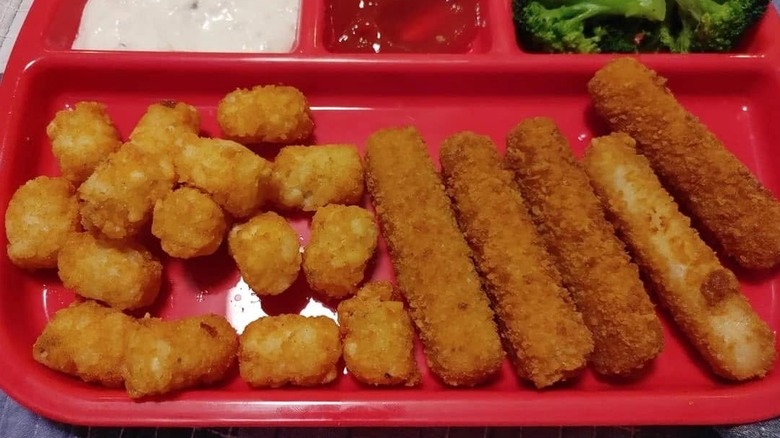
The origins of fish on Fridays has a multi-faceted history that extends beyond being an end of the week school lunch tradition. Part of it arises from the Catholic tradition of no meat on Fridays, which had been a guideline for long enough that even when the church decided it was no longer mandatory, it had become a cultural tradition that continued to be observed by many.
Fish was, for a long time, also a part of the surplus supply chain that provided food to school cafeterias. Lunch workers had to use what they had to make meals students would eat, and since Friday's had a cultural tradition of being fish day, it became a lunchroom tradition for some schools, as well. This wasn't a hard and fast rule for every school in the United States: Pizza and other meals were also served, but fish stick Friday is a day not forgotten by others. In fact, it's been pretty highly thought-of.
The shape of the fish varied slightly. Fish sticks became popular in American households in the '60s, and those iconic finger shapes made their way into cafeterias along with square breaded patties. No matter their form, despite some students' distastes, many remember the fish stick lunch as a good one. Crispy breading, with what people at least remember as real fish, made the meal one some schoolchildren looked forward to.
7. Turkey and gravy were for more than Thanksgiving
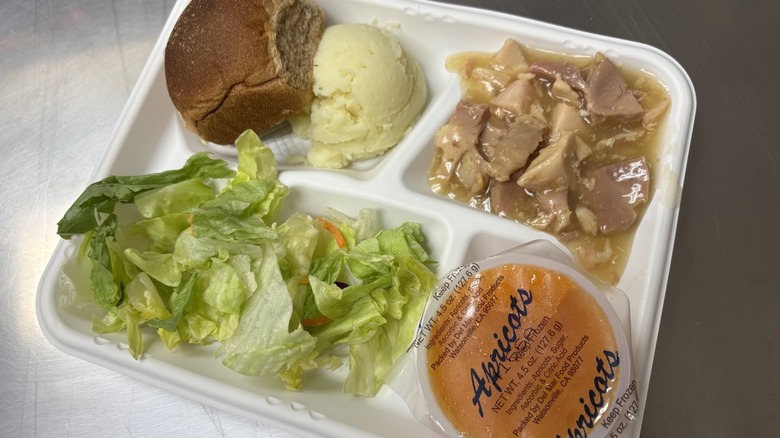
Turkey's popularity as an agricultural necessity in America began in the 1800s, when it rose as a must-have on a lot of folks' holiday tables. When agricultural surplus began to be funneled into schools after the late 1940s, turkey became one of those products. And once it found its way to lunch workers, it was up to them to figure out how to serve it to students.
The turkey meal showed up during the holiday season the way you might expect: a plate of mashed potatoes, slices of turkey, and gravy to top it all off. The food was often cooked on-site with real ingredients. Turkey wasn't reserved to just one month, though, appearing in its savory sauce throughout the year in some schools. And many people just can't get those fresh-baked rolls out of their minds, either, all these years later.
8. Chili with cinnamon rolls were a regular midwestern pairing
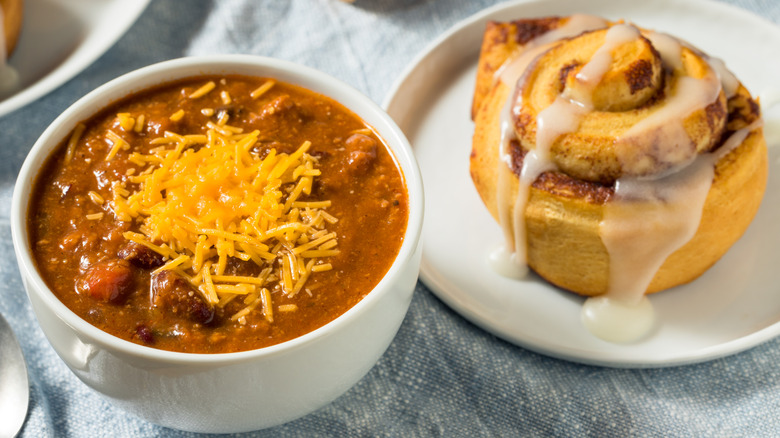
Chili was a regular feature in 1970s cafeterias across much of the United States. The economic strife of the '70s hit food costs, and schools were also negotiating changes in government policies around school lunch funding. Chili and other ground-beef dishes were a good way to use inexpensive ground beef that cafeterias had used for a long time, while stretching it to feed more mouths by adding beans. Regardless of its practicality, the memory of the chili is a good one – a little sweet, but just right for a kid's palate. But the common practice of pairing cinnamon rolls with chili is what makes this school lunch fondly and distinctly remembered.
In Midwestern states, chili and cinnamon rolls make a common pairing. Kids looked forward to a freshly baked gooey cinnamon roll right alongside their chili, in a combination that might seem as strange to outsiders as pineapple on pizza. This wasn't the case everywhere, though. Some places instead served cornbread as a side, but, if we're honest, we'd prefer the cinnamon roll, too. It's a pairing we might just have to try so we can see what the nostalgia is all about.
9. Spaghetti was served with meat sauce
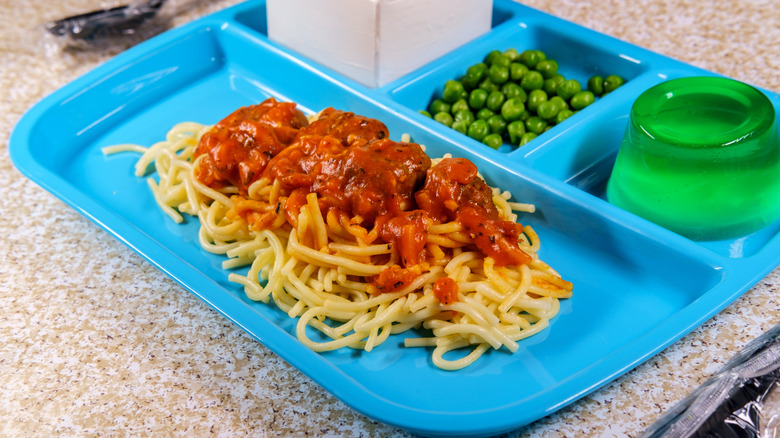
It's doubtful that pasta was an authentic Italian affair in the 1970s cafeteria, but spaghetti with a tomato and meat sauce was a regularly-featured menu item. This was another way schools used surplus and cheap ingredients to feed as many kids as they could while staying within the budget that had to work alongside the discounted price students paid under government school lunch policies at the beginning of the decade.
An Italian nonna might frown at the practice of breaking up the noodles, but it was common for lunch workers to break dried spaghetti pasta into thirds . Tomato sauce with crumbled ground meat was a popular feature, but other students remember their spaghetti more as chili-flavored, which may have been a cafeteria's thrifty way of using up leftover chili and cheese. Either way, spaghetti comes up as a happy memory that kids from the 1970s still remember fondly today.
10. Tuna casserole wasn't just for dinner at home
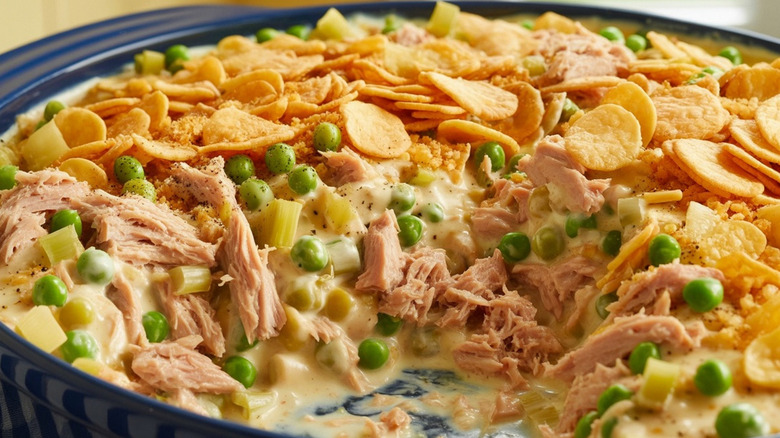
The budgetary choices made by school cafeterias in the 1970s reflected shifts in how government funding was disbursed to schools and reduced cost or free lunches meant that cheaper ingredients had to feed more mouths for less. Many 1970s homemakers feeding families faced a similar financial strain in a struggling economy. The solution showed up, both at home and at school, in the form of casserole, perhaps the most famous of all which was tuna noodle.
Tuna casserole didn't appear everywhere on school menus, but when it did, the dish was one of the more divisive we've encountered. Some people are nostalgic for the beloved scratch-made dish, whether at home or served by lunch workers, while others detest the idea of hot, creamy tuna to this day and regularly avoided it. While canned tuna sometimes appeared in sandwich form, the tuna casserole was an inexpensive, filling way to feed kids.
11. Mac and cheese didn't come out of a box
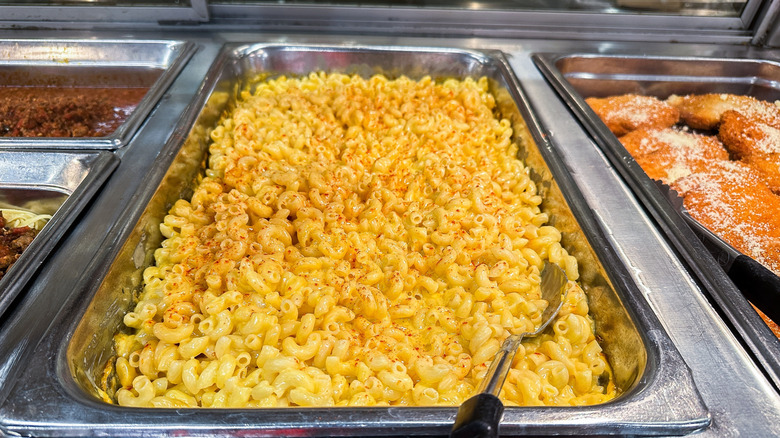
When the USDA began supplying schools with surplus food after World War II, a common ingredient provided to school cafeterias was huge blocks of American or "loaf" cheese. If you've ever seen an unwrapped cube of Velveeta, imagine a larger, commercial-sized version. That's a lot of cheese, and cafeterias needed to get creative with it. Enter the gooey, simple macaroni and cheese.
Back in the 1970s, macaroni and cheese at schools didn't come out of a box, despite Kraft being on the market since the Great Depression. Instead, people remember hearty helpings of gooey, freshly made macaroni and cheese, sometimes baked. This cheesy masterpiece is well-remembered, and some folks still go out hunting for recipes to try and recreate their memories. One essential if you want to capture the true '70s cafeteria spirit is ditching the fancy cheese and béchamel and opting for a hunk of processed American cheese, instead.
12. Hot dogs and hamburgers were an affordable option then, too
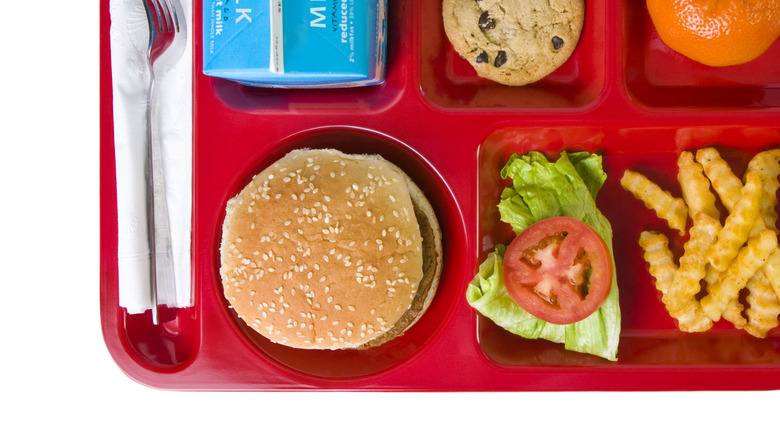
Quintessential American favorites like hot dogs and hamburgers were cookout, dinnertime, and even lunchtime staples long before the 1970s. Students who enjoyed them from the cafeteria in the 1970s can thank European immigrants for bringing frankfurters and hamburgers with them in the late 1800s. Over time, those European traditions changed and became the standard American meal offerings they saw as regular on school lunch menus. The classic preparations were there: a bun, burger patty or wiener, and condiments, but sometimes the meats were served differently.
Beanie weenies or franks and beans, essentially hot dogs in baked beans, are a sometimes-remembered version of a hot dog lunch from some of peoples' memories. Other people don't remember a bun at all, instead recalling a toasted slice of white bread beneath. One thing that's certain is that whether it was a home-packed lunch box or a hot cafeteria meal, the 1970s were an era of meals so full of nostalgia that many long for their return.