

How Much Quality Prime Rib Costs In 2026
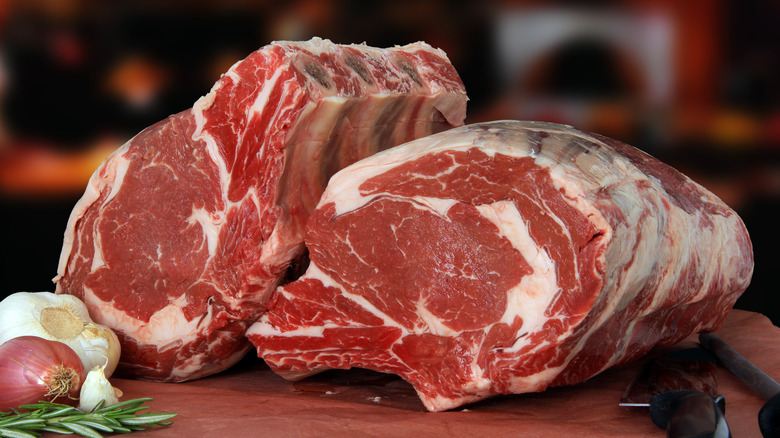
Prime rib, also called standing rib roast, when prepared correctly, is a dream, with a tender, buttery interior and a perfect, crackling crust on the outside. It's also versatile: You can serve it with rich, creamy mashed potatoes, or it equally suits a bright, fresh side like a Caesar salad. Now, the only downside to prime rib is the price; it's known for being an expensive cut of beef because not only is the price per pound high, but a roast can weigh well over 15 pounds. You also don't want to skimp on quality — go big or go home, right? — so if you're wondering how much you can expect to pay for a good prime rib at the grocery store in 2026, a reasonable estimate is, on average, $17 to $20 per pound.
Of course, there are outliers. Depending on the time of year you're buying it, prime rib often goes on sale for the winter holidays, so you might be able to get a good deal on a great piece of meat, spending much less than $17 per pound. For example, German grocery chain Aldi rolls out rib roasts in the winter, and while the price has risen steadily over the years, the last time it was sold, it cost a mere $8.99 per pound. Warehouse chains like Costco also carry prime rib, and they might sell it for $16 per pound. In both cases, too, customers rave about the quality of the meat and the end product.
Local butcher prime rib costs more, but quality often follows
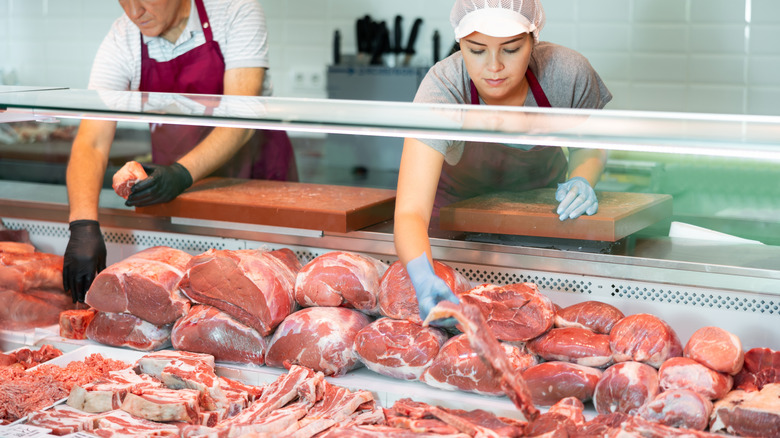
On the other end of the price spectrum, you can pretty much always find a very nice prime rib roast at your local butcher, but you're likely going to pay quite a bit more for it, to the tune of $30 or more per pound. It begs the question: Is the butcher shop rib roast worth the extra money you'd be paying for an already spendy cut of beef?
Well, there are definitely merits to buying meat from a local butcher, starting with transparency and quality. It's more likely that small specialty shops source specific cuts from local farms, so the distance that meat has to travel to get inside a case can be far less than, say, beef from a big-box retailer like Costco. And if the rib roast did indeed come from a local or regional farm, it's also far more likely the cow was humanely raised and slaughtered.
So yes, the pricier butcher shop prime rib is likely better quality than your typical supermarket rib roast, and there are myriad reasons why you should shop local if you can afford it. If you can't, though, the budget-friendly Aldi (or whichever supermarket you choose) cuts will still get the job done nicely.