

5 Italian Restaurant Rules American Tourists Immediately Break
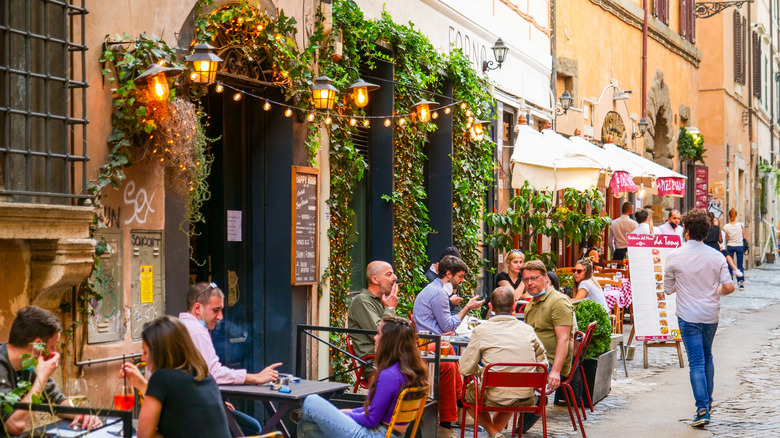
A trip to Italy is a once-in-a-lifetime experience, and alongside its stunning scenery and wealth of history, the country's world-famous food is another reason why it pulls in millions of tourists each year. Italian food has become a fundamental part of the American culinary landscape, so it's not exactly unfamiliar territory for the average U.S. citizen. But one thing that frequently catches American tourists off guard is the many unwritten rules that come with a trip to an osteria or trattoria. If you're someone who likes to travel like a local, learning the do's and don'ts is a good way to avoid sticking out like a sore thumb.
One of our favorite things about Italian cuisine is how remarkably diverse it is. From the hearty mountain food of Piedmont to the richly spiced, Arab-influenced cooking of Sicily, there's so much more to Italian food than just pizza and pasta. But despite each region having its own distinct culinary identity, the whole country is held together by the same shared set of conventions. Some are relatively minor, like how ordering a post-meal Aperol spritz might raise an eyebrow or two. Others, however, could land you in hot water, like simply asking the waiter to sprinkle cheese over your spaghetti allo scoglio.
In Italy, food isn't just food. It's fundamentally intertwined with the country's culture, heritage, and identity. These rules exist to make sure every meal can be savored properly, and while they might sound dramatic, there's a reason Italian cuisine is considered to be among the best in the world. By following these rules and eating like a true local, you're guaranteed to get the most out of everything the country's vibrant food scene has to offer.
Italians and Americans do coffee very differently

One thing your average Italian or American will always agree on is that coffee is everything. But that's where the similarities end. Here in the States, we love our artisan "third-wave" coffee shops, flavored syrups and spices, and generous serving sizes. In Italy, however, coffee is a far simpler affair, though far more ritualized. To blend in, it's best to stick to the basics: It all starts with espresso (known as un caffè), with varying amounts of steamed milk added to create drinks like cappuccino, caffè latte, and caffè macchiato. Sugar and sweeteners are easy enough to find, but if you want to order like a local, leave the syrup and topping requests stateside.
One specific order known to famously trip up American tourists is the iced latte. In Italian, "latte" simply means milk, so asking for an iced one will get you exactly that: a glass of cold milk and nothing more. If you're craving an actual iced coffee, order a caffè shakerato instead (a chilled espresso), or ask specifically for a "caffè latte freddo" (cold latte).
The styles aren't the only things that differ, either. In the States, you can drink coffee morning, noon, and evening, and no one bats an eye. But that's far from the norm in Italy. Strict unspoken rules govern coffee timing; break them, and you might as well have "tourist" stamped across your forehead. Chief among these rules is never ordering a cappuccino after 11 a.m. It might seem odd to the American mind, but Italians treat milk-based coffee as a breakfast-only affair, usually paired with a sweet pastry. Many also believe heavy, warm dairy slows digestion after a meal. The go-to instead is a quick shot of espresso after lunch.
Never make the mistake of asking for cheese on your seafood
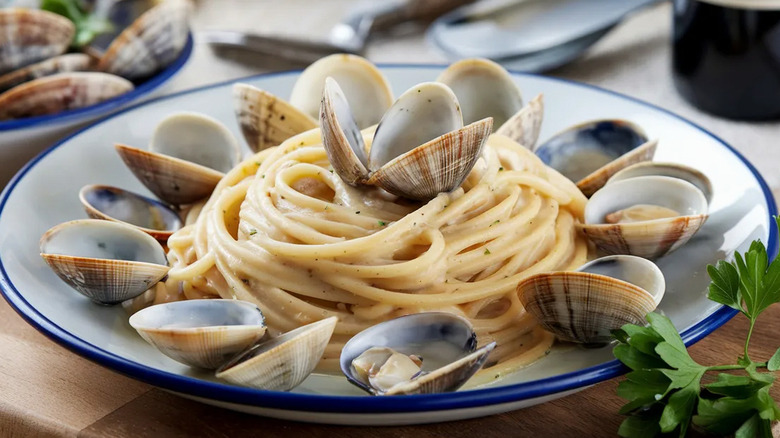
Italy is world-renowned for its seafood, and for good reason, too. From bright, briny linguine alle vongole to a rich and creamy risotto ai frutti di mare, the country has something for everybody. So, if you're ever visiting coastal regions like the Amalfi Coast, Sicily, or Puglia, skipping the local catch would be a serious miss. But with that said, if you make the mistake of asking your waiter to top your seafood with cheese, you may end up wishing you'd never ordered it in the first place. See, in Italy, this is considered a culinary sin of the highest order, and plenty of American tourists have horror stories of a server flat-out refusing this request.
It's no big revelation that Italian food rules are famously rigid. Traditional Italian cooking prioritizes ingredient balance over personal preference, which is why mixing cheese and seafood isn't just a faux pas, but borders on something closer to sacrilege. While Italy is certainly famous for its cheeses, many of the best-known varieties come from the landlocked parts of the country, where rich meat dishes and hearty sauces reign supreme. This geographical difference meant that "mountain and sea" ingredients historically weren't often paired together and had their own distinct evolutions and applications within Italian cuisine.
But at the end of the day, the main reason seafood and cheese aren't traditionally mixed comes down to taste. Italians simply don't think they go well together. The beauty of their seafood lies in its freshness, with catches served not long after being caught. That mild, slightly sweet flavor is what makes it shine, and to the Italian palate, drenching it in salty, heavy cheese destroys the very balance that makes seafood great in the first place.
Don't mix up your aperitivi and digestivi
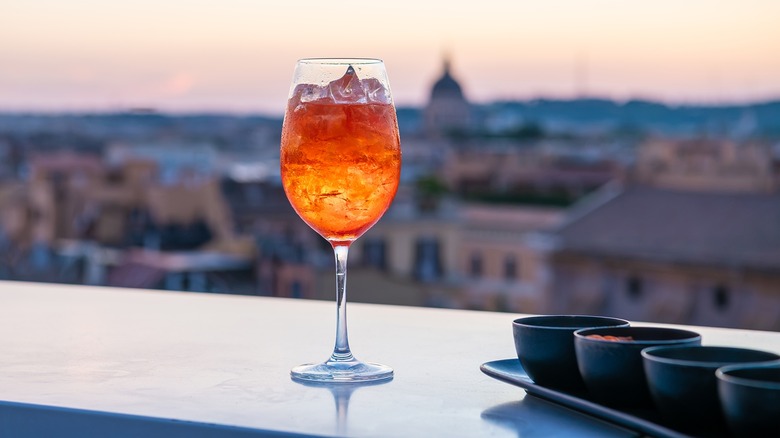
There are few things in life more pleasurable than sipping an Aperol spritz under the hot Italian sun and letting your worries float away. But that experience might get soured if you order one after your meal. See, Aperol falls under the category of what Italians call "aperitivi" — drinks served before a meal to stimulate the appetite. Also falling under the aperitivi umbrella are classic tipples like a Campari spritz, Negroni, and bellini.
The custom of aperitivo refers to Italians gathering together for a pre-meal drink and some light snacks. This ritual is beloved by Italians, and honestly, it's easy to see why. A cold drink, good company, and the promise of dinner — what's not to love? But the clue is right there in the name. Taken from the Latin verb "aperire," meaning "to open," aperitivi exist to come before the meal, and ordering one post-dinner is a guaranteed way to mark yourself as a tourist. To order like a local, you should instead request a digestivo as your post-meal drink.
Always served after the meal and sometimes complimentary, digestivi are meant to settle the stomach rather than open it up, and they tend to be stronger than their pre-meal counterparts. Think liqueurs and spirits like limoncello, grappa, amaro, or sambuca. They're usually served in small glasses, sipped slowly, and typically taken neat. As the name suggests, digestivi are traditionally believed to aid digestion following the famously lengthy Italian meal. It's not really that surprising, then, that ordering a digestivo before a meal would certainly raise a few Italian eyebrows.
Don't go for a meal during il riposo

Compared to the States, life in Italy can be far more laid-back, and one custom we could learn a thing or two from is "il riposo," meaning "the rest." Typically falling somewhere between noon and 3 p.m., il riposo is a stretch of the day when some shops shutter, streets quiet down, and restaurants pause between lunch and dinner service. What once started as a practical way to avoid the worst of the unforgiving Mediterranean heat evolved into a cultural opportunity to slow down and spend time with family.
Il riposo is common around the Mediterranean (many folks know Spain's more famous iteration, "la siesta"), but it can still catch unfamiliar American tourists off guard when they go looking for lunch and find a ghost town instead. You'll feel the effects most in small countryside towns, though afternoon closures are still found in major hubs like Rome, Florence, and Milan, especially among small, family-owned businesses. In the cities, spots in tourist-heavy areas tend to stay open, though that comes with its own hazards, and you're more likely to end up at a spot catering to out-of-towners and not locals.
To manage il riposo, look up restaurant hours ahead of time and anchor your day around those dining windows. It might feel inconvenient at first, but this time is a great excuse to do as the Italians do and slow down in the afternoon.
Chefs don't take too kindly to recipe modifications
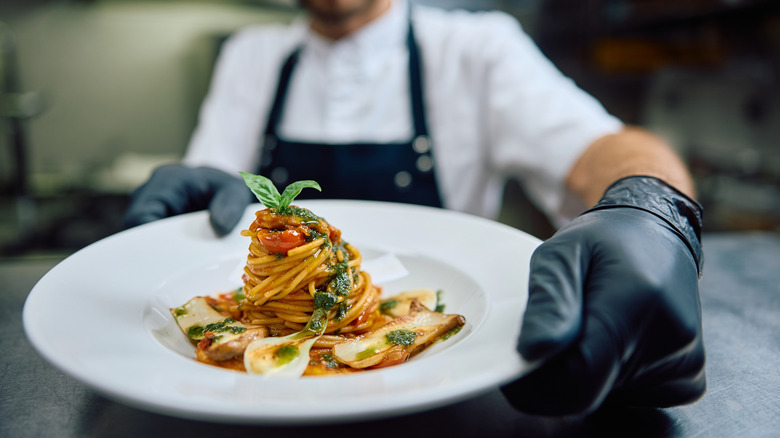
Here in the States, many restaurants operate on a "customer is always right" basis, and chefs are often more than happy to swap an ingredient or tweak how a dish is prepared. In Italy, however, it's often the opposite. Modifying a dish isn't really how things are done there. Once a plate leaves the kitchen as intended, it's considered done, and asking for changes can come across as second-guessing the chef rather than making a normal request. Of course, reputable establishments will generally accommodate guests with allergies, so you should never feel afraid to ask your server to make sure certain ingredients are omitted.
If your request does get denied, it's rarely out of spite. Italian chefs can be more stubborn than Americans might be used to, but they're simply protecting the best version of the dish. Italian recipes and the ingredients that go into them are a matter of regional pride. Take spaghetti alla carbonara, one of Rome's four foundational pastas. Walk into a traditional restaurant in the city, and you'll generally find it made with the same core ingredients: guanciale, Pecorino Romano, eggs, and black pepper. In the States, plenty of recipes call for cream instead. We're not saying this version doesn't taste good, but to the Roman chef, requesting that they add cream is asking them to wreck a dish that's been perfected for generations.
Italians are also huge on seasonality. It's a foundation of their food culture, and menus shift naturally as the months change and ingredients reach their peak flavor and abundance. Asking for substitutions that don't align with this philosophy is, to the Italian chef, tantamount to changing the entire character and balance of the dish.