

The Case For Not Sprinkling Parmesan Cheese On Italian Seafood Meals
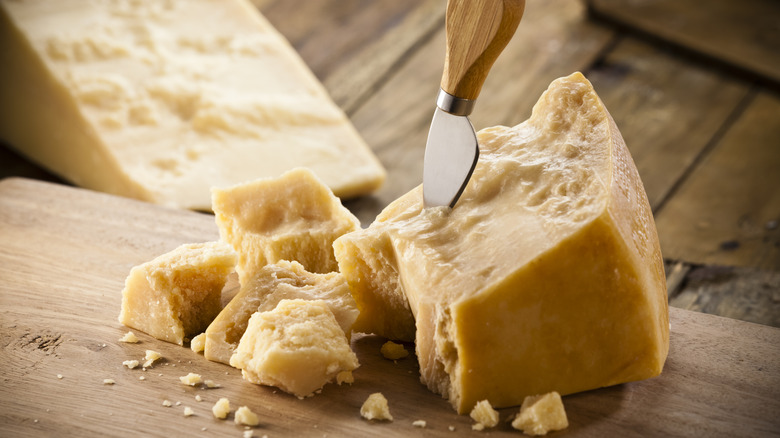
Italians love parmesan. The cheese — or, more precisely, Parmigiano Reggiano, the PDO-protected northern Italian staple made under stringent regional production rules — is the near-unavoidable pairing for almost any pasta dish, adding a nutty, salty note that can elevate even the saddest bowl of spaghetti. But when it comes to seafood pasta dishes, Italians often resist reaching for the grater, and for good reason.
The no-cheese-with-seafood rule is one of those Italian customs that has become enshrined in a seemingly untouchable — and often lampooned — rulebook guiding exactly how Italians should (and shouldn't) enjoy their meals. We've heard most of the rookie errors you can make when ordering Italian cuisine: no cream in carbonara, no cappuccino after 11 a.m., no pineapple on pizza. Yet when it comes to keeping dairy off all things marine, there's a fairly practical reason. Most seafood is already rich with umami, briny flavors, and subtle sweetness. Parmesan — especially in its most aged forms — is assertive in both its savoriness and rich texture. Add the two together, and you can end up with a discordantly salty combination.
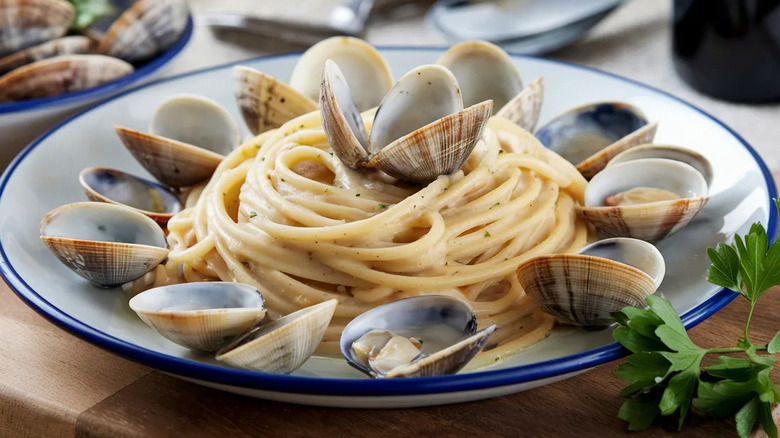
In Italian seafood pastas, the noodles are merely the vehicle — the catch of the day is the star of the show. As with the general philosophy behind most Italian cooking, the ingredients should be fresh and speak for themselves. In some classic seafood dishes from the Bel Paese — from linguine alle vongole (with clams) to risotto allo scoglio — the only seasonings used are fresh herbs, garlic, and an unmissable drizzle of extra-virgin olive oil.
Historical and religious roots divided dairy from fish
Parmesan is not just a type of cheese, but one that comes from a specific region: Emilia-Romagna, known for beefy ragùs, stuffed pastas, pork dishes, and dairy, rather than the seafood-forward cuisine of Italy's Mediterranean coastline. To be exact, Parmigiano Reggiano comes from a protected area that includes the provinces of Parma, Modena, Reggio Emilia, as well as parts of Bologna and Mantua in neighboring Lombardy.
Over the centuries, the cheese came to be associated with the produce of the land rather than the sea. Before refrigeration and modern food transportation, it would have been uncommon for an inland cheese and a coastal catch of the day to end up on the same plate. Most of Italy's most iconic seafood dishes emerged from its Mediterranean coastline, especially southern areas like Naples, the Amalfi Coast, Sicily, Calabria, and Apulia, and have traditionally been garnished and seasoned with the olive oil and aromatic produce of those regions rather than dairy. Italian food remains firmly regional, and the concept of a "national" cuisine is relatively recent, making the notion of a parmesan-topped seafood dish fundamentally atypical.
But behind the historical roots of this culinary phenomenon lies a possible religious influence. Within Catholic tradition, fish is generally associated with lean days, when meat from land animals was avoided, especially during Lent. While there was no Church-mandated ban on combining cheese and seafood, it's possible that this religious context further cemented an already existing culinary boundary.
Italy's prohibition against pairing fish with cheese isn't completely ironclad
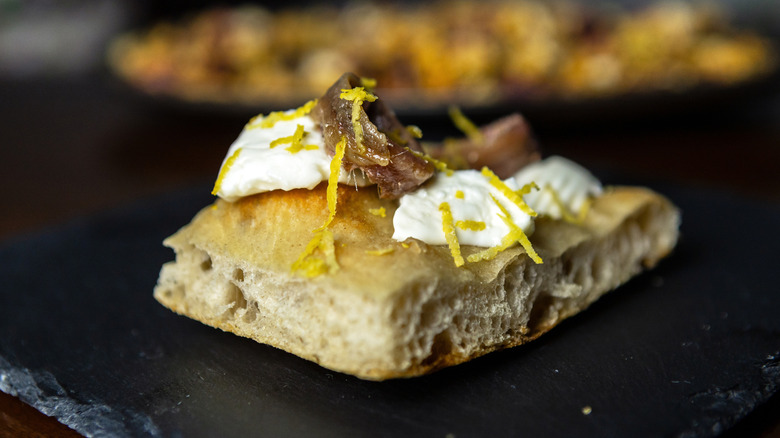
While you're unlikely to find parmesan on your seafood order in most Italian restaurants — and you'll certainly raise your waiter's eyebrows if you ask for an extra serving — that doesn't mean mixing fish and dairy is a total anathema. Seafood and cheese do sometimes meet on Italian menus, although typically in very specific contexts.
Pecorino — a sheep's milk cheese that is generally saltier and tangier than parmesan — is occasionally served with mussels, especially because the cheese is more popular in central and southern Italy. The same applies to ricotta salata, or aged, salted ricotta, which is a staple of Sicilian cuisine. Some traditional recipes even explicitly call for seafood-and-dairy pairings: In Rome, fried zucchini flowers (fiori di zucca) are stuffed with mozzarella and anchovies. Likewise, in Abruzzo, fried anchovies (alici fritte) are often served with eggs and grated pecorino. While mixing parmesan and seafood might be considered a tourist blunder — or, at most, a gourmet novelty — you can try some of these specialties if your love of seafood is matched by a devotion to dairy, and you think the two belong on the same plate.