

12 Mistakes To Avoid Making With Chicken & Dumplings
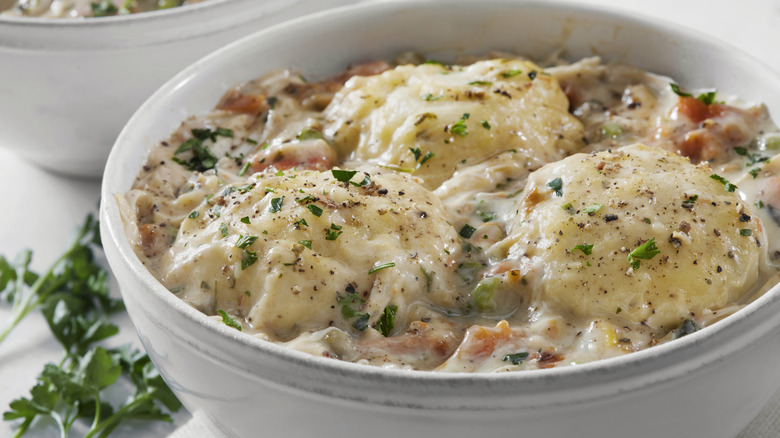
If you're looking for a dish to hibernate with on a cold, dreary day, you can't afford to sleep on chicken and dumplings. You get pillow-soft dumplings bobbing in a velvety gravy built on a light roux, layered with aromatic vegetables and just enough seasoning to keep things interesting, all tied together by tender chicken pulled into bite-size pieces. It's one heck of a combo, hitting the spot so thoroughly it's even made it to the top of Dolly Parton's roaster of comfort foods.
Better yet, you don't have to carve out an entire afternoon to make it. The whole endeavor can take well under an hour if you hustle. But while it's one of the most low-effort comfort foods around, blunders are not completely unheard of. Your chicken can turn rubbery, the broth can end up heavy and doughy, and the dumplings can either spread into the soup or turn hard as rocks. But don't fret, because we've got you covered. Below, we've rounded up some of the biggest mistakes folks make with this dish, along with some nifty tricks to help steer you toward success.
Overworking the dumpling dough
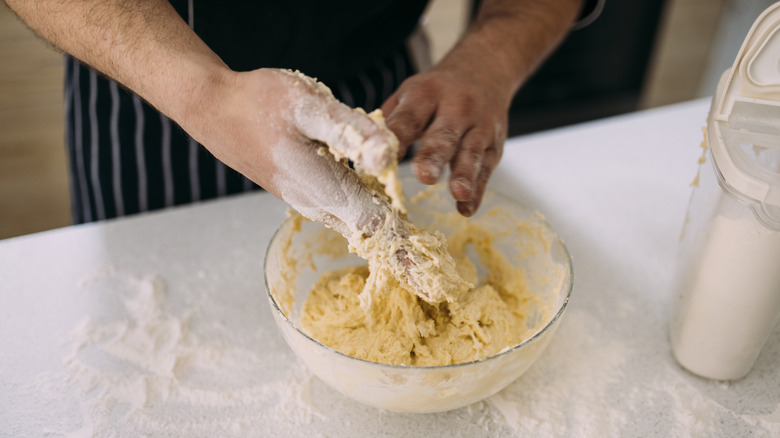
Getting that airy, biscuit-like texture from your dumplings takes a little finesse. You can't go at the dough the way you would a wonton or potsticker wrapper. Restraint is key here. You want to stir the flour together with your liquid only until it's just combined, then stop as soon as the last streaks of flour disappear.
Don't panic if the dough looks a little lumpy. Forcing it into one perfectly smooth, cohesive mass might get you a prettier result, but chasing aesthetics at this point can be counterproductive. Every turn of the spoon develops more gluten, and while that's preferred and even prized in bread dough, dumplings and gluten are not chummy at all. An overwrought dough will likely churn out dumplings that are dense or chewy, or worse, prone to falling apart when dunked in gravy.
So how do you know you've overmixed it? Trust your eyes. A good chicken-and-dumplings dough should look a little scruffy, not silky smooth. It should still hold together when scooped, though. If it's so shaggy that it crumbles apart, you've strayed too far in the opposite direction and should add a splash of milk, broth, or water to help it come together. Unfortunately, there's not much you can do to rescue an overwrought dumpling dough. At that point, your best bet is to trash the whole thing and start from scratch.
Cooking with the lid open
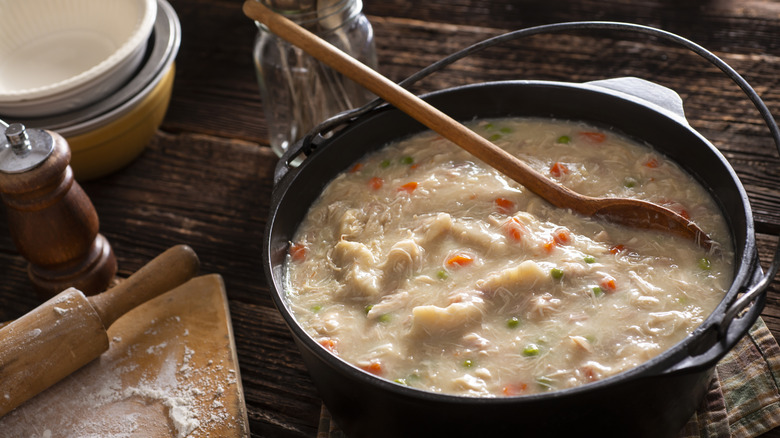
To peek or not to peek, that is the question. The answer depends on what you're trying to achieve. If you're trying to make a reduction, by all means, give yourself a show. But do yourself a favor and resist the urge for spectacle once your dumplings go in. Steam does a lot of heavy lifting in this dish. If you keep flapping the lid, that steam escapes into the ether, robbing the tops of your dumplings of the moist heat they need to cook through. This is how you end up with dumplings that are perfectly cooked on the bottom but still disappointingly doughy on top.
All that escaping moisture also dries out the broth, leaving less liquid for the dumplings to absorb as they cook. That can leave you with a denser, drier result than if you'd simply left the lid alone. As the broth continues to reduce, it's also likely to become overly thick and stick to the bottom of the pot, turning your gravy into a pasty mess.
Things get even messier if you're a first-timer at this whole chicken-and-dumplings business. Lifting the lid before the recommended cooking time has elapsed — typically about 10 to 20 minutes, depending on the recipe — can change the cooking environment enough that the usual timing no longer applies. Suddenly, you're left guesstimating when the dumplings are done, which is a surefire way to end up serving them undercooked or overcooked.
Under-seasoning the broth
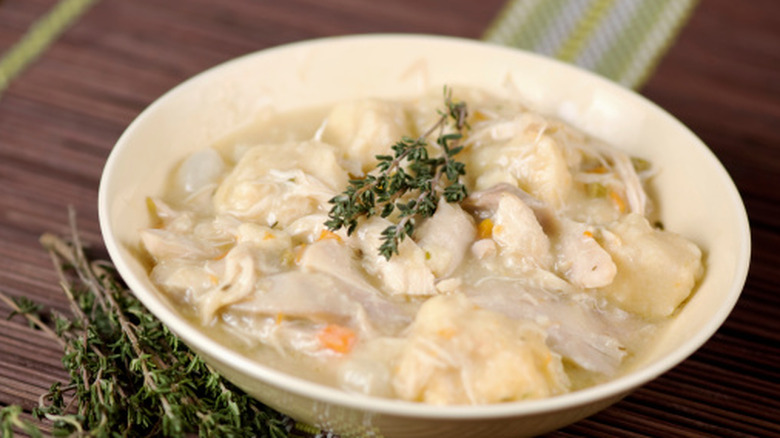
There's nothing like a proper blend of seasoning to make a dish come alive; something even Bobby Flay can't stress enough. And although chicken and dumplings is meant to be a soothing, comforting dish, that doesn't mean it should be bland. A gentle sprinkling of salt and black pepper right at the end won't do, either. You need to start building flavor from the get-go, giving your spices and aromatics time to diffuse through the broth. Otherwise, you might end up with something surprisingly bland despite your heroic last-minute seasoning efforts.
A simple mirepoix of onions, carrots, and celery is a solid starting point for a rich, flavorful broth. But don't stop there. A little minced garlic, poultry seasoning, thyme, rosemary, sage, mustard powder, or even Worcestershire sauce will make fast friends with your sautéed aromatics. Once you've thickened the broth — whether with plain flour or a light roux — season it with good old salt and black pepper.
Don't forget the dumpling dough, either. It doesn't need much; a little salt and pepper will do just fine, though you can certainly crank things up a notch with a pinch of parsley or garlic powder. And remember, those dumplings are bound to soak up some of that beautifully seasoned broth, so the liquid should taste just a touch more assertive than you'd ultimately want in the finished dish.
Using the wrong cut of chicken
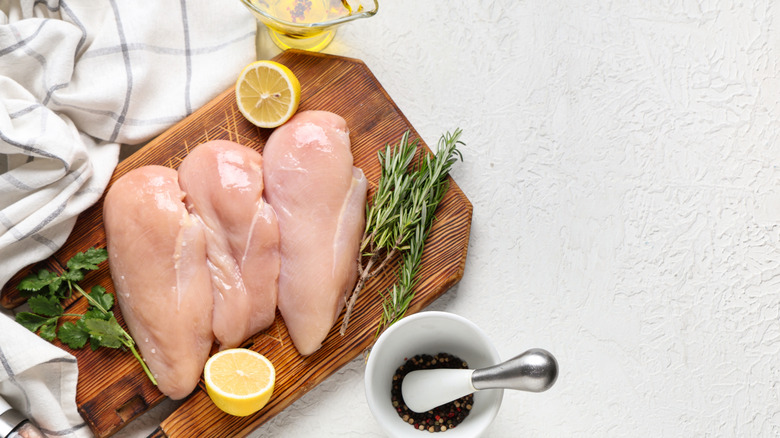
Stellar chicken and dumplings start with a deeply flavorful broth, and seasonings and aromatics aside, the depth of flavor depends largely on the chicken. To get that tender, juicy result, you need the right cut of chicken, and that takes a little discernment. Chicken contains both dark and white meat, and while both can go into your broth, they'll take the dish in completely different directions.
Your first instinct might be to reach for chicken breast. It certainly looks sturdy enough to withstand a 30- to 60-minute simmer, but appearances can be deceiving. Chicken breast is mostly skeletal muscle, and as it cooks, those muscle proteins tighten up and squeeze out moisture. That means there's a very real chance your chicken will turn dry, stringy, and rubbery by the time the dumplings are ready.
Dark meat, particularly chicken thighs, behaves differently. Thanks to its higher fat content and connective tissue, it's far more resilient to heat. In fact, time works in its favor. As the chicken gently bubbles away, collagen gradually melts into gelatin, leaving the meat succulent while lending the broth extra richness and body.
Once you've settled on thighs, you can crank the flavor up another notch by choosing bone-in ones. Yes, you'll have to fish out the bones before serving, but the payoff is worth the extra effort. As they simmer, the bones enrich the broth with extra flavor and gelatin, while the meat stays exceptionally juicy and tender.
Adding too much liquid to the dumpling dough
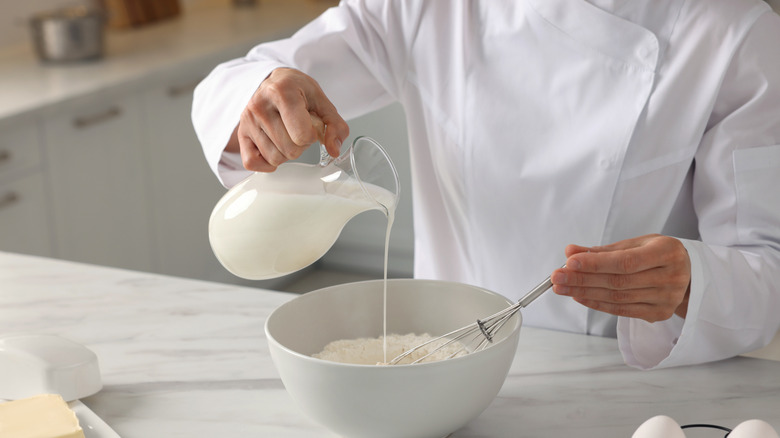
Nothing jars the senses quite like biting into gummy, watery dumplings, no matter how silky or well-seasoned the broth may be. If this keeps happening to you, there's a good chance you're adding more liquid to your dumpling dough than you should.
Drop dumplings need enough structure to survive a simmering broth without dissolving into it. If you make the dough too wet, the dumplings can spread out or even fall apart before they've had a chance to set. They'll also struggle to trap the gas released by the baking powder, leaving you with heavy, doughy dumplings instead of light, fluffy pillows.
Exactly how much liquid you'll need depends on several factors. Most recipes hover around a two-to-one or three-to-one ratio of flour to liquid, but that's hardly an unbreakable rule. The type of flour you're using also comes into play. Cake flour, for instance, has a finer grind than all-purpose flour. That means it'll absorb more liquid, so you may need to dial the moisture back slightly if you make the switch.
Even with ordinary all-purpose flour, though, blindly following the measurements can lead you astray. Your senses are far more reliable than the measuring cup. A good dumpling dough should scoop up easily, hold a proper mound on the spoon, and drop cleanly into the broth rather than slough off like pancake batter.
Adding your dumplings too early
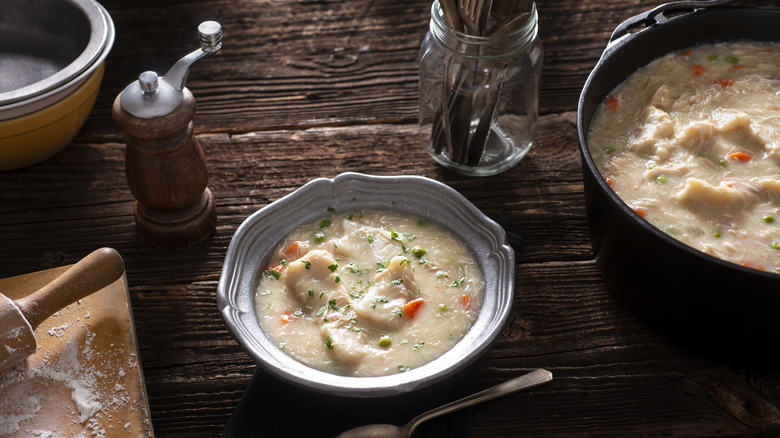
Chicken and dumplings is a pretty easygoing meal. If you lean on a few shortcuts — like using refrigerated canned biscuit dough instead of making your dumpling dough from scratch — you might even have dinner on the table in under 30 minutes. Still, this isn't a dish you can rush. The dumplings, especially, are pretty time-sensitive. If you drop them in too early, they might soak up far more broth than you want, turning them heavy and soggy. Left long enough, they may overcook, lose their delicate structure, and begin to break down into the broth.
So how do you know it's time to add the dumplings? As a general rule of thumb, wait until everything else — including quick-cooking ingredients like peas — is cooked or nearly cooked. The broth should be at a gentle simmer and just beginning to thicken into a silky gravy. If you're planning to let the stew reduce for another 20 or 30 minutes, hold off on the dumplings. They only need about 10 to 20 minutes to cook, so there's no sense making them wait around in the pot that long.
Don't wait too long, either. Your dumplings depend on the steam rising from the broth to puff up and cook through. If you drop them into a stew that's already reduced into an overly thick gravy, there may not be enough free moisture left to generate the required steam.
Making your dumplings too thick
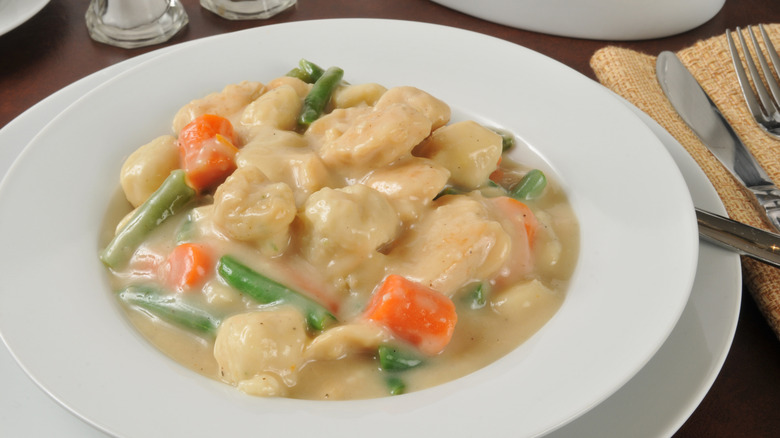
A good chicken-and-dumplings dumpling sets itself apart with a plump, pillowy bite. And while some folks might prefer the rounded mouthfeel of a dense dumpling, bigger isn't always better. Drop dumplings cook from the outside in, relying on the heat and steam from the simmering broth to cook through to the center. If you make them too big, you're asking that heat to travel a lot further. By the time the middle is just beginning to feel the heat, the outside may already be overdone, leaving you with dumplings that are falling apart around the edges while still gummy or raw in the center.
So, how big is too big? Most recipes place the sweet spot at around one to two tablespoons of dough per dumpling, roughly the size of a golf ball. That's enough to produce a satisfyingly plump, biscuit-like bite while still allowing them to cook through in about 10 to 20 minutes. If you're ever in doubt, sacrifice one for science and slice it open before pulling the pot off the stove. The center should be airy and fluffy, not dense or doughy.
Don't overcorrect too far in the opposite direction, either. Tiny dumplings can cook through in a flash, turning mushy, or even disintegrating into the broth. And don't mix and match sizes. Consistency is key, lest you end up with a mishmash of perfectly puffy, undercooked, overcooked, and waterlogged dumplings.
Not using a leavening agent in the dumpling dough
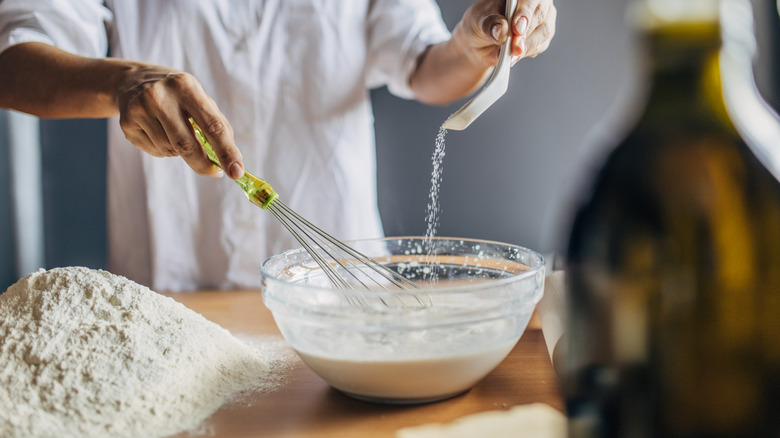
If your dumplings keep turning out dense and chewy, then you probably missed one small but crucial step: adding a leavening agent. Most recipes call for baking powder; usually about one to two teaspoons for every cup of all-purpose flour. Don't get too heavy-handed, though. Much like a cake, too much baking powder can cause the dumplings to rise rapidly, only to collapse on themselves. Used in the right amount, baking powder releases carbon dioxide as the dough heats up, and those tiny gas bubbles become trapped inside, giving the dumplings their signature light, fluffy texture.
Many folks assume baking soda can stand in for baking powder, but that only works if your dough contains an acidic ingredient like buttermilk to wake it up. Otherwise, it won't produce the same reliable lift and may even leave the dumplings with an unpleasant metallic or soapy taste.
That doesn't mean you have to abandon dinner if baking powder is nowhere to be found. One workaround is to make your own by combining baking soda with cream of tartar. Another easy fix is to swap the all-purpose flour for self-rising flour, which already contains baking powder, and might give you a much more tender result.
Stirring too early
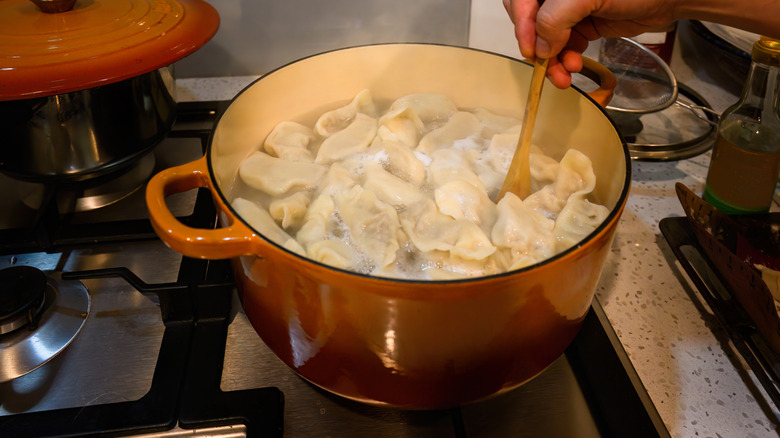
Your grandparents probably made chicken and dumplings all the time, and if that's the case, they likely passed down one piece of hard-earned wisdom above all else: Keep your hands off the spoon once the dumplings go into the pot. It isn't just an old wives' tale. Fresh dumplings are incredibly fragile. In those first few minutes, they're little more than soft batter sitting atop the stew. If you run a spoon through them too aggressively, they can tear apart before they've had a chance to fully set.
Your dumplings are also counting on the tiny gas bubbles produced by the baking powder to puff them up into soft, fluffy pillows. If you agitate them while that's still happening, you risk knocking some of that air back out, leaving yourself with a much denser result than you bargained for.
If you really must move things around, resist the urge to stir. Instead, give the pot a few gentle swirls to help redistribute the broth. And don't panic if you notice a couple sticking together. You're much better off nudging them apart once they've finished their time in the pot than trying to pry them apart while they're still soft enough to fall apart at the slightest touch.
Making the gravy too thick or too thin
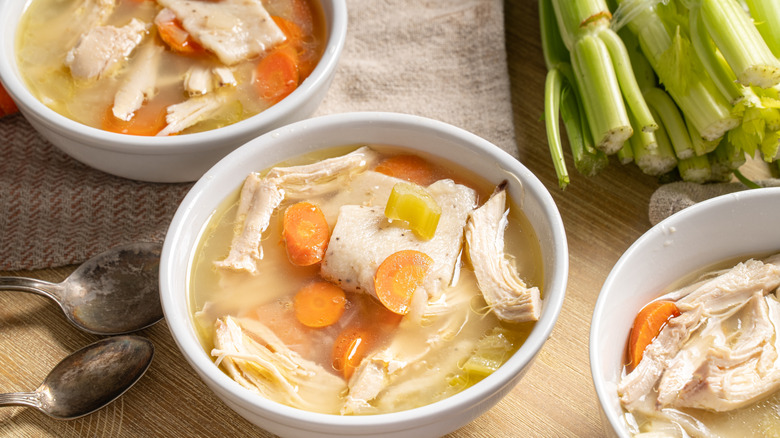
Chicken and dumplings might be a simple fix-up, but it's also a vintage comfort dish with a rich tradition behind it. One of the few things that's remained consistent as it's traveled through time is the gravy. It's meant to be silky and hearty; never pasty, gluey, or watery. Hitting that sweet spot takes a little finesse.
Your dumplings rely on free moisture from the broth to cook through and puff up nicely. If you start out with a broth that's already blopping aggressively, your dumplings won't steam properly and might turn dense and tough. Still, you don't want the dumplings swimming in what amounts to chicken soup. If the liquid runs straight off the spoon without leaving much of a coating before the dumplings go in, it's probably worth reducing it for a few more minutes.
And if it's still looking too thin — or you're worried a lengthy reduction will overcook your aromatics — a simple roux of butter and flour should get you to the right consistency without much fuss. Also, if you're a first-timer, resist the urge to throw the flour straight into the pot. Unless you have the rapid-fire whisking reflexes of a caffeinated cat, dumping spoonfuls of raw flour into the hot broth will only leave you with stubborn lumps. You'll know you've got it right when the broth is loose enough to pool gently around the pot without sputtering, yet thick enough to leave a smooth, velvety coating over the chicken and dumplings.
Using a pot that's too narrow
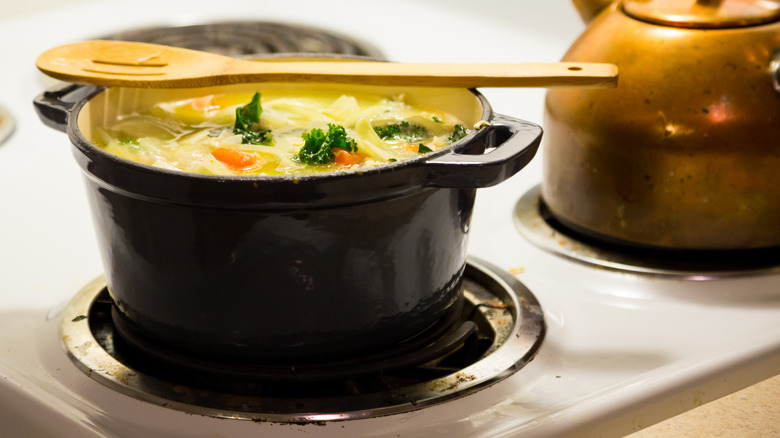
Like any dish, chicken and dumplings rewards proper technique. But without the right equipment, even good technique starts to falter. Worry not, though; you don't need a complicated kitchen setup to churn out a stellar bowl. The one piece of equipment worth paying attention to is your pot. Because your dumplings will cook mostly on the surface of the broth rather than fully submerged in it, you need a pot with adequate surface area so they have ample room to steam without piling onto each other. If they get too chummy in the pot, they might end up fusing together instead of forming individual pillows.
A 5- to 6-quart enameled Dutch oven is an expert favorite, thanks to its broad cooking surface, even heat, and tight-fitting lid. But if you haven't gotten around to splurging on one, a large saucepan will also give your dumplings plenty of room to spread out and steam. Just don't overcorrect and reach for something shallow, like a skillet. It may offer lots of surface area, but it isn't deep enough to comfortably hold both the broth and the expanding dumplings, making spills and sticking far more likely.
Don't panic if every pot in your cupboard is on the tall-and-skinny side. You can work around it by making slightly smaller dumplings so more of them fit in a single layer. Just remember to shave a few minutes off the cooking time; they'll steam through faster than full-sized dumplings.
Cooking too many dumplings at once
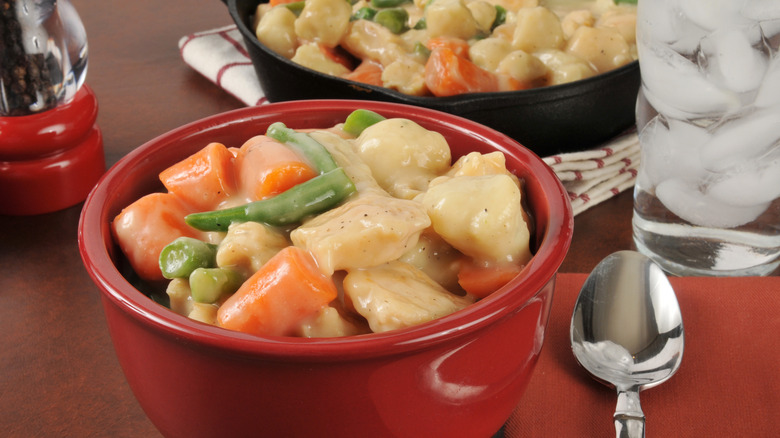
Admit it, the real headliners in chicken and dumplings are the dumplings. The chicken, broth, and aromatics are really there to give them a rich, savory backdrop. Still, you shouldn't go overboard. There's a limit to how many dumplings you can cook at once.
If you pack them shoulder to shoulder, there won't be enough room for the steam to move around, which could leave you with a mishmash of overcooked, undercooked, and downright raw dumplings. Fresh dumplings also expand quite a bit as they cook, and while the dough is still setting, it's incredibly pliable. If you pack them too closely, they may coalesce into one giant dumpling raft that stretches across the pot and refuses to cook through.
The exact number of dumplings you can comfortably cook varies from recipe to recipe. But if you're working with the aforementioned 5- or 6-quart Dutch oven, you can probably squeeze in around a dozen tablespoon- to 2-tablespoon-sized dumplings without much trouble. If you're making larger dumplings, though, it's worth dialing that number back a bit. Better yet, don't obsess over numbers. Eyeball it instead. You're in the sweet spot if your dumplings fit comfortably in a single layer and you can still see patches of simmering broth between them.