

Italian Vs British Sausages: How Do The Meats Differ?
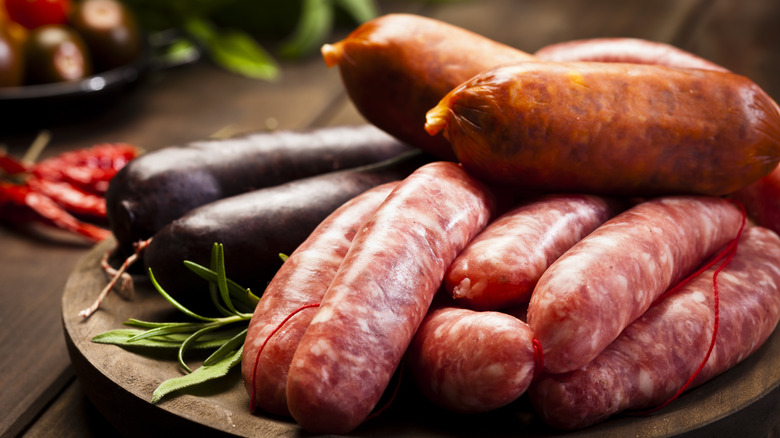
Sausages are one of those universal delights we love to have on our plates, and yet, how they're prepared can vary enormously from country to country. An Irish sausage with colcannon is quite different to a French Andouille, after all. Similarly, an Italian "salsiccia" and a British banger are quite different in flavor and texture. Their particularities are not only cultural, as different cuisines cater to unique palates, as well as using the more local ingredients at hand, but also in the seasonings, binders used, and specific meat content.
At its core, Italian sausages are fresher and more meat-forward, with fennel and anise supplying their distinct flavor; garlic is often used too. British sausages, on the other hand, are softer and plumper, a result of combining pork with water and rusk or breadcrumbs, and milder seasoning such as mace, sage, or nutmeg. A key distinction, however, also lies in how they're marketed — especially in American supermarkets. In U.S. grocery stores, an "Italian sausage" can refer to a fresh, Italian-American style pork sausage, rather than one of the plethora of regional sausages from the Bel Paese itself. Likewise, British sausages can range from cheap supermarket "bangers" to premium, butcher-made links made almost exclusively of pork and seasoning.
This can also explain the difference in cost between the two. A basic British sausage is often cheaper because the more expensive meat cuts are filled out with water and rusk, while Italian sausages tend to contain a higher percentage of actual pork. Ultimately, the main difference lies in what goes into making the sausage: The meat content, casing, farming standards, provenance, and brand. Learning how to judge the quality of a sausage, using a butcher's own handy methods, is ultimately more useful than distinguishing them by nationality alone.
Italian sausages are diverse, meat-forward, and herbaceous
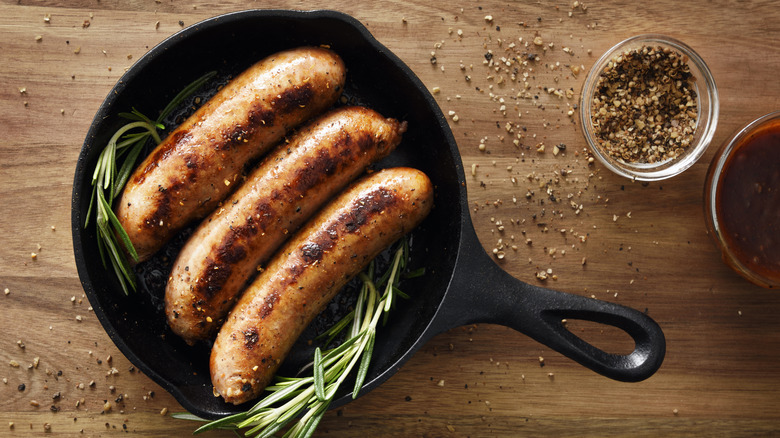
Much like Italy's culinary heritage — which traces a long and complex history, and was only recently unified into a "national" cuisine — sausages in Italy are regionally diverse. Up north, they borrow from the Mitteleuropean (Central European), Alpine palate, with smoky meat and milder seasonings; further south, they can be both heavily spiced and spicy, with Calabria's almost pâté-like Nduja packing a ton of heat and peppery flavor. And that doesn't even cover the countless regional variations, including Tuscany's fennel-rich salsiccia al finocchietto or Sardinia's wine-infused cured pork sausage.
That said, "Italian sausages" as sold in the United States tend to be coarse, made with ground pork and fat. Federal standards require any sausage sold under the title to contain at least 85% meat, with fat making up to a maximum of 35% of the content. The seasoning must include salt, pepper, and either fennel or anise (or both), with a 3% water limit. Other flavorings can be added, but these remain optional. It's this high meat content that makes Italian sausages generally more expensive within the U.S. market.
Italian sausages work very well in a variety of dishes, especially those that showcase their more Mediterranean-inspired flavor profile. Think pappardelle with a tomato and mascarpone sauce; a hearty Neapolitan pizza alongside bitter greens, like chicory or friarielli; or over a lentil stew finished with a garlic soffritto — even quick ricotta and sausage stuffed baked tomatoes. The key is finding a dish that complements the meat-forward richness and aromatic, herbaceous seasonings that make Italian sausages so distinctive. The casing can also be easily removed, meaning you can crumble the filling onto a pasta sauce, soup, stew, or pizza.
Rusk-filled British sausages are generally milder and softer
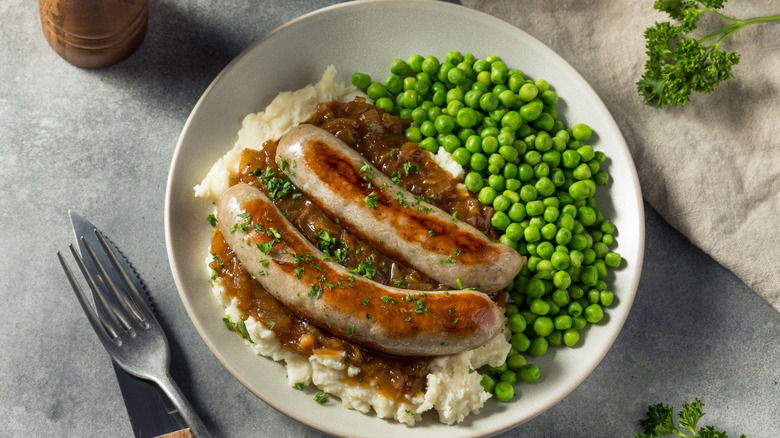
Sausages are one of the cornerstones of British cuisine — an unmistakable staple of a "fry up" or hearty full English breakfast, as well as the star of pub classic "bangers and mash" and baked comfort foods like toad in the hole. Traditional bangers tend to be moist, chewy, and mild in profile: made with a mix of pork, pork fat, water, seasonings, and rusk — a dry, bread-like cereal ingredient that functions as both a filler and binder.
Regional varieties across the U.K. also affect the composition of sausages, with Oxford sausages adding a note of lemon, Lincolnshire sausages using sage, and the well-known northwestern Cumberland style being heavy on the black pepper. North of Hadrian's Wall, Scottish Lorne sausages often include beef as well as pork — and the national dish, Haggis, is a sausage-like dish made of minced offal, oatmeal, and spices. In Wales, sausages sometimes don't include meat at all, as shown by the cheese, leek, and breadcrumb-mixed Glamorgan type.
British law allows pork sausages to be labelled as such with as little as 42% meat, although premium varieties often have around 80 to 98%. This is mainly why they can be considerably cheaper than their Italian counterparts — a 2025 U.K. supermarket comparison showed a 42% pork sausage cost around half as much per 3.5 ounces (100 grams) as the 97% version (via The Guardian). Lower cost, however, is not an indication of lack of quality. If rusk is used properly, it can support moisture retention and produce the sort of texture immediately associated with a classic British banger. It also explains how Blighty's iconic sausages got their explosive nickname: Historically, water-rich sausages tended to split or loudly pop while being cooked.