

How Americans Eat Differently From The French
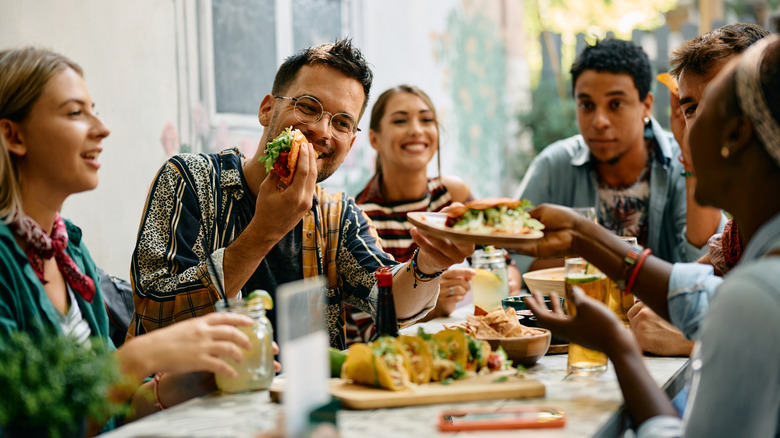
American and French food cultures are, like many things, often reduced a set of stereotypes. The U.S. is portrayed as the land of all-American cheeseburgers; France, of baguettes; the former of TV dinners, drive-thrus, and giant-sized refillable sodas; the latter, tiny cafés au laits, slow outdoor lunches, and elegantly picnicked charcuterie. But when comparing how people actually eat on both sides of the pond, what differences are grounded in fact — as opposed to cliché?
As a result of globalization and growing consumerism, eating habits have become increasingly similar in both countries: at present, people in both the U.S. and France tend to prioritize convenience, speed, diversity of choice, and tried-and-tested flavors, with an increasing attention to different types of nutritional optimization and specific diets: protein-maxxing and plant-based eating have grown in popularity across the world.
All this notwithstanding, there are clear differences between the United States and France when it comes to eating what's on your plate — and if it's even served on a plate in the first place. In the U.S., meals are often shaped by consumer trends and wider individual preferences and choices. Aside from big occasions like Thanksgiving or the 4th of July, food is less of a social ritual and more a source of quick fuel or easy comfort – why Americans tend to snack more, prefer takeout and ready-made meals, or follow specific diets catered to individual lifestyle preferences. The French, on the other hand, tend to treat food with more structure and as an enshrined part of the daily rhythm. People stop for lunch, sometimes even going home from work, and there are more cultural rules around what foods and eating habits are socially acceptable at specific times — although these are also being adapted to the increasingly fast pace of modern-day working life.
American eating prioritizes speed, comfort, and convenience

American food is richly multifaceted in its history, owing to the "melting pot" of cultures that settled in waves. From the Germanic-inspired meat dishes of the Midwest to the African-Creole heartiness of Southern soul food, Tex-Mex chili con carne to Hawaiian-Japanese fusion of musubi, cobb salad in California, greasy one-slice Italian-style pizzas of New Jersey to the Cuban ham-and-cheese sandwiches of Brooklyn bodegas, few countries offer such a vast range of culinary options. As a result of such variety and post-war mass consumerism — indeed, supermarkets were developed on American soil — U.S. eating culture came to be shaped by accessible, marketable abundance.
At its heart, American eating culture prioritizes convenience, tastiness, satiety, and speed. Meals are often prepped in batches, leftovers are a staple — asking for a carry-out bag at a restaurant is normal — and portions tend to be larger. The weekend breakfast-slash-brunch remains a clear example of this. Blending savory and sweet foods, Americans tend to go on the heartier side — something which fascinates Europeans: A classic U.S. morning meal could involve bacon, sausages, pancakes, cereal, and a fruit juice. Even plant-forward or "wellness" breakfasts, from avocado on toast to granola bowls, emphasize quick fuel, substantial portions, and, more recently, higher protein.
The structure of meals in the U.S. is often less firmly embedded than in Europe. Consumer culture popularized ready-meals and fast food — and this came to be reflected in the cultural attitude to eating. Office workers pack lunches or grab quick bowls, eaten desk-side; parents and their kids often dine at different times, or in front of the T.V.; and snacks remain a backbone of the American food industry. As a reaction to fast eating culture, the country also became the cradle for a wide range of diets, from gluten-free everything to keto.
The French treat their meals as a time to pause
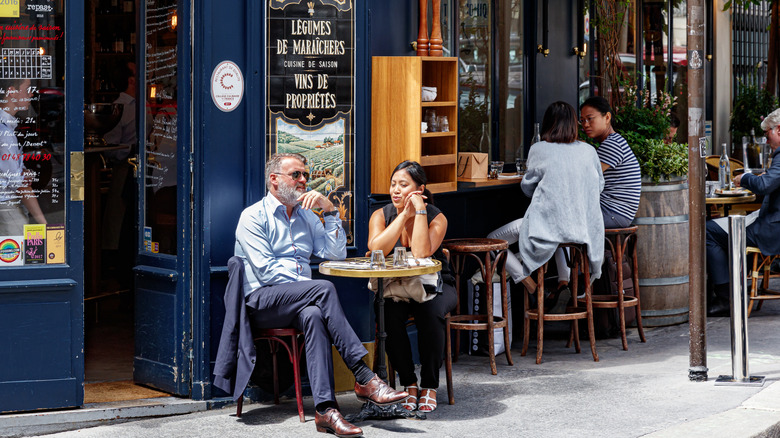
In France, food is treated as more than just fuel — it's a sacrosanct part of the day, and an excuse to take a breather from the humdrum of busy daily schedules. That's why the French like to sit at the table with family and friends for meals, and take their time — office lunches or T.V. dinners might not be unheard of, but people like to make their meals more intentional — and it's part of the culture to have time to do so.
The biggest, most obvious difference is breakfast — usually more of a sweet snack than an actual meal. A traditional French "pétit dejeuner" typically involves little more than a pastry — a croissant or pain au chocolat the most common — and a coffee. Lunch and dinner, however, are more substantial, and typically focus on a balance between carb, protein, and fat. Food isn't just to be scarfed down — children are taught the importance and purpose of food right from their school cafeterias.
While marketed "diet" or "high-protein, low-fat, low-carb" products have long hit the shelves in France, the country's relationship with food is more neutral: less seen as a problem to solve or a source of self-optimization, rather a natural part of the daily rhythm of life. That means the French still tend to prefer single-ingredient foods — cheese, butter, bread, even a glass of wine — and structured meals over processed snacks. French culture may be gradually adopting new trends and adapting to the pressures of an ever-faster-paced culinary landscape, but the art of "gouter" — mindfully tasting food — is far from dead.