

How Cheap Was A Lobster Dinner In The '60s Vs 2026?
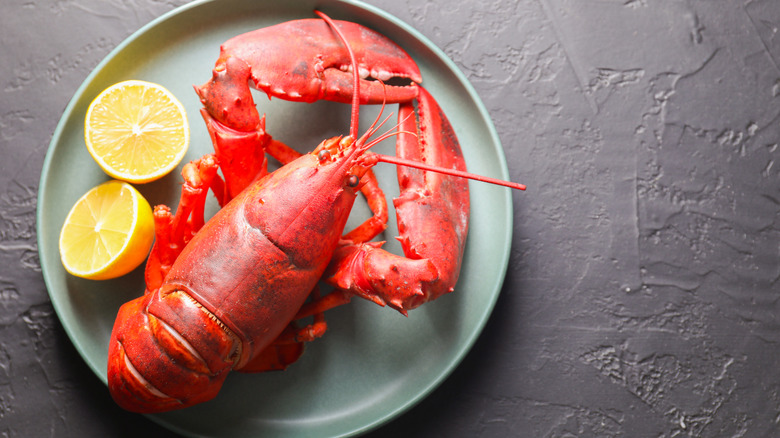
While lobster is not exclusively sold in high-end restaurants (with their bizarre fine dining rules), these days it is mostly considered an upscale food. And while the cost of ordering freshly sourced lobster in a restaurant today has priced a lot of people out of enjoying it, that wasn't always the case. In the 1960s, for example, you could enjoy a lobster dinner at a family-oriented spot on Long Island for $2.50, or about $28 in today's money, a reasonable (but not inexpensive) sum for a special middle-class meal. In contrast, a lobster dinner in 2026 at a similarly casual restaurant in the same area can cost about $55 (and in a fine dining setting? A whole lobster could cost you almost $90, with no sides or accompaniments!).
While lobster dinners in the 1960s weren't a cheap meal by any means, the price today, adjusted for inflation, is more than $20 higher. Obviously, the overall price of food has risen since the 1960s, but there are a number of factors that help explain the cost of a lobster meal then, and its even more expensive counterpart now.
Lobster wasn't always a high-priced luxury food
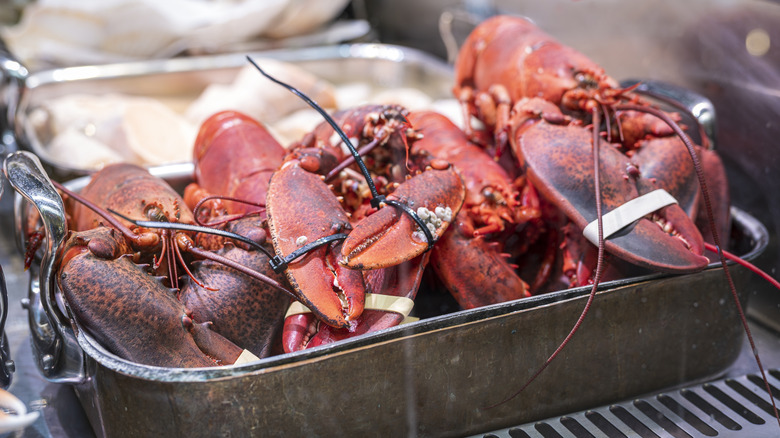
To understand why a lobster dinner was more moderately priced in the 1960s, we have to back up and explain America's history of eating this shellfish before the mid-20th century. When the first colonists arrived on the shores of what is now the U.S., lobsters were incredibly plentiful, so much so that they were caught and fed to livestock — imagine that, farm animals noshing on what we pay premium prices for today. It was considered a poor man's protein, and aside from pigs and cows, it was consumed mainly by the impoverished, or those down on their luck (to be fair, the tomalley — the green substance found inside a lobster — can be off-putting).
However, toward the middle of the 19th century, people who weren't aware of the prejudice against lobster — mainly inlanders, as opposed to East Coasters — started trying the crustaceans, and they liked what they tasted (hence the development of the dish lobster Newberg). The once-overabundant bug of the sea began to be eaten in greater quantities, and its bottom-of-the-barrel pricing began to rise, too.
By the 1940s, lobster had shed its disadvantaged origins and become associated with high-class living, as people spotted the rich and famous eating it at restaurants. And as ever, when the 1960s rolled around, more modest eateries sought to attract patrons by offering it on their menus, pricing it just low enough that the middle class could afford it as a way to treat themselves. A lobster dinner, at $28 in today's money, was definitely more expensive than fast food and lunch-counter fare at the time, but not so outrageous that an everyday couple celebrating an anniversary or birthday couldn't make it work.
Both history and climate shape 2026 lobster prices
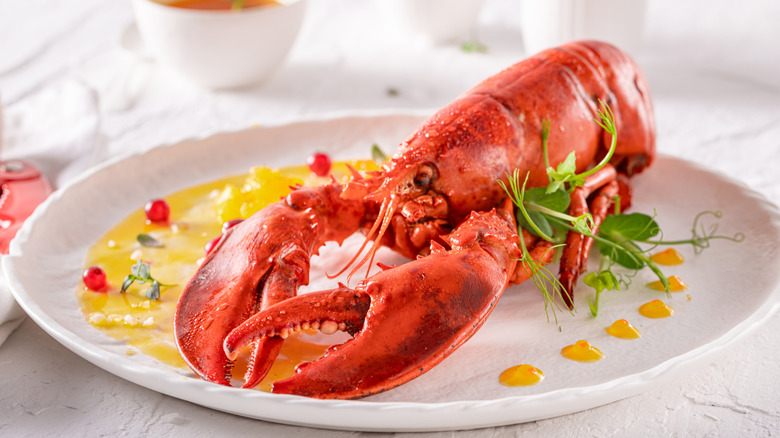
Just as the cost of a 1960s lobster dinner was shaped by prior history, so too is the market value of such a meal in 2026. The crustacean has only grown more premium over time, following a generally upward trajectory from the mid-20th century until the early 2020s, with just a few fluctuations along the way.
Several major factors have likely driven the $55 lobster dinner of 2026. First and foremost, the COVID-19 pandemic — which shuttered restaurants through much of 2020 and part of 2021 — forced the industry to pivot. A sharp initial price collapse was then followed by a huge surge in demand as dining rooms reopened, sending costs skyrocketing. Once menu prices climb, they rarely return to pre-crisis baselines. While lobster prices have stabilized somewhat since, even dipping slightly in early 2026, overall consumer seafood costs will likely trend upward as the year continues.
Aside from the economy, there is also the environment to contend with. When the first Europeans colonized what is now the U.S., lobsters were a dime a dozen (figuratively). Today, their numbers are far lower, partially because of their increased popularity, but also due to climate change, which has had a negative effect on their population, particularly off the coast of Maine. This, in turn, also impacts the price of a modern lobster dinner, and will no doubt have further implications in the future.