

5 Classic Fast Food Restaurants That Were Founded In The Midwest
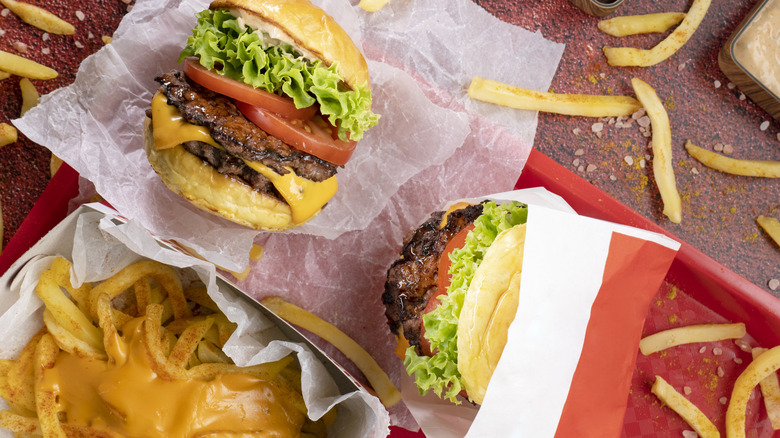
Modern fast food is one of America's great culinary innovations. Although now a form of dining widespread from sea to shining sea, the Midwest played an especially pivotal role in the genre. The region's industrial infrastructure — replete with highways and urban sprawl — favored the convenience-minded dining style. Not to mention, local cuisine, filled with items like hot dogs, burgers, and frozen dairy treats, favored the format, too. It's a merging of factors that continues to make the Midwest a drive-thru hotspot.
So, although industry giant McDonald's may have started in California, it comes as no surprise that a variety of chains kicked off in the area. Openings include century-old innovators like White Castle, as well as now-widespread chains like Wendy's and Arby's. The Midwest is home to a lineup of chains with beloved local followings — Culver's being the most prominent example — as well as businesses like Dairy Queen, which has achieved great success in Texas. The region gave rise to a breadth of impressive fast food success stories.
Kansas-based White Castle pioneered the fast food model
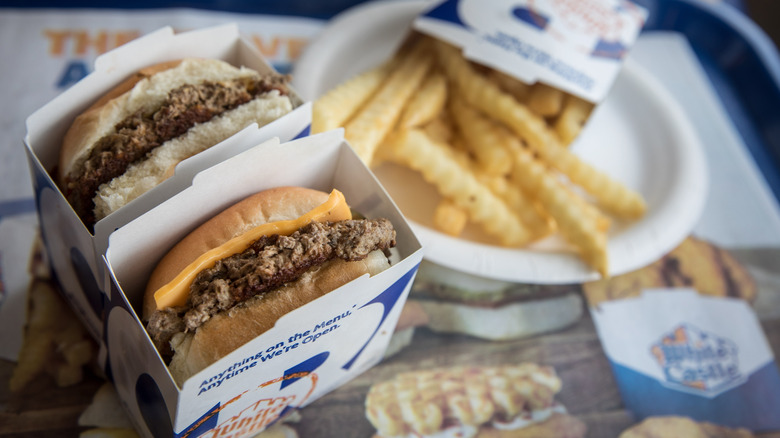
Considered America's first fast-food chain, White Castle opened its doors in 1921 in Wichita, Kansas. The eatery established itself with a focus on small-sized burgers, priced at 5 cents apiece. From the get-go, an emphasis on cleanliness and efficiency made the business stand out — a model that catered to Wichita's then-booming population. White Castle already operated four locations by the end of its first year, before successfully moving into markets like New York City the following decade. Today, the chain operates more than 300 outlets, primarily maintaining a focus in the Midwest.
Throughout its more than century-long history, White Castle continued to innovate culinary commerce. The chain introduced takeout containers in 1927 — a then-rare practice — selling burgers in a bag. It initiated the use of steel spatulas and also developed a unique burger-steaming method. Patties come lined with holes to speed cooking times, with even the square shape designed to optimize grill space. Today, White Castle serves an array of sliders, with offerings like crispy chicken and breaded fish in addition to the original beef version.
All the while, the chain has remained family-owned since 1921. White Castle has refused to franchise, instead fully maintaining in-house leadership. Although it previously experimented with international locations like Shanghai, China, the chain continues to uphold its Midwestern roots.
Founded in Ohio, Arby's has grown into a nationwide icon
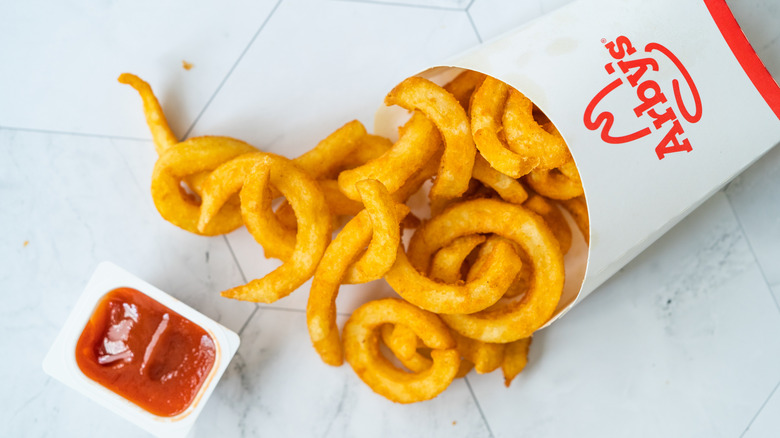
Arby's first opened its doors in 1964, started by brothers Leroy and Forrest Raffel in Boardman, Ohio. Inspired by the quickly expanding fast food industry, the duo sought to create a replicable concept centered around roast beef — an offering that remains central to the chain today. Although priced higher than competitors, the concept caught on, with expansion to 300 outlets by 1970.
Following a bankruptcy in the same decade, the brothers ultimately sold the business to RC Cola in 1976 and permanently stepped away from the chain in 1979. Arby's headquarters relocated to Atlanta, Georgia, then to Miami, Florida, in 1987. Following a merger with Wendy's in 2008 that lasted three years, the company moved back to Atlanta. The chain has long operated outside the Midwest. Nevertheless, Arby's has maintained a widespread presence, with nearly 4,000 locations nationwide as of March 2026.
Throughout the years, the chain has experimented with a wide array of food offerings. In the 1990s, Arby's bought the cinnamon roll company T.J. Cinnamons, adding baked goods to its lineup. The company tried selling sourdough melts in the early 2000s, sandwiches consisting of cured meat topped with melted cheese. During the 2020s, Arby's debuted unique regional sandwiches crafted with proteins like venison and duck, and even dipped its toe into the booze business. In complement to iconic menu items like curly fries and roast beef sandwiches, Arby's has maintained a distinct approach to fast food.
Wisconsin-born Culver's is a Midwestern staple
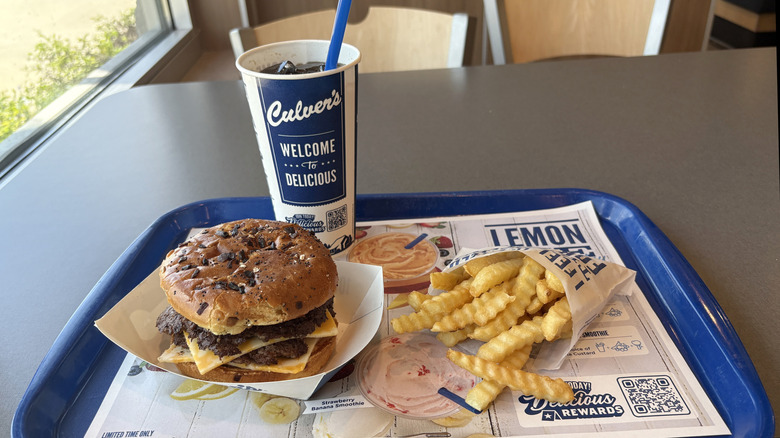
Among Midwestern chains, few garner a passionate fandom quite like Culver's. Boasting a regional pride akin to In-N-Out's Californian roots, this more-than-1,000-location chain traces its roots to Sauk City, Wisconsin. Founded by two generations of the Culver family in 1984, the chain started in a repurposed A&W outlet first acquired more than two decades earlier.
From the start, the vision was clear: Culver's Frozen Custard and ButterBurgers sought to win over customers with dairy-infused creations. The chain debuted its iconic rich and creamy frozen custard, as well as its own rendition of the ButterBurger, a butter-basted style already popular in Wisconsin. At first, winning over the milk-loving state proved difficult — the Milwaukee region contained abundant similar eateries. The Culvers persisted by using high-quality ingredients and crafting food from scratch. To this day, the chain still makes its own mashed potatoes and uses burger meat that is never frozen.
The first successful franchised location opened in 1990 in Baraboo, Wisconsin. The inaugural out-of-state expansion occurred in 1995 with a Minnesota outlet, and the first Southern Culver's opened in Texas in 1998. As the chain grew outside the Midwest, Culver's helped popularize Wisconsin's regional fondness for ButterBurgers, frozen custard, and cheese curds, a 1997 menu addition.
Illinois-born Dairy Queen became a soft-serve powerhouse
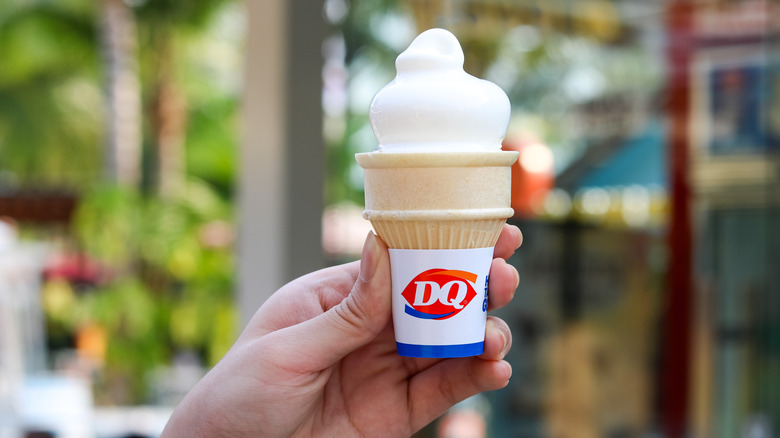
Famed for its frozen treats, Dairy Queen now delights customers nationwide. As of May 2026, the chain operates more than 4,000 locations across 49 states and several thousand more abroad — a truly widespread success. Yet that legacy traces back to Joliet, Illinois, where the first Dairy Queen opened in 1940. Started by a businessman, his son, and a friend, the chain kicked off as a modest takeout-only stand serving soft-serve ice cream. Nevertheless, franchising was an immediate goal — there were already nearly a dozen Dairy Queens in 1941 and 100 in 1947. By the 1950s, several thousand DQs operated nationwide.
The chain's dedication to ice cream correlates with Midwestern fondness for dairy. However, Dairy Queen's concept quickly transcended its regional ties. Starting in the late 1950s, the business garnered a dedicated following in Texas; some even mistakenly attribute the chain's origins to the state. Operated with looser franchising regulations, Dairy Queen locations there uniquely serve tacos and other regional menu items.
Across regions, Dairy Queen has retained a dynamic approach to its business model. Whether acquiring the California-born Orange Julius in 1987 — a frozen, Creamsicle-like beverage concept — or rolling out chicken strips in 1995, the chain has long offered a wide range of bites. Anchored by cold desserts like the iconic Blizzard, it's easy to forget this beloved chain has Midwestern origins.
Wendy's successfully expanded far beyond its Ohio origins
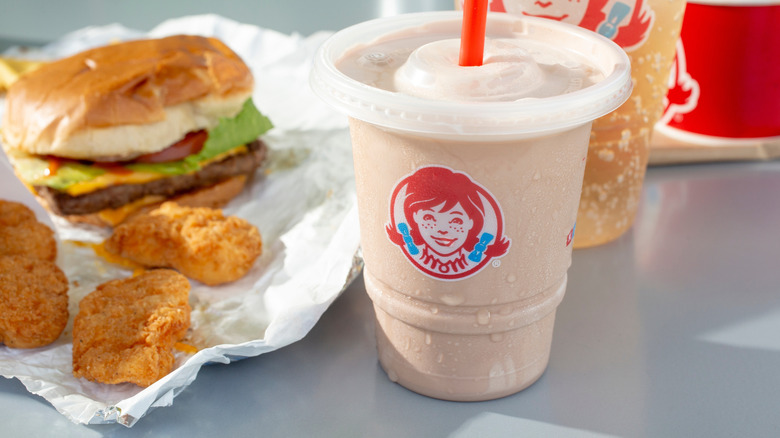
Wendy's first opened in November 1969 in Columbus, Ohio, creating a business model around the quintessentially Midwestern pairing of burgers and frozen dairy treats. From the get-go, the chain introduced its signature square burgers, shaped in such a manner as an indicator of quality. The equally iconic Frosty — a frozen dairy dessert — also appeared on the chain's first menu. Accompanied by food items like chili, an ample soft drink selection, and a welcoming environment, the restaurant was an immediate success.
Only a year later, the chain debuted the trailblazing pickup window, equipped with a speaker system for speedy ordering. Wendy's also achieved nationwide prominence with a successful marketing campaign, the famed "Where's the beef?" advertisement, which debuted in 1984. By 1985, Wendy's operated 3,000 locations. As of June 2026, the chain has more than 7,000 outlets across 30 countries.
Today, Wendy's continues to operate from Dublin, Ohio, a Columbus suburb. The chain keeps evolving, with additions like a nationwide breakfast menu in 2020, items such as the Pretzel Bacon Cheeseburger, and continual reworking of its salad offerings. From its inception, the Midwestern-born chain has cemented itself among the fast food greats.