

10 Popular American Foods That Are Hard To Find In Canada
In the age of the internet and e-retailers, the list of things you can't purchase and have shipped to your home grows ever smaller — so long as you do not care about the price. With that in mind, there are some popular American foods that Canadians do not have ready access to if they are looking to keep charges to a minimum. Outside of certain speciality stores, a considerable number of America's neighbors rely on forum-facilitated snack exchanges to barter for bars or cookies (it's rough out there).
While some fundraising snacks and chain store goods have never ventured out of the states, other products once readily available in Canada have been discontinued. In some cases, no explanation has been given as to why a fan-favorite pasta sauce or snack cake suddenly vanished from store shelves. Let's explore some of these hard-to-come-by American goods for Canadians, from pasta sauces to pastries.
1. Ragú
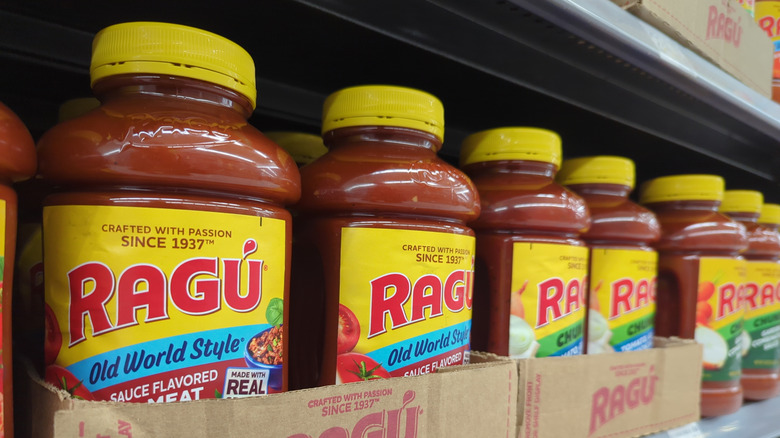
Whether directly impacted or merely a witness to the wall-to-wall coverage of shortages and supply chain disruptions that came with the COVID-19 pandemic, few are likely to soon forget the experience. Sure, varying degrees of normalcy returned in the years that have followed, but some contemporary changes have not been undone. This includes the decision by Mizkan America, Inc. to pull the Ragú pasta sauce brand from distribution across Canada in 2020.
Throughout summer that year, an increasing number of patrons began taking note that their preferred option for pasta nights had been trickling out of stores with no signs of restocking. Call outs seeking explanations for the absence received the same prepared statement from Ragú about the "hard decision to exit the Canadian pasta-sauce market" without further elaboration. At the same time, shortages stateside shortages were reported by the Toronto Sun citing challenges faced by the company, but Ragú did not clarify if the issue was relevant to the ultimate decision to abruptly cut distribution in Canada.
2. Pop-Tarts variety
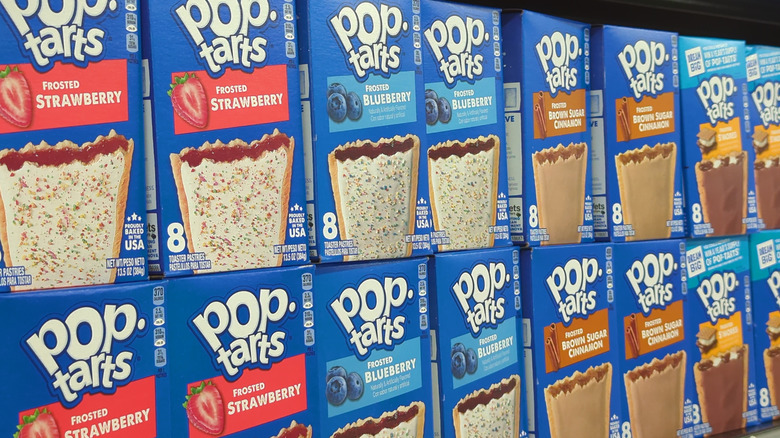
When the co-creator of Pop-Tarts died in February 2024, fans of the toaster pastry had the opportunity to reminisce about the four original flavors. A few months later, Jerry Seinfeld's directorial debut delivered the satirical origin tale, "Unfrosted." Since the '60s, the frosted — and sometimes unfrosted — offering from Kellogg's has cycled through scores of flavors. While a dazzling array stock the shelves of American supermarkets and grocery stores, Canadian consumers are limited to about a dozen options.
On top of two flavors from the original roster — strawberry and blueberry — Pop-Tarts in Canada come in birthday berry, cherry, chocolate fudge, churro, cookies and crème, raspberry, s'mores, and strawberry milkshake, as well as unfrosted strawberry. By comparison, the American market includes such flavors as banana bread, chocolatey chip pancake, lemon blueberry crumble, and a couple of Girl Scout cookie-themed options. Additionally, Kellogg's offers alternative versions of Pop-Tarts with a Super Stuffed variety, a protein-promoting option, and Pastry Bites not readily available in Canada. Though all Pop-Tarts come in packs of two, obviously.
3. Moon Pies
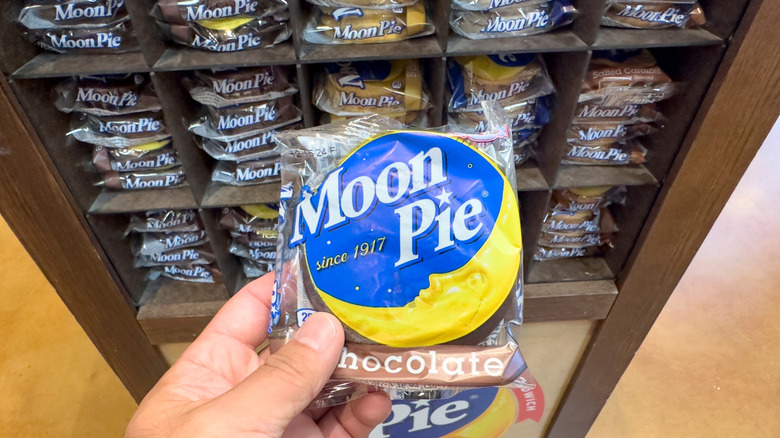
Inspired by a Kentucky coal miner, the first Moon Pie is said to have been created well over a century ago in Chattanooga, Tennessee. Since then, the sweet sandwich that combines the flavors of s'mores with marshmallow filling between graham cracker cookies, all dipped in chocolate, have made their way from coast to coast. While there are even specialty stores dedicated to Moon Pies and related goods in and around Tennessee, the same cannot be said of Moon Pie access in Canada.
Across America's northern border, snack seekers rely on alternatives where it concerns Moon Pie, be that a speciality importer or the similar Canadian treat, Wagon Wheels. Dare Foods, the company behind Wagon Wheels, has been around since the 19th century and produces goods like Bear Paws cookies, Breton crackers, and Whippet cookies — similar to Nabisco Mallomars. On top of sales in its home nation, Dare's "Made in Canada" goods can be found in over 50 countries.
4. Bugles
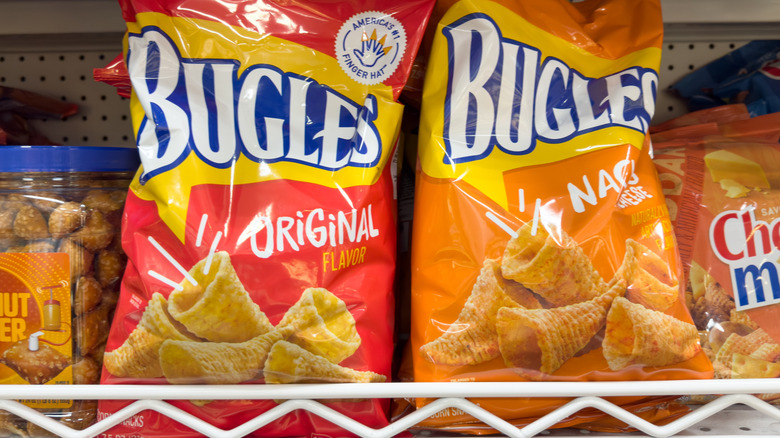
Sometimes the ubiquitousness of a certain good in the United States makes it hard to comprehend that the same prevalence doesn't hold true in a neighboring nation. Where it concerns Bugles by General Mills, such has been the case since 2022. It was November of that year that the multinational company made clear on X to confused fans of the horn-shaped corn snacks that they had in fact been discontinued across Canada.
Lacking a confirmed reason from the company, a report from CBC Radio speculated at a number of possible causes. This included the added cost of bilingual packaging in Canada, as well as competition with other brands. What is certain is that 2022 was not the first time Bugle sales ceased in the Great White North. More than a decade earlier in 2010, General Mills, per The London Free Press, cited a decrease in demand as responsible for the decision to pull Bugles from Canadian markets. Ultimately, this means the company isn't opposed to reversing the decision, having done so before. General Mills' social media account suggested it was open to such a possibility while encouraging fans to seek a "tasty substitute" for the time being.
5. Girl Scout cookies
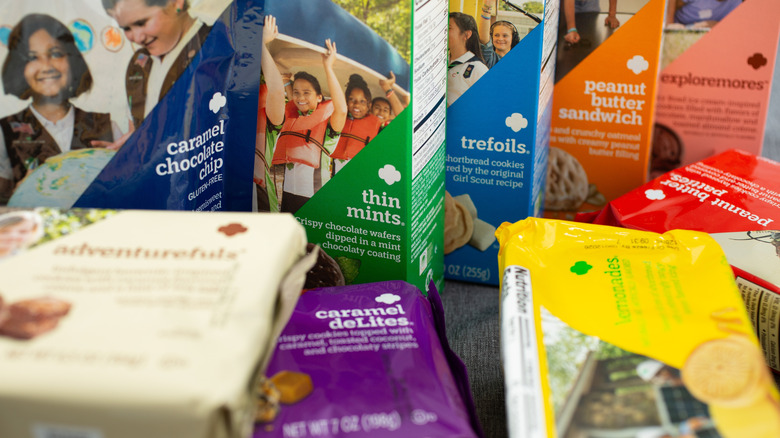
A simple point of fact remains, without Girl Scouts there can be no Girl Scout cookies. Though the New York-headquartered national organization is a part of the international World Association of Girl Guides and Girl Scouts, the American group remains a separate entity from its Canadian counterpart. As such, while fundraising frenzies are fed by cookie flavors like Tagalongs, Lemonades, and the best-selling Thin Mints, similarly-motivated campaigns in Canada are not so diverse.
Despite the easy answer to how many Girl Scout cookies are sold each year being a lot, Girl Guides offer but two cookie options — each with its own season to shine. During the spring, Dare Foods rolls out the Classic Chocolate and Vanilla Sandwich cookies while in the fall it produces Chocolatey Mint cookies. As for the American cookies that are only shipped domestically, the production is credited to both ABC Bakers and Little Brownie Bakers. The latter joined the enterprise in the '70s, while the former started baking for scouts dating back to 1937.
6. Skippy peanut butter
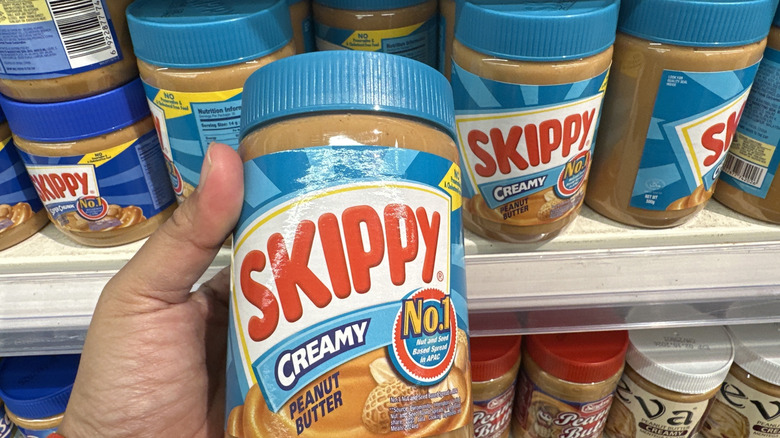
In 2013, Hormel Foods officially acquired Skippy peanut butter from Unilever at a cost of roughly $700 million. Little more than four years later, the brand sold around the world shrunk its reach by more than 35 million people, per the Government of Canada, when the move to discontinue sales to Canada was announced. "It was an incredibly difficult decision to withdraw Skippy peanut butter from the Canadian market," Hormel spokesperson Brian Olson told CBC News in 2017. Pricing and competition were listed as prevailing factors behind the decision.
No different than in the U.S., patriotism often finds Canadians buying domestic and that includes their peanut butter purchases. Kraft peanut butter earned the top spot in the category for the 2026 BrandSpark Most Trusted Awards while promoting being Canadian made with imported peanuts. While it remains more challenging to track Skippy down north of the border, Hormel did makes moves back into the market in 2024. That year, the company introduced five Skippy cookie snacks, dubbing it the opening phase in a "Canada re-launch."
7. Nestlé frozen entrées
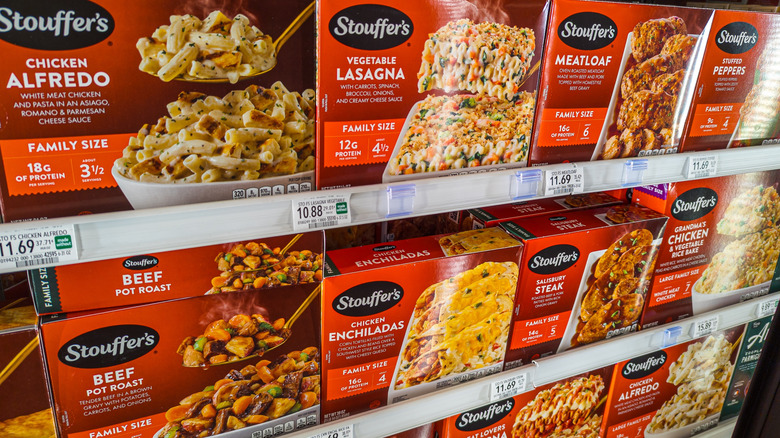
Akin to Hormel's decision to pull Skippy from Canadian stores, Nestlé Canada made its own sales shift in 2023 when it announced an end to sales of frozen meals and pizzas. The press release outlined how the move was made to change the focus to categories like coffee, ice cream, pet food, and infant goods with the expectation of supporting growth. "We remain open to enhancing our portfolio where it makes sense for business," said Nestlé Canada president and CEO John Carmichael who emphasized the new priorities.
As a result of the new business strategy, frozen goods under the brands Lean Cuisine, Life Cuisine, Delissio, and Stouffer's were discontinued over the course of the year. A likely contributing factor is that Nestlé lacks a manufacturing factory for the products in Canada, meaning it had been relying on a supplier. Meanwhile, Stouffer's Meat Lovers Lasagna in particular landed fairly high among frozen lasagnas ranked by Food Republic bolstering the reality on what Canadians would be missing out on.
8. Little Debbie
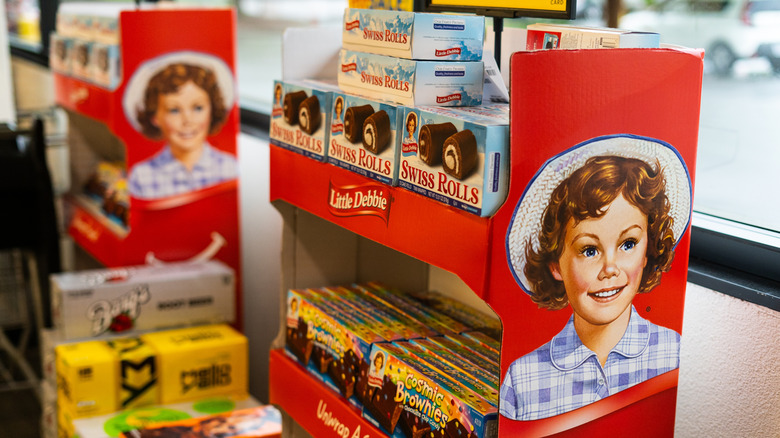
Throughout 2020, many consumers learned to go with the flow, riding each wave of supply chain disruption as best they could. That said, as production and distribution found its own stride again in the wake of the COVID-19 pandemic, the decision for an entire line of products to get pulled from Canada left many shocked. Surprised or not, Little Debbie last appeared at scale on shelves north of the border in 2022. It was that year that the McKee Foods Corporation brand was nixed.
The decision was made outside of the immediate control of McKee regarding Swiss Rolls, Zebra Cakes, Oatmeal Creme Pies, and Nutty Buddy Wafer Bars. Mike Gloekler, the Tennessee-based company's public relations manager expressed in a statement that the Canadian distributor pulled the plug on its business relationship. It was also made clear that there was no active effort to find a replacement.
Meanwhile, McKee also nixed distribution to the U.S. Defense Commissary Agency. While bothersome to military service members and their families, that fact also proves a potential bright light at the end of a Little Debbie-less tunnel for Canadians. After nearly four years, McKee confirmed to Stars and Stripes in May 2026 that ordering agreements had been made and the snack cakes could start shipping in once more.
9. Certain Mars snacks
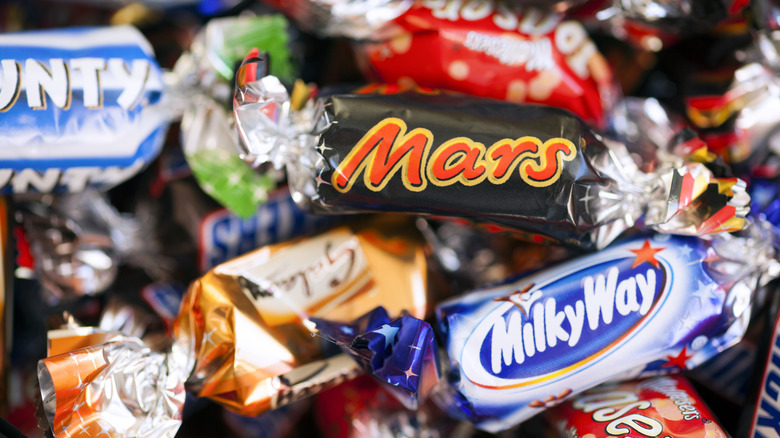
Like spot the difference picture puzzles or films with altered timelines or alternate dimensions, store shelves in different countries can appear at once familiar, yet noticeably different. This is true of the candy bar section where products from large international brands aren't always marketed the same, or at all. In the case of the snacking brands of Mars Inc., M&M's, Skittles, and Snickers — the American classic and world's best-selling chocolate bar — are all available in Canada, but the same can't be said for other popular treats.
Examples of snacks listed as available in the U.S. but not across the provinces of its northern neighbor are 3 Musketeers, Dove, and Combos. At the same time, the absence of Milky Way bars does not equal the absence of Milky Way flavor. Created in 1932 compared to the 1923 origin of Milky Way, Forrest Mars' Mars bars pair caramel, chocolate, and nougat. Despite those broad similarities, they remain unique candy options.
10. Snacks from Trader Joe's
For those unfamiliar, an unexpected connection links Trader Joe's with Aldi, as the latter's Aldi Nord division bought the chain in 1979 that, as of 2026, amounts to more than 600 locations. The former's Aldi Süd has expanded to some 2,150 branches in the United States over 50 years. Another connection is that, amid all that growth, neither chain has seen fit to expand into Canada, despite consumers' expressed interest in access on their own side of the border.
What that also means is that top ranked items from Trader Joe's Product Hall of Fame — like Peanut Butter Filled Pretzel Nuggets and Chili & Lime Flavored Rolled Corn Tortilla Chips — are not easy to come by. In fact, the popularity is such that, for a time, enterprising Canadian Michael Hallatt owned and operated the Trader Joe's resale store Pirate Joe's in Vancouver. Unfortunately, those who grew accustomed to the uptick in prices in exchange for foregoing the drive found themselves back on the road again in 2017. The growing fees related to a number of lawsuits became too burdensome, and the business shuttered.